


ビットコインにはCEOがいません。取締役会もありません。そして、誰もが従うルールを決められるような中央の権限も存在しません。
つまり、著名なビットコイン開発者がビットコイン改善提案(BIP)の編集者リストから外されたとき、重要なのは単に「誰が外されたのか」ではありません。
なぜプロセスはそこまで到達したのか?
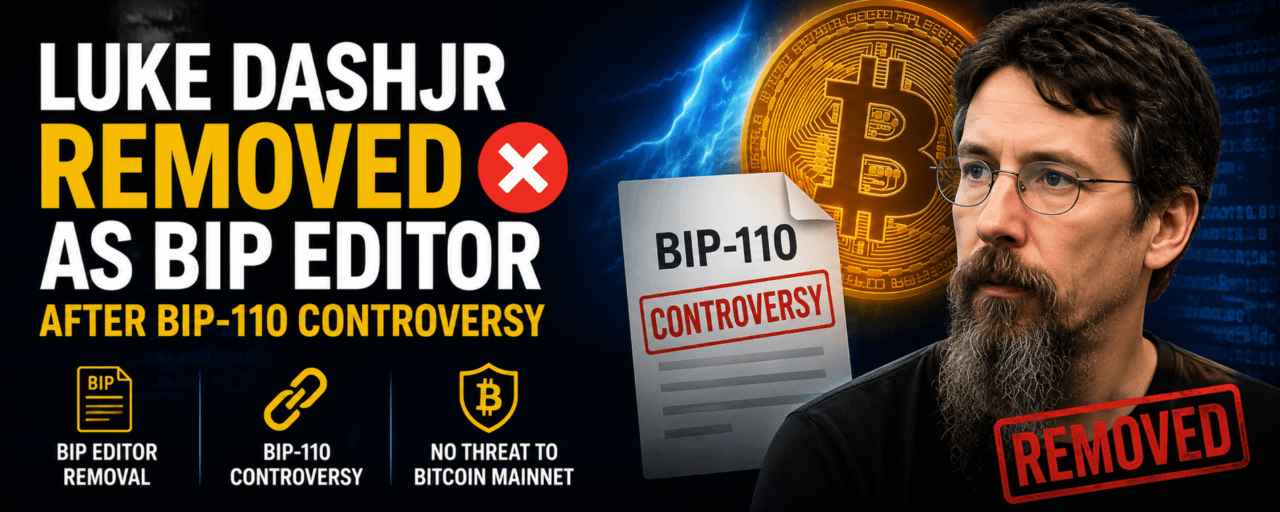
ルーク・ダッシュジュールは、BIP-110をめぐる争いを受けてBIP編集者から外され、ビットコインの最近の技術史の中でも特に珍しいガバナンス上の論点が生まれました。
この変更はbitcoin/bipsリポジトリでPull Request 2248によりマージされ、BIP 3で定義されたエディター一覧からダシュジャーを削除した。
しかし重要な違いがある:
ダシュジャーはBIPエディターから外された――ビットコイン開発からではない。
そしてこれは、ビットコインのメインネットが損なわれたり、深刻な脅威にさらされたことを意味するわけではない。
本当の物語は、プロセス、ニュートラリティ、そして信頼についてのものだ。
⚡ 何が起きた?
論点はBIP-110、いわゆる「Reduced Data Temporary Softfork(縮小データの一時的ソフトフォーク)」にある。
提案は、停止していた少数派チェーンの有効化の試みと結び付けられ、また通常のBIPレビュー手順が行われたかどうかをめぐる意見の不一致が生じたことで、ますます物議を醸すようになった。
それが、通常なら技術的な論争にとどまったものを、より大きなものへと変えてしまった:
ビットコインの変更を提案・文書化するプロセスを誰がコントロールするのか?
それが、BIPエディターの役割が重要になるところだ。
🧩 BIPエディターは実際に何をするのか?
BIPエディターはビットコインを支配しない。
彼らはできない:
ノードに新しいソフトウェアを動かすよう強制する
マイナーにフォークを採用させる
取引所に提案をサポートさせる
それ自体でビットコインの合意ルールを変える
ビットコインのユーザーが実行しなければならないバージョンを決める
役割は主に手続き的だ。
BIPエディターは次を支援する:
提案の番号付け
フォーマット
リポジトリのワークフロー
ステータスの変更
ドキュメント
それは管理的に聞こえるかもしれない。
しかしビットコインには、ロードマップを設定する中央の権限がない。
よって、提案を取り巻くプロセスの信頼性が重要になる。
開発者がプロセスが中立だと考えるなら、提案はより広い技術的検討を受けることがある。
その中立性が疑われるなら、プロセスそのものが論争の一部になる。
🔥 なぜBIP-110はこれほど物議を醸したのか
BIP-110は、ビットコインで繰り返し現れる議論の一つに触れている:
ビットコインのブロックチェーンで許可されるデータ量はどれくらいにすべきで、ネットワークが受け入れるべき活動はどのようなものか?
根本的に異なる見方がある。
一方は、過剰なデータ利用、スパム、そしてビットコインのインフラを運用し続ける長期コストを懸念している。
もう一方は、正当なデータ利用に制限を課すことが検閲に相当したり、ビットコインの許可不要(permissionless)な性質を妨げたりし得ると心配している。
そして、その技術的な議論の下には、もっと大きな問いがある:
そもそもビットコインは何に使われるべきなのか?
マネタリー(通貨)決済のネットワーク?
データ層?
検閲耐性のあるインフラ?
それとも、3つの何らかの組み合わせだろうか?
だからこそ、ブロックデータをめぐる議論は、ビットコインの技術コミュニティの中で意外に政治的になることがある。
🧨 そしてガバナンス問題がやって来た
ダシュジャー(Dashjr)は長年にわたり著名なビットコイン開発者で、スパムやブロックチェーンのデータ方針について一貫して強い立場を取ってきた。
この背景により、BIP-110の論争は特に神経を使うものになった。
提案が少数派による有効化の試みと結び付けられ、通常のレビュー手順に関する疑問が生じたことで、論争は提案そのものの内容を超えて動いた。
問題になったのは、BIPプロセスが一貫して中立に適用されているかどうかだった。
そしてそれが、最終的にエディターの解任が表しているものでもある。
ビットコインの合意ルールへの変更ではない。
ビットコインの提案を管理するために使われたプロセスの信頼性をめぐる争い。
⛓️ 少数派チェーンはどうなるのか?
ここから先の話は、簡単に誇張され得る。
少数派チェーンは、ビットコインと歴史やブランドを共有しているだけでは、自動的にビットコインになるわけではない。
ビットコインの経済ネットワークは、最終的には、どのルールを認識するかを選ぶ参加者によって決まる。
それには以下が含まれる:
ノード
マイナー
取引所
ウォレット
ユーザー
加盟店
流動性
停止していた少数派チェーンは、突然ビットコインのメインネットを置き換えたわけではない。
主要なビットコインチェーンは引き続き稼働していた。
つまり、BTCを保有または取引しているなら、重要な要点はこうではない:
「ビットコインが分裂した。」
そうではない。
より重要な要点は、ビットコインのルールを変える場合でも、広範な合意を得るのが依然として極めて難しいということだ。
そしてそれは意図的だ。
🏛️ ビットコインの奇妙なガバナンスモデル
ビットコインのガバナンスは、伝統的な企業のように組織化されていないため、混沌として見えることがある。
あるのは:
CEOはいない
取締役会はない
合意を制御する中央の財団はない
単一のロードマップ投票はない
開発者は変更を提案できる。
マイナーはシグナルを出せる。
ノード運用者はそれらを拒否できる。
ユーザーはアップグレードを拒否できる。
取引所は、どのチェーンをサポートするか選べる。
経済主体は最終的に、現実世界での実効性があるルールがどれかを決める。
それによってビットコインは、非常に舵取りが難しくなる。
ただし、その難しさ自体が中央集権的な支配への防御の一部でもある。
開発者は単にこう発表することはできない:
「これが新しいビットコインだ。」
ネットワークがそれを受け入れなければならない。
👀 ルーク・ダシュジャーを超えて、なぜこれが重要なのか
直ちに起きる結果はシンプルだ:
ルーク・ダシュジャーはもはやBIPエディターとして掲載されていない。
しかし、より興味深い結果として、次に何が起こるかがあり得る。
今後の物議を呼び得る提案は、次の点でもさらに厳しく精査される可能性がある:
エディターの中立性
レビュー手順
利益相反の懸念
ソフトフォークの有効化手法
コミュニティの合意
変更を提案することと、実際にネットワークに採用させることの違い
したがってBIP-110の論争は、必ずしもBIP-110そのものだけの問題として重要なのではない。
それが重要なのは、ビットコインの根本的な緊張の一つを明らかにするからだ:
ビットコインには開発者による協調が必要だが、その協調が中央集権的な支配になってしまうことは許されない。
それは難しいバランスだ。
📉 これはBTCの価格にとって意味があるのか?
おそらく直接はそうではない。
これは主に、直接の市場の触媒というより、ガバナンスと開発の話だ。
ここで扱われている情報の中には、ビットコインのメインネットが差し迫った技術的脅威にさらされている兆候はない。
トレーダーにとってより重要なのは、その論争が次のどれかに発展するかどうかだ:
より広い開発者間の対立
意味のある経済的な支援を受けた競合チェーン
深刻な合意の対立
または単に技術コミュニティ内の意見対立として残るだけだ。
当面は、説明された出来事に基づくと、後者の解釈のほうがより適切に見える。
🧠 大きな全体像
ビットコインの最大の強みは、同時に最大の不満の種にもなり得る。
ビットコインを変えるのは難しい。
コードを書ける。
提案を公開できる。
開発者を説得できる。
マイナーを説得できる。
しかしそれらのどれも、経済ネットワークがそれに従うことを保証するものではない。
したがって、BIPエディター一覧からのルーク・ダシュジャーの削除は、人事変更としてはあまり面白くなく、ビットコインのガバナンスが実際にどう機能しているかを示すものとしてより興味深い。
ビットコインをコントロールするのは誰か一人ではない。
開発者ではない。
マイナーではない。
BIPエディターではない。
そして次のソフトフォークを提案する当事者ですらない。
最終的に、ネットワークが認識するルールを決める。
そしてだからこそ、プロセスをめぐる争いが問題になる。
⚠️ これはビットコインのガバナンスの分析であり、投資助言ではありません。取引や投資の判断を行う前に、必ずご自身で調査してください。
#Bitcoin #BTC #BIP110 #Crypto #BitcoinDevelopment #Blockchain #CryptoNews #Trading