#baby $BABY
バビロンの多日間にわたるチャレンジ期間に対する、私の最初の反応は純粋なトレーダーとしての苛立ちでした。こんな形の決済設計をする人は誰なんだろう?私の世界では、遅延は漏れです。塞ぐものであって、遅延を前提に組み込むものではありません。
でもビットコインは、その直感を痛烈に思い知らせてくれます。
インフラを深く調べるほど、私は気づきました。市場は必ずしもスピードに対して対価を払うわけではない、と。価値が手を移す前に、誰かを指摘できる「正しいタイミング」を得ることに対して払うこともあるのです。この視点の転換は、バビロンのTrustless Bitcoin Vaultsの見え方を根本から作り替えました。
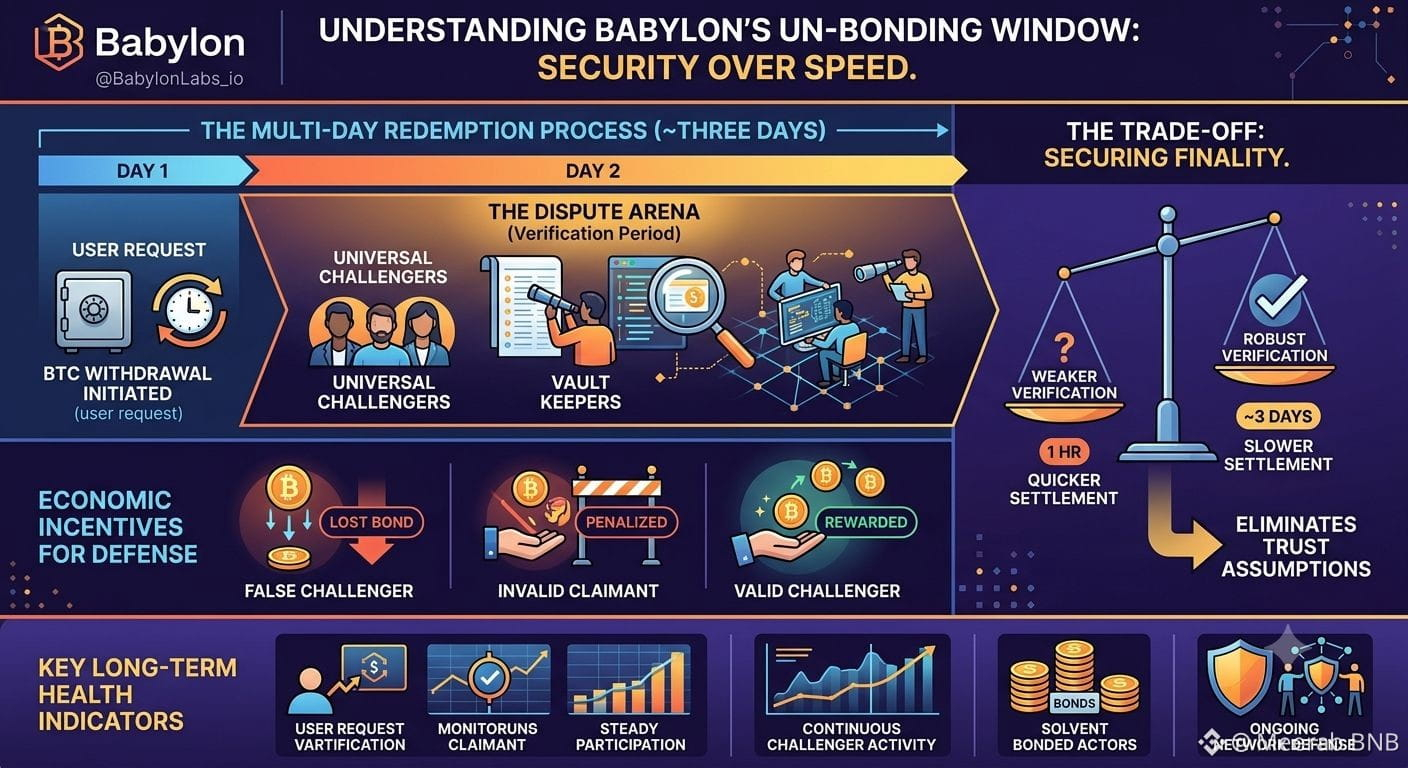
約3日間の償還(redemption)待機期間は、ただのアイドル待ちではありません。これは紛争(dispute)の場です。Universal ChallengersやVault Keepersが、最終性(finality)に至る前に無効なBTCの引き出しを捕捉するのに十分な時間が確保されます。偽のチャレンジャーは担保(bond)を失います。無効な請求者はペナルティを受けます。待ち時間は摩擦になり、それが経済的なフィルターへと変わっていくのです。
私を惹きつけるのは、待機期間そのものではありません。もっと重要なのは、この検証リズムが、インセンティブが派手な報酬で人目を引いているときだけでなく、ネットワークの「習慣」として根付くかどうかです。チャレンジへの参加がインセンティブの通常化後も保たれるなら、セキュリティは機能としてではなく、継続的に維持される公共サービスのように見えてきます。
ここには本物のトレードオフがあります。償還が速いほど魅力的なのは確かです。ですが、検証が(わずかでも)弱くなると、静かに信頼の前提が、そうした前提を排除するよう設計されたシステムへと忍び込んでしまうのです。
だから私はTPSや決済スピードではなく見ています。持続的な健康状態の兆候を探しています。チャレンジャーはまだ活動しているのか?担保を持つ関係者は支払い能力を保ったままなのか?人々は、バズが冷めた後も、そのシステムを守るために支出を続けているのか?
なぜなら、ネットワークの最強のセキュリティが「必要なときに人間が出てくること」に依存しているなら、実際に何があなたに、そのネットワークが5年後もそこにいると確信させるでしょうか?
@BabylonLabs_io $BABY
バビロンの多日間にわたるチャレンジ期間に対する、私の最初の反応は純粋なトレーダーとしての苛立ちでした。こんな形の決済設計をする人は誰なんだろう?私の世界では、遅延は漏れです。塞ぐものであって、遅延を前提に組み込むものではありません。
でもビットコインは、その直感を痛烈に思い知らせてくれます。
インフラを深く調べるほど、私は気づきました。市場は必ずしもスピードに対して対価を払うわけではない、と。価値が手を移す前に、誰かを指摘できる「正しいタイミング」を得ることに対して払うこともあるのです。この視点の転換は、バビロンのTrustless Bitcoin Vaultsの見え方を根本から作り替えました。
約3日間の償還(redemption)待機期間は、ただのアイドル待ちではありません。これは紛争(dispute)の場です。Universal ChallengersやVault Keepersが、最終性(finality)に至る前に無効なBTCの引き出しを捕捉するのに十分な時間が確保されます。偽のチャレンジャーは担保(bond)を失います。無効な請求者はペナルティを受けます。待ち時間は摩擦になり、それが経済的なフィルターへと変わっていくのです。
私を惹きつけるのは、待機期間そのものではありません。もっと重要なのは、この検証リズムが、インセンティブが派手な報酬で人目を引いているときだけでなく、ネットワークの「習慣」として根付くかどうかです。チャレンジへの参加がインセンティブの通常化後も保たれるなら、セキュリティは機能としてではなく、継続的に維持される公共サービスのように見えてきます。
ここには本物のトレードオフがあります。償還が速いほど魅力的なのは確かです。ですが、検証が(わずかでも)弱くなると、静かに信頼の前提が、そうした前提を排除するよう設計されたシステムへと忍び込んでしまうのです。
だから私はTPSや決済スピードではなく見ています。持続的な健康状態の兆候を探しています。チャレンジャーはまだ活動しているのか?担保を持つ関係者は支払い能力を保ったままなのか?人々は、バズが冷めた後も、そのシステムを守るために支出を続けているのか?
なぜなら、ネットワークの最強のセキュリティが「必要なときに人間が出てくること」に依存しているなら、実際に何があなたに、そのネットワークが5年後もそこにいると確信させるでしょうか?
@BabylonLabs_io $BABY