#baby $BABY
@BabylonLabs_io
バビロンについての、あるひとつの疑問に私は何度も立ち返ります。
多くの人は、市場が落ち着いているときに分散型システムを判断します。私は、流動性が消えていくのを見て、誰もが自分の利益を守り始めたときに何が起きるのかを観察するのが好きです。
そこで、協調が本当に試されます。
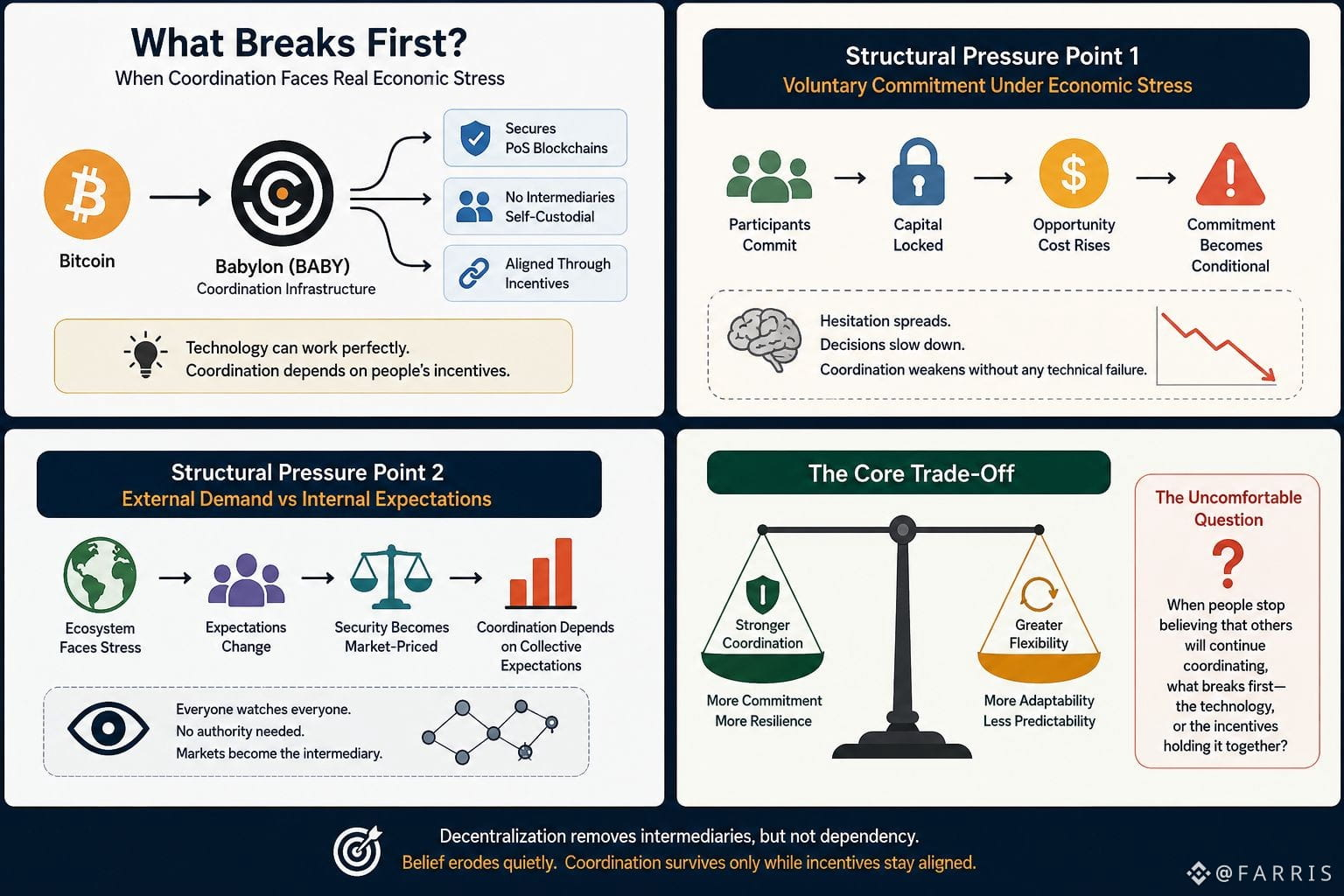
本当の難しさは、技術が動き続けるかどうかではありません。問題は、インセンティブが変わったときに、人々が協力し続けるかどうかです。セキュリティは保たれたまま、献身(コミットメント)だけが静かに薄れていくことがあります。市場は技術的な失敗なしに、システムを弱める必要はありません。時に必要なのは、参加者がより慎重になり、より選別的になり、柔軟性を犠牲にすることに消極的になることだけです。
だから私は、$BABY を「ただの別のトークン」ではなく、協調(コーディネーション)のインフラだと見ています。その長期的な重要性は、経済的な圧力によって個々の生存が集合的な信頼よりも重要になったときでも、インセンティブを引き続き整合させられるかにかかっています。
また、無視できないトレードオフもあります。強い協調には通常、より強いコミットメントが必要ですが、より強いコミットメントは、条件が突然変わったときに柔軟性を下げてしまいます。
私が拭いきれない疑問は、シンプルです。
人々が、皆がこれからも協調し続けるだろうと信じなくなったとき、最初に壊れるのは何ですか――技術でしょうか、それとも、それをつなぎ留めているインセンティブでしょうか
そこが、研究に値する部分です。
#OilCrashes9% #USToCancelIranAttackSubjectToDeal #CardanoRisesNearly10% #CoinkiteMayFaceLegalActionOverColdcardFlaw $BICO
@BabylonLabs_io
バビロンについての、あるひとつの疑問に私は何度も立ち返ります。
多くの人は、市場が落ち着いているときに分散型システムを判断します。私は、流動性が消えていくのを見て、誰もが自分の利益を守り始めたときに何が起きるのかを観察するのが好きです。
そこで、協調が本当に試されます。
本当の難しさは、技術が動き続けるかどうかではありません。問題は、インセンティブが変わったときに、人々が協力し続けるかどうかです。セキュリティは保たれたまま、献身(コミットメント)だけが静かに薄れていくことがあります。市場は技術的な失敗なしに、システムを弱める必要はありません。時に必要なのは、参加者がより慎重になり、より選別的になり、柔軟性を犠牲にすることに消極的になることだけです。
だから私は、$BABY を「ただの別のトークン」ではなく、協調(コーディネーション)のインフラだと見ています。その長期的な重要性は、経済的な圧力によって個々の生存が集合的な信頼よりも重要になったときでも、インセンティブを引き続き整合させられるかにかかっています。
また、無視できないトレードオフもあります。強い協調には通常、より強いコミットメントが必要ですが、より強いコミットメントは、条件が突然変わったときに柔軟性を下げてしまいます。
私が拭いきれない疑問は、シンプルです。
人々が、皆がこれからも協調し続けるだろうと信じなくなったとき、最初に壊れるのは何ですか――技術でしょうか、それとも、それをつなぎ留めているインセンティブでしょうか
そこが、研究に値する部分です。
#OilCrashes9% #USToCancelIranAttackSubjectToDeal #CardanoRisesNearly10% #CoinkiteMayFaceLegalActionOverColdcardFlaw $BICO