tbvを正直に保つために、実際に誰が出てこなければならないのかを少し考えた。
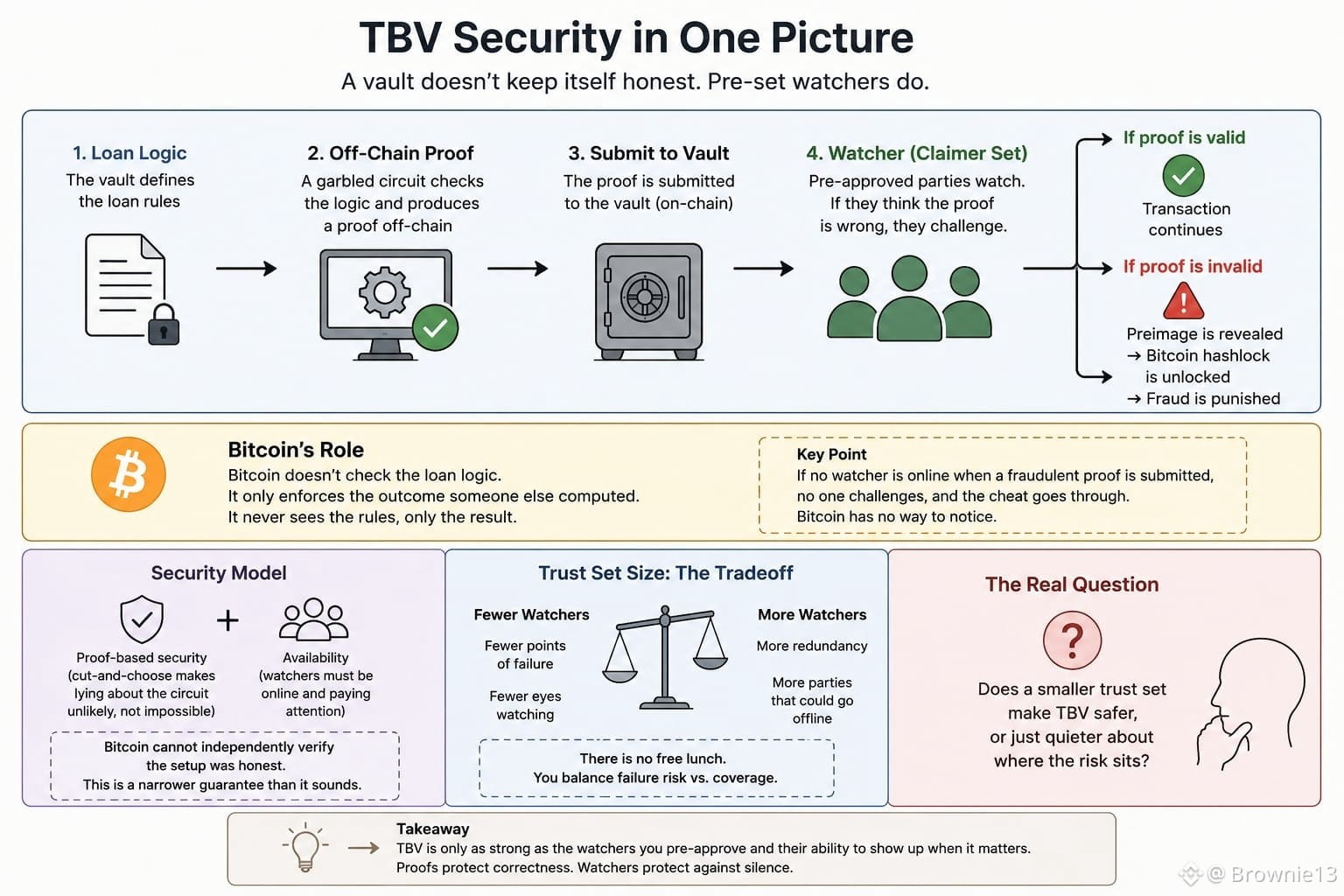
金庫(ボルト)はそれ自体で不正を検証しない。ガーブルド・サーキットがオフチェーンで証明を照合し、その証明が間違っている場合にだけ、罰としてビットコインのハッシュロックを解除するプリイメージを明らかにする。
ビットコイン自体はローンの論理を決して検証せず、別の誰かが計算した結果をただ強制するだけだ。
その結果はウォッチャーに依存する。
クレイマーの集合は金庫が作成された時点で固定されるので、チャレンジを実行して悪い証明を見つけられるのは事前に承認された当事者だけで、その集合の外の者は介入を許されない。
最初はそれが形式的なものに聞こえた。
しかし、詐欺的な証明が投入されたときに、それらの事前指定された当事者が誰もオンラインにいない、あるいは監視していないのなら、チートはそのまま通ってしまう。なぜならビットコインには自分で気づく仕組みがないからだ。
セキュリティモデルは「証明ベースのセキュリティ」ではなく、証明ベースのセキュリティに加えて可用性(availability)まで含めたものだ。
カット&チューズは回路について嘘をつく可能性を下げるが、ゼロにはできない。そしてビットコインは、セットアップが正直だったことを独立して検証できない。
それは聞こえるよりも狭い保証だ。
必要な当事者が少なければ、故障点(ポイント・オブ・フェイル)は減る。しかし同時に、ある瞬間に金庫をチェックする目の数も減る。
考える価値がある。
挑戦者(チェレンジャー)が増えると冗長性は増えるが、追加された各当事者は「必要なときにちょうどオフラインになる可能性がある」別の誰かでもある。
では、より小さい信頼集合はtbvをより安全にするのか、それともリスクがどこにあるかについて黙っているだけなのか?
@BabylonLabs_io #baby $BABY
金庫(ボルト)はそれ自体で不正を検証しない。ガーブルド・サーキットがオフチェーンで証明を照合し、その証明が間違っている場合にだけ、罰としてビットコインのハッシュロックを解除するプリイメージを明らかにする。
ビットコイン自体はローンの論理を決して検証せず、別の誰かが計算した結果をただ強制するだけだ。
その結果はウォッチャーに依存する。
クレイマーの集合は金庫が作成された時点で固定されるので、チャレンジを実行して悪い証明を見つけられるのは事前に承認された当事者だけで、その集合の外の者は介入を許されない。
最初はそれが形式的なものに聞こえた。
しかし、詐欺的な証明が投入されたときに、それらの事前指定された当事者が誰もオンラインにいない、あるいは監視していないのなら、チートはそのまま通ってしまう。なぜならビットコインには自分で気づく仕組みがないからだ。
セキュリティモデルは「証明ベースのセキュリティ」ではなく、証明ベースのセキュリティに加えて可用性(availability)まで含めたものだ。
カット&チューズは回路について嘘をつく可能性を下げるが、ゼロにはできない。そしてビットコインは、セットアップが正直だったことを独立して検証できない。
それは聞こえるよりも狭い保証だ。
必要な当事者が少なければ、故障点(ポイント・オブ・フェイル)は減る。しかし同時に、ある瞬間に金庫をチェックする目の数も減る。
考える価値がある。
挑戦者(チェレンジャー)が増えると冗長性は増えるが、追加された各当事者は「必要なときにちょうどオフラインになる可能性がある」別の誰かでもある。
では、より小さい信頼集合はtbvをより安全にするのか、それともリスクがどこにあるかについて黙っているだけなのか?
@BabylonLabs_io #baby $BABY