#baby $BABY 私がバビロンを読み始めたとき、最初に1つの前提がありました。
もしビットコインがセキュリティ層になるのなら、BABYは徐々に重要性が下がっていくはずだ、と。
しかし、アーキテクチャは私を逆の方向へ押し続けてきました。
BTCがBABYに取って代わるわけでもありません。BABYがBTCに取って代わるわけでもありません。互いの死角を減らすのです。
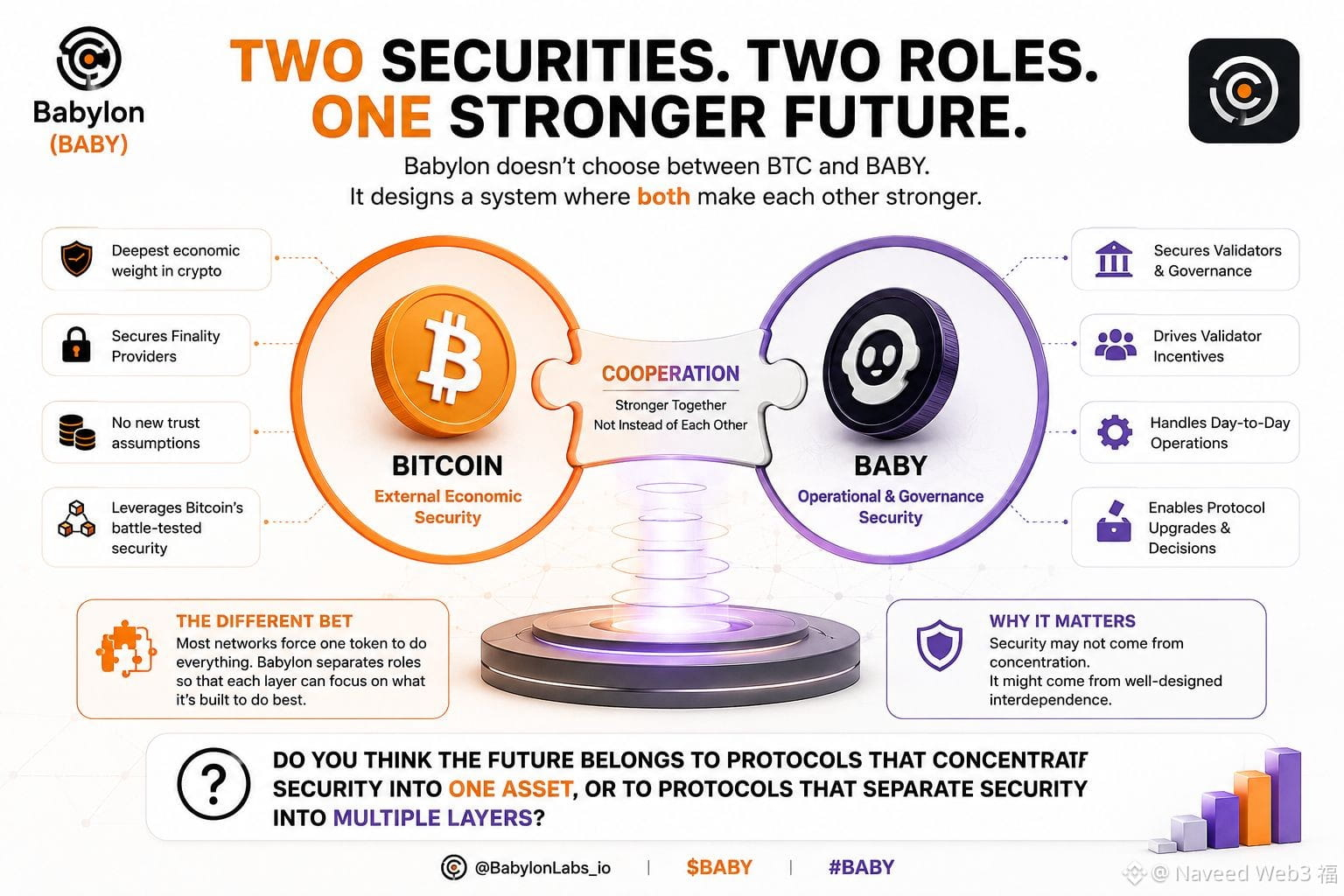
ビットコインは、ほとんどのPoSネットワークが自力では生み出せない外部の経済的重みをもたらします。BABYはガバナンス、バリデータへのインセンティブ、そしてビットコインがそもそも扱うように設計されなかった運用レイヤーを担います。
私の関心を引いたのは、分離そのものではありません。
バビロンが、これらの責務を1つの資産に統合しようと決してしない、という点でした。
多くの暗号ネットワークは、単一のトークンにすべてのインセンティブ、すべてのセキュリティ前提、すべてのガバナンス判断を背負わせることに執着しているように見えます。
バビロンは、別の賭けをしているようです。
おそらく、単一の資産がすべてを担う必要がないとき、セキュリティはより強靭になります。
もしそれが本当なら、バビロンの成功は「どれだけBTCがステークされたか」では測れないはずです。
それは、2つの独立したセキュリティ層が、競い合うのではなく協力を強いられることで、より強くなるかどうかで測られるでしょう。
それが、私が十分に語られていないと感じる部分です。
将来は、セキュリティを1つの資産に集中させるプロトコルに属すると思いますか?それとも、セキュリティを複数のレイヤーに意図的に分離するプロトコルに属すると思いますか?
@BabylonLabs_io
もしビットコインがセキュリティ層になるのなら、BABYは徐々に重要性が下がっていくはずだ、と。
しかし、アーキテクチャは私を逆の方向へ押し続けてきました。
BTCがBABYに取って代わるわけでもありません。BABYがBTCに取って代わるわけでもありません。互いの死角を減らすのです。
ビットコインは、ほとんどのPoSネットワークが自力では生み出せない外部の経済的重みをもたらします。BABYはガバナンス、バリデータへのインセンティブ、そしてビットコインがそもそも扱うように設計されなかった運用レイヤーを担います。
私の関心を引いたのは、分離そのものではありません。
バビロンが、これらの責務を1つの資産に統合しようと決してしない、という点でした。
多くの暗号ネットワークは、単一のトークンにすべてのインセンティブ、すべてのセキュリティ前提、すべてのガバナンス判断を背負わせることに執着しているように見えます。
バビロンは、別の賭けをしているようです。
おそらく、単一の資産がすべてを担う必要がないとき、セキュリティはより強靭になります。
もしそれが本当なら、バビロンの成功は「どれだけBTCがステークされたか」では測れないはずです。
それは、2つの独立したセキュリティ層が、競い合うのではなく協力を強いられることで、より強くなるかどうかで測られるでしょう。
それが、私が十分に語られていないと感じる部分です。
将来は、セキュリティを1つの資産に集中させるプロトコルに属すると思いますか?それとも、セキュリティを複数のレイヤーに意図的に分離するプロトコルに属すると思いますか?
@BabylonLabs_io