I kept thinking about where the biggest design decision in Trustless Bitcoin Vaults actually happens.
The answer seems to be the moment a BTC vault is created.
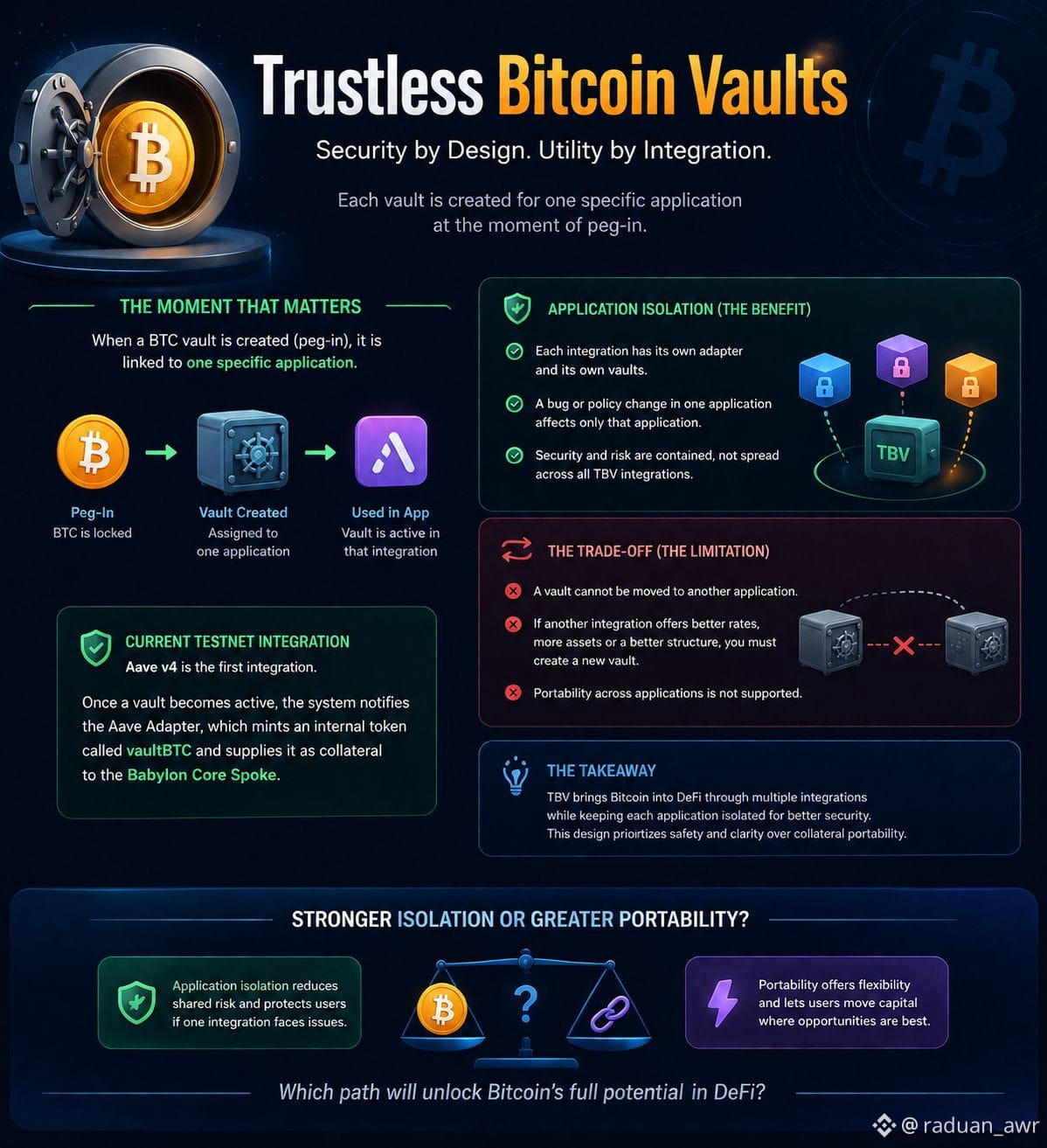
Instead of building one vault that can freely move between every integration, TBV links each vault to a specific application from the start. In the current public testnet, that first destination is Aave v4. Once activated, the vault is recognized through a dedicated adapter and used within that integration's lending flow.
What stands out is the security model.
Each application operates with its own vault structure and supporting contracts. That means if one integration encounters a technical issue or changes its rules, the impact is intended to remain contained instead of affecting every TBV-powered application.
The obvious compromise is flexibility.
A vault isn't designed to jump from one protocol to another later. If a different integration eventually offers better opportunities, users would create a new vault rather than transfer the existing one.
To me, this feels like a deliberate choice: reduce shared risk first, then expand Bitcoin's utility through separate integrations instead of shared collateral.
Do you think stronger application isolation is the right direction, or should future Bitcoin DeFi focus more on making collateral portable across protocols? #baby $BABY @BabylonLabs_io
The answer seems to be the moment a BTC vault is created.
Instead of building one vault that can freely move between every integration, TBV links each vault to a specific application from the start. In the current public testnet, that first destination is Aave v4. Once activated, the vault is recognized through a dedicated adapter and used within that integration's lending flow.
What stands out is the security model.
Each application operates with its own vault structure and supporting contracts. That means if one integration encounters a technical issue or changes its rules, the impact is intended to remain contained instead of affecting every TBV-powered application.
The obvious compromise is flexibility.
A vault isn't designed to jump from one protocol to another later. If a different integration eventually offers better opportunities, users would create a new vault rather than transfer the existing one.
To me, this feels like a deliberate choice: reduce shared risk first, then expand Bitcoin's utility through separate integrations instead of shared collateral.
Do you think stronger application isolation is the right direction, or should future Bitcoin DeFi focus more on making collateral portable across protocols? #baby $BABY @BabylonLabs_io