
バビロンのステーキング・モデルについて読めば読むほど、ある1つの点が特に目立ってきました。
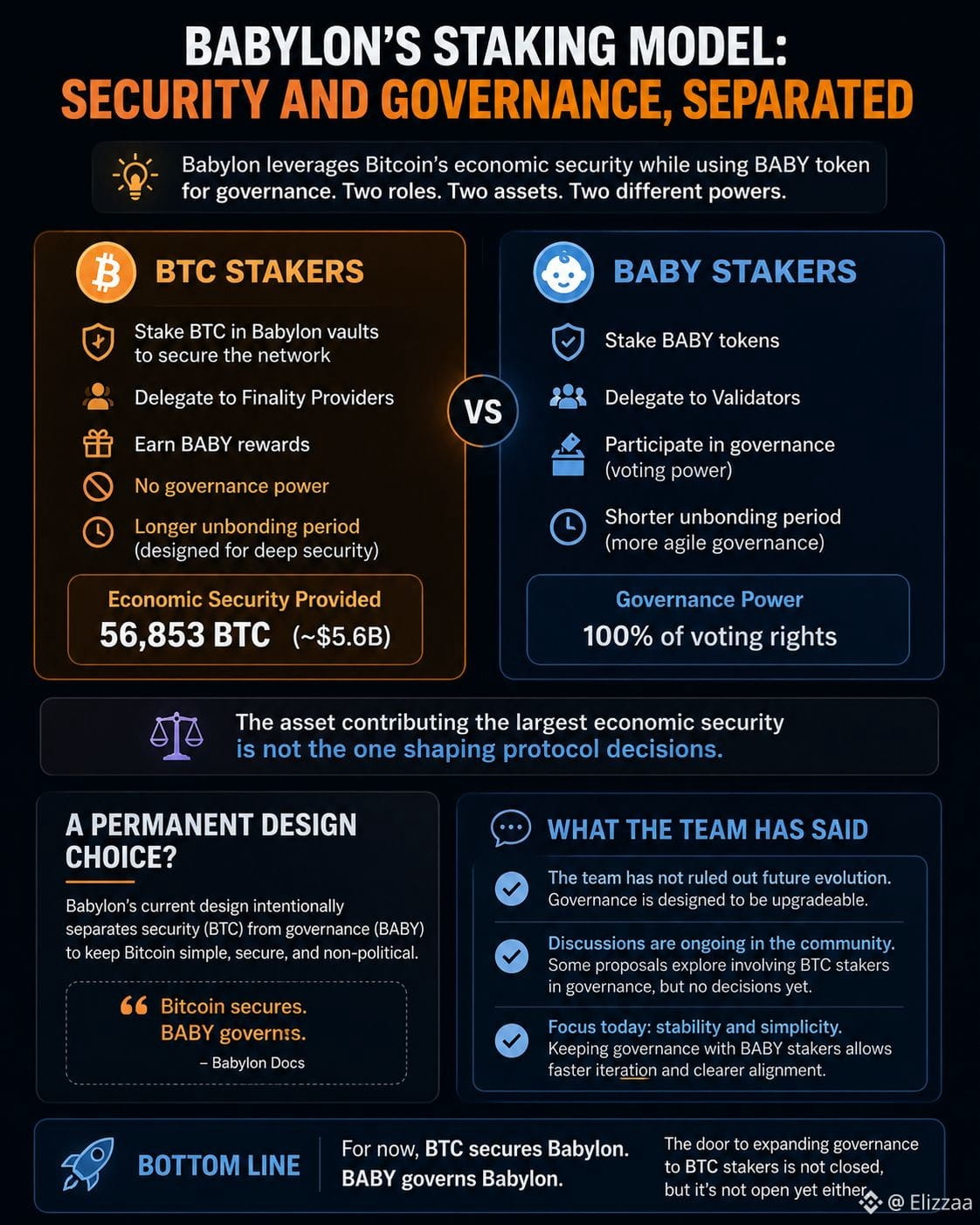
誰もがバビロンのバルツにステークされている56,853 BTC(およそ56億ドル)に注目していますが、ガバナンス構造も同じくらい興味深いのです。
BTCステーカーは、ファイナリティ・プロバイダーに委任することでネットワークをセキュアにし、BABYの報酬を得ます。しかし、彼らはガバナンスには参加しません。
一方、BABYステーカーはバリデーターに委任し、アンボンド期間は短く、そして投票権(全ての議決権)を保有します。
つまり、最大の経済的セキュリティに貢献している資産が、プロトコルの意思決定を形作っているわけではないのです。
良いとも悪いとも言いません。ただ、セキュリティとガバナンスが分離している点が面白いと感じました。
これは恒久的な設計方針なのでしょうか?それともチームは、将来的にBTCステーカーにもガバナンスを拡大することについて議論していますか?
#baby $BABY @BabylonLabs_io
誰もがバビロンのバルツにステークされている56,853 BTC(およそ56億ドル)に注目していますが、ガバナンス構造も同じくらい興味深いのです。
BTCステーカーは、ファイナリティ・プロバイダーに委任することでネットワークをセキュアにし、BABYの報酬を得ます。しかし、彼らはガバナンスには参加しません。
一方、BABYステーカーはバリデーターに委任し、アンボンド期間は短く、そして投票権(全ての議決権)を保有します。
つまり、最大の経済的セキュリティに貢献している資産が、プロトコルの意思決定を形作っているわけではないのです。
良いとも悪いとも言いません。ただ、セキュリティとガバナンスが分離している点が面白いと感じました。
これは恒久的な設計方針なのでしょうか?それともチームは、将来的にBTCステーカーにもガバナンスを拡大することについて議論していますか?
#baby $BABY @BabylonLabs_io