
Tao Merin BnB
5.2k 投稿

Tao Merin BnB
報告
ユーザーをブロック
取引を発注
高頻度トレーダー
8.7か月
432 フォロー
7.1K+ フォロワー
2.2K+ いいね
投稿
ポートフォリオ
すべて
引用
ライブ

記事
翻訳参照
OpenLedger and the Quiet Shift Toward Transparent AI InfrastructureI started paying real attention to OpenLedger at a point where most AI conversations were honestly starting to blur together. Every project sounded the same. Bigger models. Faster inference. More automation. Same recycled promises, different branding. And meanwhile, almost nobody wanted to talk about the uncomfortable part the human layer underneath all this stuff.
Because here’s the thing. AI doesn’t magically appear out of thin air. People feed these systems. People label data, refine models, train workflows, test outputs, shape behavior. But once the machine spits out something impressive, all that human contribution kind of disappears into the fog. Hidden pipelines. Closed systems. Black boxes everywhere.
That’s what made OpenLedger stick with me.
And weirdly, it wasn’t some huge feature announcement or flashy demo that did it. It was a small detail. I noticed how the network handled attribution. Data didn’t just vanish after being submitted. Models weren’t treated like mysterious floating entities disconnected from the people who improved them. Everything stayed linked datasets, models, agents, interactions. You could actually follow the chain instead of blindly trusting it existed.
Honestly, that changes the feeling of the whole system.
Most platforms today only care about outputs. That’s the obsession. Give users fast results and hide the machinery underneath. But the problem with that approach is that eventually nobody really knows where anything came from anymore. Contributors lose visibility. Users lose context. And companies end up asking the public to trust systems they can’t meaningfully inspect.
That’s not sustainable. Especially not for AI.
OpenLedger seems to understand this better than a lot of projects do. Instead of bolting transparency on afterward as some compliance feature, it builds traceability directly into the structure itself. Data connects to models. Models connect to agents. Actions leave trails. Contributions remain visible over time instead of getting absorbed into some corporate void.
And no, that’s not just a technical detail. It changes the entire relationship between people and AI infrastructure.
Because let’s be real most digital systems today are built around extraction. Platforms take value from users quietly and efficiently while contributors become interchangeable. You upload, interact, improve the system indirectly, and then your role disappears the second the platform scales. That’s been the internet’s favorite business model for years.
OpenLedger pushes against that dynamic in a pretty important way. It treats participation like something worth preserving instead of something temporary. The architecture remembers who contributed and how value moved through the network. That creates accountability, sure, but it also creates respect. Subtle difference. Big impact.
The more I thought about it, the more I realized the real value here isn’t speed. It’s not scale either. Every platform eventually claims they’re the fastest and most scalable thing on Earth. Those arguments never last long because somebody else always shows up six months later with bigger numbers.
Trust is harder.
Transparency is harder.
Building systems people can actually inspect? That’s much harder.
And this is where things get tricky for the broader AI industry. We’re moving into a world where AI systems won’t just generate images or answer questions. They’ll influence research, hiring, education, financial decisions, governance, media basically everything. Once that happens, hidden infrastructure becomes a serious problem. Regulators won’t tolerate total opacity forever. Institutions won’t either. At some point people will demand to know where outputs came from, what data shaped them, and who’s accountable when things go sideways.
Most existing systems aren’t built for that level of scrutiny.
OpenLedger feels like it was designed with that future in mind from the start. Not in a dramatic “change the world overnight” kind of way. More like a quiet structural correction. A recognition that accountability can’t be treated as optional once AI becomes foundational infrastructure.
I also think the platform touches on something deeper around data integrity. Right now, data is often treated like disposable fuel. Companies collect it, process it, absorb it into models, and move on. But data isn’t abstract. It reflects human decisions, behavior, creativity, expertise. Treating all of that like anonymous raw material creates obvious ethical and operational problems.
OpenLedger doesn’t completely solve every issue surrounding AI contribution, obviously. Nothing does. But it creates a framework where origins and relationships stay visible instead of getting buried. That alone matters more than people realize.
And honestly, I think this idea of visible contribution is going to become increasingly important over the next few years. People are getting tired of systems that demand trust without offering transparency in return. That frustration is growing everywhere tech, media, institutions, all of it.
What stayed with me after exploring OpenLedger wasn’t hype. It was the calmness of the design philosophy. The network doesn’t feel obsessed with shouting about dominance or disruption. It feels focused on building infrastructure that can actually explain itself.
That’s rare.
A lot of AI platforms today operate like sealed containers. You put information in, outputs come out, and users are expected not to ask too many questions in between. OpenLedger takes almost the opposite stance. It assumes visibility matters. That attribution matters. That understanding the path behind an outcome is just as important as the outcome itself.
I think that’s a smarter long-term bet than people realize.
Because eventually, capability becomes common. Everyone catches up. Faster models become normal. Better automation becomes expected. But systems that can create durable trust? Systems that preserve accountability without killing usability? Those are harder to build.
And honestly, those are probably the systems that last.
#OpenLedger @Openledger $OPEN
{spot}(OPENUSDT)
OpenLedger and the Quiet Shift Toward Transparent AI Infrastructure
I started paying real attention to OpenLedger at a point where most AI conversations were honestly starting to blur together. Every project sounded the same. Bigger models. Faster inference. More automation. Same recycled promises, different branding. And meanwhile, almost nobody wanted to talk about the uncomfortable part the human layer underneath all this stuff.
Because here’s the thing. AI doesn’t magically appear out of thin air. People feed these systems. People label data, refine models, train workflows, test outputs, shape behavior. But once the machine spits out something impressive, all that human contribution kind of disappears into the fog. Hidden pipelines. Closed systems. Black boxes everywhere.
That’s what made OpenLedger stick with me.
And weirdly, it wasn’t some huge feature announcement or flashy demo that did it. It was a small detail. I noticed how the network handled attribution. Data didn’t just vanish after being submitted. Models weren’t treated like mysterious floating entities disconnected from the people who improved them. Everything stayed linked datasets, models, agents, interactions. You could actually follow the chain instead of blindly trusting it existed.
Honestly, that changes the feeling of the whole system.
Most platforms today only care about outputs. That’s the obsession. Give users fast results and hide the machinery underneath. But the problem with that approach is that eventually nobody really knows where anything came from anymore. Contributors lose visibility. Users lose context. And companies end up asking the public to trust systems they can’t meaningfully inspect.
That’s not sustainable. Especially not for AI.
OpenLedger seems to understand this better than a lot of projects do. Instead of bolting transparency on afterward as some compliance feature, it builds traceability directly into the structure itself. Data connects to models. Models connect to agents. Actions leave trails. Contributions remain visible over time instead of getting absorbed into some corporate void.
And no, that’s not just a technical detail. It changes the entire relationship between people and AI infrastructure.
Because let’s be real most digital systems today are built around extraction. Platforms take value from users quietly and efficiently while contributors become interchangeable. You upload, interact, improve the system indirectly, and then your role disappears the second the platform scales. That’s been the internet’s favorite business model for years.
OpenLedger pushes against that dynamic in a pretty important way. It treats participation like something worth preserving instead of something temporary. The architecture remembers who contributed and how value moved through the network. That creates accountability, sure, but it also creates respect. Subtle difference. Big impact.
The more I thought about it, the more I realized the real value here isn’t speed. It’s not scale either. Every platform eventually claims they’re the fastest and most scalable thing on Earth. Those arguments never last long because somebody else always shows up six months later with bigger numbers.
Trust is harder.
Transparency is harder.
Building systems people can actually inspect? That’s much harder.
And this is where things get tricky for the broader AI industry. We’re moving into a world where AI systems won’t just generate images or answer questions. They’ll influence research, hiring, education, financial decisions, governance, media basically everything. Once that happens, hidden infrastructure becomes a serious problem. Regulators won’t tolerate total opacity forever. Institutions won’t either. At some point people will demand to know where outputs came from, what data shaped them, and who’s accountable when things go sideways.
Most existing systems aren’t built for that level of scrutiny.
OpenLedger feels like it was designed with that future in mind from the start. Not in a dramatic “change the world overnight” kind of way. More like a quiet structural correction. A recognition that accountability can’t be treated as optional once AI becomes foundational infrastructure.
I also think the platform touches on something deeper around data integrity. Right now, data is often treated like disposable fuel. Companies collect it, process it, absorb it into models, and move on. But data isn’t abstract. It reflects human decisions, behavior, creativity, expertise. Treating all of that like anonymous raw material creates obvious ethical and operational problems.
OpenLedger doesn’t completely solve every issue surrounding AI contribution, obviously. Nothing does. But it creates a framework where origins and relationships stay visible instead of getting buried. That alone matters more than people realize.
And honestly, I think this idea of visible contribution is going to become increasingly important over the next few years. People are getting tired of systems that demand trust without offering transparency in return. That frustration is growing everywhere tech, media, institutions, all of it.
What stayed with me after exploring OpenLedger wasn’t hype. It was the calmness of the design philosophy. The network doesn’t feel obsessed with shouting about dominance or disruption. It feels focused on building infrastructure that can actually explain itself.
That’s rare.
A lot of AI platforms today operate like sealed containers. You put information in, outputs come out, and users are expected not to ask too many questions in between. OpenLedger takes almost the opposite stance. It assumes visibility matters. That attribution matters. That understanding the path behind an outcome is just as important as the outcome itself.
I think that’s a smarter long-term bet than people realize.
Because eventually, capability becomes common. Everyone catches up. Faster models become normal. Better automation becomes expected. But systems that can create durable trust? Systems that preserve accountability without killing usability? Those are harder to build.
And honestly, those are probably the systems that last.
#OpenLedger @OpenLedger $OPEN
Because here’s the thing. AI doesn’t magically appear out of thin air. People feed these systems. People label data, refine models, train workflows, test outputs, shape behavior. But once the machine spits out something impressive, all that human contribution kind of disappears into the fog. Hidden pipelines. Closed systems. Black boxes everywhere.
That’s what made OpenLedger stick with me.
And weirdly, it wasn’t some huge feature announcement or flashy demo that did it. It was a small detail. I noticed how the network handled attribution. Data didn’t just vanish after being submitted. Models weren’t treated like mysterious floating entities disconnected from the people who improved them. Everything stayed linked datasets, models, agents, interactions. You could actually follow the chain instead of blindly trusting it existed.
Honestly, that changes the feeling of the whole system.
Most platforms today only care about outputs. That’s the obsession. Give users fast results and hide the machinery underneath. But the problem with that approach is that eventually nobody really knows where anything came from anymore. Contributors lose visibility. Users lose context. And companies end up asking the public to trust systems they can’t meaningfully inspect.
That’s not sustainable. Especially not for AI.
OpenLedger seems to understand this better than a lot of projects do. Instead of bolting transparency on afterward as some compliance feature, it builds traceability directly into the structure itself. Data connects to models. Models connect to agents. Actions leave trails. Contributions remain visible over time instead of getting absorbed into some corporate void.
And no, that’s not just a technical detail. It changes the entire relationship between people and AI infrastructure.
Because let’s be real most digital systems today are built around extraction. Platforms take value from users quietly and efficiently while contributors become interchangeable. You upload, interact, improve the system indirectly, and then your role disappears the second the platform scales. That’s been the internet’s favorite business model for years.
OpenLedger pushes against that dynamic in a pretty important way. It treats participation like something worth preserving instead of something temporary. The architecture remembers who contributed and how value moved through the network. That creates accountability, sure, but it also creates respect. Subtle difference. Big impact.
The more I thought about it, the more I realized the real value here isn’t speed. It’s not scale either. Every platform eventually claims they’re the fastest and most scalable thing on Earth. Those arguments never last long because somebody else always shows up six months later with bigger numbers.
Trust is harder.
Transparency is harder.
Building systems people can actually inspect? That’s much harder.
And this is where things get tricky for the broader AI industry. We’re moving into a world where AI systems won’t just generate images or answer questions. They’ll influence research, hiring, education, financial decisions, governance, media basically everything. Once that happens, hidden infrastructure becomes a serious problem. Regulators won’t tolerate total opacity forever. Institutions won’t either. At some point people will demand to know where outputs came from, what data shaped them, and who’s accountable when things go sideways.
Most existing systems aren’t built for that level of scrutiny.
OpenLedger feels like it was designed with that future in mind from the start. Not in a dramatic “change the world overnight” kind of way. More like a quiet structural correction. A recognition that accountability can’t be treated as optional once AI becomes foundational infrastructure.
I also think the platform touches on something deeper around data integrity. Right now, data is often treated like disposable fuel. Companies collect it, process it, absorb it into models, and move on. But data isn’t abstract. It reflects human decisions, behavior, creativity, expertise. Treating all of that like anonymous raw material creates obvious ethical and operational problems.
OpenLedger doesn’t completely solve every issue surrounding AI contribution, obviously. Nothing does. But it creates a framework where origins and relationships stay visible instead of getting buried. That alone matters more than people realize.
And honestly, I think this idea of visible contribution is going to become increasingly important over the next few years. People are getting tired of systems that demand trust without offering transparency in return. That frustration is growing everywhere tech, media, institutions, all of it.
What stayed with me after exploring OpenLedger wasn’t hype. It was the calmness of the design philosophy. The network doesn’t feel obsessed with shouting about dominance or disruption. It feels focused on building infrastructure that can actually explain itself.
That’s rare.
A lot of AI platforms today operate like sealed containers. You put information in, outputs come out, and users are expected not to ask too many questions in between. OpenLedger takes almost the opposite stance. It assumes visibility matters. That attribution matters. That understanding the path behind an outcome is just as important as the outcome itself.
I think that’s a smarter long-term bet than people realize.
Because eventually, capability becomes common. Everyone catches up. Faster models become normal. Better automation becomes expected. But systems that can create durable trust? Systems that preserve accountability without killing usability? Those are harder to build.
And honestly, those are probably the systems that last.
#OpenLedger @OpenLedger $OPEN
27
14
362
翻訳参照
Most AI projects keep talking about compute, scale, and faster models. Almost nobody talks about the real problem: trust.
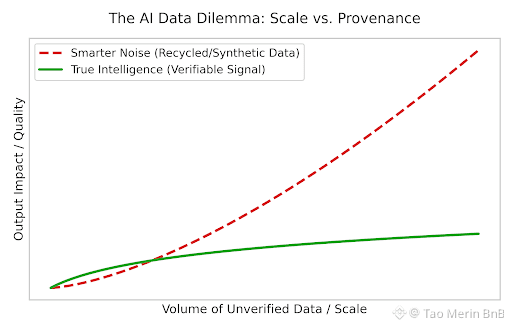
The internet is already flooded with recycled datasets, synthetic content, and low-quality AI outputs training on each other. More data doesn’t automatically create better intelligence. Sometimes it just creates smarter noise.
That’s why caught my attention.
It’s not trying to sell another AI chatbot narrative. The bigger idea seems to be building economic rails for verifiable intelligence where data, models, and agents can actually be tracked, attributed, and monetized properly.
Because in the future AI economy, provenance matters.
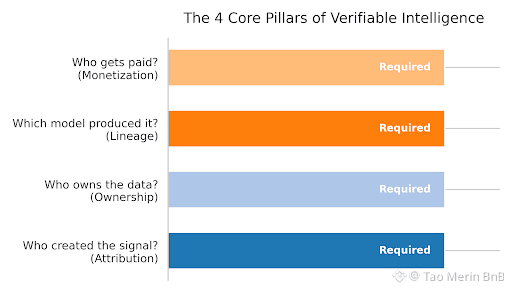
Who created the signal?
Who owns the data?
Which model produced the output?
Who gets paid?
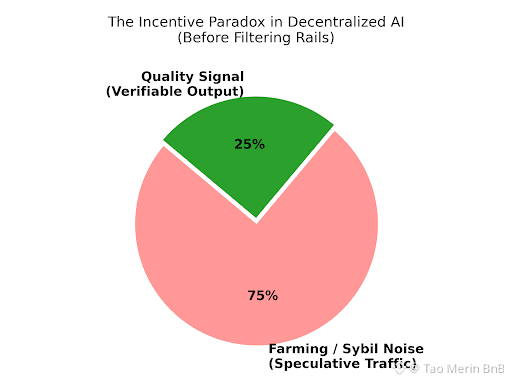
Here’s the hard part though: crypto incentives usually attract farming before they attract quality. So the real challenge isn’t decentralization. It’s filtering signal from noise.
And honestly, that might become one of the biggest infrastructure problems in AI over the next few years.
#OpenLedger @Openledger $OPEN
{spot}(OPENUSDT)
Most AI projects keep talking about compute, scale, and faster models. Almost nobody talks about the real problem: trust.
The internet is already flooded with recycled datasets, synthetic content, and low-quality AI outputs training on each other. More data doesn’t automatically create better intelligence. Sometimes it just creates smarter noise.
That’s why caught my attention.
It’s not trying to sell another AI chatbot narrative. The bigger idea seems to be building economic rails for verifiable intelligence where data, models, and agents can actually be tracked, attributed, and monetized properly.
Because in the future AI economy, provenance matters.
Who created the signal?
Who owns the data?
Which model produced the output?
Who gets paid?
Here’s the hard part though: crypto incentives usually attract farming before they attract quality. So the real challenge isn’t decentralization. It’s filtering signal from noise.
And honestly, that might become one of the biggest infrastructure problems in AI over the next few years.
#OpenLedger @OpenLedger $OPEN
The internet is already flooded with recycled datasets, synthetic content, and low-quality AI outputs training on each other. More data doesn’t automatically create better intelligence. Sometimes it just creates smarter noise.
That’s why caught my attention.
It’s not trying to sell another AI chatbot narrative. The bigger idea seems to be building economic rails for verifiable intelligence where data, models, and agents can actually be tracked, attributed, and monetized properly.
Because in the future AI economy, provenance matters.
Who created the signal?
Who owns the data?
Which model produced the output?
Who gets paid?
Here’s the hard part though: crypto incentives usually attract farming before they attract quality. So the real challenge isn’t decentralization. It’s filtering signal from noise.
And honestly, that might become one of the biggest infrastructure problems in AI over the next few years.
#OpenLedger @OpenLedger $OPEN
7
4
74
確認済み

記事
OpenLedger (OPEN): 検証可能なインテリジェンスの市場を構築することの厳しい真実今日のほとんどのAIインフラは、信頼の問題を抱えています。計算の問題ではありません。スケーリングの問題でもありません。信頼の問題です。
正直なところ、市場が存在しないふりをし続けている部分です。
インターネットはすでにゴミデータで溺れています。スクレイピングされたデータセット。AI生成のスラッジが他のAI生成のスラッジをトレーニングしています。合成コンテンツがさらに合成コンテンツを供給する無限ループ。誰もが「より多くのデータ」を叫び続けていますが、量だけではインテリジェンスは解決しません。悪い入力は、GPUとトークンインセンティブを付けたからといって魔法のように有用になるわけではありません。
OpenLedger (OPEN): 検証可能なインテリジェンスの市場を構築することの厳しい真実
今日のほとんどのAIインフラは、信頼の問題を抱えています。計算の問題ではありません。スケーリングの問題でもありません。信頼の問題です。
正直なところ、市場が存在しないふりをし続けている部分です。
インターネットはすでにゴミデータで溺れています。スクレイピングされたデータセット。AI生成のスラッジが他のAI生成のスラッジをトレーニングしています。合成コンテンツがさらに合成コンテンツを供給する無限ループ。誰もが「より多くのデータ」を叫び続けていますが、量だけではインテリジェンスは解決しません。悪い入力は、GPUとトークンインセンティブを付けたからといって魔法のように有用になるわけではありません。
正直なところ、市場が存在しないふりをし続けている部分です。
インターネットはすでにゴミデータで溺れています。スクレイピングされたデータセット。AI生成のスラッジが他のAI生成のスラッジをトレーニングしています。合成コンテンツがさらに合成コンテンツを供給する無限ループ。誰もが「より多くのデータ」を叫び続けていますが、量だけではインテリジェンスは解決しません。悪い入力は、GPUとトークンインセンティブを付けたからといって魔法のように有用になるわけではありません。
59
14
1.9k
翻訳参照
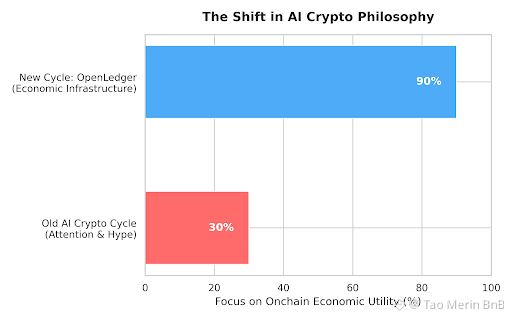
Most AI crypto projects spent the last cycle chasing attention.
OpenLedger feels different.
It’s not trying to be another chatbot wrapped in tokenomics. The bigger idea here is turning data, models, and AI agents into actual onchain economic participants. That’s a much harder problem and honestly, a far more important one.
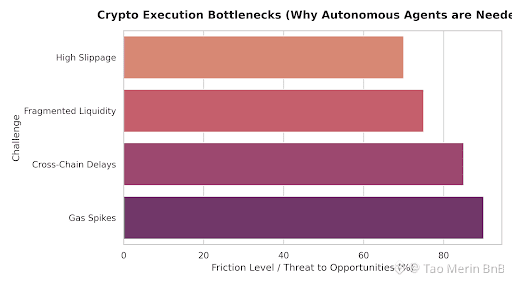
Here’s the thing most people miss: crypto doesn’t have an information problem anymore. It has an execution problem.
Cross-chain delays, slippage, gas spikes, fragmented liquidity these things kill opportunities every single day. OpenLedger is betting that autonomous AI systems will eventually need their own coordination and settlement layer to operate efficiently across decentralized networks.
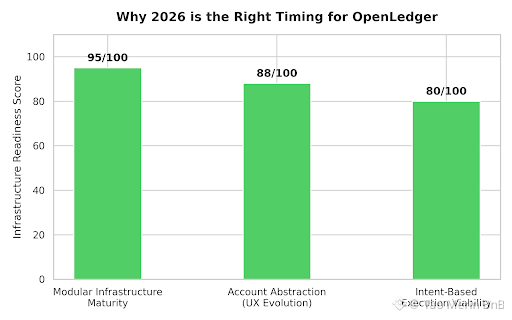
And weirdly enough… 2026 might finally be the right timing for this.
Modular infrastructure matured. Account Abstraction improved UX. Intent-based execution became viable. Two years ago, this probably wouldn’t have worked properly.
Still early though. Real risks exist around verification, bad outputs, incentive alignment, and execution accountability. That part shouldn’t be ignored.
But if decentralized AI economies actually scale, coordination layers like $OPEN could end up mattering a lot more than people expect.
#OpenLedger @Openledger $OPEN
{spot}(OPENUSDT)
Most AI crypto projects spent the last cycle chasing attention.
OpenLedger feels different.
It’s not trying to be another chatbot wrapped in tokenomics. The bigger idea here is turning data, models, and AI agents into actual onchain economic participants. That’s a much harder problem and honestly, a far more important one.
Here’s the thing most people miss: crypto doesn’t have an information problem anymore. It has an execution problem.
Cross-chain delays, slippage, gas spikes, fragmented liquidity these things kill opportunities every single day. OpenLedger is betting that autonomous AI systems will eventually need their own coordination and settlement layer to operate efficiently across decentralized networks.
And weirdly enough… 2026 might finally be the right timing for this.
Modular infrastructure matured. Account Abstraction improved UX. Intent-based execution became viable. Two years ago, this probably wouldn’t have worked properly.
Still early though. Real risks exist around verification, bad outputs, incentive alignment, and execution accountability. That part shouldn’t be ignored.
But if decentralized AI economies actually scale, coordination layers like $OPEN could end up mattering a lot more than people expect.
#OpenLedger @OpenLedger $OPEN
OpenLedger feels different.
It’s not trying to be another chatbot wrapped in tokenomics. The bigger idea here is turning data, models, and AI agents into actual onchain economic participants. That’s a much harder problem and honestly, a far more important one.
Here’s the thing most people miss: crypto doesn’t have an information problem anymore. It has an execution problem.
Cross-chain delays, slippage, gas spikes, fragmented liquidity these things kill opportunities every single day. OpenLedger is betting that autonomous AI systems will eventually need their own coordination and settlement layer to operate efficiently across decentralized networks.
And weirdly enough… 2026 might finally be the right timing for this.
Modular infrastructure matured. Account Abstraction improved UX. Intent-based execution became viable. Two years ago, this probably wouldn’t have worked properly.
Still early though. Real risks exist around verification, bad outputs, incentive alignment, and execution accountability. That part shouldn’t be ignored.
But if decentralized AI economies actually scale, coordination layers like $OPEN could end up mattering a lot more than people expect.
#OpenLedger @OpenLedger $OPEN
1
3
285

記事
翻訳参照
OpenLedger ($OPEN): The Quiet Buildout of an AI Coordination Layer That Actually Feels Timed CorrectMost crypto launches today feel engineered in a marketing lab before they ever become useful products.
You know the pattern already. Massive countdown. Influencer threads saying the exact same thing. “Revolutionary infrastructure.” “The future of AI.” “Game-changing tokenomics.” Then liquidity shows up, people rotate capital for two weeks, engagement dies, and everyone slowly realizes the protocol underneath the hype barely works outside controlled demos.
OpenLedger didn’t really launch like that.
Honestly, that’s probably the first reason people started paying attention to it.
There wasn’t this desperate attempt to force relevance through nonstop shilling. No weird manufactured urgency. No “last chance before mass adoption” nonsense every six hours on the timeline. It came into the market relatively quietly, which in crypto almost feels suspicious now because we’re so used to projects screaming for attention before they’ve earned any.
And here’s the thing after the first AI narrative wave already burned through the industry once, quieter launches actually carry more weight with experienced traders and builders. Most people who’ve been around long enough can smell recycled AI branding from miles away now.
That’s where OpenLedger feels a little different.
A lot of AI-related crypto projects over the last cycle basically stopped at the interface layer. Chatbots. Analytics dashboards. Sentiment trackers. Fancy wrappers around centralized models pretending to be decentralized infrastructure. Underneath all the buzzwords, most of them were still heavily dependent on centralized systems with tokens awkwardly stapled onto the side.
OpenLedger seems to be aiming deeper in the stack.
Instead of treating AI like a front-end feature for engagement farming, the protocol is trying to build a coordination layer where data, models, agents, and machine-generated outputs can function as actual onchain economic assets. Not just information tools. Economic participants.
That’s a very different ambition.
Because if you zoom out for a second, the current AI landscape is still incredibly centralized despite all the decentralization talk floating around crypto. Valuable datasets sit behind closed systems. Access to advanced models usually depends on centralized APIs. Revenue mostly flows toward infrastructure owners instead of contributors. Even a lot of “autonomous” AI agents in crypto still rely on fragmented offchain execution environments with questionable trust assumptions.
OpenLedger’s core thesis seems pretty straightforward: if AI economies are going to become real, they need liquidity rails and coordination infrastructure the same way DeFi needed settlement infrastructure.
And honestly, that idea makes more sense to me than another AI trading assistant trying to summarize Twitter sentiment.
The important part here is execution.
Crypto doesn’t really suffer from lack of information anymore. If anything, the market is drowning in data. Everyone has dashboards. Everyone has analytics. Everyone has AI summaries, AI alerts, AI market commentary, AI portfolio assistants. Information isn’t scarce.
Efficient coordination still is.
Any trader who’s moved size across chains knows exactly what that feels like in practice. You spot a pricing inefficiency somewhere. Maybe there’s a temporary spread between ecosystems. Maybe an AI agent catches a rebalance opportunity before liquidity adjusts. On paper the trade looks clean.
Then reality kicks in.
Gas spikes. The bridge slows down. Slippage eats the edge. MEV extraction grabs another piece. Confirmation delays ruin timing. Suddenly your theoretical 0.8% spread turns into a negative trade because fragmented infrastructure consumed the entire opportunity before execution finalized.
That’s where OpenLedger starts becoming interesting beyond the AI narrative itself.
The protocol isn’t just trying to generate better insights. It’s trying to create an environment where autonomous systems can coordinate economically in real time across decentralized infrastructure. That’s a much bigger deal than people realize at first glance.
Honestly, I don’t even think the right comparison for OpenLedger is “other AI crypto projects.” The better comparison might actually be early oracle infrastructure, interoperability layers, or modular execution systems.
Because if autonomous agents eventually become persistent actors inside crypto markets and let’s be real, that direction already feels inevitable then those systems need more than intelligence. They need coordination rails. Reliable data access. Settlement infrastructure. Incentive alignment. Identity persistence. Low-friction liquidity movement.
Without that foundation, autonomous execution breaks down fast.
Two years ago, this probably wouldn’t have worked properly even if the idea itself was solid.
The surrounding infrastructure just wasn’t mature enough yet. Cross-chain communication was shaky. Account Abstraction still felt experimental outside niche circles. Intent-based systems were early. Modular blockchain frameworks looked promising but weren’t battle-tested at meaningful scale. Bridging infrastructure carried ugly trust assumptions almost everywhere.
2026 is a completely different environment.
Execution layers are faster now. Data availability systems reduced a lot of the bottlenecks that used to kill throughput efficiency. Wallet infrastructure evolved from static interfaces into programmable environments. Intent-centric architectures improved routing dramatically. Autonomous execution actually feels economically viable now instead of sounding like futuristic marketing copy.
Timing matters more than people admit in crypto.
A lot of ideas fail simply because they arrive before the surrounding infrastructure is ready to support them. OpenLedger feels like it’s launching right when multiple trends are finally converging together at the same time: decentralized AI demand, modular execution environments, programmable accounts, and increasingly autonomous onchain behavior.
That said, this is where things get tricky.
You can’t talk about autonomous AI coordination layers without talking seriously about risk. And honestly, too many projects in this sector conveniently skip that part because it kills the excitement narrative.
There are real unresolved problems here.
Verification is probably one of the biggest.
How exactly does the network validate the integrity and quality of contributed data at scale? Traditional DeFi already struggles with oracle reliability. AI systems introduce an entirely different layer of complexity because outputs can be probabilistic, context-dependent, or manipulable in ways standard financial infrastructure never had to deal with.
A faulty oracle is dangerous enough. A corrupted AI coordination layer distributing flawed outputs across interconnected systems? That’s a completely different category of systemic risk.
Then there’s accountability.
If autonomous agents operating through decentralized infrastructure generate losses, where does responsibility actually sit? If a model routes liquidity badly, executes inefficiently, or operates on compromised training data, traditional accountability frameworks start getting blurry very quickly.
These aren’t theoretical edge cases anymore either. Once AI systems become economically active participants, infrastructure risk and behavioral risk start blending together.
OpenLedger will eventually need strong mechanisms around execution validation, contributor incentives, reputation systems, and dispute resolution if it wants sophisticated capital to fully trust the network long term.
And then there’s the sustainability question. Probably the hardest one.
Every decentralized AI network says it can attract builders, data providers, and model developers into an open ecosystem. Very few explain why high-quality contributors would consistently choose decentralized coordination over vertically integrated private systems with predictable monetization and tighter operational control.
That’s the real test.
OpenLedger’s future probably depends less on marketing and more on whether the network can create durable economic incentives that survive after speculative attention disappears. Infrastructure becomes valuable when people rely on it operationally, not emotionally.
That distinction matters a lot.
Narratives attract liquidity quickly. Dependency retains it.
The strongest protocols in crypto history became dominant because other systems quietly started needing them underneath normal operations. That’s the benchmark OpenLedger eventually has to hit if it wants to matter long term.
Does it become embedded infrastructure for decentralized AI economies?
Or does it stay another interesting experiment attached to a strong narrative cycle?
Because if AI-native economies actually expand the way many people expect, coordination infrastructure becomes incredibly important. Maybe one of the most important layers in the stack.
And honestly, the competitive landscape changes pretty dramatically if that happens.
Manual execution speed matters less once autonomous agents operate continuously. Information asymmetry compresses because machine systems process public data far faster than humans ever will. Even trading itself starts evolving from manual execution toward strategy architecture and system design.
That’s the real shift people underestimate.
The moat stops being “who clicks fastest” and becomes “who designs the best systems.” Better coordination logic. Better training environments. Better execution architecture. Better incentive structures.
That’s where the value starts concentrating.
Which brings the conversation back to $OPEN itself.
If OpenLedger ends up functioning as just another AI-branded blockchain competing for temporary liquidity rotations, then the token probably behaves like every other narrative asset in crypto — cyclical attention, speculative inflows, then eventual cooling once the market moves on.
But if the protocol successfully becomes coordination infrastructure for decentralized machine economies, the token starts representing something much more durable. Settlement activity. Execution coordination. Data exchange. Ecosystem dependency. Economic bandwidth for autonomous systems.
Completely different category of value accrual.
And historically, the strongest infrastructure tokens become almost invisible over time because users stop thinking about them directly. The network simply becomes embedded into normal activity flows underneath the surface.
Now obviously, OpenLedger isn’t there yet. It’s still early. Way too early to pretend certainty exists here.
The metrics that actually matter will reveal themselves slowly: developer retention, real execution density, stress-tested coordination under volatility, validator behavior, contributor quality, ecosystem stickiness. Not launch-week engagement numbers.
Personally, I think the smartest way to approach systems like this is cautiously. Test small workflows first. Use isolated wallets. Observe how the coordination mechanics behave during chaotic conditions. Watch what builders do after the initial attention cycle fades.
Because eventually crypto stops rewarding ideas and starts rewarding reliability.
And honestly, OpenLedger’s biggest opportunity probably isn’t becoming the loudest AI protocol in the market.
It’s becoming infrastructure people quietly depend on every day without even thinking about it.
#OpenLedger @Openledger $OPEN
{spot}(OPENUSDT)
OpenLedger ($OPEN): The Quiet Buildout of an AI Coordination Layer That Actually Feels Timed Correct
Most crypto launches today feel engineered in a marketing lab before they ever become useful products.
You know the pattern already. Massive countdown. Influencer threads saying the exact same thing. “Revolutionary infrastructure.” “The future of AI.” “Game-changing tokenomics.” Then liquidity shows up, people rotate capital for two weeks, engagement dies, and everyone slowly realizes the protocol underneath the hype barely works outside controlled demos.
OpenLedger didn’t really launch like that.
Honestly, that’s probably the first reason people started paying attention to it.
There wasn’t this desperate attempt to force relevance through nonstop shilling. No weird manufactured urgency. No “last chance before mass adoption” nonsense every six hours on the timeline. It came into the market relatively quietly, which in crypto almost feels suspicious now because we’re so used to projects screaming for attention before they’ve earned any.
And here’s the thing after the first AI narrative wave already burned through the industry once, quieter launches actually carry more weight with experienced traders and builders. Most people who’ve been around long enough can smell recycled AI branding from miles away now.
That’s where OpenLedger feels a little different.
A lot of AI-related crypto projects over the last cycle basically stopped at the interface layer. Chatbots. Analytics dashboards. Sentiment trackers. Fancy wrappers around centralized models pretending to be decentralized infrastructure. Underneath all the buzzwords, most of them were still heavily dependent on centralized systems with tokens awkwardly stapled onto the side.
OpenLedger seems to be aiming deeper in the stack.
Instead of treating AI like a front-end feature for engagement farming, the protocol is trying to build a coordination layer where data, models, agents, and machine-generated outputs can function as actual onchain economic assets. Not just information tools. Economic participants.
That’s a very different ambition.
Because if you zoom out for a second, the current AI landscape is still incredibly centralized despite all the decentralization talk floating around crypto. Valuable datasets sit behind closed systems. Access to advanced models usually depends on centralized APIs. Revenue mostly flows toward infrastructure owners instead of contributors. Even a lot of “autonomous” AI agents in crypto still rely on fragmented offchain execution environments with questionable trust assumptions.
OpenLedger’s core thesis seems pretty straightforward: if AI economies are going to become real, they need liquidity rails and coordination infrastructure the same way DeFi needed settlement infrastructure.
And honestly, that idea makes more sense to me than another AI trading assistant trying to summarize Twitter sentiment.
The important part here is execution.
Crypto doesn’t really suffer from lack of information anymore. If anything, the market is drowning in data. Everyone has dashboards. Everyone has analytics. Everyone has AI summaries, AI alerts, AI market commentary, AI portfolio assistants. Information isn’t scarce.
Efficient coordination still is.
Any trader who’s moved size across chains knows exactly what that feels like in practice. You spot a pricing inefficiency somewhere. Maybe there’s a temporary spread between ecosystems. Maybe an AI agent catches a rebalance opportunity before liquidity adjusts. On paper the trade looks clean.
Then reality kicks in.
Gas spikes. The bridge slows down. Slippage eats the edge. MEV extraction grabs another piece. Confirmation delays ruin timing. Suddenly your theoretical 0.8% spread turns into a negative trade because fragmented infrastructure consumed the entire opportunity before execution finalized.
That’s where OpenLedger starts becoming interesting beyond the AI narrative itself.
The protocol isn’t just trying to generate better insights. It’s trying to create an environment where autonomous systems can coordinate economically in real time across decentralized infrastructure. That’s a much bigger deal than people realize at first glance.
Honestly, I don’t even think the right comparison for OpenLedger is “other AI crypto projects.” The better comparison might actually be early oracle infrastructure, interoperability layers, or modular execution systems.
Because if autonomous agents eventually become persistent actors inside crypto markets and let’s be real, that direction already feels inevitable then those systems need more than intelligence. They need coordination rails. Reliable data access. Settlement infrastructure. Incentive alignment. Identity persistence. Low-friction liquidity movement.
Without that foundation, autonomous execution breaks down fast.
Two years ago, this probably wouldn’t have worked properly even if the idea itself was solid.
The surrounding infrastructure just wasn’t mature enough yet. Cross-chain communication was shaky. Account Abstraction still felt experimental outside niche circles. Intent-based systems were early. Modular blockchain frameworks looked promising but weren’t battle-tested at meaningful scale. Bridging infrastructure carried ugly trust assumptions almost everywhere.
2026 is a completely different environment.
Execution layers are faster now. Data availability systems reduced a lot of the bottlenecks that used to kill throughput efficiency. Wallet infrastructure evolved from static interfaces into programmable environments. Intent-centric architectures improved routing dramatically. Autonomous execution actually feels economically viable now instead of sounding like futuristic marketing copy.
Timing matters more than people admit in crypto.
A lot of ideas fail simply because they arrive before the surrounding infrastructure is ready to support them. OpenLedger feels like it’s launching right when multiple trends are finally converging together at the same time: decentralized AI demand, modular execution environments, programmable accounts, and increasingly autonomous onchain behavior.
That said, this is where things get tricky.
You can’t talk about autonomous AI coordination layers without talking seriously about risk. And honestly, too many projects in this sector conveniently skip that part because it kills the excitement narrative.
There are real unresolved problems here.
Verification is probably one of the biggest.
How exactly does the network validate the integrity and quality of contributed data at scale? Traditional DeFi already struggles with oracle reliability. AI systems introduce an entirely different layer of complexity because outputs can be probabilistic, context-dependent, or manipulable in ways standard financial infrastructure never had to deal with.
A faulty oracle is dangerous enough. A corrupted AI coordination layer distributing flawed outputs across interconnected systems? That’s a completely different category of systemic risk.
Then there’s accountability.
If autonomous agents operating through decentralized infrastructure generate losses, where does responsibility actually sit? If a model routes liquidity badly, executes inefficiently, or operates on compromised training data, traditional accountability frameworks start getting blurry very quickly.
These aren’t theoretical edge cases anymore either. Once AI systems become economically active participants, infrastructure risk and behavioral risk start blending together.
OpenLedger will eventually need strong mechanisms around execution validation, contributor incentives, reputation systems, and dispute resolution if it wants sophisticated capital to fully trust the network long term.
And then there’s the sustainability question. Probably the hardest one.
Every decentralized AI network says it can attract builders, data providers, and model developers into an open ecosystem. Very few explain why high-quality contributors would consistently choose decentralized coordination over vertically integrated private systems with predictable monetization and tighter operational control.
That’s the real test.
OpenLedger’s future probably depends less on marketing and more on whether the network can create durable economic incentives that survive after speculative attention disappears. Infrastructure becomes valuable when people rely on it operationally, not emotionally.
That distinction matters a lot.
Narratives attract liquidity quickly. Dependency retains it.
The strongest protocols in crypto history became dominant because other systems quietly started needing them underneath normal operations. That’s the benchmark OpenLedger eventually has to hit if it wants to matter long term.
Does it become embedded infrastructure for decentralized AI economies?
Or does it stay another interesting experiment attached to a strong narrative cycle?
Because if AI-native economies actually expand the way many people expect, coordination infrastructure becomes incredibly important. Maybe one of the most important layers in the stack.
And honestly, the competitive landscape changes pretty dramatically if that happens.
Manual execution speed matters less once autonomous agents operate continuously. Information asymmetry compresses because machine systems process public data far faster than humans ever will. Even trading itself starts evolving from manual execution toward strategy architecture and system design.
That’s the real shift people underestimate.
The moat stops being “who clicks fastest” and becomes “who designs the best systems.” Better coordination logic. Better training environments. Better execution architecture. Better incentive structures.
That’s where the value starts concentrating.
Which brings the conversation back to $OPEN itself.
If OpenLedger ends up functioning as just another AI-branded blockchain competing for temporary liquidity rotations, then the token probably behaves like every other narrative asset in crypto — cyclical attention, speculative inflows, then eventual cooling once the market moves on.
But if the protocol successfully becomes coordination infrastructure for decentralized machine economies, the token starts representing something much more durable. Settlement activity. Execution coordination. Data exchange. Ecosystem dependency. Economic bandwidth for autonomous systems.
Completely different category of value accrual.
And historically, the strongest infrastructure tokens become almost invisible over time because users stop thinking about them directly. The network simply becomes embedded into normal activity flows underneath the surface.
Now obviously, OpenLedger isn’t there yet. It’s still early. Way too early to pretend certainty exists here.
The metrics that actually matter will reveal themselves slowly: developer retention, real execution density, stress-tested coordination under volatility, validator behavior, contributor quality, ecosystem stickiness. Not launch-week engagement numbers.
Personally, I think the smartest way to approach systems like this is cautiously. Test small workflows first. Use isolated wallets. Observe how the coordination mechanics behave during chaotic conditions. Watch what builders do after the initial attention cycle fades.
Because eventually crypto stops rewarding ideas and starts rewarding reliability.
And honestly, OpenLedger’s biggest opportunity probably isn’t becoming the loudest AI protocol in the market.
It’s becoming infrastructure people quietly depend on every day without even thinking about it.
#OpenLedger @OpenLedger $OPEN
You know the pattern already. Massive countdown. Influencer threads saying the exact same thing. “Revolutionary infrastructure.” “The future of AI.” “Game-changing tokenomics.” Then liquidity shows up, people rotate capital for two weeks, engagement dies, and everyone slowly realizes the protocol underneath the hype barely works outside controlled demos.
OpenLedger didn’t really launch like that.
Honestly, that’s probably the first reason people started paying attention to it.
There wasn’t this desperate attempt to force relevance through nonstop shilling. No weird manufactured urgency. No “last chance before mass adoption” nonsense every six hours on the timeline. It came into the market relatively quietly, which in crypto almost feels suspicious now because we’re so used to projects screaming for attention before they’ve earned any.
And here’s the thing after the first AI narrative wave already burned through the industry once, quieter launches actually carry more weight with experienced traders and builders. Most people who’ve been around long enough can smell recycled AI branding from miles away now.
That’s where OpenLedger feels a little different.
A lot of AI-related crypto projects over the last cycle basically stopped at the interface layer. Chatbots. Analytics dashboards. Sentiment trackers. Fancy wrappers around centralized models pretending to be decentralized infrastructure. Underneath all the buzzwords, most of them were still heavily dependent on centralized systems with tokens awkwardly stapled onto the side.
OpenLedger seems to be aiming deeper in the stack.
Instead of treating AI like a front-end feature for engagement farming, the protocol is trying to build a coordination layer where data, models, agents, and machine-generated outputs can function as actual onchain economic assets. Not just information tools. Economic participants.
That’s a very different ambition.
Because if you zoom out for a second, the current AI landscape is still incredibly centralized despite all the decentralization talk floating around crypto. Valuable datasets sit behind closed systems. Access to advanced models usually depends on centralized APIs. Revenue mostly flows toward infrastructure owners instead of contributors. Even a lot of “autonomous” AI agents in crypto still rely on fragmented offchain execution environments with questionable trust assumptions.
OpenLedger’s core thesis seems pretty straightforward: if AI economies are going to become real, they need liquidity rails and coordination infrastructure the same way DeFi needed settlement infrastructure.
And honestly, that idea makes more sense to me than another AI trading assistant trying to summarize Twitter sentiment.
The important part here is execution.
Crypto doesn’t really suffer from lack of information anymore. If anything, the market is drowning in data. Everyone has dashboards. Everyone has analytics. Everyone has AI summaries, AI alerts, AI market commentary, AI portfolio assistants. Information isn’t scarce.
Efficient coordination still is.
Any trader who’s moved size across chains knows exactly what that feels like in practice. You spot a pricing inefficiency somewhere. Maybe there’s a temporary spread between ecosystems. Maybe an AI agent catches a rebalance opportunity before liquidity adjusts. On paper the trade looks clean.
Then reality kicks in.
Gas spikes. The bridge slows down. Slippage eats the edge. MEV extraction grabs another piece. Confirmation delays ruin timing. Suddenly your theoretical 0.8% spread turns into a negative trade because fragmented infrastructure consumed the entire opportunity before execution finalized.
That’s where OpenLedger starts becoming interesting beyond the AI narrative itself.
The protocol isn’t just trying to generate better insights. It’s trying to create an environment where autonomous systems can coordinate economically in real time across decentralized infrastructure. That’s a much bigger deal than people realize at first glance.
Honestly, I don’t even think the right comparison for OpenLedger is “other AI crypto projects.” The better comparison might actually be early oracle infrastructure, interoperability layers, or modular execution systems.
Because if autonomous agents eventually become persistent actors inside crypto markets and let’s be real, that direction already feels inevitable then those systems need more than intelligence. They need coordination rails. Reliable data access. Settlement infrastructure. Incentive alignment. Identity persistence. Low-friction liquidity movement.
Without that foundation, autonomous execution breaks down fast.
Two years ago, this probably wouldn’t have worked properly even if the idea itself was solid.
The surrounding infrastructure just wasn’t mature enough yet. Cross-chain communication was shaky. Account Abstraction still felt experimental outside niche circles. Intent-based systems were early. Modular blockchain frameworks looked promising but weren’t battle-tested at meaningful scale. Bridging infrastructure carried ugly trust assumptions almost everywhere.
2026 is a completely different environment.
Execution layers are faster now. Data availability systems reduced a lot of the bottlenecks that used to kill throughput efficiency. Wallet infrastructure evolved from static interfaces into programmable environments. Intent-centric architectures improved routing dramatically. Autonomous execution actually feels economically viable now instead of sounding like futuristic marketing copy.
Timing matters more than people admit in crypto.
A lot of ideas fail simply because they arrive before the surrounding infrastructure is ready to support them. OpenLedger feels like it’s launching right when multiple trends are finally converging together at the same time: decentralized AI demand, modular execution environments, programmable accounts, and increasingly autonomous onchain behavior.
That said, this is where things get tricky.
You can’t talk about autonomous AI coordination layers without talking seriously about risk. And honestly, too many projects in this sector conveniently skip that part because it kills the excitement narrative.
There are real unresolved problems here.
Verification is probably one of the biggest.
How exactly does the network validate the integrity and quality of contributed data at scale? Traditional DeFi already struggles with oracle reliability. AI systems introduce an entirely different layer of complexity because outputs can be probabilistic, context-dependent, or manipulable in ways standard financial infrastructure never had to deal with.
A faulty oracle is dangerous enough. A corrupted AI coordination layer distributing flawed outputs across interconnected systems? That’s a completely different category of systemic risk.
Then there’s accountability.
If autonomous agents operating through decentralized infrastructure generate losses, where does responsibility actually sit? If a model routes liquidity badly, executes inefficiently, or operates on compromised training data, traditional accountability frameworks start getting blurry very quickly.
These aren’t theoretical edge cases anymore either. Once AI systems become economically active participants, infrastructure risk and behavioral risk start blending together.
OpenLedger will eventually need strong mechanisms around execution validation, contributor incentives, reputation systems, and dispute resolution if it wants sophisticated capital to fully trust the network long term.
And then there’s the sustainability question. Probably the hardest one.
Every decentralized AI network says it can attract builders, data providers, and model developers into an open ecosystem. Very few explain why high-quality contributors would consistently choose decentralized coordination over vertically integrated private systems with predictable monetization and tighter operational control.
That’s the real test.
OpenLedger’s future probably depends less on marketing and more on whether the network can create durable economic incentives that survive after speculative attention disappears. Infrastructure becomes valuable when people rely on it operationally, not emotionally.
That distinction matters a lot.
Narratives attract liquidity quickly. Dependency retains it.
The strongest protocols in crypto history became dominant because other systems quietly started needing them underneath normal operations. That’s the benchmark OpenLedger eventually has to hit if it wants to matter long term.
Does it become embedded infrastructure for decentralized AI economies?
Or does it stay another interesting experiment attached to a strong narrative cycle?
Because if AI-native economies actually expand the way many people expect, coordination infrastructure becomes incredibly important. Maybe one of the most important layers in the stack.
And honestly, the competitive landscape changes pretty dramatically if that happens.
Manual execution speed matters less once autonomous agents operate continuously. Information asymmetry compresses because machine systems process public data far faster than humans ever will. Even trading itself starts evolving from manual execution toward strategy architecture and system design.
That’s the real shift people underestimate.
The moat stops being “who clicks fastest” and becomes “who designs the best systems.” Better coordination logic. Better training environments. Better execution architecture. Better incentive structures.
That’s where the value starts concentrating.
Which brings the conversation back to $OPEN itself.
If OpenLedger ends up functioning as just another AI-branded blockchain competing for temporary liquidity rotations, then the token probably behaves like every other narrative asset in crypto — cyclical attention, speculative inflows, then eventual cooling once the market moves on.
But if the protocol successfully becomes coordination infrastructure for decentralized machine economies, the token starts representing something much more durable. Settlement activity. Execution coordination. Data exchange. Ecosystem dependency. Economic bandwidth for autonomous systems.
Completely different category of value accrual.
And historically, the strongest infrastructure tokens become almost invisible over time because users stop thinking about them directly. The network simply becomes embedded into normal activity flows underneath the surface.
Now obviously, OpenLedger isn’t there yet. It’s still early. Way too early to pretend certainty exists here.
The metrics that actually matter will reveal themselves slowly: developer retention, real execution density, stress-tested coordination under volatility, validator behavior, contributor quality, ecosystem stickiness. Not launch-week engagement numbers.
Personally, I think the smartest way to approach systems like this is cautiously. Test small workflows first. Use isolated wallets. Observe how the coordination mechanics behave during chaotic conditions. Watch what builders do after the initial attention cycle fades.
Because eventually crypto stops rewarding ideas and starts rewarding reliability.
And honestly, OpenLedger’s biggest opportunity probably isn’t becoming the loudest AI protocol in the market.
It’s becoming infrastructure people quietly depend on every day without even thinking about it.
#OpenLedger @OpenLedger $OPEN
8
10
144
·
--
ブリッシュ
翻訳参照
@pixels #pixel $PIXEL I spent some time in Pixels, and it feels more like a relaxing farming game than a typical Web3 project. You just wander, plant crops, and see other players doing their own thing—it’s simple, but kind of calming. The blockchain side is there, but it doesn’t feel forced, which honestly makes the experience better.
At times it feels slow, and I wasn’t always sure what to do next, but somehow that didn’t ruin it. There’s a quiet charm to it. It feels less like a “play-to-earn” grind and more like a small, growing world. Not perfect, but definitely interesting in its own laid-back way.
@pixels #pixel $PIXEL
{future}(PIXELUSDT)
@Pixels #pixel $PIXEL I spent some time in Pixels, and it feels more like a relaxing farming game than a typical Web3 project. You just wander, plant crops, and see other players doing their own thing—it’s simple, but kind of calming. The blockchain side is there, but it doesn’t feel forced, which honestly makes the experience better.
At times it feels slow, and I wasn’t always sure what to do next, but somehow that didn’t ruin it. There’s a quiet charm to it. It feels less like a “play-to-earn” grind and more like a small, growing world. Not perfect, but definitely interesting in its own laid-back way.
@Pixels #pixel $PIXEL
At times it feels slow, and I wasn’t always sure what to do next, but somehow that didn’t ruin it. There’s a quiet charm to it. It feels less like a “play-to-earn” grind and more like a small, growing world. Not perfect, but definitely interesting in its own laid-back way.
@Pixels #pixel $PIXEL
1
2
105
Pixels (PIXEL): 静かに何かもっと大きなものになった農業ゲーム@pixels 私はPixelsにこれほどの時間を費やすとは思っていませんでした。最初は、心地よい農業ゲームに包まれた別のWeb3実験のように見えました — 作物を植え、リソースを集め、少し取引し、ログオフする。そんな感じ。でも、実際にしばらく座って世界を歩き、人々の行動を観察していると…ゲームが示している以上に、表面下で何かが進行しているように感じ始めました。
最初に目に入ったのはメカニクスではなく、ペーシングでした。すべてが思ったより少し遅く動きます。苛立つほど遅くはなく、ただ…意図的に。何かを植えたら、待つ。何かをクラフトしたら、待つ。その待っている間に、他のプレイヤーに気づき始めます。彼らが何をしているのか、どこに立っているのか、どれくらいの頻度で特定のスポットに戻ってくるのか。微妙ですが、「ゲームをプレイする」から「システムを観察する」へと体験がシフトしていくようです。
Pixels (PIXEL): 静かに何かもっと大きなものになった農業ゲーム
@Pixels 私はPixelsにこれほどの時間を費やすとは思っていませんでした。最初は、心地よい農業ゲームに包まれた別のWeb3実験のように見えました — 作物を植え、リソースを集め、少し取引し、ログオフする。そんな感じ。でも、実際にしばらく座って世界を歩き、人々の行動を観察していると…ゲームが示している以上に、表面下で何かが進行しているように感じ始めました。
最初に目に入ったのはメカニクスではなく、ペーシングでした。すべてが思ったより少し遅く動きます。苛立つほど遅くはなく、ただ…意図的に。何かを植えたら、待つ。何かをクラフトしたら、待つ。その待っている間に、他のプレイヤーに気づき始めます。彼らが何をしているのか、どこに立っているのか、どれくらいの頻度で特定のスポットに戻ってくるのか。微妙ですが、「ゲームをプレイする」から「システムを観察する」へと体験がシフトしていくようです。
最初に目に入ったのはメカニクスではなく、ペーシングでした。すべてが思ったより少し遅く動きます。苛立つほど遅くはなく、ただ…意図的に。何かを植えたら、待つ。何かをクラフトしたら、待つ。その待っている間に、他のプレイヤーに気づき始めます。彼らが何をしているのか、どこに立っているのか、どれくらいの頻度で特定のスポットに戻ってくるのか。微妙ですが、「ゲームをプレイする」から「システムを観察する」へと体験がシフトしていくようです。
8
6
276
·
--
ブリッシュ
翻訳参照
@pixels #pixel $PIXEL
Pixels started as a promise of player ownership, but the deeper you go, the more the system feels shaped by timing rather than pure effort. Players repeat the same farming, crafting, and trading loops, yet outcomes vary because rewards seem tied to broader system cycles, not individual actions. The Task Board often feels less like a generator and more like a window into pre-allocated opportunities, revealed when conditions align. This creates a perception that value already exists upstream, influenced by mechanisms like RORS balancing total rewards and revenue. Volatility further amplifies this, making past effort suddenly visible or temporarily irrelevant. At the same time, reliance on the Ronin Network reminds us that ownership is conditional, not absolute. Partnerships bring experienced users, but retention remains uncertain. Ultimately, Pixels feels less like creating outcomes and more like arriving at value when allowed.
@pixels #pixel $PIXEL
{future}(PIXELUSDT)
@Pixels #pixel $PIXEL
Pixels started as a promise of player ownership, but the deeper you go, the more the system feels shaped by timing rather than pure effort. Players repeat the same farming, crafting, and trading loops, yet outcomes vary because rewards seem tied to broader system cycles, not individual actions. The Task Board often feels less like a generator and more like a window into pre-allocated opportunities, revealed when conditions align. This creates a perception that value already exists upstream, influenced by mechanisms like RORS balancing total rewards and revenue. Volatility further amplifies this, making past effort suddenly visible or temporarily irrelevant. At the same time, reliance on the Ronin Network reminds us that ownership is conditional, not absolute. Partnerships bring experienced users, but retention remains uncertain. Ultimately, Pixels feels less like creating outcomes and more like arriving at value when allowed.
@Pixels #pixel $PIXEL
Pixels started as a promise of player ownership, but the deeper you go, the more the system feels shaped by timing rather than pure effort. Players repeat the same farming, crafting, and trading loops, yet outcomes vary because rewards seem tied to broader system cycles, not individual actions. The Task Board often feels less like a generator and more like a window into pre-allocated opportunities, revealed when conditions align. This creates a perception that value already exists upstream, influenced by mechanisms like RORS balancing total rewards and revenue. Volatility further amplifies this, making past effort suddenly visible or temporarily irrelevant. At the same time, reliance on the Ronin Network reminds us that ownership is conditional, not absolute. Partnerships bring experienced users, but retention remains uncertain. Ultimately, Pixels feels less like creating outcomes and more like arriving at value when allowed.
@Pixels #pixel $PIXEL
1
84
翻訳参照
Pixels: Data, Memory, and the Quiet Shift from Playing to Being Evaluated@pixels ko surface par dekha jaye to yeh ek simple Web3 farming game lagta hai. Lekin jab system ko gehrai se samjha jaye, to yeh sirf gameplay nahi balki ek evolving economic machine nazar aata hai—jahan value sirf distribute nahi hoti, balki continuously measure, adjust aur reallocate hoti rehti hai.
Sab se pehle jo cheez Pixels ko alag banati hai, woh hai iska data layer. Traditional gaming studios ko LTV (lifetime value), fraud detection, session depth aur churn prediction jaise core metrics build karne mein mahine nahi balki saal lag jate hain. Sirf infrastructure nahi, balki clean aur meaningful data sab se bada challenge hota hai. Pixels ne is problem ko simplify kar diya hai ek integrated API ke through, jahan yeh tamam metrics ek din ke andar access kiye ja sakte hain. Lekin asal value speed nahi hai—asal value woh production-level data hai jo real players aur real adversarial conditions se aata hai. Yeh woh cheez hai jo kisi bhi startup ke liye replicate karna almost namumkin hota hai.
Yeh chaar metrics alag alag nahi chalti—yeh ek combined lens create karti hain. LTV financial potential ko measure karta hai, fraud score behavioral authenticity ko, session depth engagement ki quality ko, aur churn vector future risk ko. Jab in sab ko ek saath dekha jata hai, tab system yeh decide karta hai ke kaun sa player ecosystem ke liye valuable hai aur kis waqt intervention ki zarurat hai. Yeh static reward system nahi, balki dynamic allocation engine hai.
Isi jagah se Pixels ka dusra important concept emerge hota hai: economic memory. Aksar onchain systems ke paas transaction history hoti hai, lekin memory nahi. History sirf record karti hai ke kya hua, jab ke memory influence karti hai ke agay kya hoga. Pixels is gap ko bridge karne ki koshish karta hai. Yahan player ki past activity sirf numbers tak limited nahi rehti, balki system ke behavior ko shape karti hai. Yeh ek path-dependent economy create karta hai jahan aap ka current state aap ke accumulated history se juda hota hai.
Traditional Play-to-Earn models zyada tar “memoryless” thay—reward sirf current activity par depend karta tha. Is wajah se players system ko exploit karke exit kar jate thay, kyunki unka past contribution koi long-term weight nahi rakhta tha. Pixels is approach ko challenge karta hai by introducing layers jo easily liquidate nahi hoti—jaise optimization knowledge, production positioning aur social trust. Yeh sab cheezein ek hidden economic memory create karti hain jo sirf assets se measure nahi hoti.
Lekin yahan ek tension bhi hai. Onchain economies ka core strength unki openness aur liquidity hai. Lekin jitni zyada liquidity hoti hai, utni hi memory weak ho jati hai—kyunki assets transfer ho sakte hain, wallets change ho sakte hain aur identity flatten ho jati hai. Pixels isi balance ko maintain karne ki koshish kar raha hai: ek open system jahan value freely move kare, lekin history apni importance lose na kare.
Gameplay ke andar yeh system aur bhi subtle tareeke se nazar aata hai. Pehle lagta hai ke rewards predictable hain—plant karo, harvest karo, reward mil jaye ga. Lekin time ke saath feel hota hai ke outcomes consistent nahi hain. System jaise quietly adjust ho raha ho based on behavior. Yeh randomness nahi, balki feedback loop hai. Har action evaluate hota hai ke kya yeh system ko sustain karta hai ya nahi. Agar nahi, to value dheere dheere us behavior se shift ho jati hai.
Iska matlab yeh hai ke Pixels mein reward lena hi objective nahi—reward “justify” karna objective ban jata hai. System continuously test karta hai ke kaun se players sirf extract kar rahe hain aur kaun system ko strengthen kar rahe hain. Yeh approach efficiency ko improve karta hai, lekin sath hi system ko selective bhi banata hai. Har player ko equal reward nahi milta, aur kuch behaviors time ke saath irrelevant ho jate hain.
Token layer bhi is system ka hissa hai, lekin poora focus token par nahi rehta. Staking aur locked mechanics zyada tar access control ki tarah kaam karti hain—reward exposure un players ko milta hai jo long-term commitment dikhate hain. Is se ek link banta hai behavior aur economic privilege ke darmiyan.
Akhir mein, Pixels ko sirf ek game kehna mushkil hai. Yeh ek adaptive economy hai jo continuously seekh rahi hai aur apne incentives ko reshape kar rahi hai. Yeh dekhna abhi baqi hai ke kya yeh system long-term stability achieve karega ya naye optimization loops create karega. Lekin ek cheez clear hai: yahan value un logon se nahi aati jo sirf aate hain, balki un se aati hai jo system ke andar reh kar usay sustain karte hain.
Aur shayad yahi sab se bada shift hai—playing se zyada, system ab decide kar raha hai ke aap ki value kya hai.
@pixels #pixel $PIXEL
{future}(PIXELUSDT)
Pixels: Data, Memory, and the Quiet Shift from Playing to Being Evaluated
@Pixels ko surface par dekha jaye to yeh ek simple Web3 farming game lagta hai. Lekin jab system ko gehrai se samjha jaye, to yeh sirf gameplay nahi balki ek evolving economic machine nazar aata hai—jahan value sirf distribute nahi hoti, balki continuously measure, adjust aur reallocate hoti rehti hai.
Sab se pehle jo cheez Pixels ko alag banati hai, woh hai iska data layer. Traditional gaming studios ko LTV (lifetime value), fraud detection, session depth aur churn prediction jaise core metrics build karne mein mahine nahi balki saal lag jate hain. Sirf infrastructure nahi, balki clean aur meaningful data sab se bada challenge hota hai. Pixels ne is problem ko simplify kar diya hai ek integrated API ke through, jahan yeh tamam metrics ek din ke andar access kiye ja sakte hain. Lekin asal value speed nahi hai—asal value woh production-level data hai jo real players aur real adversarial conditions se aata hai. Yeh woh cheez hai jo kisi bhi startup ke liye replicate karna almost namumkin hota hai.
Yeh chaar metrics alag alag nahi chalti—yeh ek combined lens create karti hain. LTV financial potential ko measure karta hai, fraud score behavioral authenticity ko, session depth engagement ki quality ko, aur churn vector future risk ko. Jab in sab ko ek saath dekha jata hai, tab system yeh decide karta hai ke kaun sa player ecosystem ke liye valuable hai aur kis waqt intervention ki zarurat hai. Yeh static reward system nahi, balki dynamic allocation engine hai.
Isi jagah se Pixels ka dusra important concept emerge hota hai: economic memory. Aksar onchain systems ke paas transaction history hoti hai, lekin memory nahi. History sirf record karti hai ke kya hua, jab ke memory influence karti hai ke agay kya hoga. Pixels is gap ko bridge karne ki koshish karta hai. Yahan player ki past activity sirf numbers tak limited nahi rehti, balki system ke behavior ko shape karti hai. Yeh ek path-dependent economy create karta hai jahan aap ka current state aap ke accumulated history se juda hota hai.
Traditional Play-to-Earn models zyada tar “memoryless” thay—reward sirf current activity par depend karta tha. Is wajah se players system ko exploit karke exit kar jate thay, kyunki unka past contribution koi long-term weight nahi rakhta tha. Pixels is approach ko challenge karta hai by introducing layers jo easily liquidate nahi hoti—jaise optimization knowledge, production positioning aur social trust. Yeh sab cheezein ek hidden economic memory create karti hain jo sirf assets se measure nahi hoti.
Lekin yahan ek tension bhi hai. Onchain economies ka core strength unki openness aur liquidity hai. Lekin jitni zyada liquidity hoti hai, utni hi memory weak ho jati hai—kyunki assets transfer ho sakte hain, wallets change ho sakte hain aur identity flatten ho jati hai. Pixels isi balance ko maintain karne ki koshish kar raha hai: ek open system jahan value freely move kare, lekin history apni importance lose na kare.
Gameplay ke andar yeh system aur bhi subtle tareeke se nazar aata hai. Pehle lagta hai ke rewards predictable hain—plant karo, harvest karo, reward mil jaye ga. Lekin time ke saath feel hota hai ke outcomes consistent nahi hain. System jaise quietly adjust ho raha ho based on behavior. Yeh randomness nahi, balki feedback loop hai. Har action evaluate hota hai ke kya yeh system ko sustain karta hai ya nahi. Agar nahi, to value dheere dheere us behavior se shift ho jati hai.
Iska matlab yeh hai ke Pixels mein reward lena hi objective nahi—reward “justify” karna objective ban jata hai. System continuously test karta hai ke kaun se players sirf extract kar rahe hain aur kaun system ko strengthen kar rahe hain. Yeh approach efficiency ko improve karta hai, lekin sath hi system ko selective bhi banata hai. Har player ko equal reward nahi milta, aur kuch behaviors time ke saath irrelevant ho jate hain.
Token layer bhi is system ka hissa hai, lekin poora focus token par nahi rehta. Staking aur locked mechanics zyada tar access control ki tarah kaam karti hain—reward exposure un players ko milta hai jo long-term commitment dikhate hain. Is se ek link banta hai behavior aur economic privilege ke darmiyan.
Akhir mein, Pixels ko sirf ek game kehna mushkil hai. Yeh ek adaptive economy hai jo continuously seekh rahi hai aur apne incentives ko reshape kar rahi hai. Yeh dekhna abhi baqi hai ke kya yeh system long-term stability achieve karega ya naye optimization loops create karega. Lekin ek cheez clear hai: yahan value un logon se nahi aati jo sirf aate hain, balki un se aati hai jo system ke andar reh kar usay sustain karte hain.
Aur shayad yahi sab se bada shift hai—playing se zyada, system ab decide kar raha hai ke aap ki value kya hai.
@Pixels #pixel $PIXEL
Sab se pehle jo cheez Pixels ko alag banati hai, woh hai iska data layer. Traditional gaming studios ko LTV (lifetime value), fraud detection, session depth aur churn prediction jaise core metrics build karne mein mahine nahi balki saal lag jate hain. Sirf infrastructure nahi, balki clean aur meaningful data sab se bada challenge hota hai. Pixels ne is problem ko simplify kar diya hai ek integrated API ke through, jahan yeh tamam metrics ek din ke andar access kiye ja sakte hain. Lekin asal value speed nahi hai—asal value woh production-level data hai jo real players aur real adversarial conditions se aata hai. Yeh woh cheez hai jo kisi bhi startup ke liye replicate karna almost namumkin hota hai.
Yeh chaar metrics alag alag nahi chalti—yeh ek combined lens create karti hain. LTV financial potential ko measure karta hai, fraud score behavioral authenticity ko, session depth engagement ki quality ko, aur churn vector future risk ko. Jab in sab ko ek saath dekha jata hai, tab system yeh decide karta hai ke kaun sa player ecosystem ke liye valuable hai aur kis waqt intervention ki zarurat hai. Yeh static reward system nahi, balki dynamic allocation engine hai.
Isi jagah se Pixels ka dusra important concept emerge hota hai: economic memory. Aksar onchain systems ke paas transaction history hoti hai, lekin memory nahi. History sirf record karti hai ke kya hua, jab ke memory influence karti hai ke agay kya hoga. Pixels is gap ko bridge karne ki koshish karta hai. Yahan player ki past activity sirf numbers tak limited nahi rehti, balki system ke behavior ko shape karti hai. Yeh ek path-dependent economy create karta hai jahan aap ka current state aap ke accumulated history se juda hota hai.
Traditional Play-to-Earn models zyada tar “memoryless” thay—reward sirf current activity par depend karta tha. Is wajah se players system ko exploit karke exit kar jate thay, kyunki unka past contribution koi long-term weight nahi rakhta tha. Pixels is approach ko challenge karta hai by introducing layers jo easily liquidate nahi hoti—jaise optimization knowledge, production positioning aur social trust. Yeh sab cheezein ek hidden economic memory create karti hain jo sirf assets se measure nahi hoti.
Lekin yahan ek tension bhi hai. Onchain economies ka core strength unki openness aur liquidity hai. Lekin jitni zyada liquidity hoti hai, utni hi memory weak ho jati hai—kyunki assets transfer ho sakte hain, wallets change ho sakte hain aur identity flatten ho jati hai. Pixels isi balance ko maintain karne ki koshish kar raha hai: ek open system jahan value freely move kare, lekin history apni importance lose na kare.
Gameplay ke andar yeh system aur bhi subtle tareeke se nazar aata hai. Pehle lagta hai ke rewards predictable hain—plant karo, harvest karo, reward mil jaye ga. Lekin time ke saath feel hota hai ke outcomes consistent nahi hain. System jaise quietly adjust ho raha ho based on behavior. Yeh randomness nahi, balki feedback loop hai. Har action evaluate hota hai ke kya yeh system ko sustain karta hai ya nahi. Agar nahi, to value dheere dheere us behavior se shift ho jati hai.
Iska matlab yeh hai ke Pixels mein reward lena hi objective nahi—reward “justify” karna objective ban jata hai. System continuously test karta hai ke kaun se players sirf extract kar rahe hain aur kaun system ko strengthen kar rahe hain. Yeh approach efficiency ko improve karta hai, lekin sath hi system ko selective bhi banata hai. Har player ko equal reward nahi milta, aur kuch behaviors time ke saath irrelevant ho jate hain.
Token layer bhi is system ka hissa hai, lekin poora focus token par nahi rehta. Staking aur locked mechanics zyada tar access control ki tarah kaam karti hain—reward exposure un players ko milta hai jo long-term commitment dikhate hain. Is se ek link banta hai behavior aur economic privilege ke darmiyan.
Akhir mein, Pixels ko sirf ek game kehna mushkil hai. Yeh ek adaptive economy hai jo continuously seekh rahi hai aur apne incentives ko reshape kar rahi hai. Yeh dekhna abhi baqi hai ke kya yeh system long-term stability achieve karega ya naye optimization loops create karega. Lekin ek cheez clear hai: yahan value un logon se nahi aati jo sirf aate hain, balki un se aati hai jo system ke andar reh kar usay sustain karte hain.
Aur shayad yahi sab se bada shift hai—playing se zyada, system ab decide kar raha hai ke aap ki value kya hai.
@Pixels #pixel $PIXEL
1
2
185
·
--
ブリッシュ
翻訳参照
@pixels #pixel $PIXEL
I’ve been watching Pixels closely, and while it stands out as one of the most polished Web3 games—with strong onboarding, real engagement, and millions of players—the economy raises deeper questions. On the surface, the loop works: players farm, craft, and earn PIXEL. But much of the value feels internally circulated rather than driven by external demand. Systems like energy limits and progression gates carefully control supply, while emissions sustain activity but add sell pressure. This creates a reliance on continuous growth and player confidence. Pixels shows that even with strong execution, long-term sustainability may not depend on design alone, but on whether real, lasting value is actually being created beyond the system.
@pixels #pixel $PIXEL
{future}(PIXELUSDT)
@Pixels #pixel $PIXEL
I’ve been watching Pixels closely, and while it stands out as one of the most polished Web3 games—with strong onboarding, real engagement, and millions of players—the economy raises deeper questions. On the surface, the loop works: players farm, craft, and earn PIXEL. But much of the value feels internally circulated rather than driven by external demand. Systems like energy limits and progression gates carefully control supply, while emissions sustain activity but add sell pressure. This creates a reliance on continuous growth and player confidence. Pixels shows that even with strong execution, long-term sustainability may not depend on design alone, but on whether real, lasting value is actually being created beyond the system.
@Pixels #pixel $PIXEL
I’ve been watching Pixels closely, and while it stands out as one of the most polished Web3 games—with strong onboarding, real engagement, and millions of players—the economy raises deeper questions. On the surface, the loop works: players farm, craft, and earn PIXEL. But much of the value feels internally circulated rather than driven by external demand. Systems like energy limits and progression gates carefully control supply, while emissions sustain activity but add sell pressure. This creates a reliance on continuous growth and player confidence. Pixels shows that even with strong execution, long-term sustainability may not depend on design alone, but on whether real, lasting value is actually being created beyond the system.
@Pixels #pixel $PIXEL
1
1
51
翻訳参照
When Playing Becomes Positioning: Incentives, Churn, and the Hidden Economy Inside Pixels@pixels At first glance, Pixels feels simple—almost intentionally so. A light farming game, open-world, low pressure. You plant, craft, explore. It doesn’t demand intensity, and that’s part of its charm. But beneath that surface, a more complex system is quietly forming—one that doesn’t just reward play, but interprets it.
And that distinction matters.
In the early phase of any system like this, participation feels natural. Players explore out of curiosity. Rewards feel incidental, like a bonus rather than a goal. But that phase never lasts. Over time, patterns emerge. Players begin to understand what actions generate better outcomes, what signals are tracked, and what behavior the system favors.
That’s when play turns into positioning.
Actions stop being expressions of curiosity and start becoming strategic inputs. Farming isn’t just farming anymore—it’s optimization. And once that shift happens, the system faces a deeper challenge: it’s no longer measuring activity, it’s interpreting intent. That’s where things begin to blur.
Because intent is easy to simulate.
A player can look active, consistent, and engaged—but that doesn’t necessarily mean their behavior reflects genuine participation. It may simply reflect an understanding of how to perform within the system. Over time, this creates subtle tension. Not a collapse, not a visible failure—just a gradual erosion of trust.
You start to see it in small ways. Questions about fairness. Patterns that feel slightly off. Accounts that consistently outperform expectations. Nothing dramatic—just enough to make people look closer.
And when they do, the focus shifts.
It’s no longer just about earning or progressing. It becomes about whether the system itself is credible.
At the same time, another layer emerges—one that most players don’t consciously notice. Pixels operates across what feels like two environments: a smooth, frictionless simulation layer, and a more restrictive settlement layer.
Inside the game loop, everything flows. Actions are instant. Nothing is questioned. You can repeat tasks endlessly, experiment, optimize, or drift—everything is accepted. It’s a space designed for activity, not validation.
But the moment value tries to move beyond that loop, something changes.
The system becomes selective.
Not every action translates into something that holds value outside the game. Not every path is backed by actual reward allocation. Some activities are connected to real economic output, while others simply circulate within the system. From the player’s perspective, they look the same—but they don’t resolve the same way.
This creates an invisible boundary: the difference between simulation and settlement.
And most players spend most of their time on the simulation side without realizing it.
That’s where another key mechanism comes in—eligibility. Progress in Pixels isn’t just about what you do, but whether what you do is aligned with parts of the system that can actually support reward distribution. In other words, it’s not purely ownership—it’s qualification.
That distinction changes how the entire experience feels.
Because if not all actions are equally “real” in economic terms, then progress becomes less about effort and more about alignment with invisible structures—reward routing, liquidity allocation, and system priorities that exist beyond the player’s view.
Parallel to this, the economy itself is evolving in response to player behavior.
Pixels doesn’t operate like traditional fixed-reward systems. Instead, it adapts. Daily token emissions, player selling behavior, and market pressure all feed back into how rewards are distributed. If too many players sell, rewards decrease. If behavior shifts, the system adjusts again.
It’s a feedback loop—an economy that learns.
But that creates its own tension.
From the system’s perspective, reducing rewards in response to selling is logical—it protects sustainability. From the player’s perspective, it feels like being squeezed. The more they participate, the more the system adapts against them.
In effect, players are shaping the constraints they later experience.
This is where Pixels begins to feel less like a static game and more like a training environment—an economic testbed where player behavior is continuously analyzed and adjusted against. The system isn’t just distributing value; it’s studying how value flows.
At the same time, not all players respond equally to these dynamics.
Some leave—but rarely all at once.
Churn in Pixels isn’t a sudden drop-off. It’s gradual. Activity declines before disappearance. Engagement weakens days before a player actually stops logging in. And often, the reason isn’t that the game is bad—it’s that the experience loses relevance.
Rewards stop mattering. Progress feels unclear. Events don’t align with how the player engages.
These are small mismatches, but they accumulate.
What’s important is that these signals appear early. If identified in time, even small interventions—targeted rewards, minor adjustments—can shift behavior and retain players. But if ignored, they compound into silent exits.
And that’s the broader pattern across everything happening inside Pixels.
Nothing breaks loudly.
Instead, systems evolve. Incentives drift. Players adapt. Trust gets tested—not in moments of failure, but over time, through consistency and perception.
Pixels is still in a relatively aligned phase. Participation still looks like participation. But the early signs of transformation are already there: behavior becoming strategic, rewards becoming conditional, and value becoming selective.
The real question isn’t whether the system works today.
It’s how it holds up once players fully understand it.
Because eventually, they will.
And when they do, they won’t just play the system—they’ll position themselves within it.
@pixels #pixel $PIXEL
{future}(PIXELUSDT)
When Playing Becomes Positioning: Incentives, Churn, and the Hidden Economy Inside Pixels
@Pixels At first glance, Pixels feels simple—almost intentionally so. A light farming game, open-world, low pressure. You plant, craft, explore. It doesn’t demand intensity, and that’s part of its charm. But beneath that surface, a more complex system is quietly forming—one that doesn’t just reward play, but interprets it.
And that distinction matters.
In the early phase of any system like this, participation feels natural. Players explore out of curiosity. Rewards feel incidental, like a bonus rather than a goal. But that phase never lasts. Over time, patterns emerge. Players begin to understand what actions generate better outcomes, what signals are tracked, and what behavior the system favors.
That’s when play turns into positioning.
Actions stop being expressions of curiosity and start becoming strategic inputs. Farming isn’t just farming anymore—it’s optimization. And once that shift happens, the system faces a deeper challenge: it’s no longer measuring activity, it’s interpreting intent. That’s where things begin to blur.
Because intent is easy to simulate.
A player can look active, consistent, and engaged—but that doesn’t necessarily mean their behavior reflects genuine participation. It may simply reflect an understanding of how to perform within the system. Over time, this creates subtle tension. Not a collapse, not a visible failure—just a gradual erosion of trust.
You start to see it in small ways. Questions about fairness. Patterns that feel slightly off. Accounts that consistently outperform expectations. Nothing dramatic—just enough to make people look closer.
And when they do, the focus shifts.
It’s no longer just about earning or progressing. It becomes about whether the system itself is credible.
At the same time, another layer emerges—one that most players don’t consciously notice. Pixels operates across what feels like two environments: a smooth, frictionless simulation layer, and a more restrictive settlement layer.
Inside the game loop, everything flows. Actions are instant. Nothing is questioned. You can repeat tasks endlessly, experiment, optimize, or drift—everything is accepted. It’s a space designed for activity, not validation.
But the moment value tries to move beyond that loop, something changes.
The system becomes selective.
Not every action translates into something that holds value outside the game. Not every path is backed by actual reward allocation. Some activities are connected to real economic output, while others simply circulate within the system. From the player’s perspective, they look the same—but they don’t resolve the same way.
This creates an invisible boundary: the difference between simulation and settlement.
And most players spend most of their time on the simulation side without realizing it.
That’s where another key mechanism comes in—eligibility. Progress in Pixels isn’t just about what you do, but whether what you do is aligned with parts of the system that can actually support reward distribution. In other words, it’s not purely ownership—it’s qualification.
That distinction changes how the entire experience feels.
Because if not all actions are equally “real” in economic terms, then progress becomes less about effort and more about alignment with invisible structures—reward routing, liquidity allocation, and system priorities that exist beyond the player’s view.
Parallel to this, the economy itself is evolving in response to player behavior.
Pixels doesn’t operate like traditional fixed-reward systems. Instead, it adapts. Daily token emissions, player selling behavior, and market pressure all feed back into how rewards are distributed. If too many players sell, rewards decrease. If behavior shifts, the system adjusts again.
It’s a feedback loop—an economy that learns.
But that creates its own tension.
From the system’s perspective, reducing rewards in response to selling is logical—it protects sustainability. From the player’s perspective, it feels like being squeezed. The more they participate, the more the system adapts against them.
In effect, players are shaping the constraints they later experience.
This is where Pixels begins to feel less like a static game and more like a training environment—an economic testbed where player behavior is continuously analyzed and adjusted against. The system isn’t just distributing value; it’s studying how value flows.
At the same time, not all players respond equally to these dynamics.
Some leave—but rarely all at once.
Churn in Pixels isn’t a sudden drop-off. It’s gradual. Activity declines before disappearance. Engagement weakens days before a player actually stops logging in. And often, the reason isn’t that the game is bad—it’s that the experience loses relevance.
Rewards stop mattering. Progress feels unclear. Events don’t align with how the player engages.
These are small mismatches, but they accumulate.
What’s important is that these signals appear early. If identified in time, even small interventions—targeted rewards, minor adjustments—can shift behavior and retain players. But if ignored, they compound into silent exits.
And that’s the broader pattern across everything happening inside Pixels.
Nothing breaks loudly.
Instead, systems evolve. Incentives drift. Players adapt. Trust gets tested—not in moments of failure, but over time, through consistency and perception.
Pixels is still in a relatively aligned phase. Participation still looks like participation. But the early signs of transformation are already there: behavior becoming strategic, rewards becoming conditional, and value becoming selective.
The real question isn’t whether the system works today.
It’s how it holds up once players fully understand it.
Because eventually, they will.
And when they do, they won’t just play the system—they’ll position themselves within it.
@Pixels #pixel $PIXEL
And that distinction matters.
In the early phase of any system like this, participation feels natural. Players explore out of curiosity. Rewards feel incidental, like a bonus rather than a goal. But that phase never lasts. Over time, patterns emerge. Players begin to understand what actions generate better outcomes, what signals are tracked, and what behavior the system favors.
That’s when play turns into positioning.
Actions stop being expressions of curiosity and start becoming strategic inputs. Farming isn’t just farming anymore—it’s optimization. And once that shift happens, the system faces a deeper challenge: it’s no longer measuring activity, it’s interpreting intent. That’s where things begin to blur.
Because intent is easy to simulate.
A player can look active, consistent, and engaged—but that doesn’t necessarily mean their behavior reflects genuine participation. It may simply reflect an understanding of how to perform within the system. Over time, this creates subtle tension. Not a collapse, not a visible failure—just a gradual erosion of trust.
You start to see it in small ways. Questions about fairness. Patterns that feel slightly off. Accounts that consistently outperform expectations. Nothing dramatic—just enough to make people look closer.
And when they do, the focus shifts.
It’s no longer just about earning or progressing. It becomes about whether the system itself is credible.
At the same time, another layer emerges—one that most players don’t consciously notice. Pixels operates across what feels like two environments: a smooth, frictionless simulation layer, and a more restrictive settlement layer.
Inside the game loop, everything flows. Actions are instant. Nothing is questioned. You can repeat tasks endlessly, experiment, optimize, or drift—everything is accepted. It’s a space designed for activity, not validation.
But the moment value tries to move beyond that loop, something changes.
The system becomes selective.
Not every action translates into something that holds value outside the game. Not every path is backed by actual reward allocation. Some activities are connected to real economic output, while others simply circulate within the system. From the player’s perspective, they look the same—but they don’t resolve the same way.
This creates an invisible boundary: the difference between simulation and settlement.
And most players spend most of their time on the simulation side without realizing it.
That’s where another key mechanism comes in—eligibility. Progress in Pixels isn’t just about what you do, but whether what you do is aligned with parts of the system that can actually support reward distribution. In other words, it’s not purely ownership—it’s qualification.
That distinction changes how the entire experience feels.
Because if not all actions are equally “real” in economic terms, then progress becomes less about effort and more about alignment with invisible structures—reward routing, liquidity allocation, and system priorities that exist beyond the player’s view.
Parallel to this, the economy itself is evolving in response to player behavior.
Pixels doesn’t operate like traditional fixed-reward systems. Instead, it adapts. Daily token emissions, player selling behavior, and market pressure all feed back into how rewards are distributed. If too many players sell, rewards decrease. If behavior shifts, the system adjusts again.
It’s a feedback loop—an economy that learns.
But that creates its own tension.
From the system’s perspective, reducing rewards in response to selling is logical—it protects sustainability. From the player’s perspective, it feels like being squeezed. The more they participate, the more the system adapts against them.
In effect, players are shaping the constraints they later experience.
This is where Pixels begins to feel less like a static game and more like a training environment—an economic testbed where player behavior is continuously analyzed and adjusted against. The system isn’t just distributing value; it’s studying how value flows.
At the same time, not all players respond equally to these dynamics.
Some leave—but rarely all at once.
Churn in Pixels isn’t a sudden drop-off. It’s gradual. Activity declines before disappearance. Engagement weakens days before a player actually stops logging in. And often, the reason isn’t that the game is bad—it’s that the experience loses relevance.
Rewards stop mattering. Progress feels unclear. Events don’t align with how the player engages.
These are small mismatches, but they accumulate.
What’s important is that these signals appear early. If identified in time, even small interventions—targeted rewards, minor adjustments—can shift behavior and retain players. But if ignored, they compound into silent exits.
And that’s the broader pattern across everything happening inside Pixels.
Nothing breaks loudly.
Instead, systems evolve. Incentives drift. Players adapt. Trust gets tested—not in moments of failure, but over time, through consistency and perception.
Pixels is still in a relatively aligned phase. Participation still looks like participation. But the early signs of transformation are already there: behavior becoming strategic, rewards becoming conditional, and value becoming selective.
The real question isn’t whether the system works today.
It’s how it holds up once players fully understand it.
Because eventually, they will.
And when they do, they won’t just play the system—they’ll position themselves within it.
@Pixels #pixel $PIXEL
2
4
45
·
--
ブリッシュ
翻訳参照
@pixels #pixel $PIXEL
Pixels isn’t just a game economy—it’s an evolving system where ownership, labor, and growth intersect in complex ways. One of its most distinctive features is the sharecropping model, which separates land ownership from labor. Landowners provide infrastructure, while players contribute effort, creating a real internal labor market. However, this relationship isn’t perfectly balanced. Sharecroppers often rely on limited alternatives, giving landowners stronger negotiating power over yield splits.
Beyond mechanics, reputation plays a critical role. Well-managed land attracts better players, increasing productivity over time. This turns land from a passive asset into active infrastructure, rewarding those who engage deeply with the system.
At the same time, Pixels operates within controlled foundations. Built on Ronin, it offers smooth gameplay but relies on a limited validator set, meaning true decentralization—and ownership—has limits.
Finally, growth in Pixels sits between community-driven and incentive-driven. While users benefit from expansion, much of the momentum still depends on rewards. The real test is sustainability: will players stay and build value when incentives fade, or is growth still being temporarily rented?
@pixels #pixel $PIXEL
{future}(PIXELUSDT)
@Pixels #pixel $PIXEL
Pixels isn’t just a game economy—it’s an evolving system where ownership, labor, and growth intersect in complex ways. One of its most distinctive features is the sharecropping model, which separates land ownership from labor. Landowners provide infrastructure, while players contribute effort, creating a real internal labor market. However, this relationship isn’t perfectly balanced. Sharecroppers often rely on limited alternatives, giving landowners stronger negotiating power over yield splits.
Beyond mechanics, reputation plays a critical role. Well-managed land attracts better players, increasing productivity over time. This turns land from a passive asset into active infrastructure, rewarding those who engage deeply with the system.
At the same time, Pixels operates within controlled foundations. Built on Ronin, it offers smooth gameplay but relies on a limited validator set, meaning true decentralization—and ownership—has limits.
Finally, growth in Pixels sits between community-driven and incentive-driven. While users benefit from expansion, much of the momentum still depends on rewards. The real test is sustainability: will players stay and build value when incentives fade, or is growth still being temporarily rented?
@Pixels #pixel $PIXEL
Pixels isn’t just a game economy—it’s an evolving system where ownership, labor, and growth intersect in complex ways. One of its most distinctive features is the sharecropping model, which separates land ownership from labor. Landowners provide infrastructure, while players contribute effort, creating a real internal labor market. However, this relationship isn’t perfectly balanced. Sharecroppers often rely on limited alternatives, giving landowners stronger negotiating power over yield splits.
Beyond mechanics, reputation plays a critical role. Well-managed land attracts better players, increasing productivity over time. This turns land from a passive asset into active infrastructure, rewarding those who engage deeply with the system.
At the same time, Pixels operates within controlled foundations. Built on Ronin, it offers smooth gameplay but relies on a limited validator set, meaning true decentralization—and ownership—has limits.
Finally, growth in Pixels sits between community-driven and incentive-driven. While users benefit from expansion, much of the momentum still depends on rewards. The real test is sustainability: will players stay and build value when incentives fade, or is growth still being temporarily rented?
@Pixels #pixel $PIXEL
2
2
45
翻訳参照
Pixels: Ownership, Labor, and the Reality Behind “Community-Owned” Growth@pixels At first glance, Pixels presents itself as a calm, player-driven world—plant crops, build routines, earn rewards. Beneath that surface, however, lies a far more complex system where ownership, labor, and growth are carefully structured in ways that challenge many assumptions about Web3 gaming.
One of the most compelling aspects of Pixels is how it redefines land ownership through its sharecropping system. In most blockchain games, land ownership is passive: you buy an asset, it generates yield, and you collect rewards. Ownership and productivity are bundled into a single decision. Pixels breaks this pattern by separating ownership from labor.
Landowners provide infrastructure—upgraded soil, production facilities, and industrial setups—while sharecroppers contribute active effort. The yield is split between them, effectively creating an internal labor market. This design introduces something rare in Web3 economies: real interdependence. Landowners need skilled players to maximize output, and players need access to high-quality land to improve their productivity.
But this system is not perfectly balanced. The negotiating power between landowners and sharecroppers is inherently asymmetric. A sharecropper’s alternative is often a basic plot with limited production capacity, while landowners can choose between multiple workers, automation, or simply pausing activity. This imbalance shapes the commission rates and economic outcomes, meaning the “market rate” is not entirely neutral—it reflects structural advantages.
What makes this system particularly sophisticated is the role of configuration and investment. Not all land is equal. Owners who actively develop their plots—optimizing industries, maintaining production chains, and enhancing efficiency—offer significantly more value to sharecroppers. In return, they can justify higher commission rates. This creates a form of productive differentiation where effort and strategy directly impact economic outcomes.
Over time, another layer emerges: reputation. Landowners who consistently maintain high-performing plots begin to attract better sharecroppers. Better workers generate higher output, reinforcing the land’s productivity and strengthening its reputation. This feedback loop transforms land from a static asset into a dynamic piece of infrastructure with social and economic gravity.
Yet while the internal economy of Pixels shows depth, the idea of “ownership” becomes more complicated when viewed at the system level. Pixels operates on the Ronin Network, which prioritizes speed and efficiency through a relatively small set of validators. This structure allows for smooth gameplay and quick updates, but it also introduces a degree of centralization.
Transactions, assets, and in-game activities ultimately depend on this underlying infrastructure. While players may feel ownership over their land and progress, that ownership exists within a system that can still be adjusted or controlled by a limited group. The experience feels decentralized, but the foundation retains elements of coordination and oversight.
This creates a subtle tension. On one hand, centralized elements allow developers to respond სწრაფly—fixing issues, balancing the economy, and improving gameplay. On the other hand, it raises questions about who truly holds authority. If rules change or systems are updated, players may have input, but not necessarily final control.
This tension becomes even more important when considering the idea of “community-owned growth.” In theory, Pixels shifts growth away from traditional marketing and toward incentives. Players earn rewards, hold assets, and benefit when the ecosystem expands. Growth becomes something the community participates in—and potentially profits from.
However, there is a critical distinction between community-driven growth and incentive-driven growth. In many cases, users are not contributing because they believe in long-term value, but because they are rewarded in the short term. This can create rapid expansion, but also fragility. When incentives decrease, participation may drop if there is no deeper reason to stay.
For community-owned growth to be sustainable, the system must generate value independently of new user inflow. Players need to feel that their time and effort are worthwhile even without constant rewards or asset appreciation. Otherwise, growth risks becoming reflexive—driven by expectations rather than intrinsic value.
Pixels is attempting to address this by building multiple layers: gameplay depth, economic systems, and progression mechanics. These elements aim to create a foundation where value comes from experience, not just incentives. But the transition from incentive-driven engagement to genuine value-driven participation is one of the hardest challenges any Web3 system faces.
Ultimately, Pixels sits in a nuanced position. Its sharecropping model demonstrates a strong understanding of how real economies function, separating capital and labor in a way that creates meaningful interaction. Its infrastructure allows for efficiency and responsiveness, but introduces questions about control. And its growth model aligns users with the system, while still relying heavily on incentives in its current stage.
The future of Pixels depends on how these layers evolve. Will landowners actively manage their plots as productive infrastructure, or treat them as passive assets? Will players continue to engage when rewards diminish? And perhaps most importantly, will the system create lasting value that exists beyond growth itself?
Pixels does not offer simple answers. Instead, it presents a living experiment—one where ownership is real but conditional, labor is dynamic but uneven, and growth is shared but not fully secured. The outcome will depend not just on the design, but on how players choose to participate within it.
@pixels #pixel $PIXEL
Pixels: Ownership, Labor, and the Reality Behind “Community-Owned” Growth
@Pixels At first glance, Pixels presents itself as a calm, player-driven world—plant crops, build routines, earn rewards. Beneath that surface, however, lies a far more complex system where ownership, labor, and growth are carefully structured in ways that challenge many assumptions about Web3 gaming.
One of the most compelling aspects of Pixels is how it redefines land ownership through its sharecropping system. In most blockchain games, land ownership is passive: you buy an asset, it generates yield, and you collect rewards. Ownership and productivity are bundled into a single decision. Pixels breaks this pattern by separating ownership from labor.
Landowners provide infrastructure—upgraded soil, production facilities, and industrial setups—while sharecroppers contribute active effort. The yield is split between them, effectively creating an internal labor market. This design introduces something rare in Web3 economies: real interdependence. Landowners need skilled players to maximize output, and players need access to high-quality land to improve their productivity.
But this system is not perfectly balanced. The negotiating power between landowners and sharecroppers is inherently asymmetric. A sharecropper’s alternative is often a basic plot with limited production capacity, while landowners can choose between multiple workers, automation, or simply pausing activity. This imbalance shapes the commission rates and economic outcomes, meaning the “market rate” is not entirely neutral—it reflects structural advantages.
What makes this system particularly sophisticated is the role of configuration and investment. Not all land is equal. Owners who actively develop their plots—optimizing industries, maintaining production chains, and enhancing efficiency—offer significantly more value to sharecroppers. In return, they can justify higher commission rates. This creates a form of productive differentiation where effort and strategy directly impact economic outcomes.
Over time, another layer emerges: reputation. Landowners who consistently maintain high-performing plots begin to attract better sharecroppers. Better workers generate higher output, reinforcing the land’s productivity and strengthening its reputation. This feedback loop transforms land from a static asset into a dynamic piece of infrastructure with social and economic gravity.
Yet while the internal economy of Pixels shows depth, the idea of “ownership” becomes more complicated when viewed at the system level. Pixels operates on the Ronin Network, which prioritizes speed and efficiency through a relatively small set of validators. This structure allows for smooth gameplay and quick updates, but it also introduces a degree of centralization.
Transactions, assets, and in-game activities ultimately depend on this underlying infrastructure. While players may feel ownership over their land and progress, that ownership exists within a system that can still be adjusted or controlled by a limited group. The experience feels decentralized, but the foundation retains elements of coordination and oversight.
This creates a subtle tension. On one hand, centralized elements allow developers to respond სწრაფly—fixing issues, balancing the economy, and improving gameplay. On the other hand, it raises questions about who truly holds authority. If rules change or systems are updated, players may have input, but not necessarily final control.
This tension becomes even more important when considering the idea of “community-owned growth.” In theory, Pixels shifts growth away from traditional marketing and toward incentives. Players earn rewards, hold assets, and benefit when the ecosystem expands. Growth becomes something the community participates in—and potentially profits from.
However, there is a critical distinction between community-driven growth and incentive-driven growth. In many cases, users are not contributing because they believe in long-term value, but because they are rewarded in the short term. This can create rapid expansion, but also fragility. When incentives decrease, participation may drop if there is no deeper reason to stay.
For community-owned growth to be sustainable, the system must generate value independently of new user inflow. Players need to feel that their time and effort are worthwhile even without constant rewards or asset appreciation. Otherwise, growth risks becoming reflexive—driven by expectations rather than intrinsic value.
Pixels is attempting to address this by building multiple layers: gameplay depth, economic systems, and progression mechanics. These elements aim to create a foundation where value comes from experience, not just incentives. But the transition from incentive-driven engagement to genuine value-driven participation is one of the hardest challenges any Web3 system faces.
Ultimately, Pixels sits in a nuanced position. Its sharecropping model demonstrates a strong understanding of how real economies function, separating capital and labor in a way that creates meaningful interaction. Its infrastructure allows for efficiency and responsiveness, but introduces questions about control. And its growth model aligns users with the system, while still relying heavily on incentives in its current stage.
The future of Pixels depends on how these layers evolve. Will landowners actively manage their plots as productive infrastructure, or treat them as passive assets? Will players continue to engage when rewards diminish? And perhaps most importantly, will the system create lasting value that exists beyond growth itself?
Pixels does not offer simple answers. Instead, it presents a living experiment—one where ownership is real but conditional, labor is dynamic but uneven, and growth is shared but not fully secured. The outcome will depend not just on the design, but on how players choose to participate within it.
@Pixels #pixel $PIXEL
One of the most compelling aspects of Pixels is how it redefines land ownership through its sharecropping system. In most blockchain games, land ownership is passive: you buy an asset, it generates yield, and you collect rewards. Ownership and productivity are bundled into a single decision. Pixels breaks this pattern by separating ownership from labor.
Landowners provide infrastructure—upgraded soil, production facilities, and industrial setups—while sharecroppers contribute active effort. The yield is split between them, effectively creating an internal labor market. This design introduces something rare in Web3 economies: real interdependence. Landowners need skilled players to maximize output, and players need access to high-quality land to improve their productivity.
But this system is not perfectly balanced. The negotiating power between landowners and sharecroppers is inherently asymmetric. A sharecropper’s alternative is often a basic plot with limited production capacity, while landowners can choose between multiple workers, automation, or simply pausing activity. This imbalance shapes the commission rates and economic outcomes, meaning the “market rate” is not entirely neutral—it reflects structural advantages.
What makes this system particularly sophisticated is the role of configuration and investment. Not all land is equal. Owners who actively develop their plots—optimizing industries, maintaining production chains, and enhancing efficiency—offer significantly more value to sharecroppers. In return, they can justify higher commission rates. This creates a form of productive differentiation where effort and strategy directly impact economic outcomes.
Over time, another layer emerges: reputation. Landowners who consistently maintain high-performing plots begin to attract better sharecroppers. Better workers generate higher output, reinforcing the land’s productivity and strengthening its reputation. This feedback loop transforms land from a static asset into a dynamic piece of infrastructure with social and economic gravity.
Yet while the internal economy of Pixels shows depth, the idea of “ownership” becomes more complicated when viewed at the system level. Pixels operates on the Ronin Network, which prioritizes speed and efficiency through a relatively small set of validators. This structure allows for smooth gameplay and quick updates, but it also introduces a degree of centralization.
Transactions, assets, and in-game activities ultimately depend on this underlying infrastructure. While players may feel ownership over their land and progress, that ownership exists within a system that can still be adjusted or controlled by a limited group. The experience feels decentralized, but the foundation retains elements of coordination and oversight.
This creates a subtle tension. On one hand, centralized elements allow developers to respond სწრაფly—fixing issues, balancing the economy, and improving gameplay. On the other hand, it raises questions about who truly holds authority. If rules change or systems are updated, players may have input, but not necessarily final control.
This tension becomes even more important when considering the idea of “community-owned growth.” In theory, Pixels shifts growth away from traditional marketing and toward incentives. Players earn rewards, hold assets, and benefit when the ecosystem expands. Growth becomes something the community participates in—and potentially profits from.
However, there is a critical distinction between community-driven growth and incentive-driven growth. In many cases, users are not contributing because they believe in long-term value, but because they are rewarded in the short term. This can create rapid expansion, but also fragility. When incentives decrease, participation may drop if there is no deeper reason to stay.
For community-owned growth to be sustainable, the system must generate value independently of new user inflow. Players need to feel that their time and effort are worthwhile even without constant rewards or asset appreciation. Otherwise, growth risks becoming reflexive—driven by expectations rather than intrinsic value.
Pixels is attempting to address this by building multiple layers: gameplay depth, economic systems, and progression mechanics. These elements aim to create a foundation where value comes from experience, not just incentives. But the transition from incentive-driven engagement to genuine value-driven participation is one of the hardest challenges any Web3 system faces.
Ultimately, Pixels sits in a nuanced position. Its sharecropping model demonstrates a strong understanding of how real economies function, separating capital and labor in a way that creates meaningful interaction. Its infrastructure allows for efficiency and responsiveness, but introduces questions about control. And its growth model aligns users with the system, while still relying heavily on incentives in its current stage.
The future of Pixels depends on how these layers evolve. Will landowners actively manage their plots as productive infrastructure, or treat them as passive assets? Will players continue to engage when rewards diminish? And perhaps most importantly, will the system create lasting value that exists beyond growth itself?
Pixels does not offer simple answers. Instead, it presents a living experiment—one where ownership is real but conditional, labor is dynamic but uneven, and growth is shared but not fully secured. The outcome will depend not just on the design, but on how players choose to participate within it.
@Pixels #pixel $PIXEL
9
6
179
·
--
ブリッシュ
翻訳参照
@pixels #pixel $PIXEL Pixels is trying to solve one of the hardest problems in Web3 gaming: not just attracting users, but retaining meaningful ones. While many projects promise decentralization, the real question remains—how much control will actually be handed to the community, and when? Pixels’ governance model suggests that PIXEL holders will influence key areas like the economy and game development, but as seen across Web3, true power often stays with core teams.
What stands out more is their approach to growth. Instead of chasing vanity metrics like downloads and signups, Pixels is focusing on “qualified growth.” Their referral system rewards users only when invited players actively contribute to the ecosystem. This reduces spam and aligns incentives with real engagement.
Similarly, their share-to-earn model turns players into a distribution channel, but it introduces a challenge: maintaining authenticity. Incentivized sharing can blur genuine engagement, which is why their effort to monitor and filter social signals is both ambitious and critical.
Overall, Pixels isn’t trying to buy growth—it’s trying to earn it. The trade-off may be slower adoption, but potentially stronger long-term retention. The real test is whether this model can scale beyond serious users.
@pixels #pixel $PIXEL
{future}(PIXELUSDT)
@Pixels #pixel $PIXEL Pixels is trying to solve one of the hardest problems in Web3 gaming: not just attracting users, but retaining meaningful ones. While many projects promise decentralization, the real question remains—how much control will actually be handed to the community, and when? Pixels’ governance model suggests that PIXEL holders will influence key areas like the economy and game development, but as seen across Web3, true power often stays with core teams.
What stands out more is their approach to growth. Instead of chasing vanity metrics like downloads and signups, Pixels is focusing on “qualified growth.” Their referral system rewards users only when invited players actively contribute to the ecosystem. This reduces spam and aligns incentives with real engagement.
Similarly, their share-to-earn model turns players into a distribution channel, but it introduces a challenge: maintaining authenticity. Incentivized sharing can blur genuine engagement, which is why their effort to monitor and filter social signals is both ambitious and critical.
Overall, Pixels isn’t trying to buy growth—it’s trying to earn it. The trade-off may be slower adoption, but potentially stronger long-term retention. The real test is whether this model can scale beyond serious users.
@Pixels #pixel $PIXEL
What stands out more is their approach to growth. Instead of chasing vanity metrics like downloads and signups, Pixels is focusing on “qualified growth.” Their referral system rewards users only when invited players actively contribute to the ecosystem. This reduces spam and aligns incentives with real engagement.
Similarly, their share-to-earn model turns players into a distribution channel, but it introduces a challenge: maintaining authenticity. Incentivized sharing can blur genuine engagement, which is why their effort to monitor and filter social signals is both ambitious and critical.
Overall, Pixels isn’t trying to buy growth—it’s trying to earn it. The trade-off may be slower adoption, but potentially stronger long-term retention. The real test is whether this model can scale beyond serious users.
@Pixels #pixel $PIXEL
3
63
翻訳参照
Pixels Beyond Gaming: Building a Living Digital Economy of NFTs, Pets, and Player-Driven Systems@pixels At first glance, Pixels looks like a typical blockchain game featuring NFTs, farming, and crafting mechanics. However, when examined more closely, it becomes clear that Pixels is evolving beyond a simple game into a complex digital economy.
One of the most interesting aspects is the Pets system. These pets are minted as NFTs on the Ronin network, and each pet carries a unique combination of traits that influence not only its appearance but also its in-game performance. This is a significant distinction, as most NFT-based games focus only on cosmetic uniqueness. In Pixels, traits directly impact farming efficiency and productivity, meaning rarity translates into real gameplay value rather than just visual appeal.
The minting process relies on on-chain randomness to ensure uniqueness. However, achieving true randomness on a blockchain is inherently difficult. Most systems rely on mechanisms like verifiable random functions or commit-reveal schemes. The real question is whether Pixels’ implementation is truly fair and unpredictable—something that can only be confirmed through properly audited smart contracts.
The breeding system adds another layer of depth. Players can combine two pets to create offspring with inherited and mutated traits. This introduces the concept of a “genetic economy,” where players are not just collecting pets but strategically breeding them to produce more valuable combinations.
Beyond pets, the real strength of Pixels lies in its economic design. Initially, the game faced two major issues: inflation and lack of end-game engagement. Players were earning tokens, but there were limited ways to spend them, and long-term motivation was weak.
To address these problems, Pixels introduced several key systems:
Speck Upgrades: Land expansion is possible, but costs increase progressively, enabling controlled growth.
Crafting Durability: Items now degrade with use, ensuring continuous demand.
Inventory Caps: These limit hoarding and encourage market circulation.
Together, these systems create a continuous economic loop:
craft → earn → upgrade → craft again
Chapter 3, particularly “Bountyfall,” represents a major turning point. It introduces guilds and factions such as Wildgroves, Seedwrights, and Reapers. Rewards are now based on collective performance rather than individual output, encouraging cooperation and coordination among players.
Additional layers further enhance the system:
Exploration Realms: Procedurally generated islands that promote discovery
Voyage Contracts: Access to content requires spending in-game currency
LiveOps Events: Such as Fishing Frenzy and Harvest Rush to sustain engagement
Social Features: Including proximity chat, emotes, referrals, and share-to-earn systems
Pixels is increasingly becoming a social ecosystem, not just a game.
Another notable development is Pixels Pals, a two-player pet interaction system. It captures user behavior data and feeds it into a Smart Reward Ad Network, suggesting a more advanced, adaptive reward structure. The introduction of a 7-day wallet-free onboarding experience lowers entry barriers for new players, while vPIXEL microtransactions activate a small-scale economy from the very beginning.
To stabilize the economy, Pixels has also introduced USDC rewards, reducing reliance on a single token. Additionally, an AI-driven reward engine adjusts rewards based on player activity, while $PIXEL staking boosts farming productivity.
Considering all these elements, Pixels can no longer be seen as just a game. It has evolved into a multi-layered system combining gameplay, economy, social interaction, and reward engineering.
However, one critical question remains:
Can this system sustain genuine, long-term player motivation?
Ultimately, the success of any game or digital economy depends not just on its design but on whether people naturally integrate it into their daily habits.
Pixels may not be perfect, but it is clearly not stagnant. It is continuously evolving and that is what makes it truly interesting.
@pixels #pixel $PIXEL
{future}(PIXELUSDT)
Pixels Beyond Gaming: Building a Living Digital Economy of NFTs, Pets, and Player-Driven Systems
@Pixels At first glance, Pixels looks like a typical blockchain game featuring NFTs, farming, and crafting mechanics. However, when examined more closely, it becomes clear that Pixels is evolving beyond a simple game into a complex digital economy.
One of the most interesting aspects is the Pets system. These pets are minted as NFTs on the Ronin network, and each pet carries a unique combination of traits that influence not only its appearance but also its in-game performance. This is a significant distinction, as most NFT-based games focus only on cosmetic uniqueness. In Pixels, traits directly impact farming efficiency and productivity, meaning rarity translates into real gameplay value rather than just visual appeal.
The minting process relies on on-chain randomness to ensure uniqueness. However, achieving true randomness on a blockchain is inherently difficult. Most systems rely on mechanisms like verifiable random functions or commit-reveal schemes. The real question is whether Pixels’ implementation is truly fair and unpredictable—something that can only be confirmed through properly audited smart contracts.
The breeding system adds another layer of depth. Players can combine two pets to create offspring with inherited and mutated traits. This introduces the concept of a “genetic economy,” where players are not just collecting pets but strategically breeding them to produce more valuable combinations.
Beyond pets, the real strength of Pixels lies in its economic design. Initially, the game faced two major issues: inflation and lack of end-game engagement. Players were earning tokens, but there were limited ways to spend them, and long-term motivation was weak.
To address these problems, Pixels introduced several key systems:
Speck Upgrades: Land expansion is possible, but costs increase progressively, enabling controlled growth.
Crafting Durability: Items now degrade with use, ensuring continuous demand.
Inventory Caps: These limit hoarding and encourage market circulation.
Together, these systems create a continuous economic loop:
craft → earn → upgrade → craft again
Chapter 3, particularly “Bountyfall,” represents a major turning point. It introduces guilds and factions such as Wildgroves, Seedwrights, and Reapers. Rewards are now based on collective performance rather than individual output, encouraging cooperation and coordination among players.
Additional layers further enhance the system:
Exploration Realms: Procedurally generated islands that promote discovery
Voyage Contracts: Access to content requires spending in-game currency
LiveOps Events: Such as Fishing Frenzy and Harvest Rush to sustain engagement
Social Features: Including proximity chat, emotes, referrals, and share-to-earn systems
Pixels is increasingly becoming a social ecosystem, not just a game.
Another notable development is Pixels Pals, a two-player pet interaction system. It captures user behavior data and feeds it into a Smart Reward Ad Network, suggesting a more advanced, adaptive reward structure. The introduction of a 7-day wallet-free onboarding experience lowers entry barriers for new players, while vPIXEL microtransactions activate a small-scale economy from the very beginning.
To stabilize the economy, Pixels has also introduced USDC rewards, reducing reliance on a single token. Additionally, an AI-driven reward engine adjusts rewards based on player activity, while $PIXEL staking boosts farming productivity.
Considering all these elements, Pixels can no longer be seen as just a game. It has evolved into a multi-layered system combining gameplay, economy, social interaction, and reward engineering.
However, one critical question remains:
Can this system sustain genuine, long-term player motivation?
Ultimately, the success of any game or digital economy depends not just on its design but on whether people naturally integrate it into their daily habits.
Pixels may not be perfect, but it is clearly not stagnant. It is continuously evolving and that is what makes it truly interesting.
@Pixels #pixel $PIXEL
One of the most interesting aspects is the Pets system. These pets are minted as NFTs on the Ronin network, and each pet carries a unique combination of traits that influence not only its appearance but also its in-game performance. This is a significant distinction, as most NFT-based games focus only on cosmetic uniqueness. In Pixels, traits directly impact farming efficiency and productivity, meaning rarity translates into real gameplay value rather than just visual appeal.
The minting process relies on on-chain randomness to ensure uniqueness. However, achieving true randomness on a blockchain is inherently difficult. Most systems rely on mechanisms like verifiable random functions or commit-reveal schemes. The real question is whether Pixels’ implementation is truly fair and unpredictable—something that can only be confirmed through properly audited smart contracts.
The breeding system adds another layer of depth. Players can combine two pets to create offspring with inherited and mutated traits. This introduces the concept of a “genetic economy,” where players are not just collecting pets but strategically breeding them to produce more valuable combinations.
Beyond pets, the real strength of Pixels lies in its economic design. Initially, the game faced two major issues: inflation and lack of end-game engagement. Players were earning tokens, but there were limited ways to spend them, and long-term motivation was weak.
To address these problems, Pixels introduced several key systems:
Speck Upgrades: Land expansion is possible, but costs increase progressively, enabling controlled growth.
Crafting Durability: Items now degrade with use, ensuring continuous demand.
Inventory Caps: These limit hoarding and encourage market circulation.
Together, these systems create a continuous economic loop:
craft → earn → upgrade → craft again
Chapter 3, particularly “Bountyfall,” represents a major turning point. It introduces guilds and factions such as Wildgroves, Seedwrights, and Reapers. Rewards are now based on collective performance rather than individual output, encouraging cooperation and coordination among players.
Additional layers further enhance the system:
Exploration Realms: Procedurally generated islands that promote discovery
Voyage Contracts: Access to content requires spending in-game currency
LiveOps Events: Such as Fishing Frenzy and Harvest Rush to sustain engagement
Social Features: Including proximity chat, emotes, referrals, and share-to-earn systems
Pixels is increasingly becoming a social ecosystem, not just a game.
Another notable development is Pixels Pals, a two-player pet interaction system. It captures user behavior data and feeds it into a Smart Reward Ad Network, suggesting a more advanced, adaptive reward structure. The introduction of a 7-day wallet-free onboarding experience lowers entry barriers for new players, while vPIXEL microtransactions activate a small-scale economy from the very beginning.
To stabilize the economy, Pixels has also introduced USDC rewards, reducing reliance on a single token. Additionally, an AI-driven reward engine adjusts rewards based on player activity, while $PIXEL staking boosts farming productivity.
Considering all these elements, Pixels can no longer be seen as just a game. It has evolved into a multi-layered system combining gameplay, economy, social interaction, and reward engineering.
However, one critical question remains:
Can this system sustain genuine, long-term player motivation?
Ultimately, the success of any game or digital economy depends not just on its design but on whether people naturally integrate it into their daily habits.
Pixels may not be perfect, but it is clearly not stagnant. It is continuously evolving and that is what makes it truly interesting.
@Pixels #pixel $PIXEL
13
11
100
ログインして、さらにコンテンツを読む
厳選トピックで世界の暗号資産トレーダーの仲間入り
⚡️ 暗号資産に関する最新かつ有益な情報が見つかります。
💬 世界最大の暗号資産取引所から信頼されています。
👍 認証を受けたクリエイターから、有益なインサイトを得られます。
メール / 電話番号
トレンドトピック
XRPLeadsCryptoPullbackDropsNearly7%
閲覧回数 2,055
77人が討論中
🚨#xrpleadscryptopullbackdropsnearly7% — $XRP モンスタ―ラリーの後に今日の暗号資産の急売りを招いた。
1週間で約44%急騰し、$1.66のレジスタンスに到達した後、$XRPはこの24時間でほぼ7%値を戻し、$1.40台まで下落。上位10銘柄の中で損失が目立っている。勢いが冷める中で起きる、典型的なレバレッジの巻き戻しだ。
📉 状況整理:価格は現在、心理的節目の$1.40サポートを試している。ここを割り込むと、流動性を巻き込む動きで$1.35方向へ向かう(RSIはすでにオーバーソールド付近)。一方で$1.43〜1.45を奪回できれば、下げ止まり(ディップが終わった)ことを示すサインになる。
💪 対抗シナリオ:オンチェーンの動きは別の物語を示している。XRPLの利用状況は安定しており、RLUSDの供給は$2Bを超えた。また、$XRP ETFへの資金流入は、クジラが戻ってきていることで積み上がり続けている。なお、一部のアナリストは次の上げの足を$2.25まで描いている。さらにCanary CapitalのCEOは、数か月で$3も視野に入れるような発言までしている。
結論:1週間で44%上げた後の7%下落は、典型的な利益確定。真の試金石は? $1.40が持つかどうか。持てば—ラリー再開。失えば—$1.35が磁石になる。レベルを見ろ、ノイズではない。👀
#SECSendsCryptoCustodyRuleToWhiteHouse #BitcoinFaces$6.4BOptionsExpiry #IranSaysHormuzOmanDealNotFinalized #XRPRallies44%InAWeek
KimHotbae
·いいね:2件
·閲覧回数 2.6k
DollarPostsBiggestGainInNearlyFourWeeks
閲覧回数 47
15人が討論中
SheinReportedlySetsHKIPOPriceAboutHK$48.56
閲覧回数 119
7人が討論中