#opg $OPG $O $H
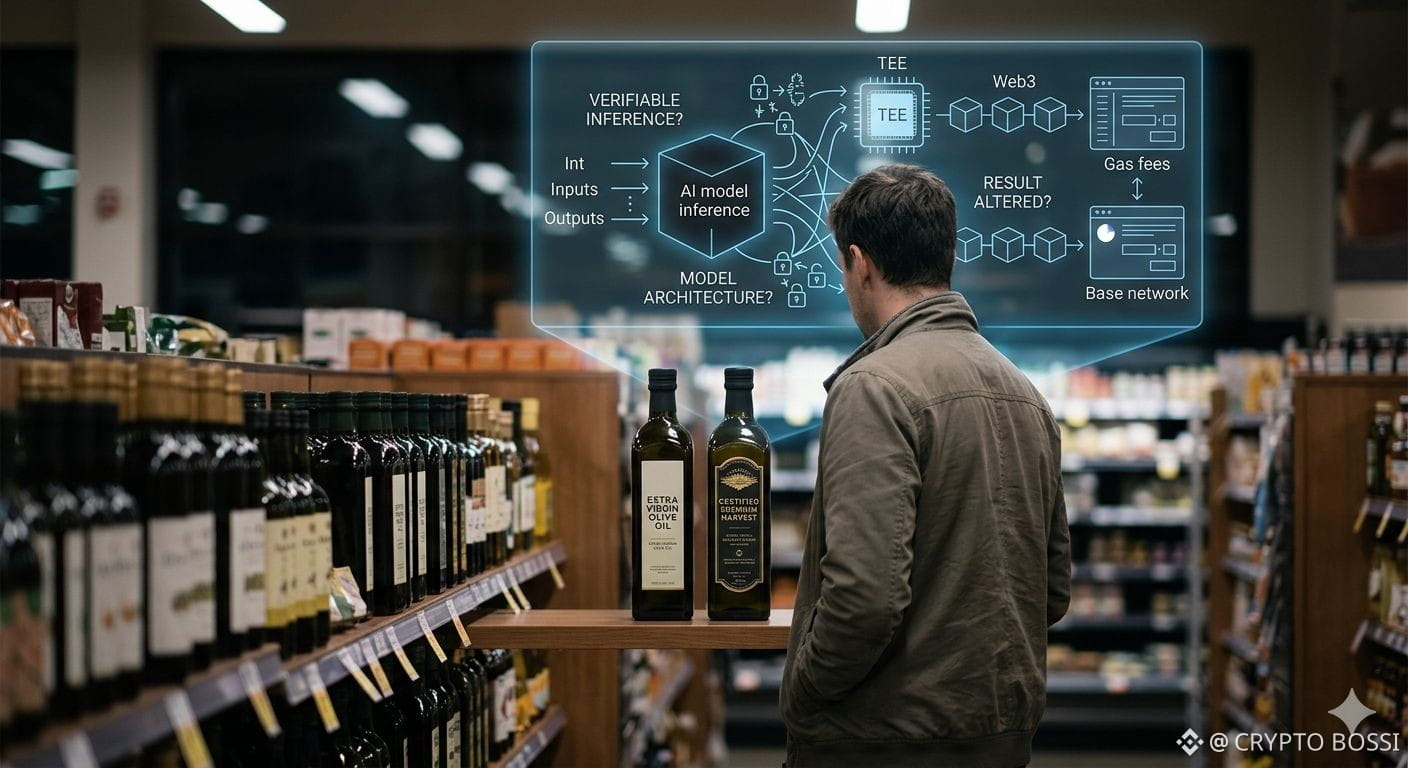
Last night, I stood in the grocery aisle staring at two bottles of extra virgin olive oil. They looked identical, but one was triple the price, boasting a "certified premium harvest" label. With no lab equipment in my pocket to verify if it was authentic or just cheap oil mixed with green dye, I simply chose to trust the label and paid the premium.
That memory came back to me while reading about OpenGradient. What makes its premise interesting is that it moves past the generic "AI plus crypto" hype. It targets a genuine, systemic problem: when a model gives an answer, how do we actually know which architecture ran, what happened mid-inference, and whether the result was quietly altered?
In a world increasingly dependent on automated decisions, that transparency matters. Yet, I still pause. If verifying an output requires navigating TEE enclaves, hardware attestations, Web3 wallets, and Base network gas fees, will everyday users bother?
We risk entering a paradigm where trust becomes technically bulletproof but practically exhausting. OpenGradient may elegantly solve the black-box problem of centralized AI. However, the ultimate test isn't the cryptography—it is whether people can leverage the solution without feeling entirely lost in the math.
#OPG @OpenGradient
Last night, I stood in the grocery aisle staring at two bottles of extra virgin olive oil. They looked identical, but one was triple the price, boasting a "certified premium harvest" label. With no lab equipment in my pocket to verify if it was authentic or just cheap oil mixed with green dye, I simply chose to trust the label and paid the premium.
That memory came back to me while reading about OpenGradient. What makes its premise interesting is that it moves past the generic "AI plus crypto" hype. It targets a genuine, systemic problem: when a model gives an answer, how do we actually know which architecture ran, what happened mid-inference, and whether the result was quietly altered?
In a world increasingly dependent on automated decisions, that transparency matters. Yet, I still pause. If verifying an output requires navigating TEE enclaves, hardware attestations, Web3 wallets, and Base network gas fees, will everyday users bother?
We risk entering a paradigm where trust becomes technically bulletproof but practically exhausting. OpenGradient may elegantly solve the black-box problem of centralized AI. However, the ultimate test isn't the cryptography—it is whether people can leverage the solution without feeling entirely lost in the math.
#OPG @OpenGradient