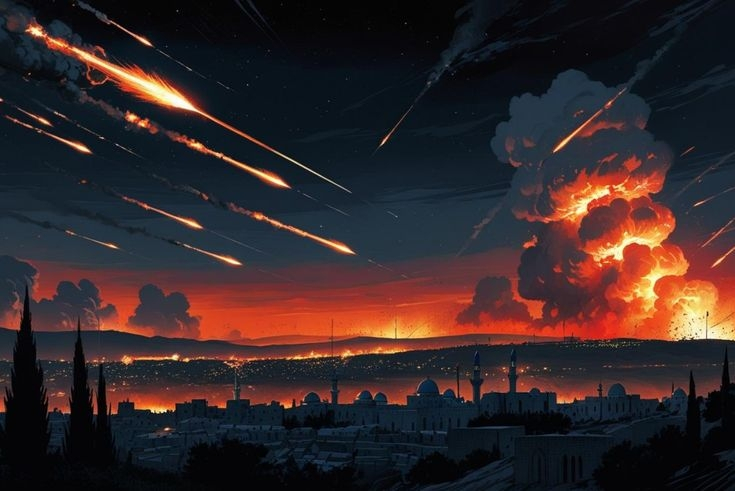

The ongoing war between Israel and Iran in 2026 has rapidly evolved into one of the most dangerous geopolitical crises in recent history, extending far beyond the Middle East and sending shockwaves through global politics, energy markets, and financial systems.
Origins of the Conflict
The war began on February 28, 2026, when Israel, supported by the United States, launched large-scale airstrikes on Iran targeting military infrastructure, missile systems, and government facilities. (Wikipedia)
These strikes were framed as a preemptive move to stop Iran’s nuclear and missile capabilities. In response, Iran retaliated with missile and drone attacks against Israel, U.S. bases, and allied countries across the region, marking the start of a full-scale regional conflict. (Wikipedia)
What initially appeared to be a short, decisive operation quickly escalated into a prolonged and complex war involving multiple actors and proxy groups.
Current Situation on the Ground
As of now, the conflict remains highly unstable. A temporary ceasefire exists but is fragile and at risk of collapse. (The Washington Post)
Iran is actively rebuilding damaged missile bases, suggesting preparation for renewed fighting. (New York Post)
Israel has signaled readiness to resume full military operations if necessary. (The Times of Israel)
Fighting has expanded beyond Iran and Israel into Lebanon, where clashes involving Hezbollah have caused thousands of casualties. (Al Jazeera)
At the same time, diplomatic efforts—led by the U.S. and supported by countries like Pakistan—are attempting to extend or stabilize the ceasefire, though key disagreements remain unresolved. (Reuters)
Regional and Proxy Escalation
The war is no longer confined to two countries. It has spread across the region:
Hezbollah in Lebanon continues to engage Israeli forces
Houthi rebels in Yemen have launched missile attacks toward Israel
U.S. military involvement and presence in the region has intensified
This multi-front nature has transformed the conflict into a broader regional war, increasing the risk of further escalation.
Global Economic Impact
The war is already affecting the global economy in serious ways:
Iran has halted major petrochemical exports after Israeli strikes on energy infrastructure, tightening global supply. (Reuters)
Oil transport disruptions, especially around the Strait of Hormuz, have driven energy prices higher. (Wikipedia)
The International Monetary Fund (IMF) warns the conflict could push global debt levels to historic highs due to rising costs and slowing growth. (The Guardian)
These developments are increasing inflation pressures worldwide and creating uncertainty in financial markets.
Political Fallout
The war has also reshaped political landscapes:
Israeli Prime Minister Benjamin Netanyahu faces declining public support as the war drags on without a decisive outcome. (Reuters)
International criticism has grown over civilian casualties and the scale of destruction
Protests against the war have emerged globally, reflecting widespread concern about escalation
Meanwhile, Iran appears resilient despite heavy damage, maintaining military capabilities and influence through regional allies.
What Happens Next?
The future of the conflict remains uncertain. There are three possible scenarios:
Extended War – Fighting resumes at full scale, potentially involving more countries
Fragile Ceasefire – Temporary calm continues, but tensions remain high
Negotiated Settlement – Diplomatic breakthroughs reduce hostilities, though core issues like Iran’s nuclear program remain unresolved
At present, the situation leans toward instability, with both sides preparing for the possibility of renewed conflict.
Conclusion
The Israel–Iran war is no longer a regional issue—it is a global crisis influencing energy markets, international security, and economic stability. While a temporary pause in fighting offers hope, the underlying tensions remain unresolved, making this one of the most volatile and closely watched conflicts in the world today.
The coming weeks will be critical in determining whether the world moves toward de-escalation—or deeper into confrontation.