
Honestly, it feels like privacy in Web3 is finally moving from being just a nice to have to something absolutely essential. As digital systems keep growing and more assets land on chain, protecting sensitive information has become a real priority. The early blockchain networks leaned hard into transparency to build trust, but that meant user data was left pretty exposed, which definitely slowed down wider adoption. @MidnightNetwork change the game by making privacy the heart of its architecture.
I built my viewpoint around one simple idea: users shouldn’t have to pick between security and ease of use. Midnight Network uses advanced cryptography so transactions and smart contract actions can be verified without anyone seeing the underlying data. That means trust stays strong, but confidentiality isn’t sacrificed. People get a lot more control deciding what info they share and when.
Zero knowledge techniques are the backbone for all this. They let the network prove a claim is legit without exposing the actual data. So in practice, a user can prove they own something, check eligibility or complete a transaction all without giving away personal details. It’s a model of selective disclosure that supports both compliance and privacy absolutely key if you’re dealing with finance, identity or enterprise systems.
I’ve also focused on keeping the infrastructure flexible. Privacy needs aren’t the same for every user or app. Midnight Network give developers freedom to design systems where only essential information gets revealed, with everything else staying locked down. That opens up all sorts of possibilities for confidential decentralized apps: private payments, secure voting, protected business workflows the list keep growing.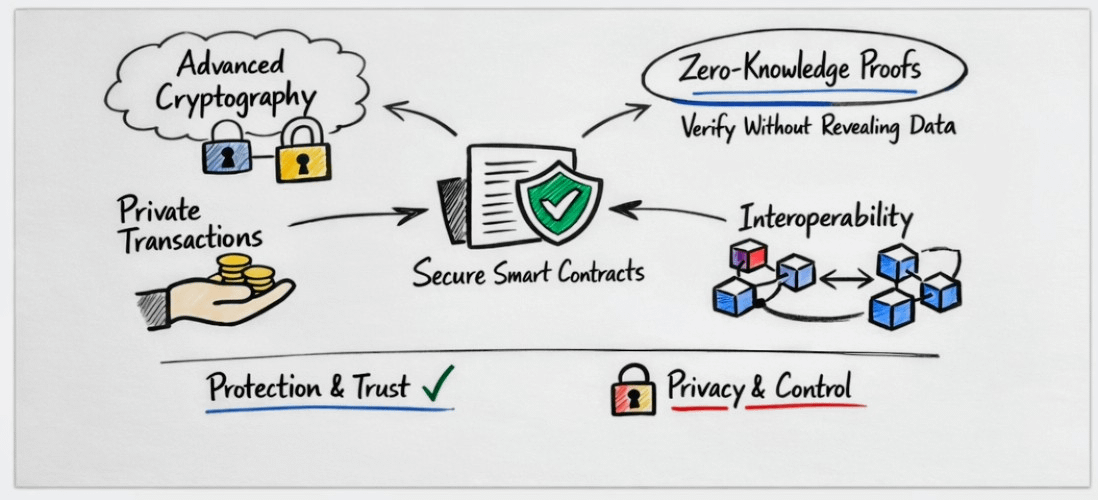
Another big piece? Interoperability. Privacy-first platforms really can’t work in a vacuum. @MidnightNetwork designed to play well with other blockchains, so you can securely exchange data without risking sensitive info. That kind of connectivity means a more robust Web3 where different networks interact, but privacy stays rock solid.
I get that trust in digital systems has to be built on both transparency and protection. Midnight Network manages both by allowing transactions to be verified and audited, while user details stay under wraps. That balance gives users, developers, and organizations real confidence they don’t have to choose between accountability and discretion.
I’m convinced this is where Web3 is headed. As more industries jump into decentralized tech, the need for privacy will just keep climbing. Midnight Network lays out a framework that meets this need without ditching the core principle of decentralization. It brings us closer to a future where people and companies can participate freely, knowing their data is safe.
To me, Midnight Network is more than just some technical upgrade. It’s a rethink of how we build and trust digital systems. By making privacy fundamental, it encourages wider adoption and unlocks real world uses. It’s a step forward that makes Web3 more practical and a lot more secure for global digital interaction.