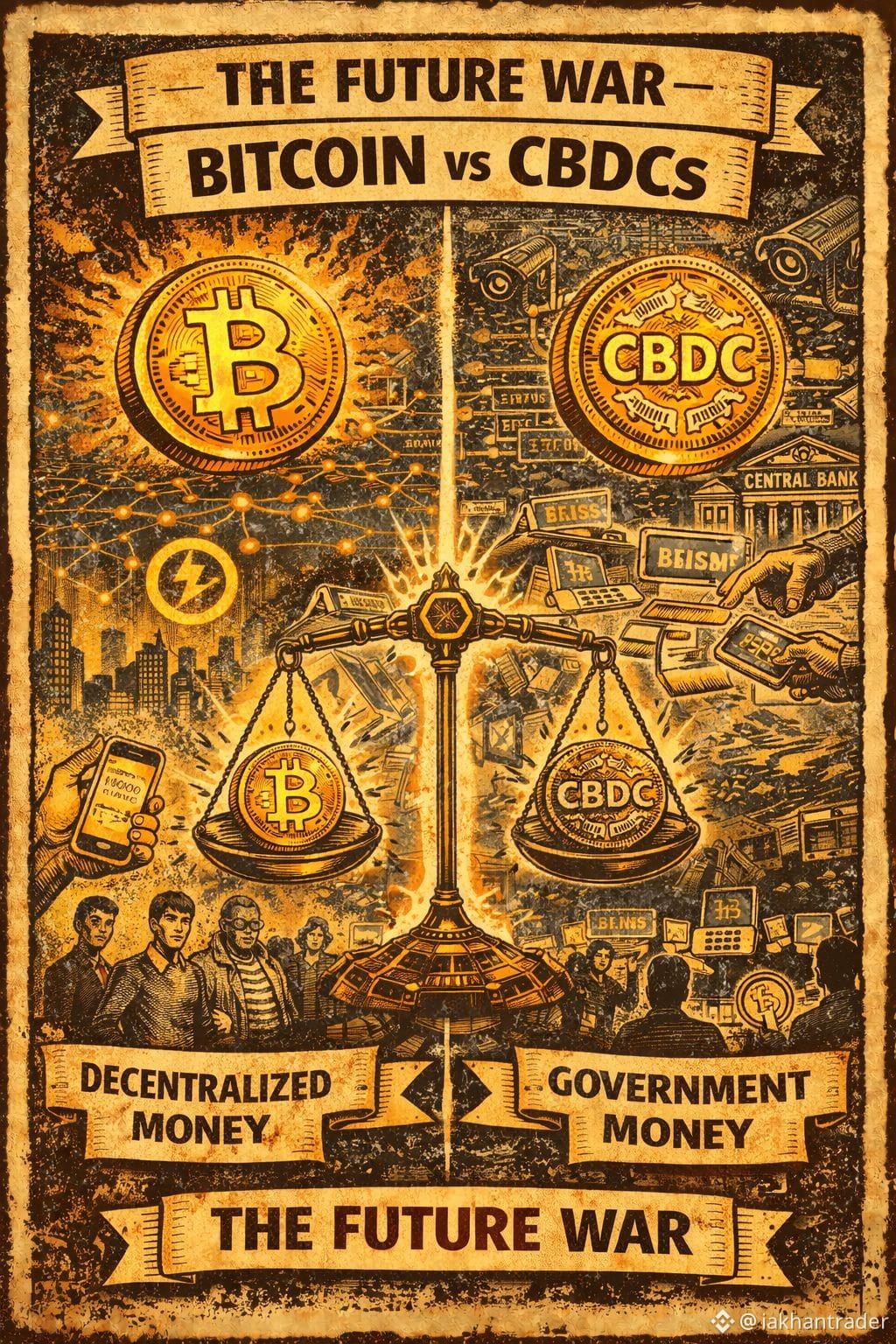
🎬 𝐄𝐩𝐢𝐬𝐨𝐝𝐞 𝐒𝐢𝐱: 𝐓𝐡𝐞 𝐅𝐮𝐭𝐮𝐫𝐞 𝐖𝐚𝐫 — 𝐁𝐢𝐭𝐜𝐨𝐢𝐧 𝐯𝐬 𝐂𝐁𝐃𝐂𝐬
Bitcoin had already challenged banks. It had survived governments, crashes, bans, and skepticism. But the next battle would be different. Because now… governments were building their own digital money.
𝑻𝒉𝒆 𝑹𝒊𝒔𝒆 𝒐𝒇 𝑫𝒊𝒈𝒊𝒕𝒂𝒍 𝑺𝒕𝒂𝒕𝒆 𝑴𝒐𝒏𝒆𝒚
Around the world, central banks began developing a new type of currency.
Not paper.
Not coins.
Purely digital.
These were called 𝐂𝐞𝐧𝐭𝐫𝐚𝐥 𝐁𝐚𝐧𝐤 𝐃𝐢𝐠𝐢𝐭𝐚𝐥 𝐂𝐮𝐫𝐫𝐞𝐧𝐜𝐢𝐞𝐬 — or CBDCs. Unlike Bitcoin, they would be fully controlled by governments.
Every transaction could be monitored.
Every wallet could be regulated.
Every unit of money could be programmed.
To many policymakers, CBDCs looked like the future of finance.
Fast.
Efficient.
Controlled.
But to others, they raised a deeper concern:
What happens when money itself becomes programmable?
𝑻𝒘𝒐 𝑶𝒑𝒑𝒐𝒔𝒊𝒕𝒆 𝑷𝒉𝒊𝒍𝒐𝒔𝒐𝒑𝒉𝒊𝒆𝒔
Bitcoin and CBDCs may both be digital. But they represent completely different ideas.
Bitcoin was built on decentralization.
No central authority.
No permission required.
CBDCs were designed for centralization.
Full oversight.
Direct control by central banks.
Meanwhile, governments continue designing the next generation of financial systems. Two visions of money are now emerging. One controlled by institutions.
One governed by code.
𝐄𝐩𝐢𝐬𝐨𝐝𝐞 𝐒𝐢𝐱 𝐞𝐧𝐝𝐬 𝐡𝐞𝐫𝐞.
𝐁𝐮𝐭 𝐭𝐡𝐞 𝐟𝐢𝐧𝐚𝐥 𝐜𝐡𝐚𝐩𝐭𝐞𝐫 𝐨𝐟 𝐭𝐡𝐢𝐬 𝐬𝐭𝐨𝐫𝐲 𝐡𝐚𝐬 𝐧𝐨𝐭 𝐲𝐞𝐭 𝐛𝐞𝐞𝐧 𝐝𝐞𝐜𝐢𝐝𝐞𝐝.
$BTC
Bitcoin had already challenged banks. It had survived governments, crashes, bans, and skepticism. But the next battle would be different. Because now… governments were building their own digital money.
𝑻𝒉𝒆 𝑹𝒊𝒔𝒆 𝒐𝒇 𝑫𝒊𝒈𝒊𝒕𝒂𝒍 𝑺𝒕𝒂𝒕𝒆 𝑴𝒐𝒏𝒆𝒚
Around the world, central banks began developing a new type of currency.
Not paper.
Not coins.
Purely digital.
These were called 𝐂𝐞𝐧𝐭𝐫𝐚𝐥 𝐁𝐚𝐧𝐤 𝐃𝐢𝐠𝐢𝐭𝐚𝐥 𝐂𝐮𝐫𝐫𝐞𝐧𝐜𝐢𝐞𝐬 — or CBDCs. Unlike Bitcoin, they would be fully controlled by governments.
Every transaction could be monitored.
Every wallet could be regulated.
Every unit of money could be programmed.
To many policymakers, CBDCs looked like the future of finance.
Fast.
Efficient.
Controlled.
But to others, they raised a deeper concern:
What happens when money itself becomes programmable?
𝑻𝒘𝒐 𝑶𝒑𝒑𝒐𝒔𝒊𝒕𝒆 𝑷𝒉𝒊𝒍𝒐𝒔𝒐𝒑𝒉𝒊𝒆𝒔
Bitcoin and CBDCs may both be digital. But they represent completely different ideas.
Bitcoin was built on decentralization.
No central authority.
No permission required.
CBDCs were designed for centralization.
Full oversight.
Direct control by central banks.
Meanwhile, governments continue designing the next generation of financial systems. Two visions of money are now emerging. One controlled by institutions.
One governed by code.
𝐄𝐩𝐢𝐬𝐨𝐝𝐞 𝐒𝐢𝐱 𝐞𝐧𝐝𝐬 𝐡𝐞𝐫𝐞.
𝐁𝐮𝐭 𝐭𝐡𝐞 𝐟𝐢𝐧𝐚𝐥 𝐜𝐡𝐚𝐩𝐭𝐞𝐫 𝐨𝐟 𝐭𝐡𝐢𝐬 𝐬𝐭𝐨𝐫𝐲 𝐡𝐚𝐬 𝐧𝐨𝐭 𝐲𝐞𝐭 𝐛𝐞𝐞𝐧 𝐝𝐞𝐜𝐢𝐝𝐞𝐝.
$BTC