

Arthur Mint
3.8k 投稿

Arthur Mint
 厳選トピック確認済+
報告
ユーザーをブロック
Arthur is here. Crypto Expert. Web3 Builder. Verified KOL on Binance Square. Let's keep growing together: X - @ArthurMint_
72 フォロー
43.9K+ フォロワー
14.3K+ いいね
投稿
·
--
翻訳参照
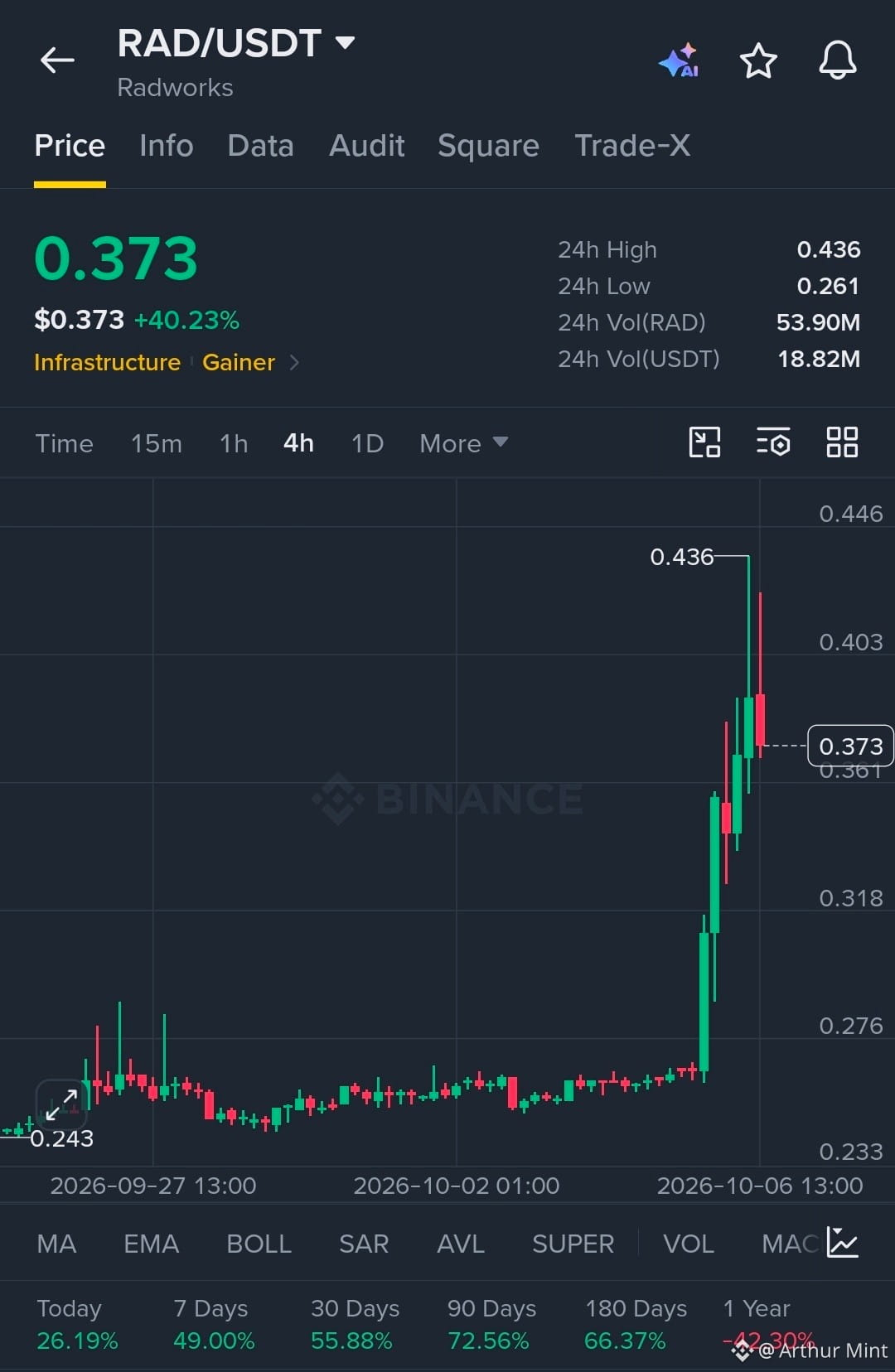
$RAD showing strong bullish strength after a sharp breakout with momentum holding above key support.
Buyers remain in control as the structure continues to form higher highs and higher lows.
EP
0.365 - 0.375
TP
TP1 0.403
TP2 0.436
TP3 0.470
SL
0.348
Liquidity remains stacked above the recent high, while any pullback into the breakout zone can trigger a strong reaction. Structure stays bullish as long as RAD holds above the key support area.
Let’s go $RAD
$RAD showing strong bullish strength after a sharp breakout with momentum holding above key support.
Buyers remain in control as the structure continues to form higher highs and higher lows.
EP
0.365 - 0.375
TP
TP1 0.403
TP2 0.436
TP3 0.470
SL
0.348
Liquidity remains stacked above the recent high, while any pullback into the breakout zone can trigger a strong reaction. Structure stays bullish as long as RAD holds above the key support area.
Let’s go $RAD
Buyers remain in control as the structure continues to form higher highs and higher lows.
EP
0.365 - 0.375
TP
TP1 0.403
TP2 0.436
TP3 0.470
SL
0.348
Liquidity remains stacked above the recent high, while any pullback into the breakout zone can trigger a strong reaction. Structure stays bullish as long as RAD holds above the key support area.
Let’s go $RAD
1
213
·
--
翻訳参照
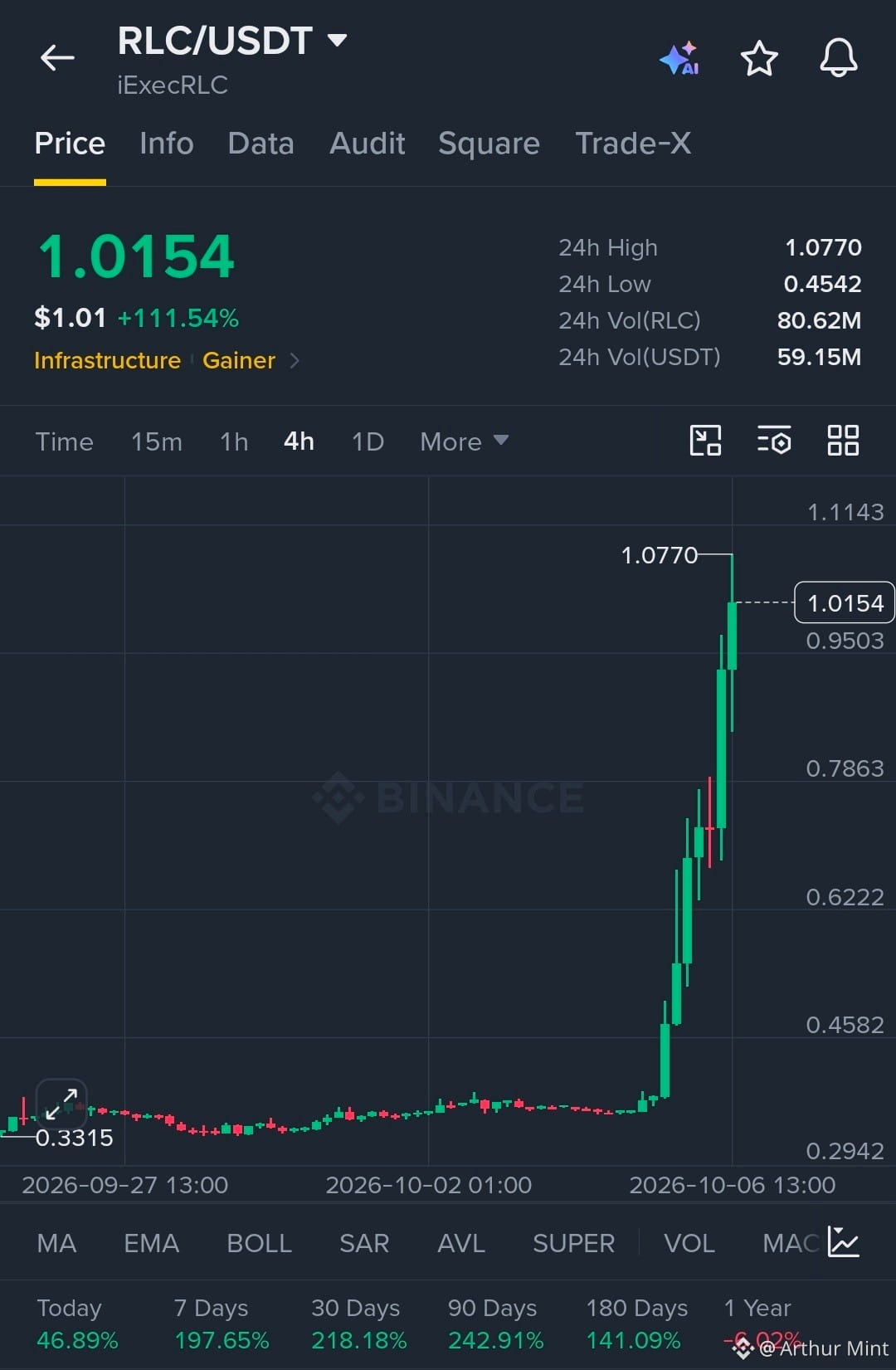
$RLC is showing explosive strength with aggressive upside momentum.
Buyers are in control, with structure holding above the breakout zone.
EP
0.95 - 1.01
TP
TP1 1.08
TP2 1.15
TP3 1.25
SL
0.88
Liquidity remains stacked above the recent high, while reactions around the breakout zone will confirm whether buyers can sustain the move. Structure remains bullish as long as price holds the entry zone.
Let’s go $RLC
$RLC is showing explosive strength with aggressive upside momentum.
Buyers are in control, with structure holding above the breakout zone.
EP
0.95 - 1.01
TP
TP1 1.08
TP2 1.15
TP3 1.25
SL
0.88
Liquidity remains stacked above the recent high, while reactions around the breakout zone will confirm whether buyers can sustain the move. Structure remains bullish as long as price holds the entry zone.
Let’s go $RLC
Buyers are in control, with structure holding above the breakout zone.
EP
0.95 - 1.01
TP
TP1 1.08
TP2 1.15
TP3 1.25
SL
0.88
Liquidity remains stacked above the recent high, while reactions around the breakout zone will confirm whether buyers can sustain the move. Structure remains bullish as long as price holds the entry zone.
Let’s go $RLC
658
·
--
翻訳参照
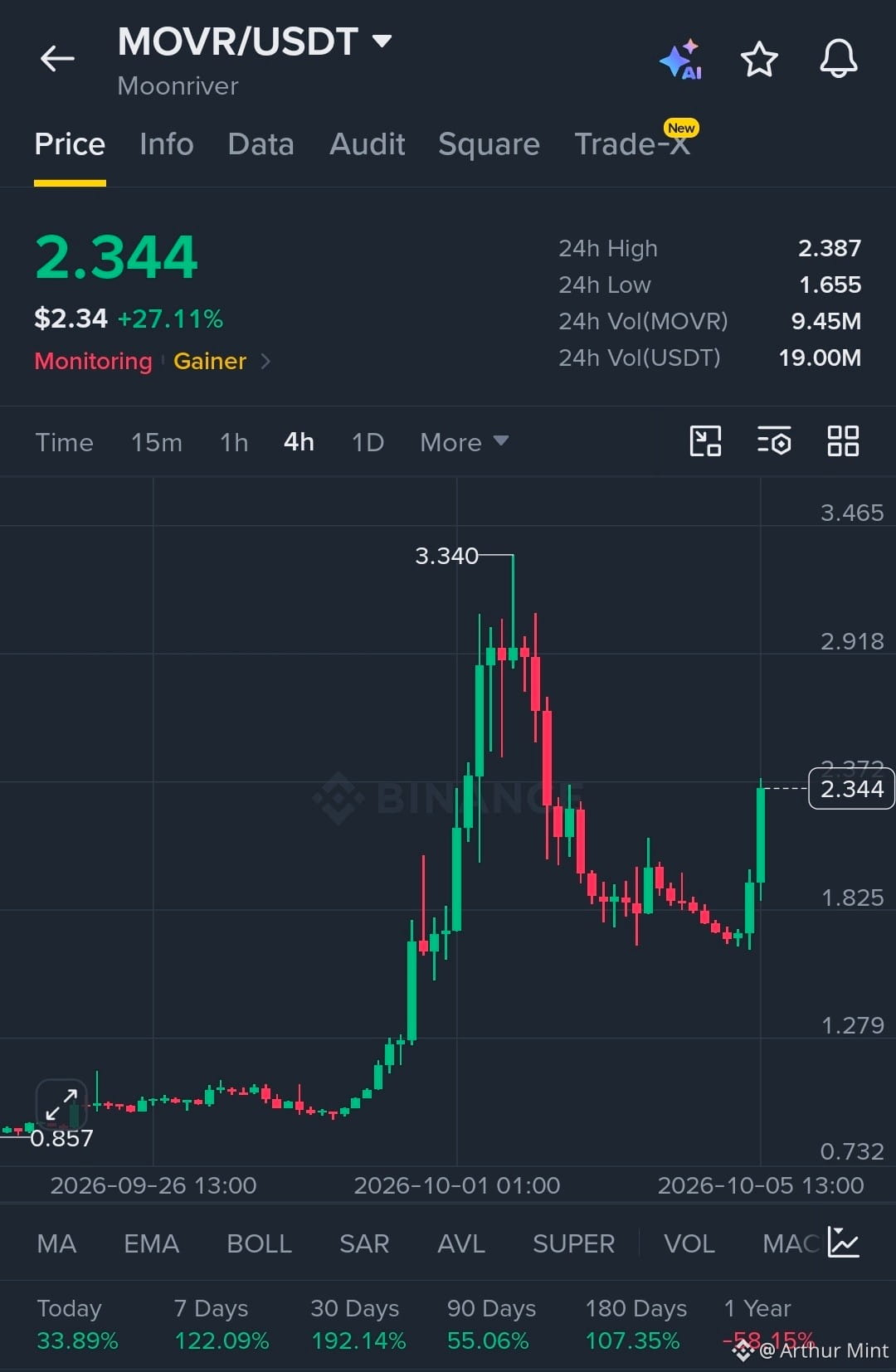
$MOVR is showing strong breakout strength with aggressive upside momentum.
Structure is bullish, with buyers reclaiming key resistance and taking control.
EP
2.30–2.35
TP
TP1 2.55
TP2 2.90
TP3 3.30
SL
2.05
Liquidity above MOVR is being targeted as price reclaims the 2.30 area, while the reaction from 1.80–1.85 confirms stronger buyer control. A sustained hold above the breakout zone keeps the structure bullish.
Let’s go $MOVR
$MOVR is showing strong breakout strength with aggressive upside momentum.
Structure is bullish, with buyers reclaiming key resistance and taking control.
EP
2.30–2.35
TP
TP1 2.55
TP2 2.90
TP3 3.30
SL
2.05
Liquidity above MOVR is being targeted as price reclaims the 2.30 area, while the reaction from 1.80–1.85 confirms stronger buyer control. A sustained hold above the breakout zone keeps the structure bullish.
Let’s go $MOVR
Structure is bullish, with buyers reclaiming key resistance and taking control.
EP
2.30–2.35
TP
TP1 2.55
TP2 2.90
TP3 3.30
SL
2.05
Liquidity above MOVR is being targeted as price reclaims the 2.30 area, while the reaction from 1.80–1.85 confirms stronger buyer control. A sustained hold above the breakout zone keeps the structure bullish.
Let’s go $MOVR
1
493
·
--
ビットコインの買い手が重要ゾーンを守っている
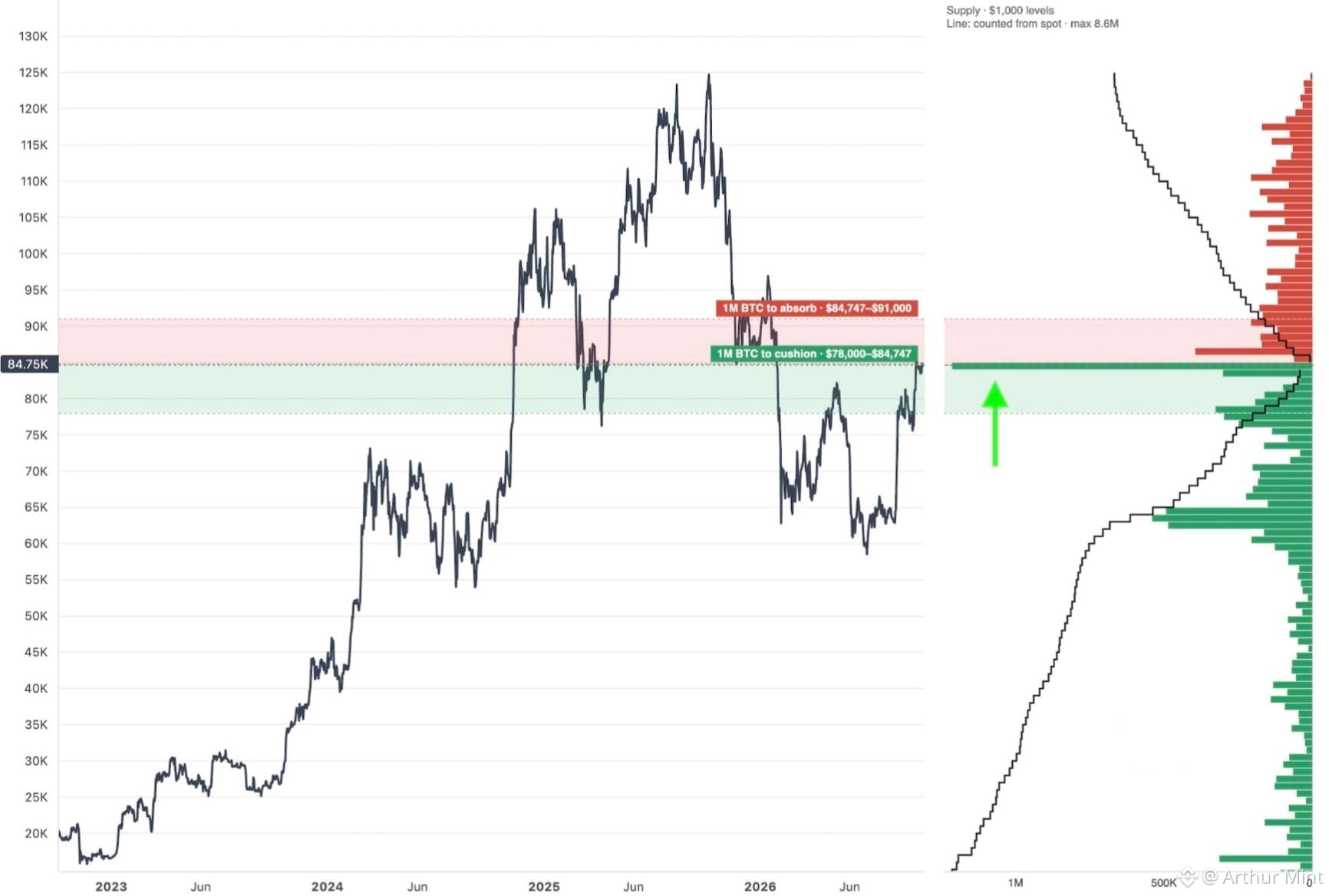
チャートは約84K〜85K付近の強い需要($BTC )を示しており、買いが活発であることを示唆しています。
この流動性は、より広い78K〜84,747のクッション・ゾーンの中に位置しています。
その上では、供給が91Kに向かって伸びています。
この構造により、買い手が動いている限り、見通しは強気を維持します。
とはいえ、これらのゾーンは崩れる可能性もあります。ビットコインはさらに上を目指すのでしょうか?
ビットコインの買い手が重要ゾーンを守っている
チャートは約84K〜85K付近の強い需要($BTC )を示しており、買いが活発であることを示唆しています。
この流動性は、より広い78K〜84,747のクッション・ゾーンの中に位置しています。
その上では、供給が91Kに向かって伸びています。
この構造により、買い手が動いている限り、見通しは強気を維持します。
とはいえ、これらのゾーンは崩れる可能性もあります。ビットコインはさらに上を目指すのでしょうか?
チャートは約84K〜85K付近の強い需要($BTC )を示しており、買いが活発であることを示唆しています。
この流動性は、より広い78K〜84,747のクッション・ゾーンの中に位置しています。
その上では、供給が91Kに向かって伸びています。
この構造により、買い手が動いている限り、見通しは強気を維持します。
とはいえ、これらのゾーンは崩れる可能性もあります。ビットコインはさらに上を目指すのでしょうか?
2
560
·
--
翻訳参照
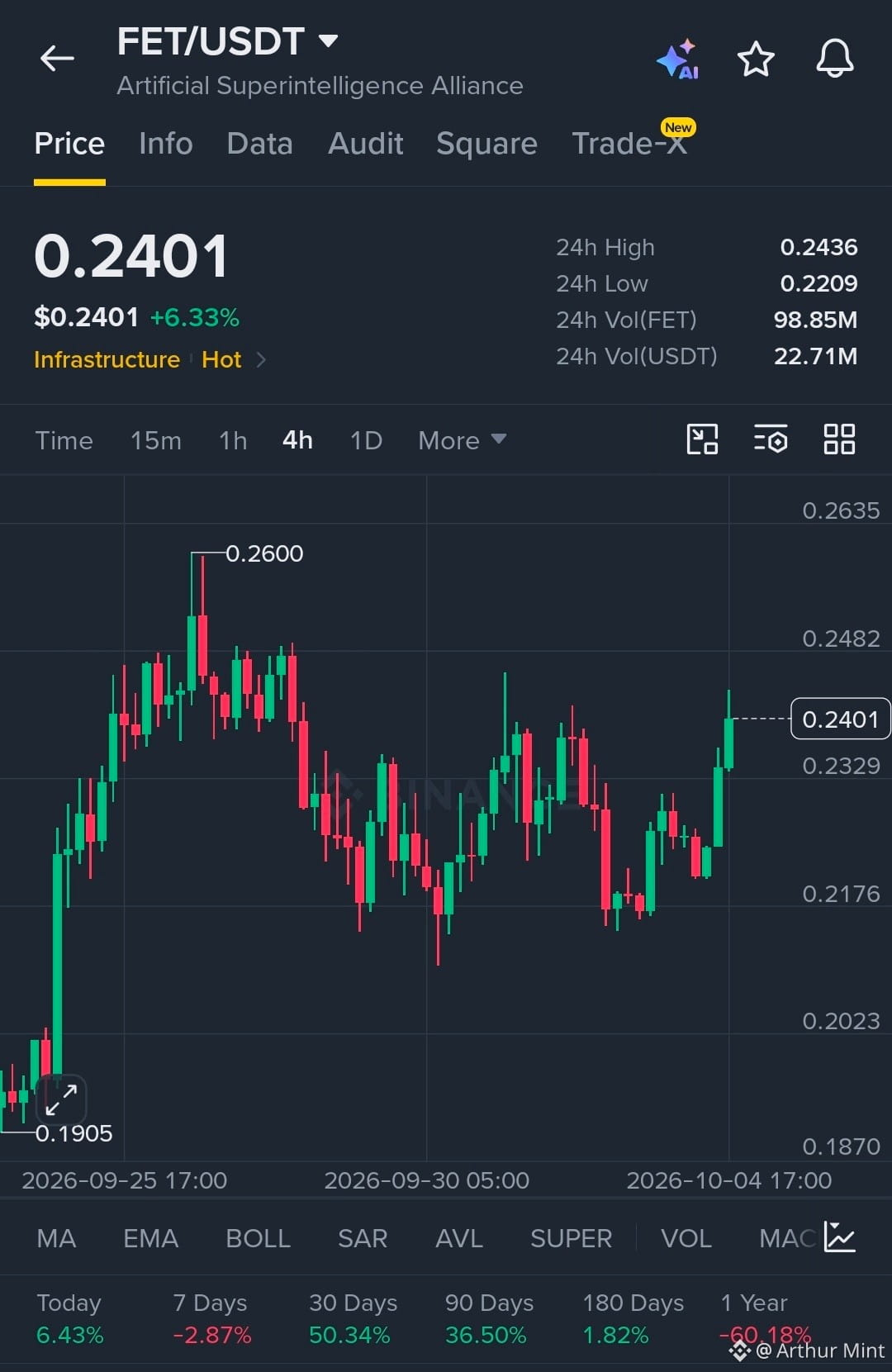
$FET showing strong bullish strength after reclaiming the 0.2329 area.
Structure is bullish with buyers maintaining control above key support.
EP
0.2390-0.2410
TP
TP1 0.2482
TP2 0.2600
TP3 0.2635
SL
0.2320
Liquidity is building above 0.2482, and a clean reaction from the current zone can drive FET toward the higher resistance levels. Structure remains bullish while price holds the entry zone.
Let’s go $FET
$FET showing strong bullish strength after reclaiming the 0.2329 area.
Structure is bullish with buyers maintaining control above key support.
EP
0.2390-0.2410
TP
TP1 0.2482
TP2 0.2600
TP3 0.2635
SL
0.2320
Liquidity is building above 0.2482, and a clean reaction from the current zone can drive FET toward the higher resistance levels. Structure remains bullish while price holds the entry zone.
Let’s go $FET
Structure is bullish with buyers maintaining control above key support.
EP
0.2390-0.2410
TP
TP1 0.2482
TP2 0.2600
TP3 0.2635
SL
0.2320
Liquidity is building above 0.2482, and a clean reaction from the current zone can drive FET toward the higher resistance levels. Structure remains bullish while price holds the entry zone.
Let’s go $FET
1
473
·
--
翻訳参照
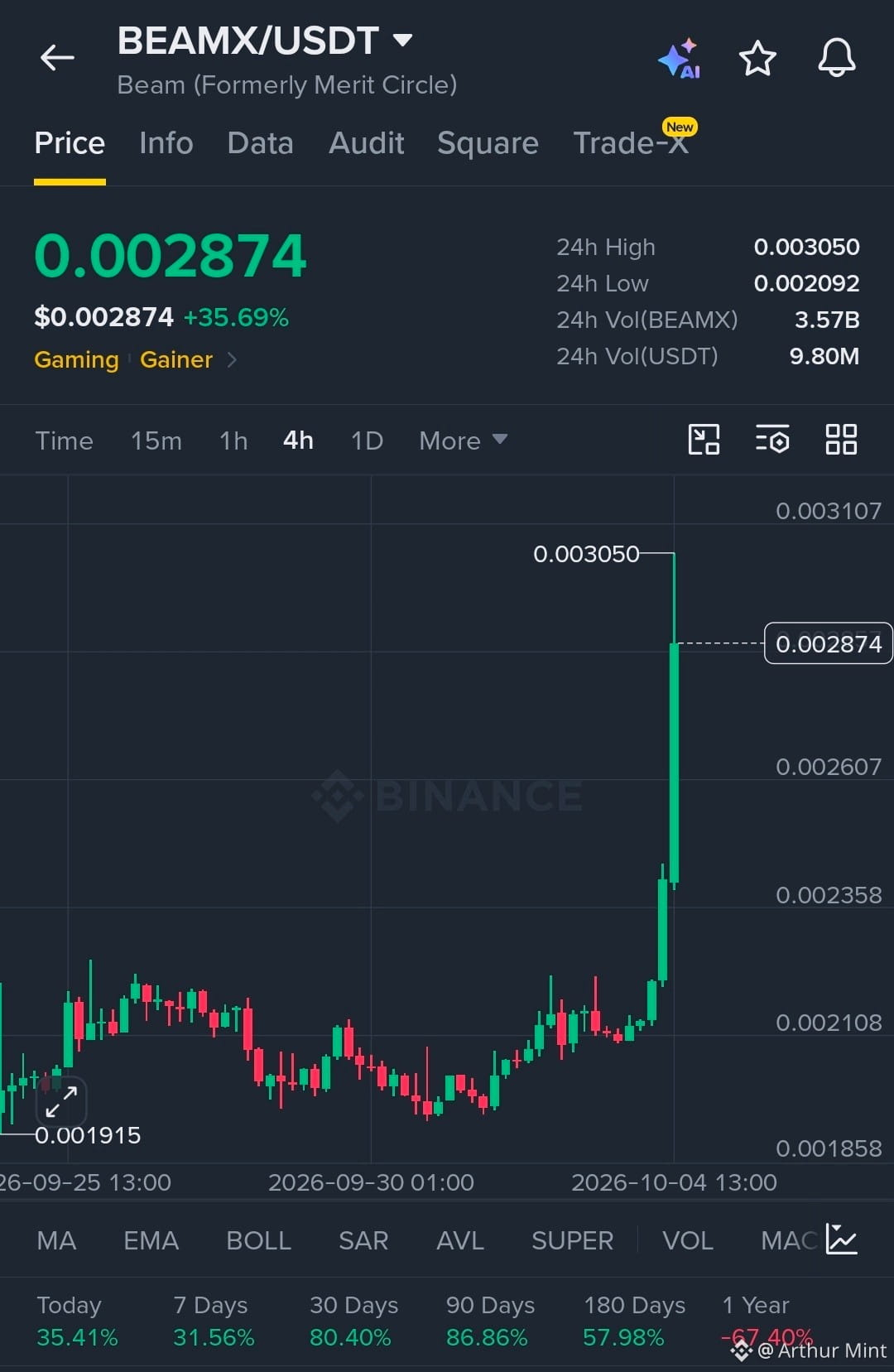
$BEAMX is showing strong bullish momentum with a decisive breakout above the recent range.
Buyers remain in control as price holds the breakout structure above key support.
EP
0.00270 - 0.00285
TP
TP1 0.00305
TP2 0.00330
TP3 0.00360
SL
0.00255
Liquidity above 0.00305 remains the immediate target, while a clean hold above the breakout zone can support further expansion. A reaction back toward the entry zone should be watched for structure confirmation.
Let’s go $BEAMX
$BEAMX is showing strong bullish momentum with a decisive breakout above the recent range.
Buyers remain in control as price holds the breakout structure above key support.
EP
0.00270 - 0.00285
TP
TP1 0.00305
TP2 0.00330
TP3 0.00360
SL
0.00255
Liquidity above 0.00305 remains the immediate target, while a clean hold above the breakout zone can support further expansion. A reaction back toward the entry zone should be watched for structure confirmation.
Let’s go $BEAMX
Buyers remain in control as price holds the breakout structure above key support.
EP
0.00270 - 0.00285
TP
TP1 0.00305
TP2 0.00330
TP3 0.00360
SL
0.00255
Liquidity above 0.00305 remains the immediate target, while a clean hold above the breakout zone can support further expansion. A reaction back toward the entry zone should be watched for structure confirmation.
Let’s go $BEAMX
332
·
--
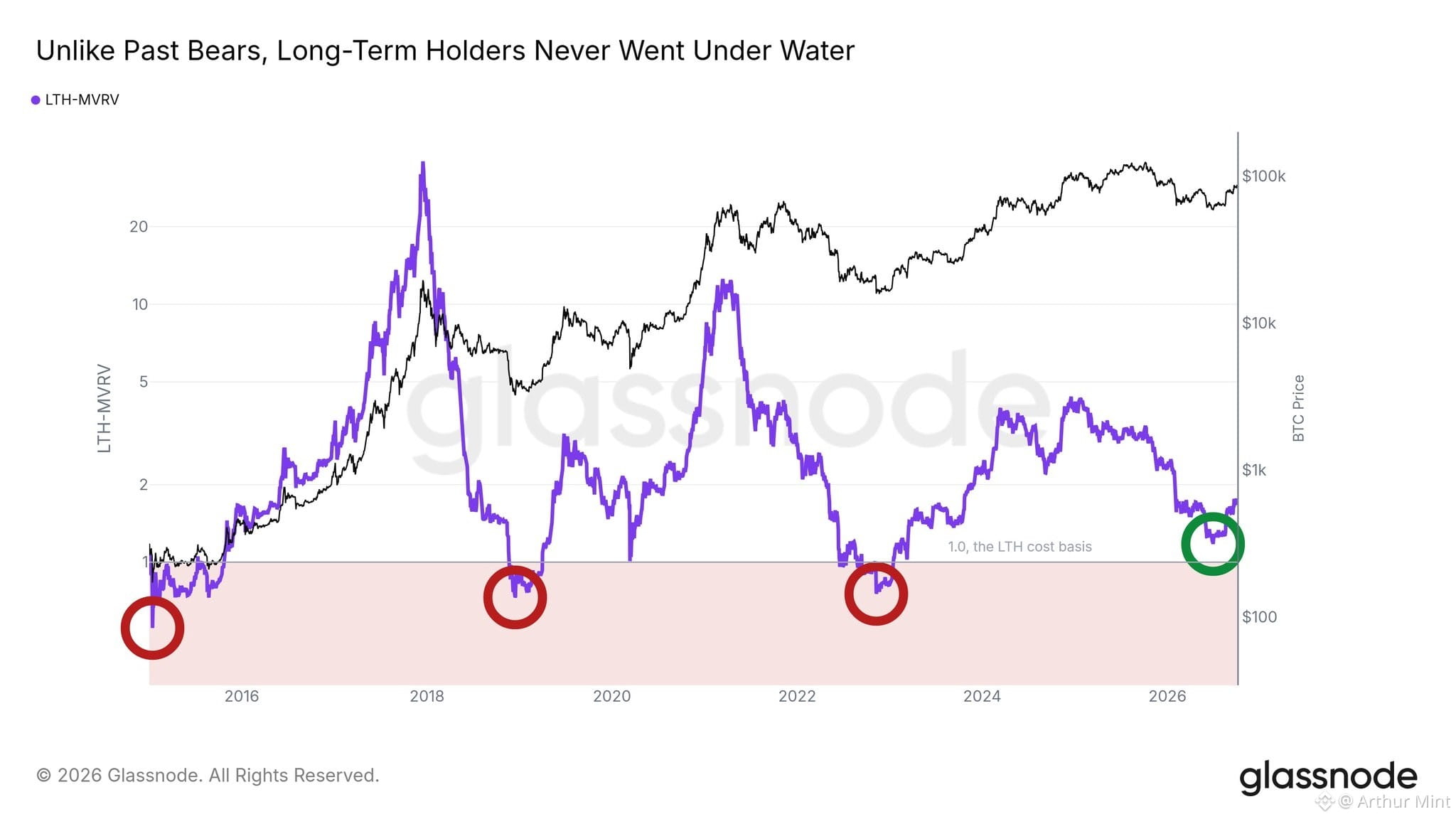
ビットコインの長期保有者が異例の底堅さを示す
今回のサイクルを通じて、ビットコインの長期保有者は利益を維持しており、過去の弱気相場とは対照的です。
チャートを見ると、LTH-MVRVは1を下回ったことがありません。つまり、このサイクルの底値でも、長期保有者層は含み損に転じませんでした。
これは重要な点です。損益分岐点を上回り続けていることは、長期投資家の確信がより強いことを示唆します。
現在、LTH-MVRVは再び上昇しており、$BTC と暗号資産市場全体にとって、より前向きな状況が整いつつあります。
ただし、市場環境は急速に変化することがあるため、これはあくまでシグナルであり、保証ではありません。
ビットコインの底堅さは、次の大きな値動きにつながるのでしょうか?
ビットコインの長期保有者が異例の底堅さを示す
今回のサイクルを通じて、ビットコインの長期保有者は利益を維持しており、過去の弱気相場とは対照的です。
チャートを見ると、LTH-MVRVは1を下回ったことがありません。つまり、このサイクルの底値でも、長期保有者層は含み損に転じませんでした。
これは重要な点です。損益分岐点を上回り続けていることは、長期投資家の確信がより強いことを示唆します。
現在、LTH-MVRVは再び上昇しており、$BTC と暗号資産市場全体にとって、より前向きな状況が整いつつあります。
ただし、市場環境は急速に変化することがあるため、これはあくまでシグナルであり、保証ではありません。
ビットコインの底堅さは、次の大きな値動きにつながるのでしょうか?
今回のサイクルを通じて、ビットコインの長期保有者は利益を維持しており、過去の弱気相場とは対照的です。
チャートを見ると、LTH-MVRVは1を下回ったことがありません。つまり、このサイクルの底値でも、長期保有者層は含み損に転じませんでした。
これは重要な点です。損益分岐点を上回り続けていることは、長期投資家の確信がより強いことを示唆します。
現在、LTH-MVRVは再び上昇しており、$BTC と暗号資産市場全体にとって、より前向きな状況が整いつつあります。
ただし、市場環境は急速に変化することがあるため、これはあくまでシグナルであり、保証ではありません。
ビットコインの底堅さは、次の大きな値動きにつながるのでしょうか?
1
696
·
--
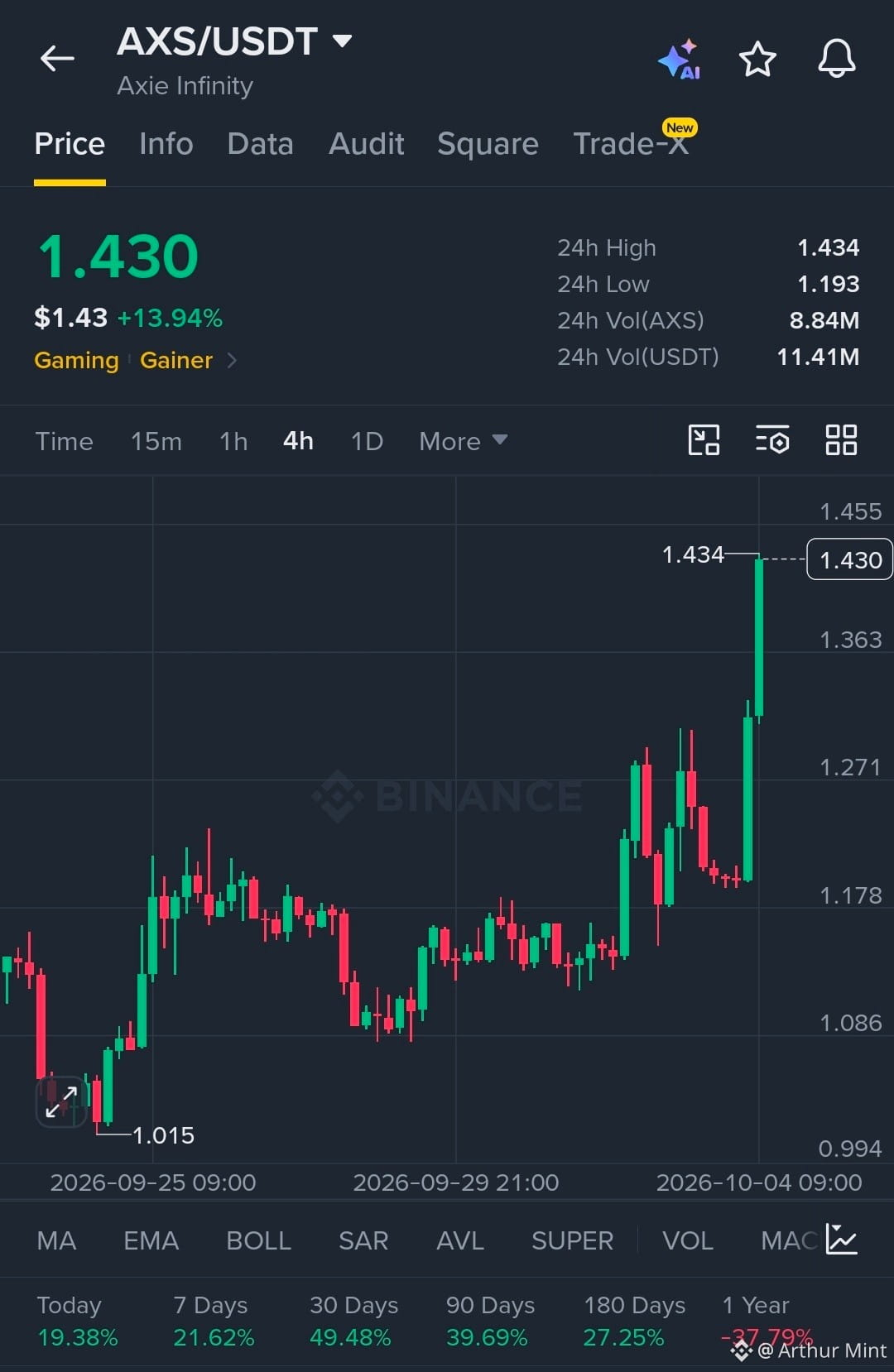
$AXS は強い強気の勢いを示しています。
買い手はブレイクアウト構造の上で引き続き主導権を維持しています。
EP
1.390 - 1.420
TP
TP1 1.480
TP2 1.550
TP3 1.650
SL
1.320
これまでの高値の上で流動性が取り込まれ、その強い反応によって買い手の支配が確認されています。AXSがブレイクアウト構造を保持している限り、継続が優勢です。
さあ行こう $AXS
$AXS は強い強気の勢いを示しています。
買い手はブレイクアウト構造の上で引き続き主導権を維持しています。
EP
1.390 - 1.420
TP
TP1 1.480
TP2 1.550
TP3 1.650
SL
1.320
これまでの高値の上で流動性が取り込まれ、その強い反応によって買い手の支配が確認されています。AXSがブレイクアウト構造を保持している限り、継続が優勢です。
さあ行こう $AXS
買い手はブレイクアウト構造の上で引き続き主導権を維持しています。
EP
1.390 - 1.420
TP
TP1 1.480
TP2 1.550
TP3 1.650
SL
1.320
これまでの高値の上で流動性が取り込まれ、その強い反応によって買い手の支配が確認されています。AXSがブレイクアウト構造を保持している限り、継続が優勢です。
さあ行こう $AXS
1
590
·
--
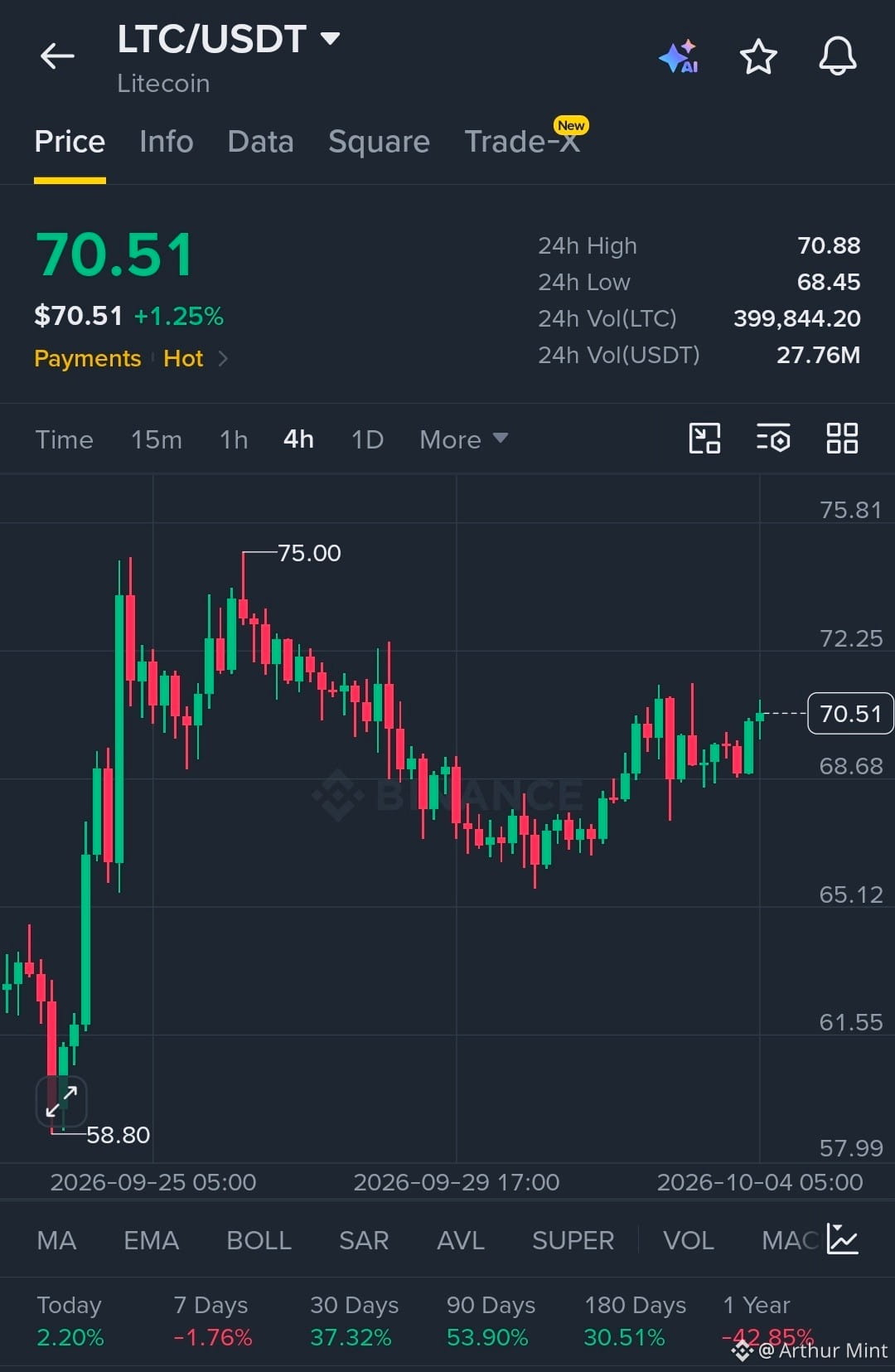
$LTC は、買い手がより高い水準を守りながら強いリカバリーの勢いを示しています。
68.68のサポートゾーンを上回っている限り、強気のコントロールは維持されています。
EP
69.80 - 70.50
TP
TP1 72.25
TP2 74.00
TP3 75.00
SL
68.20
直近の高値の上で流動性が積み上がっており、68.68周辺での反応は買い手の支配を裏付けています。72.25をきれいにブレイクすれば、より高い目標に向けた道が開けます。
さあ、$LTC へ
$LTC は、買い手がより高い水準を守りながら強いリカバリーの勢いを示しています。
68.68のサポートゾーンを上回っている限り、強気のコントロールは維持されています。
EP
69.80 - 70.50
TP
TP1 72.25
TP2 74.00
TP3 75.00
SL
68.20
直近の高値の上で流動性が積み上がっており、68.68周辺での反応は買い手の支配を裏付けています。72.25をきれいにブレイクすれば、より高い目標に向けた道が開けます。
さあ、$LTC へ
68.68のサポートゾーンを上回っている限り、強気のコントロールは維持されています。
EP
69.80 - 70.50
TP
TP1 72.25
TP2 74.00
TP3 75.00
SL
68.20
直近の高値の上で流動性が積み上がっており、68.68周辺での反応は買い手の支配を裏付けています。72.25をきれいにブレイクすれば、より高い目標に向けた道が開けます。
さあ、$LTC へ
1
740
·
--
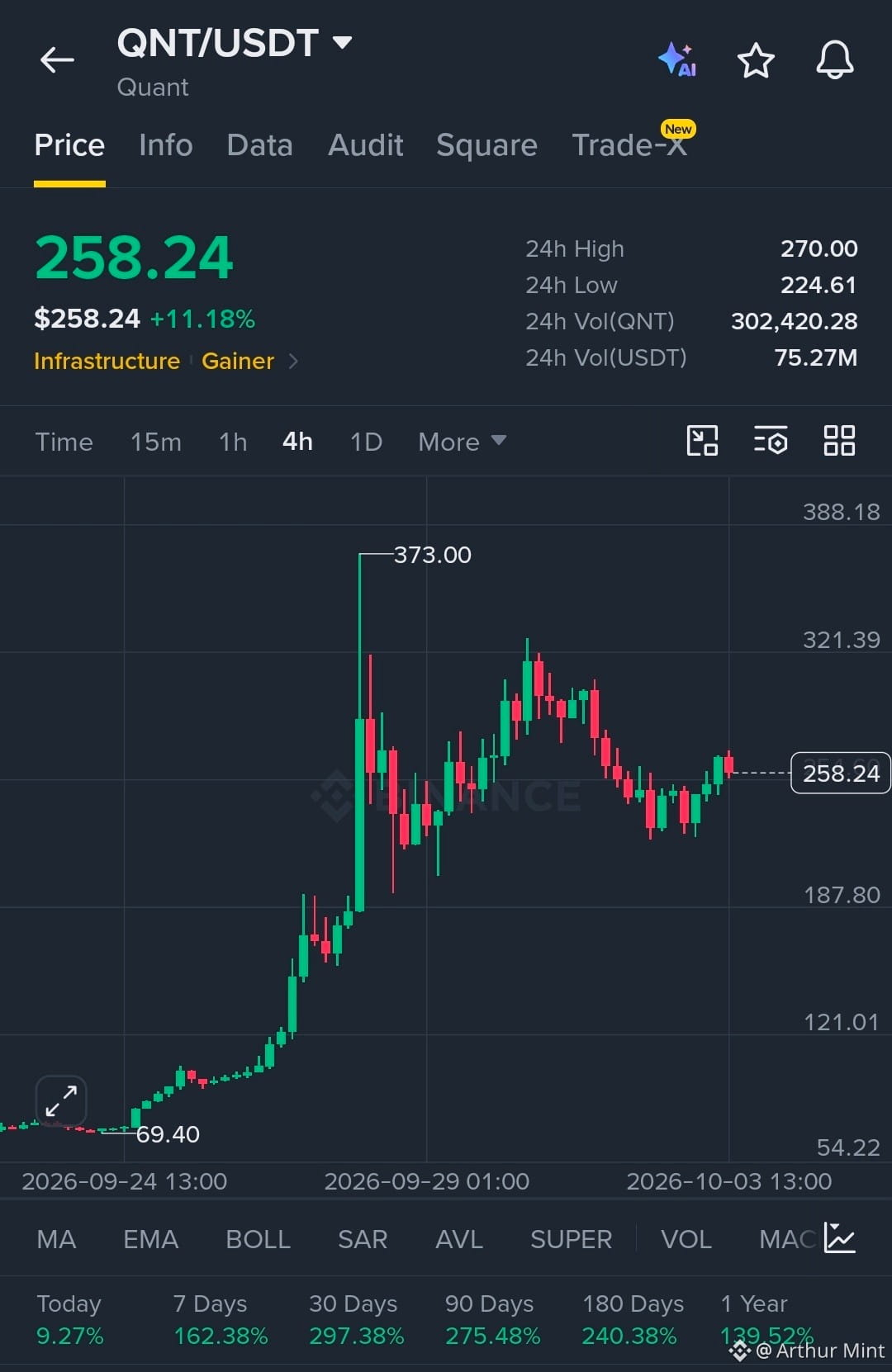
$QNT 強い強気モメンタムを示し、買い手がブレイクアウトゾーンを守っています。
価格が250のエリアを取り戻しながら、強気の支配が維持されています。
EP
250 - 260
TP
TP1 285
TP2 321
TP3 373
SL
224
流動性は直近のレンジ(調整)の下に留まっていますが、価格は230〜250のゾーンから強く反応しています。260を明確に上抜けてホールドできれば、321やそれ以上への継続を後押しし得ます。構造的には上方向が優勢で、224が維持されている限り上昇が有利です。
行こう $QNT
$QNT 強い強気モメンタムを示し、買い手がブレイクアウトゾーンを守っています。
価格が250のエリアを取り戻しながら、強気の支配が維持されています。
EP
250 - 260
TP
TP1 285
TP2 321
TP3 373
SL
224
流動性は直近のレンジ(調整)の下に留まっていますが、価格は230〜250のゾーンから強く反応しています。260を明確に上抜けてホールドできれば、321やそれ以上への継続を後押しし得ます。構造的には上方向が優勢で、224が維持されている限り上昇が有利です。
行こう $QNT
価格が250のエリアを取り戻しながら、強気の支配が維持されています。
EP
250 - 260
TP
TP1 285
TP2 321
TP3 373
SL
224
流動性は直近のレンジ(調整)の下に留まっていますが、価格は230〜250のゾーンから強く反応しています。260を明確に上抜けてホールドできれば、321やそれ以上への継続を後押しし得ます。構造的には上方向が優勢で、224が維持されている限り上昇が有利です。
行こう $QNT
465
·
--
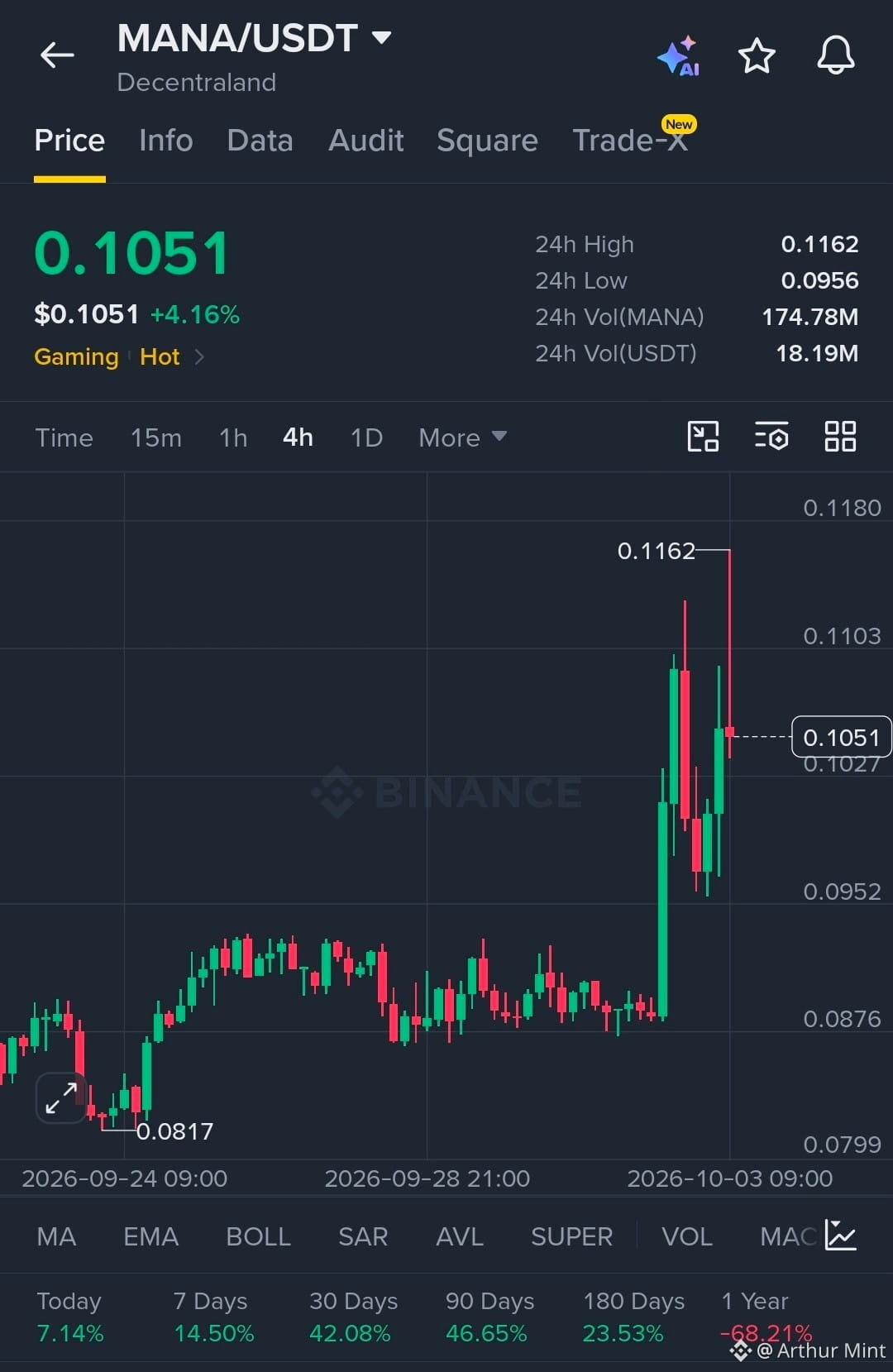
$MANA は、0.088ゾーンをブレイクした後に強い勢いを見せています。
構造は0.095を上回って強気を維持しており、買い手が主導権を保っています。
EP
0.103-0.105
TP
TP1 0.110
TP2 0.116
TP3 0.125
SL
0.095
0.110を上回る流動性が狙われており、ブレイクアウトゾーンからのきれいな反応が出れば、MANAを0.116の高値およびそれ以上の流動性へ押し上げる可能性があります。構造は0.095を上回って有効なままです。
さあ、$MANA
$MANA は、0.088ゾーンをブレイクした後に強い勢いを見せています。
構造は0.095を上回って強気を維持しており、買い手が主導権を保っています。
EP
0.103-0.105
TP
TP1 0.110
TP2 0.116
TP3 0.125
SL
0.095
0.110を上回る流動性が狙われており、ブレイクアウトゾーンからのきれいな反応が出れば、MANAを0.116の高値およびそれ以上の流動性へ押し上げる可能性があります。構造は0.095を上回って有効なままです。
さあ、$MANA
構造は0.095を上回って強気を維持しており、買い手が主導権を保っています。
EP
0.103-0.105
TP
TP1 0.110
TP2 0.116
TP3 0.125
SL
0.095
0.110を上回る流動性が狙われており、ブレイクアウトゾーンからのきれいな反応が出れば、MANAを0.116の高値およびそれ以上の流動性へ押し上げる可能性があります。構造は0.095を上回って有効なままです。
さあ、$MANA
1
3
437
·
--
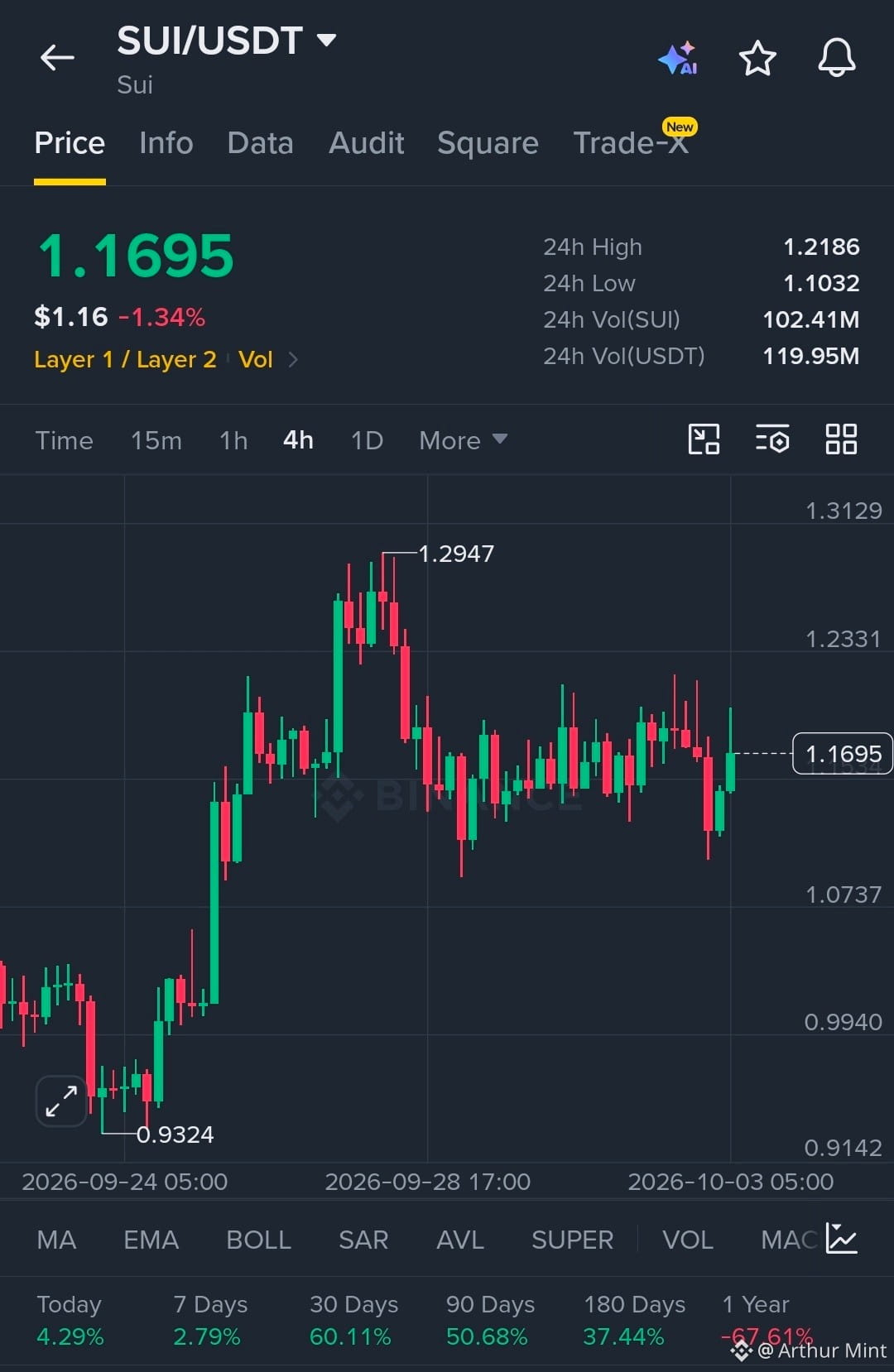
$SUI は、買い手が後退する中で重要な需要の上方で強い状態を維持しています。
構造は引き続きコントロールされており、SUIは1.15のエリアを防衛しつつ、より高い流動性を目指します。
EP
1.16 - 1.17
TP
TP1 1.20
TP2 1.23
TP3 1.29
SL
1.10
1.20の上で流動性が構築されています。一方で、直近の1.10からの反応は強い需要を示しています。1.20の明確な奪還(リクレーム)ができれば、より高いレジスタンスに向けた道と、その継続が開けます。
行こう $SUI
$SUI は、買い手が後退する中で重要な需要の上方で強い状態を維持しています。
構造は引き続きコントロールされており、SUIは1.15のエリアを防衛しつつ、より高い流動性を目指します。
EP
1.16 - 1.17
TP
TP1 1.20
TP2 1.23
TP3 1.29
SL
1.10
1.20の上で流動性が構築されています。一方で、直近の1.10からの反応は強い需要を示しています。1.20の明確な奪還(リクレーム)ができれば、より高いレジスタンスに向けた道と、その継続が開けます。
行こう $SUI
構造は引き続きコントロールされており、SUIは1.15のエリアを防衛しつつ、より高い流動性を目指します。
EP
1.16 - 1.17
TP
TP1 1.20
TP2 1.23
TP3 1.29
SL
1.10
1.20の上で流動性が構築されています。一方で、直近の1.10からの反応は強い需要を示しています。1.20の明確な奪還(リクレーム)ができれば、より高いレジスタンスに向けた道と、その継続が開けます。
行こう $SUI
1
341
·
--
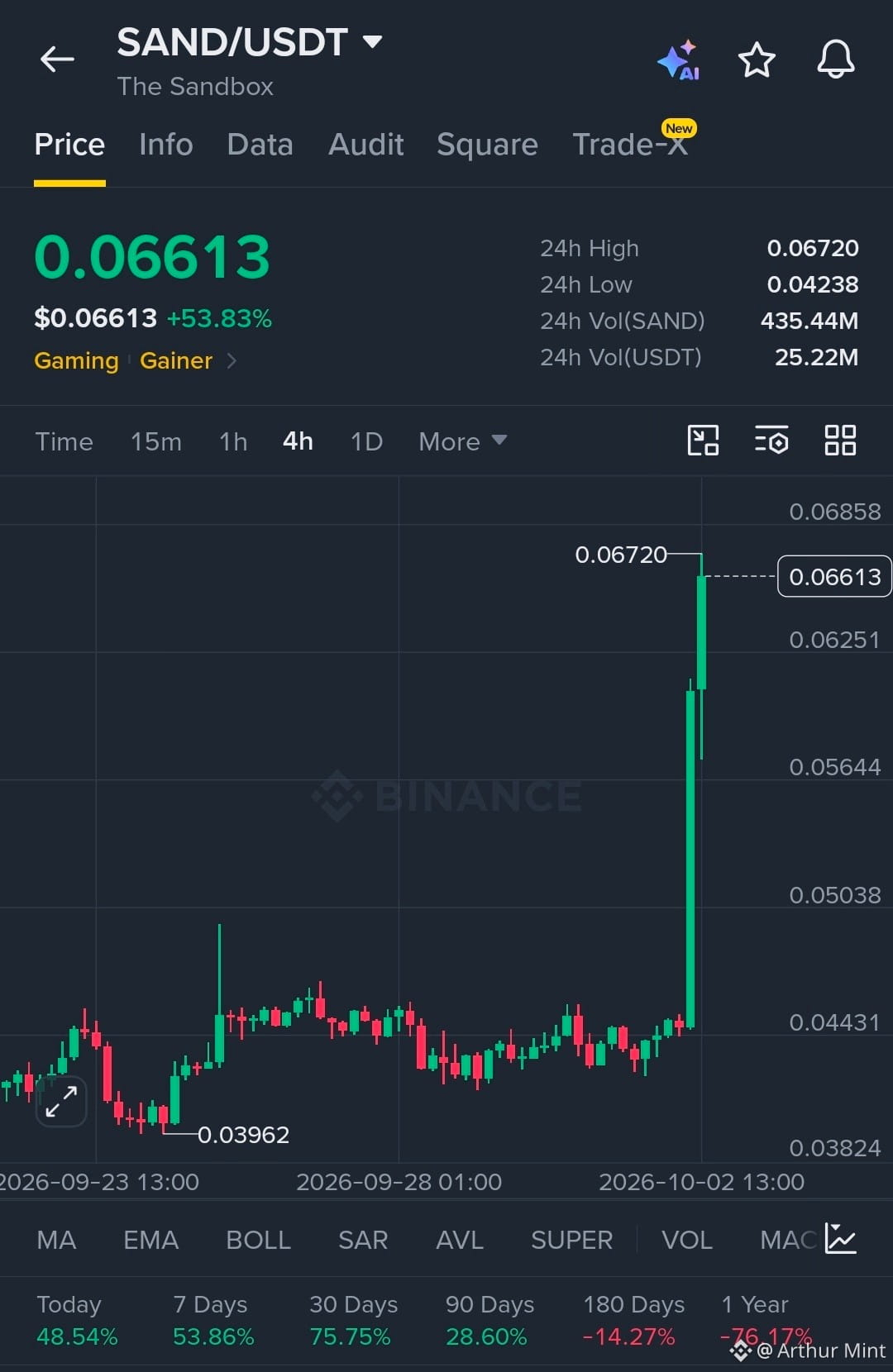
$SAND は、蓄積レンジからのクリーンなブレイクアウトによって爆発的な強さを見せています。
価格がブレイクアウトの構造を上回って維持している間、強気(ブル)が主導権を握っています。
EP
0.06150 - 0.06300
TP
TP1 0.06850
TP2 0.07200
TP3 0.07800
SL
0.05600
鋭い拡大の後、ブレイクアウト上方の流動性を狙っています。0.06720が直近の反応ゾーンとして機能します。ブレイクアウト・エリアを維持すれば強気の構造は保たれますが、サポートを失うとより深い流動性のスイープが引き起こされる可能性があります。
$SAND 、いきましょう
$SAND は、蓄積レンジからのクリーンなブレイクアウトによって爆発的な強さを見せています。
価格がブレイクアウトの構造を上回って維持している間、強気(ブル)が主導権を握っています。
EP
0.06150 - 0.06300
TP
TP1 0.06850
TP2 0.07200
TP3 0.07800
SL
0.05600
鋭い拡大の後、ブレイクアウト上方の流動性を狙っています。0.06720が直近の反応ゾーンとして機能します。ブレイクアウト・エリアを維持すれば強気の構造は保たれますが、サポートを失うとより深い流動性のスイープが引き起こされる可能性があります。
$SAND 、いきましょう
価格がブレイクアウトの構造を上回って維持している間、強気(ブル)が主導権を握っています。
EP
0.06150 - 0.06300
TP
TP1 0.06850
TP2 0.07200
TP3 0.07800
SL
0.05600
鋭い拡大の後、ブレイクアウト上方の流動性を狙っています。0.06720が直近の反応ゾーンとして機能します。ブレイクアウト・エリアを維持すれば強気の構造は保たれますが、サポートを失うとより深い流動性のスイープが引き起こされる可能性があります。
$SAND 、いきましょう
371
·
--
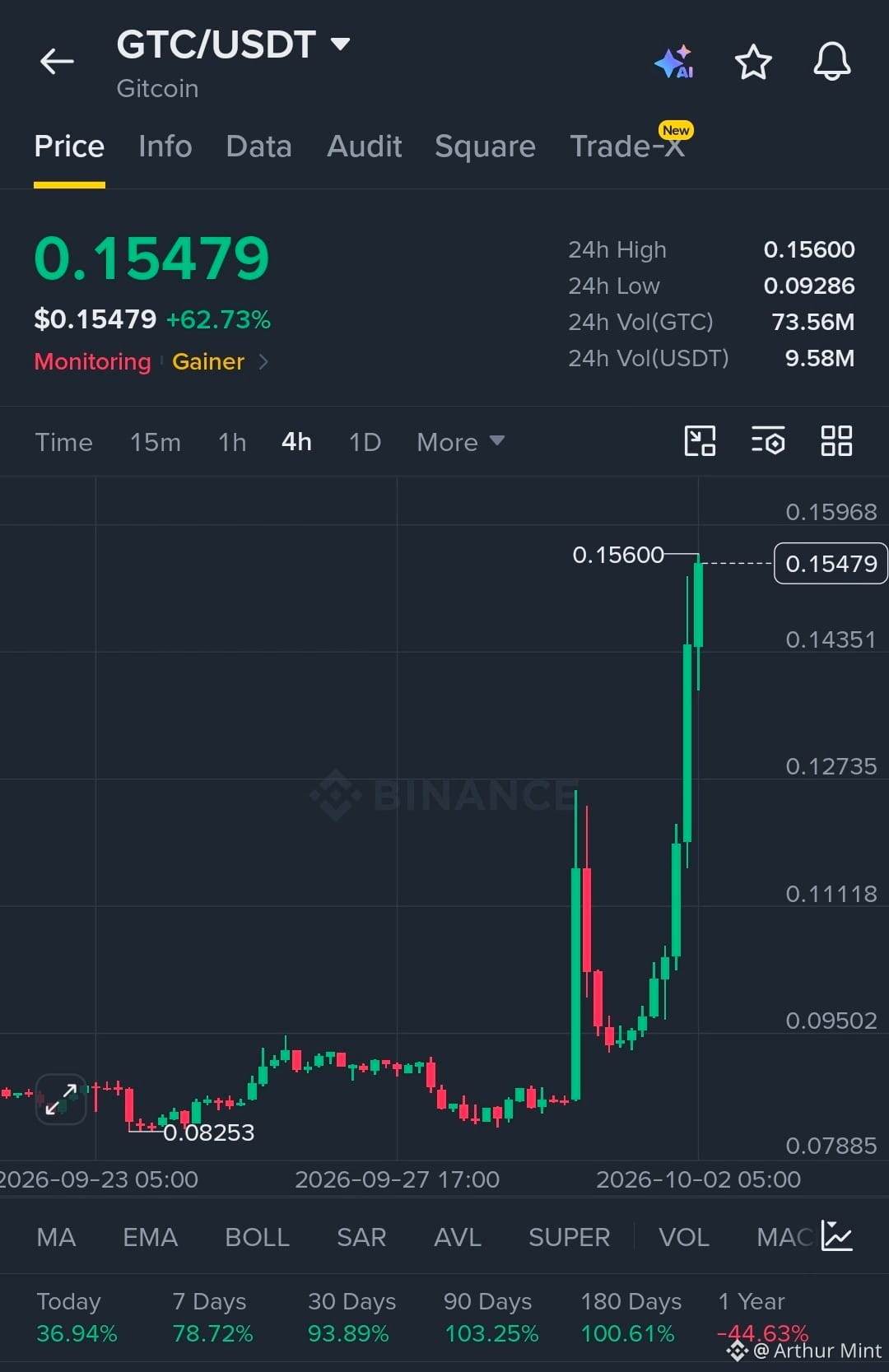
$GTC は主要なレジスタンスを上抜けた後、強い勢いを見せています。
ブレイクアウト・ゾーンの上で強いコントロールが維持されており、構造は強気のままです。
EP
0.150 - 0.154
TP
TP1 0.165
TP2 0.175
TP3 0.190
SL
0.142
0.156を上回る流動性がテストされており、ブレイクアウト・ゾーンからの強い反応が見られます。価格が0.143を上回って推移する限り、構造は強気のままであり、より高い流動性目標が焦点となります。
さあ、$GTC
$GTC は主要なレジスタンスを上抜けた後、強い勢いを見せています。
ブレイクアウト・ゾーンの上で強いコントロールが維持されており、構造は強気のままです。
EP
0.150 - 0.154
TP
TP1 0.165
TP2 0.175
TP3 0.190
SL
0.142
0.156を上回る流動性がテストされており、ブレイクアウト・ゾーンからの強い反応が見られます。価格が0.143を上回って推移する限り、構造は強気のままであり、より高い流動性目標が焦点となります。
さあ、$GTC
ブレイクアウト・ゾーンの上で強いコントロールが維持されており、構造は強気のままです。
EP
0.150 - 0.154
TP
TP1 0.165
TP2 0.175
TP3 0.190
SL
0.142
0.156を上回る流動性がテストされており、ブレイクアウト・ゾーンからの強い反応が見られます。価格が0.143を上回って推移する限り、構造は強気のままであり、より高い流動性目標が焦点となります。
さあ、$GTC
553
·
--
9月は、より強い暗号資産市場への道筋を切り開いた
9月はセンチメントの劇的な反転をもたらし、チャートにはプラス圏での主要な暗号資産の大きな値動きが複数確認できました。
広範なグリーンの地合いは、上院でClarity Actが成立せず、さらにFRBが利上げを行ったにもかかわらず、市場が上方向へ押し上げられたことを反映しています。
ビットコインは連続2週間にわたり50W MA(移動平均)を上回り続け、BTC、ETH、SOLはそれぞれ$87K、$2.8K、$120に到達しました。暗号資産の総時価総額も$3Tを回復しています。
機関投資家の需要が追い風となり、BTC ETFは流入額$2.65B、ETH ETFは$832.4Mを記録しました。ETH/BTCも、約5年ぶりの下落トレンドをついに突破しました。
モメンタムは強いものの、押し目が起こる可能性は残ります。Uptoberはこの勢いをさらに押し進められるでしょうか?
9月は、より強い暗号資産市場への道筋を切り開いた
9月はセンチメントの劇的な反転をもたらし、チャートにはプラス圏での主要な暗号資産の大きな値動きが複数確認できました。
広範なグリーンの地合いは、上院でClarity Actが成立せず、さらにFRBが利上げを行ったにもかかわらず、市場が上方向へ押し上げられたことを反映しています。
ビットコインは連続2週間にわたり50W MA(移動平均)を上回り続け、BTC、ETH、SOLはそれぞれ$87K、$2.8K、$120に到達しました。暗号資産の総時価総額も$3Tを回復しています。
機関投資家の需要が追い風となり、BTC ETFは流入額$2.65B、ETH ETFは$832.4Mを記録しました。ETH/BTCも、約5年ぶりの下落トレンドをついに突破しました。
モメンタムは強いものの、押し目が起こる可能性は残ります。Uptoberはこの勢いをさらに押し進められるでしょうか?
9月はセンチメントの劇的な反転をもたらし、チャートにはプラス圏での主要な暗号資産の大きな値動きが複数確認できました。
広範なグリーンの地合いは、上院でClarity Actが成立せず、さらにFRBが利上げを行ったにもかかわらず、市場が上方向へ押し上げられたことを反映しています。
ビットコインは連続2週間にわたり50W MA(移動平均)を上回り続け、BTC、ETH、SOLはそれぞれ$87K、$2.8K、$120に到達しました。暗号資産の総時価総額も$3Tを回復しています。
機関投資家の需要が追い風となり、BTC ETFは流入額$2.65B、ETH ETFは$832.4Mを記録しました。ETH/BTCも、約5年ぶりの下落トレンドをついに突破しました。
モメンタムは強いものの、押し目が起こる可能性は残ります。Uptoberはこの勢いをさらに押し進められるでしょうか?

375
·
--
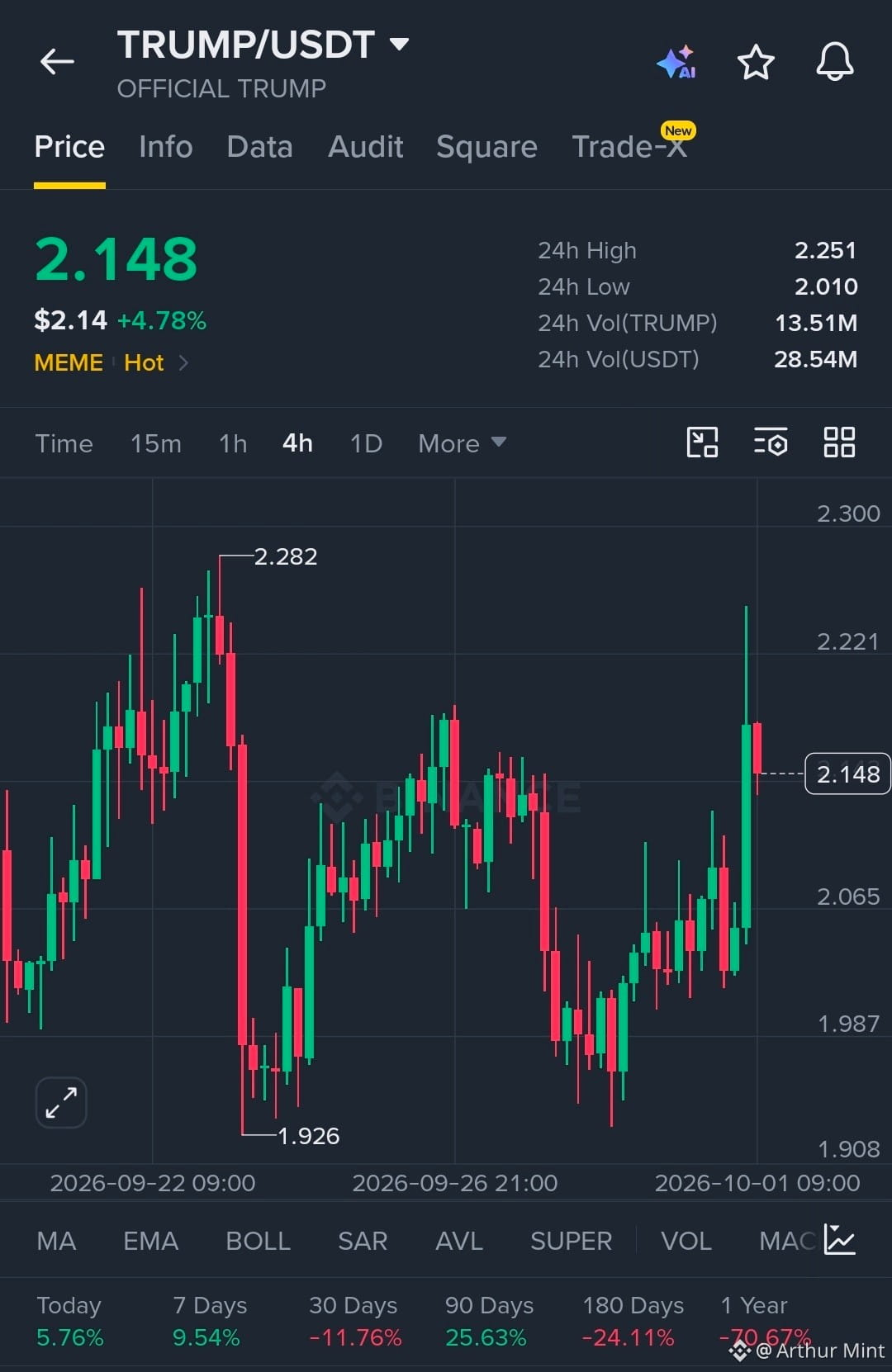
$TRUMP は強い上昇モメンタムを示しています。
構造は強気のままで、買い手が主導権を維持しています。
EP
2.13–2.15
TP
TP1 2.22
TP2 2.28
TP3 2.35
SL
2.01
2.22の上の流動性が主要な目標であり、2.28付近での反応が継続を確認します。価格が2.01のサポート帯を維持している限り、構造は強気のままです。
行きましょう $TRUMP
$TRUMP は強い上昇モメンタムを示しています。
構造は強気のままで、買い手が主導権を維持しています。
EP
2.13–2.15
TP
TP1 2.22
TP2 2.28
TP3 2.35
SL
2.01
2.22の上の流動性が主要な目標であり、2.28付近での反応が継続を確認します。価格が2.01のサポート帯を維持している限り、構造は強気のままです。
行きましょう $TRUMP
構造は強気のままで、買い手が主導権を維持しています。
EP
2.13–2.15
TP
TP1 2.22
TP2 2.28
TP3 2.35
SL
2.01
2.22の上の流動性が主要な目標であり、2.28付近での反応が継続を確認します。価格が2.01のサポート帯を維持している限り、構造は強気のままです。
行きましょう $TRUMP
1
686
·
--
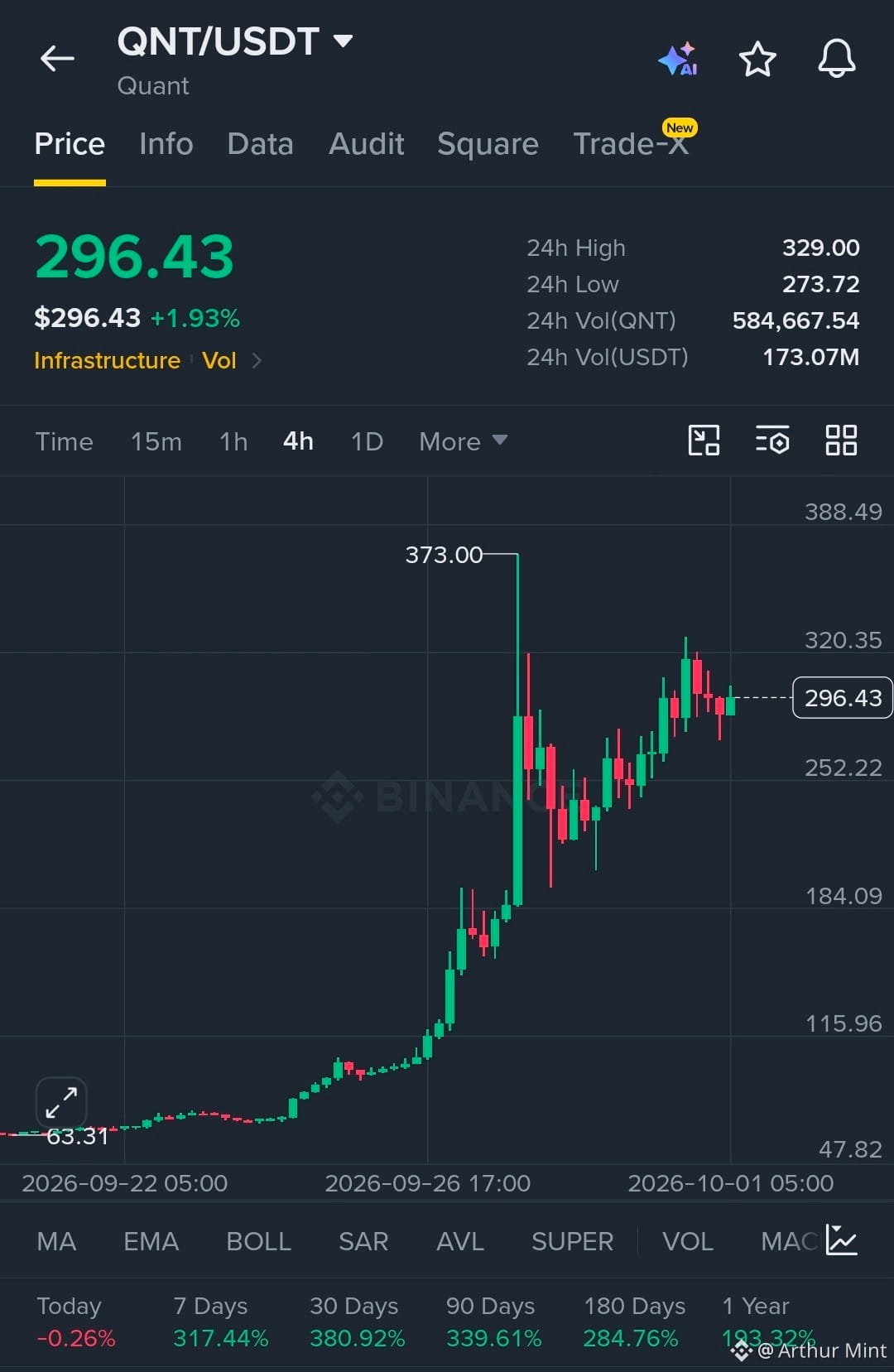
$QNT 強気の勢いが強く、買い手が主導権を維持していることを示しています。
上昇トレンドは維持されており、より高い高値とより高い安値が保たれています。
EP
294-298
TP
TP1 320
TP2 340
TP3 373
SL
273
320を上回る流動性が最重要の目標であり、294-298付近での反応が継続を確認します。273が維持されている限り、構造は強気のままです。
さあ行こう $QNT
$QNT 強気の勢いが強く、買い手が主導権を維持していることを示しています。
上昇トレンドは維持されており、より高い高値とより高い安値が保たれています。
EP
294-298
TP
TP1 320
TP2 340
TP3 373
SL
273
320を上回る流動性が最重要の目標であり、294-298付近での反応が継続を確認します。273が維持されている限り、構造は強気のままです。
さあ行こう $QNT
上昇トレンドは維持されており、より高い高値とより高い安値が保たれています。
EP
294-298
TP
TP1 320
TP2 340
TP3 373
SL
273
320を上回る流動性が最重要の目標であり、294-298付近での反応が継続を確認します。273が維持されている限り、構造は強気のままです。
さあ行こう $QNT
1
619
·
--
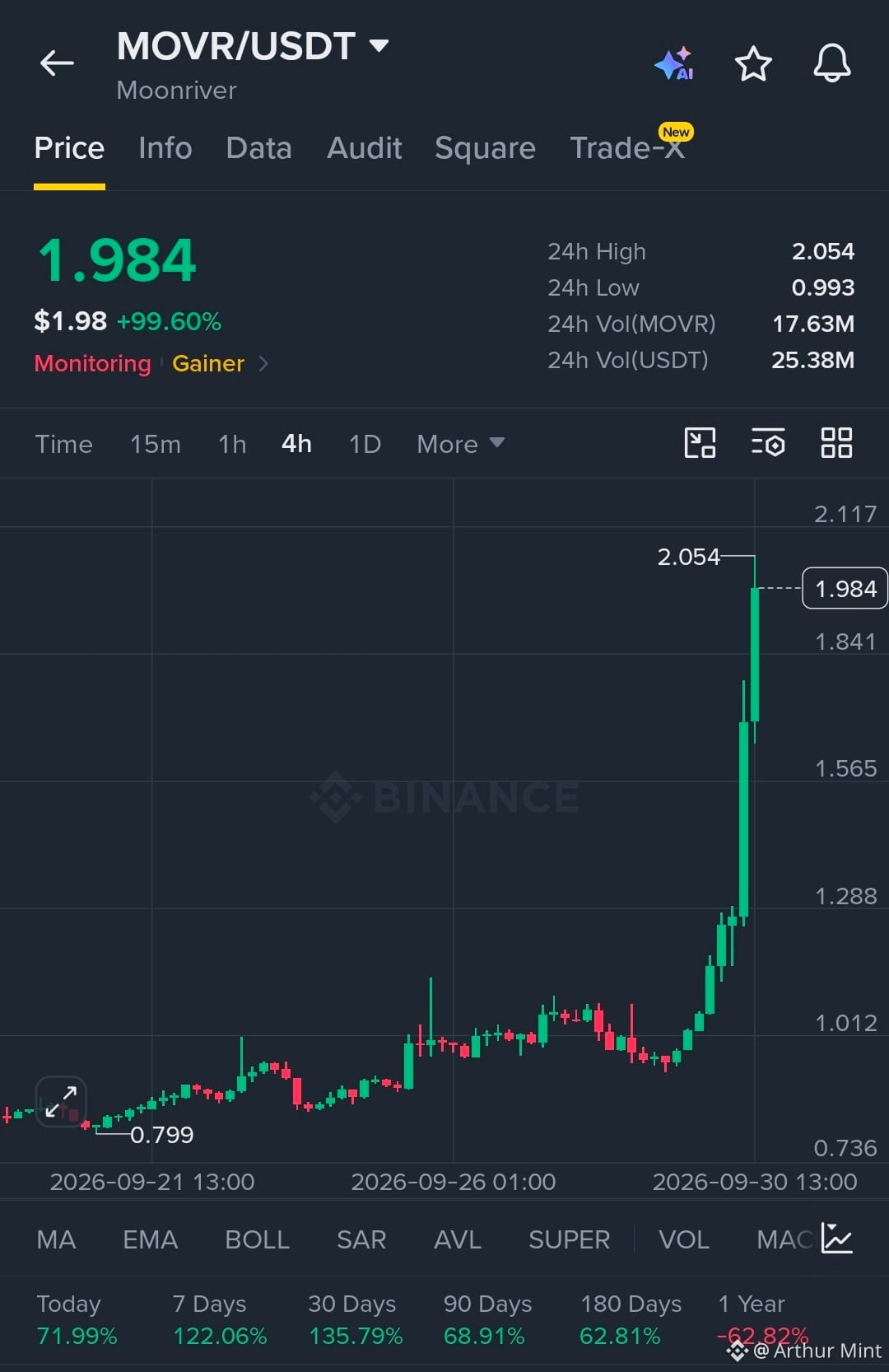
$MOVR は強力な上昇拡大により爆発的な強気モメンタムを示しています。
価格が主要なサポート上のブレイクアウト構造を維持している限り、買い手が主導権を握っています。
EP
1.90 - 1.98
TP
TP1 2.05
TP2 2.25
TP3 2.50
SL
1.72
流動性は直近の高値の上に位置しており、ブレイクアウト・ゾーン周辺での反応が継続の可否を決めます。構造を維持することで、強気の動きは保たれます。
さあ、$MOVR へ
$MOVR は強力な上昇拡大により爆発的な強気モメンタムを示しています。
価格が主要なサポート上のブレイクアウト構造を維持している限り、買い手が主導権を握っています。
EP
1.90 - 1.98
TP
TP1 2.05
TP2 2.25
TP3 2.50
SL
1.72
流動性は直近の高値の上に位置しており、ブレイクアウト・ゾーン周辺での反応が継続の可否を決めます。構造を維持することで、強気の動きは保たれます。
さあ、$MOVR へ
価格が主要なサポート上のブレイクアウト構造を維持している限り、買い手が主導権を握っています。
EP
1.90 - 1.98
TP
TP1 2.05
TP2 2.25
TP3 2.50
SL
1.72
流動性は直近の高値の上に位置しており、ブレイクアウト・ゾーン周辺での反応が継続の可否を決めます。構造を維持することで、強気の動きは保たれます。
さあ、$MOVR へ
1
691
·
--
ブリッシュ
$MU Q4 決算:強気…しかし本当の試練はFY2027
私は決算前のMUに強気寄りだが、これは単に予想を上回るかどうかの話ではない。真の試験は、マイクロンが利益率を維持し、FY2027に向けても強い需要を保てるかどうかだ。
マイクロンは第3四半期に売上$41.46B、非GAAP EPSは$25.11を達成した。第4四半期について経営陣は、売上は約$50B、粗利率86%、非GAAP EPSは$31を見込んでいる。
なぜ強気なのか
AIインフラには莫大なメモリ帯域幅が必要だ。マイクロンのHBM4はすでに高い出荷量で出荷が進んでおり、HBM4Eの生産は2027年に見込まれている。
また、マイクロンはDRAMの約20%とNANDの約3分の1に相当する16の戦略的顧客契約も獲得している。こうした複数年契約は需要の見通しを改善し、「メモリ・スーパーサイクル」論の裏付けとなる。
強気シナリオ
もし第4四半期の利益率が86%近辺で維持され、DRAM/NANDの価格が強含みのままで、経営陣がFY2027に向けた供給の引き締まりとHBM需要の堅調さを確認できるなら、メモリ・スーパーサイクルにはさらに上振れの余地が出てくる可能性がある。
弱気シナリオ
すでに市場の期待は高い。決算の上振れがあっても、FY2027のガイダンスが失望を招いたり、価格や利益率が弱まったりすれば、売りにつながる可能性がある。増加する業界の供給は依然として大きなリスクだ。
私の見解
MUはもう単なる「メモリの価格」ストーリーではない。AI需要、HBMの成長、供給の制約、そして長期の顧客契約によって、このサイクルは過去のものとは違った展開になるかもしれない。
私は決算に向けて強気だが、私がより重視するのはヘッドラインのEPSよりもFY2027のガイダンスだ。最大の疑問は、マイクロンは86%の粗利率を維持できるのか、そしてメモリ・スーパーサイクルはどれだけ長く続き得るのか、という点にある。
#EarningsSeason #MU
$MU Q4 決算:強気…しかし本当の試練はFY2027
私は決算前のMUに強気寄りだが、これは単に予想を上回るかどうかの話ではない。真の試験は、マイクロンが利益率を維持し、FY2027に向けても強い需要を保てるかどうかだ。
マイクロンは第3四半期に売上$41.46B、非GAAP EPSは$25.11を達成した。第4四半期について経営陣は、売上は約$50B、粗利率86%、非GAAP EPSは$31を見込んでいる。
なぜ強気なのか
AIインフラには莫大なメモリ帯域幅が必要だ。マイクロンのHBM4はすでに高い出荷量で出荷が進んでおり、HBM4Eの生産は2027年に見込まれている。
また、マイクロンはDRAMの約20%とNANDの約3分の1に相当する16の戦略的顧客契約も獲得している。こうした複数年契約は需要の見通しを改善し、「メモリ・スーパーサイクル」論の裏付けとなる。
強気シナリオ
もし第4四半期の利益率が86%近辺で維持され、DRAM/NANDの価格が強含みのままで、経営陣がFY2027に向けた供給の引き締まりとHBM需要の堅調さを確認できるなら、メモリ・スーパーサイクルにはさらに上振れの余地が出てくる可能性がある。
弱気シナリオ
すでに市場の期待は高い。決算の上振れがあっても、FY2027のガイダンスが失望を招いたり、価格や利益率が弱まったりすれば、売りにつながる可能性がある。増加する業界の供給は依然として大きなリスクだ。
私の見解
MUはもう単なる「メモリの価格」ストーリーではない。AI需要、HBMの成長、供給の制約、そして長期の顧客契約によって、このサイクルは過去のものとは違った展開になるかもしれない。
私は決算に向けて強気だが、私がより重視するのはヘッドラインのEPSよりもFY2027のガイダンスだ。最大の疑問は、マイクロンは86%の粗利率を維持できるのか、そしてメモリ・スーパーサイクルはどれだけ長く続き得るのか、という点にある。
#EarningsSeason #MU
私は決算前のMUに強気寄りだが、これは単に予想を上回るかどうかの話ではない。真の試験は、マイクロンが利益率を維持し、FY2027に向けても強い需要を保てるかどうかだ。
マイクロンは第3四半期に売上$41.46B、非GAAP EPSは$25.11を達成した。第4四半期について経営陣は、売上は約$50B、粗利率86%、非GAAP EPSは$31を見込んでいる。
なぜ強気なのか
AIインフラには莫大なメモリ帯域幅が必要だ。マイクロンのHBM4はすでに高い出荷量で出荷が進んでおり、HBM4Eの生産は2027年に見込まれている。
また、マイクロンはDRAMの約20%とNANDの約3分の1に相当する16の戦略的顧客契約も獲得している。こうした複数年契約は需要の見通しを改善し、「メモリ・スーパーサイクル」論の裏付けとなる。
強気シナリオ
もし第4四半期の利益率が86%近辺で維持され、DRAM/NANDの価格が強含みのままで、経営陣がFY2027に向けた供給の引き締まりとHBM需要の堅調さを確認できるなら、メモリ・スーパーサイクルにはさらに上振れの余地が出てくる可能性がある。
弱気シナリオ
すでに市場の期待は高い。決算の上振れがあっても、FY2027のガイダンスが失望を招いたり、価格や利益率が弱まったりすれば、売りにつながる可能性がある。増加する業界の供給は依然として大きなリスクだ。
私の見解
MUはもう単なる「メモリの価格」ストーリーではない。AI需要、HBMの成長、供給の制約、そして長期の顧客契約によって、このサイクルは過去のものとは違った展開になるかもしれない。
私は決算に向けて強気だが、私がより重視するのはヘッドラインのEPSよりもFY2027のガイダンスだ。最大の疑問は、マイクロンは86%の粗利率を維持できるのか、そしてメモリ・スーパーサイクルはどれだけ長く続き得るのか、という点にある。
#EarningsSeason #MU

2
406
·
--
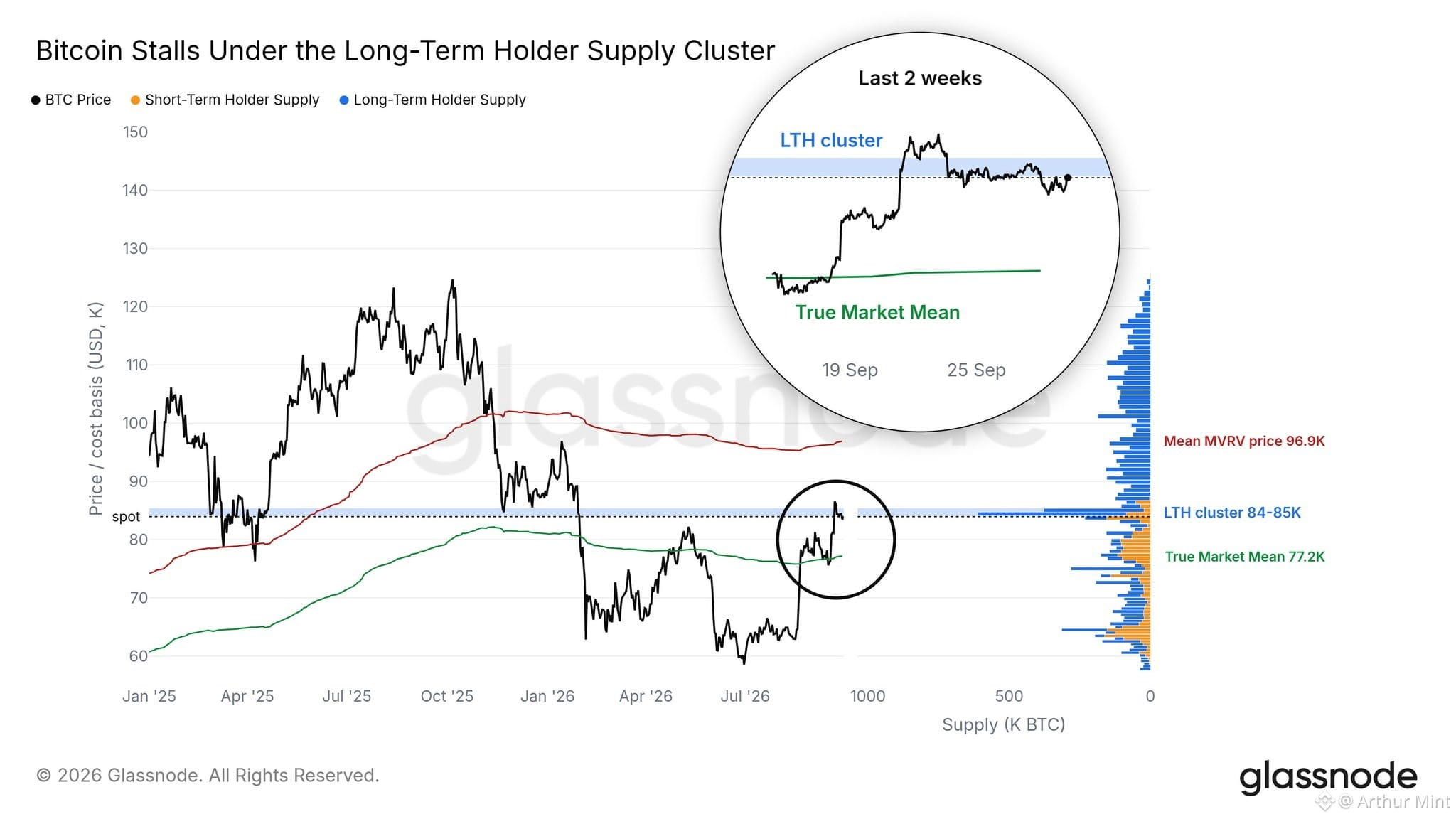
ビットコインは重要な供給バリアに直面
ビットコインは、最も重い長期保有者の供給ゾーン(約84K〜85K)付近で停滞している。
チャート上で最大の長期保有者クラスターであり、このエリアは強気派にとって極めて重要なテストとなる。
このゾーンを明確に上抜けし、その後も保有を維持できれば、ラリーの継続と強気モメンタムの強化につながる可能性がある。
それでも、拒否反応(反発)が起きれば、$BTC はレジスタンスの下にとどまり続けるかもしれない。
ビットコインはこのゾーンを奪還し、さらに上を目指せるだろうか?
ビットコインは重要な供給バリアに直面
ビットコインは、最も重い長期保有者の供給ゾーン(約84K〜85K)付近で停滞している。
チャート上で最大の長期保有者クラスターであり、このエリアは強気派にとって極めて重要なテストとなる。
このゾーンを明確に上抜けし、その後も保有を維持できれば、ラリーの継続と強気モメンタムの強化につながる可能性がある。
それでも、拒否反応(反発)が起きれば、$BTC はレジスタンスの下にとどまり続けるかもしれない。
ビットコインはこのゾーンを奪還し、さらに上を目指せるだろうか?
ビットコインは、最も重い長期保有者の供給ゾーン(約84K〜85K)付近で停滞している。
チャート上で最大の長期保有者クラスターであり、このエリアは強気派にとって極めて重要なテストとなる。
このゾーンを明確に上抜けし、その後も保有を維持できれば、ラリーの継続と強気モメンタムの強化につながる可能性がある。
それでも、拒否反応(反発)が起きれば、$BTC はレジスタンスの下にとどまり続けるかもしれない。
ビットコインはこのゾーンを奪還し、さらに上を目指せるだろうか?
1
276
ログインして、さらにコンテンツを読む
厳選トピックで世界の暗号資産トレーダーの仲間入り
⚡️ 暗号資産に関する最新かつ有益な情報が見つかります。
💬 世界最大の暗号資産取引所から信頼されています。
👍 認証を受けたクリエイターから、有益なインサイトを得られます。
メール / 電話番号