



The Real Reason Fogo Stands Out
I pay attention to Fogo for a reason that has nothing to do with TPS screenshots or leaderboard comparisons. What interests me is how an SVM based Layer 1 quietly forces developers to mature. When you build on this execution model, you are not just getting speed. You are stepping into an environment where good state design is rewarded and sloppy architecture is exposed immediately.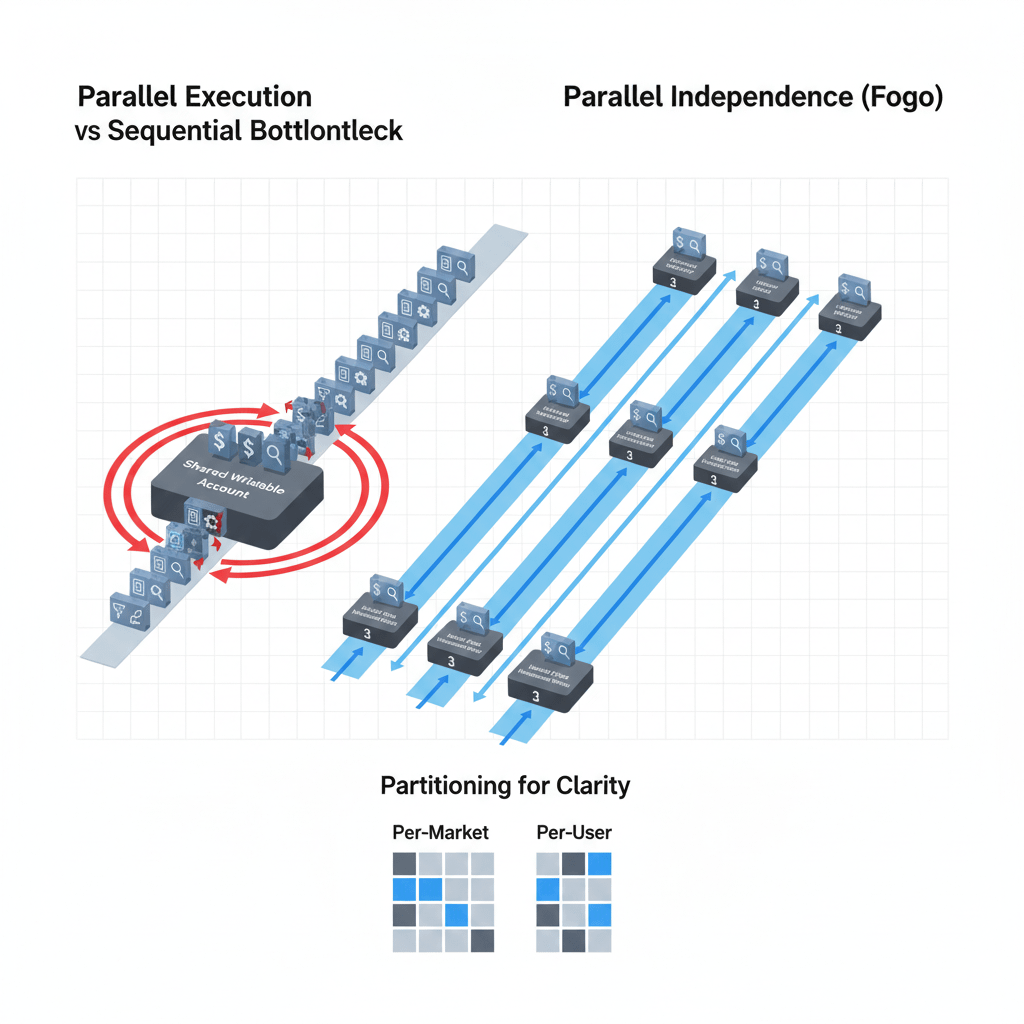
Speed Becomes Real When Applications Matter
Fogo is shaped around a simple idea. If the runtime is genuinely fast and capable of processing independent transactions at the same time, then the application becomes the bottleneck. That is where things get real. The SVM does not ask whether your marketing claims sound good. It asks whether your transactions are actually independent when real users arrive.
Why Parallel Execution Is Not Simple
Parallel execution sounds easy in theory. Transactions run together. Capacity increases. Everything feels smooth. In practice, it only works when transactions are not fighting over the same state. On an SVM chain, state is explicit. Every transaction must declare what it reads and what it writes. If those declarations overlap, the runtime cannot safely execute them in parallel. It has to serialize them.
Your Own Design Can Limit Speed
That means the chain cannot hide poor design choices. If you structure your application so that every action writes to the same shared account, you have created a traffic jam inside a system built for multiple lanes.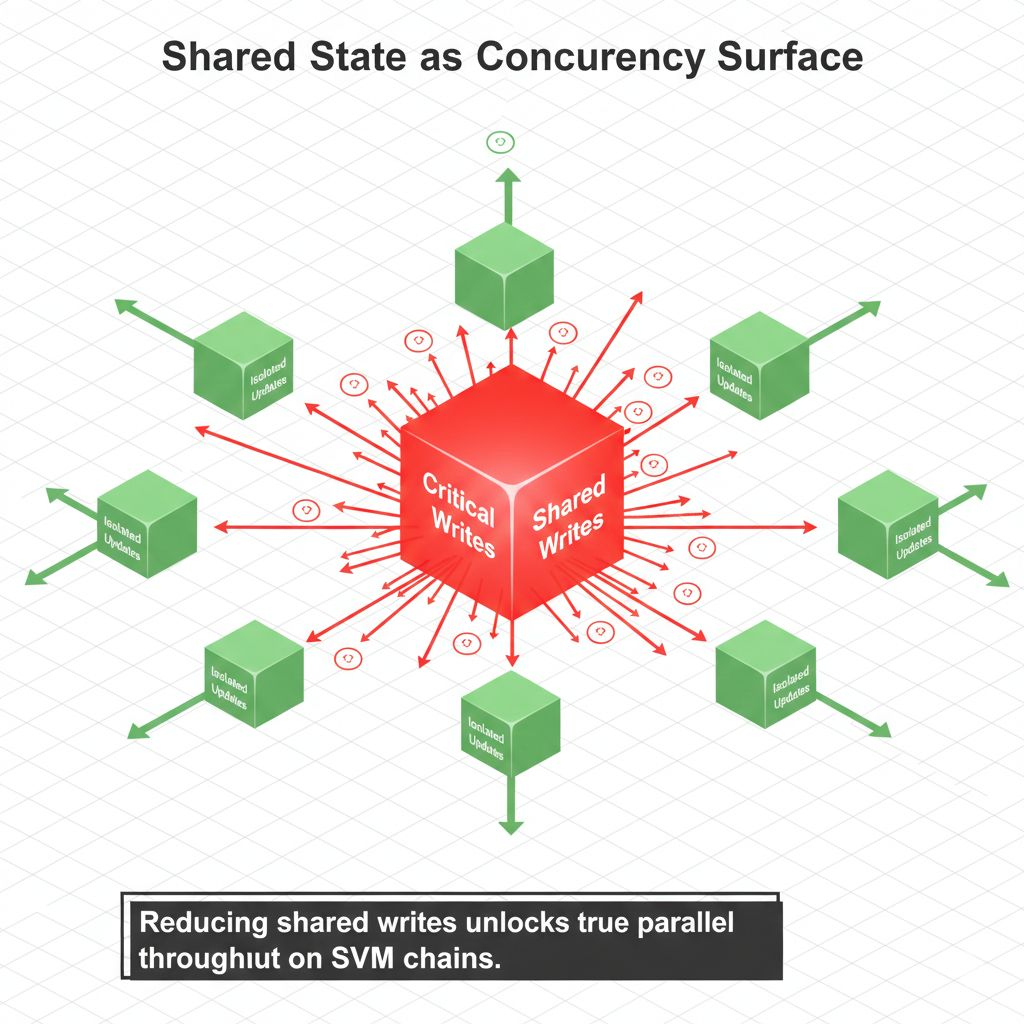
Performance Lives at the Application Layer
This is the part people miss. They talk about performance as if it lives entirely at the chain layer. On Fogo, performance becomes an application level responsibility. Two apps can sit on the same chain. One remains smooth under load. The other feels stuck. The difference is not the runtime. It is how state was partitioned.
Sequential Habits Can Kill Parallelism
Developers coming from sequential systems often carry habits that feel safe. One of the most common is maintaining a single central state object that every action updates. It feels clean. It feels organized. It gives you one source of truth. On an SVM chain, that same pattern becomes a silent throttle. Every user is now competing to write to the same place. The runtime is ready for parallelism, but the application forces everything into one lane.
State Layout as Concurrency Policy
On Fogo, state layout becomes a concurrency policy. Every writable account behaves like a lock. If too many flows depend on the same lock, you collapse parallelism even when the network is not congested. The slowdown does not come from the chain. It comes from your own architecture.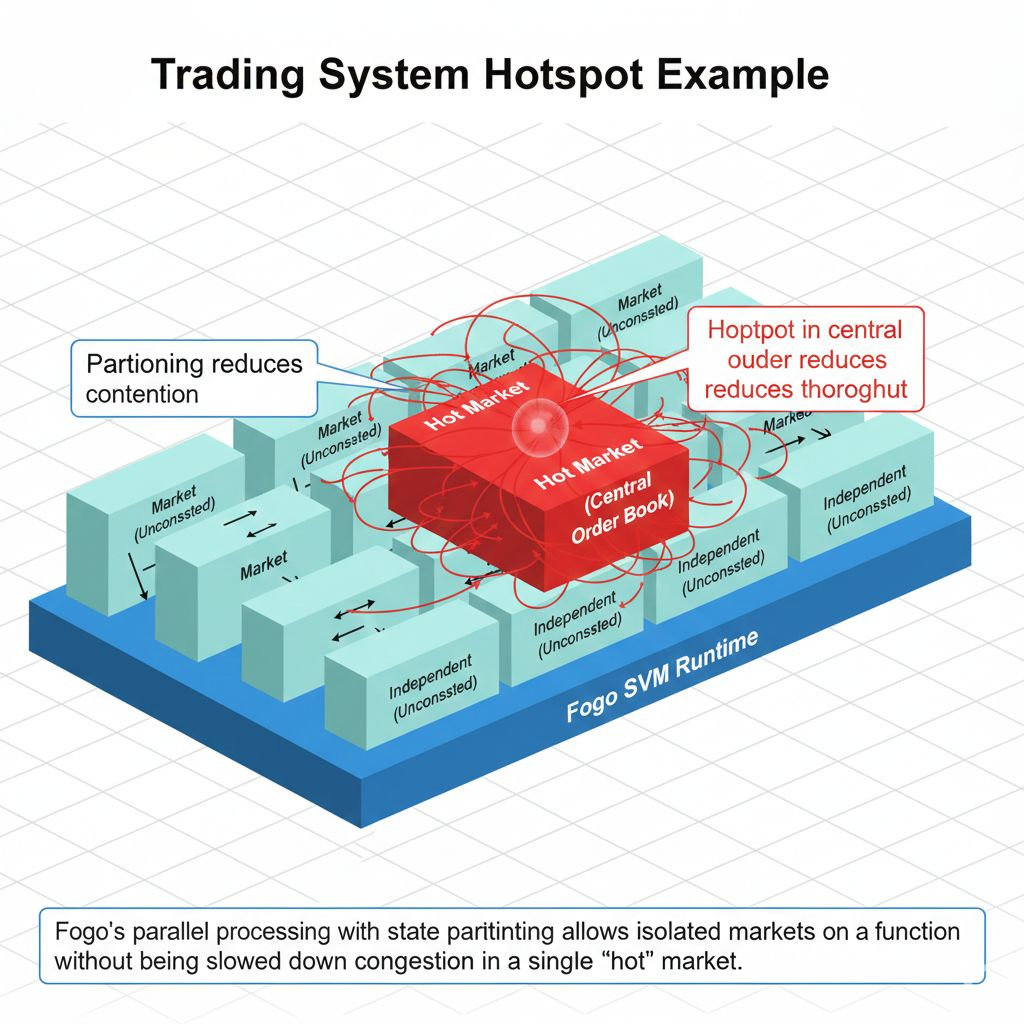
Think of Writable State as Decisions
A better mental model is this. Every piece of writable state defines who can move at the same time. The goal is not to eliminate shared state entirely. Some shared data is necessary. The goal is discipline. Separate what must be shared from what was shared out of convenience. Convenience is often where parallel execution dies.
Patterns That Keep Apps Fast
The patterns that keep applications fast on Fogo are not flashy. They are strict.
Separate user state aggressively
Isolate market specific state instead of funneling everything through a single global object
Avoid writing to shared accounts just to update metrics or visibility data
Those derived values can often be computed from events rather than mutated inside every transaction.
Successful Parallel Designs
Look at designs that handle stress well.
User actions are mostly local
A user updates their own state and a narrow slice of shared state that is truly required
Shared components are structured so unrelated users do not collide
Per user separation is not just tidy organization. It is a throughput strategy. Per market separation prevents one hot market from dragging down everything else.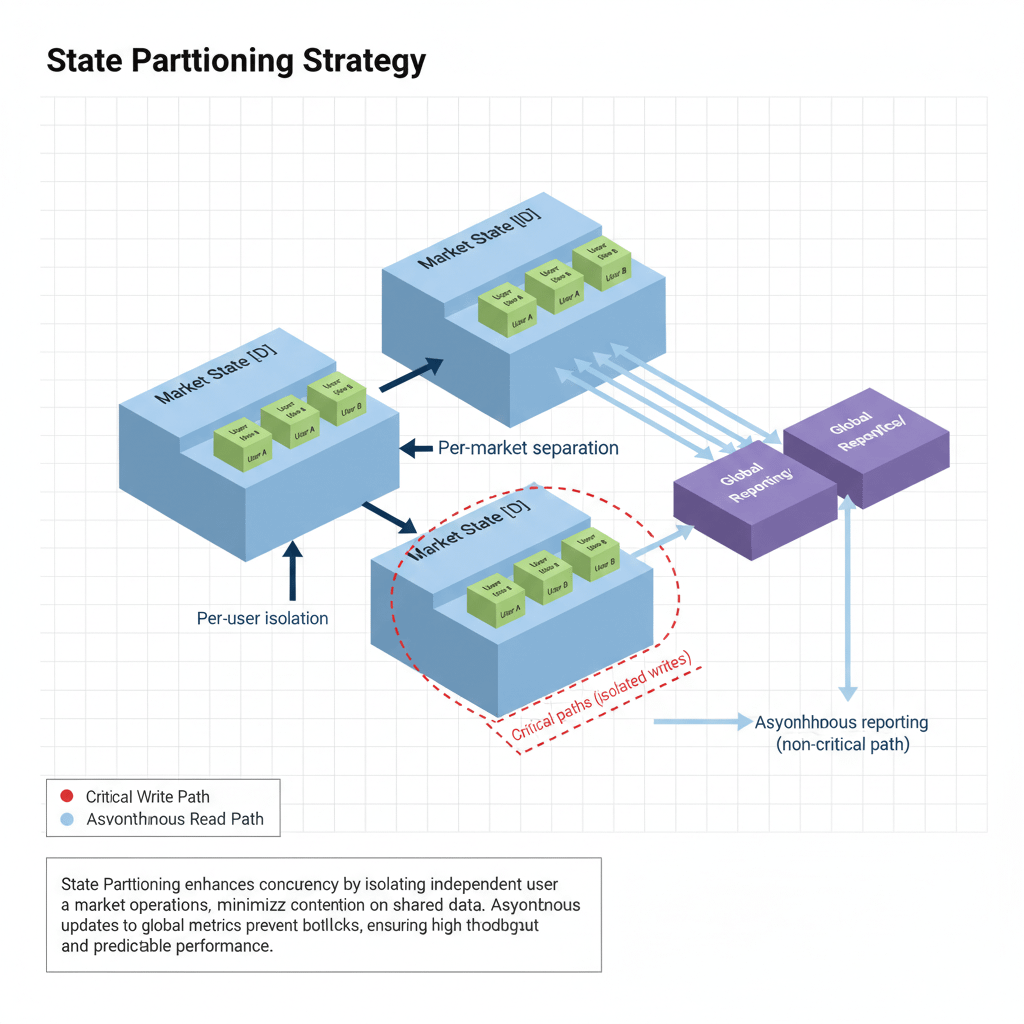
Global Reporting Traps
The subtle trap is global reporting. Developers love instant global counters.
Total volume
Global fees
Activity trackers
Leaderboards
The metrics themselves are fine. The problem appears when every transaction updates those global accounts. Now every path includes a shared write. Conflicts multiply. You have built a sequential system inside a parallel runtime. No matter how fast Fogo is, your design forces it to behave sequentially.
Separating Correctness and Reporting
Parallel execution pushes builders to separate correctness from reporting.
Critical state changes happen in one place
Reporting can update on a different cadence, be sharded, or derived from logs
Once you stop forcing every transaction to mutate the same reporting account, true concurrency becomes possible.
Trading and Interactive Systems
Trading systems highlight the point.
Trading concentrates activity
Concentration creates contention
A single central order book account serializes all operations
High frequency environments make flaws impossible to hide. Every shared writable account becomes a battlefield. Instead of independent flows progressing in parallel, everyone queues behind the same lock. Performance degrades, and market behavior shifts because contention dominates ordering.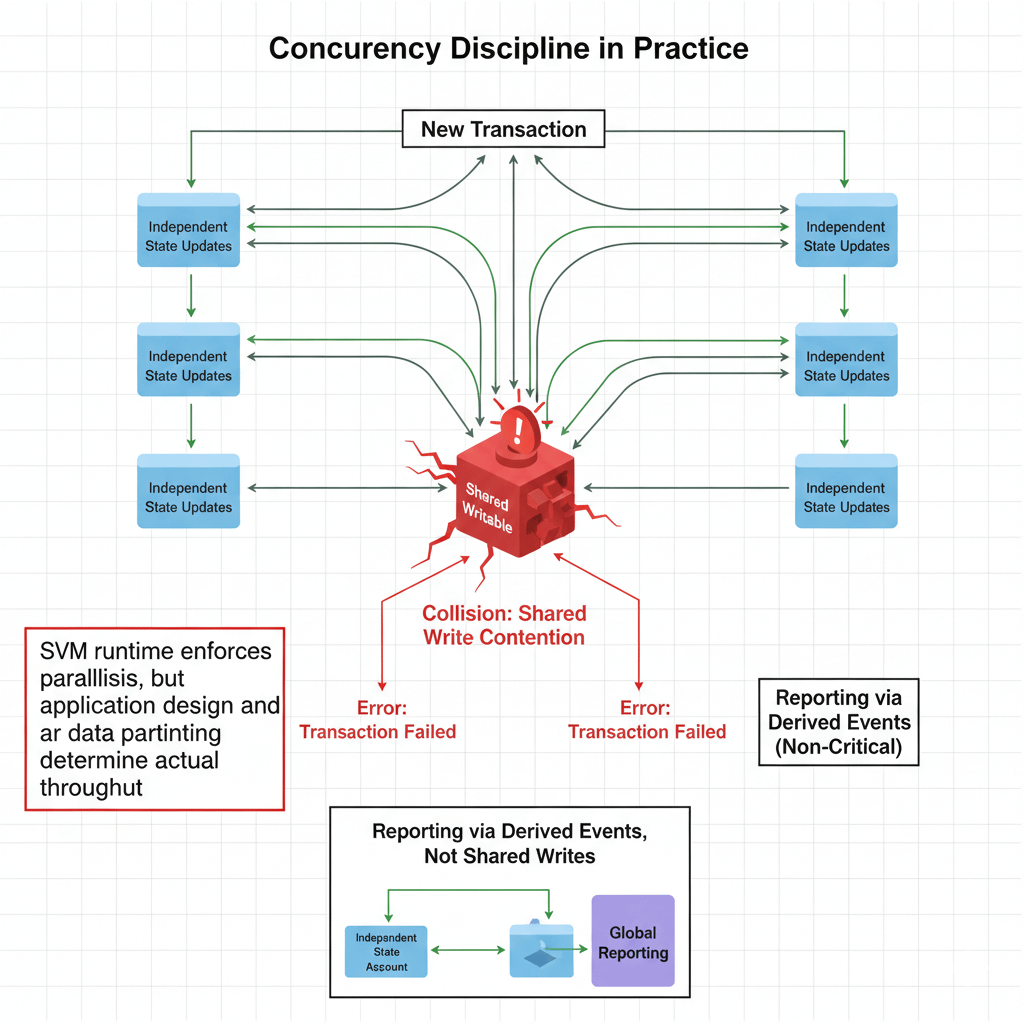
Data Heavy Applications
Reads are rarely the problem
Writes are
Avoid updating shared caches or stamping values into global accounts for convenience
Keep shared writes confined to dedicated flows
The Cost of Parallel Architecture
None of this is free. Parallel friendly architecture requires:
More components
More careful testing
Better observability
You are building real concurrency, not theoretical concurrency. But the reward is scale that matches what the SVM runtime is designed to deliver.
The Most Costly Mistake
The most damaging mistake is simple. One shared writable account that every transaction touches. On a chain like Fogo, that mistake becomes obvious quickly. The faster the chain, the clearer it becomes that your design is the constraint.
Fogo Makes the Conversation Honest
What Fogo does is make the developer conversation honest.
It is not enough to say the chain is fast
The execution model demands developers design for independence
Partition state intelligently
Treat state as a concurrency surface
Conclusion: Discipline Over Marketing
Parallel execution is not a marketing feature. It is a discipline. On an SVM based Layer 1 like Fogo, that discipline is enforced by design.