The cryptocurrency market is known for huge price swings. At one point in 2025, the total crypto market was worth over $4 trillion, then it dropped sharply months later. What causes these dramatic ups and downs? Often, it’s not just technology or economics… it’s human emotion.

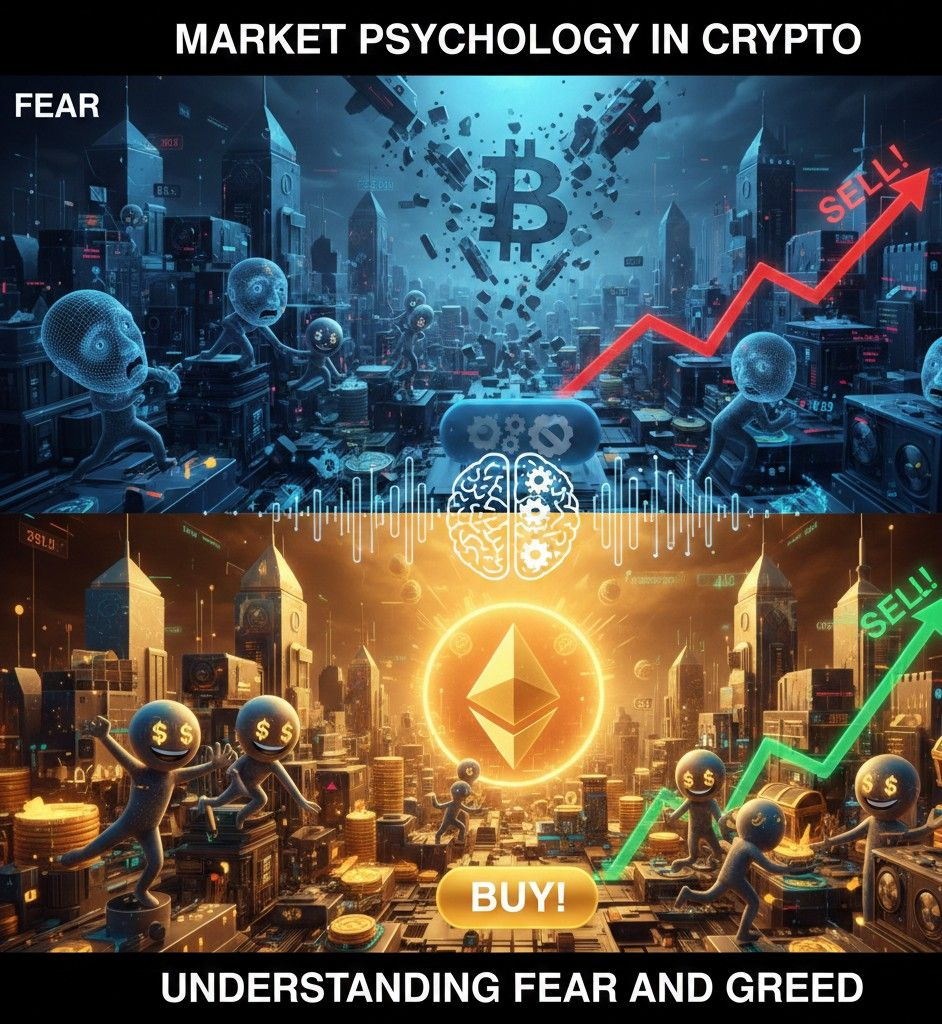
In crypto, fear and greed are two powerful forces that strongly influence prices and investor decisions.

What Is Market Psychology?

Market psychology refers to the collective emotions by and behavior of investors that shape market movements. While traditional finance assumes people make logical decisions, real markets show something different. People react emotionally, especially when money is involved.

When investors panic, they sell. When they get excited, they buy. When millions of people do this at the same time, prices move rapidly.

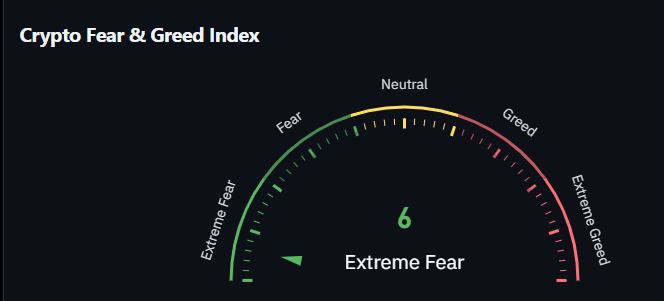
How Fear Affects Crypto Markets

Fear usually appears during price crashes, bad news, or uncertainty. It often leads to:

• Panic selling to avoid further losses

• Market capitulation, where even long term holders give up

• Moving funds to stablecoins or cash for safety

Fear can push prices down quickly, sometimes even below an asset’s true value.

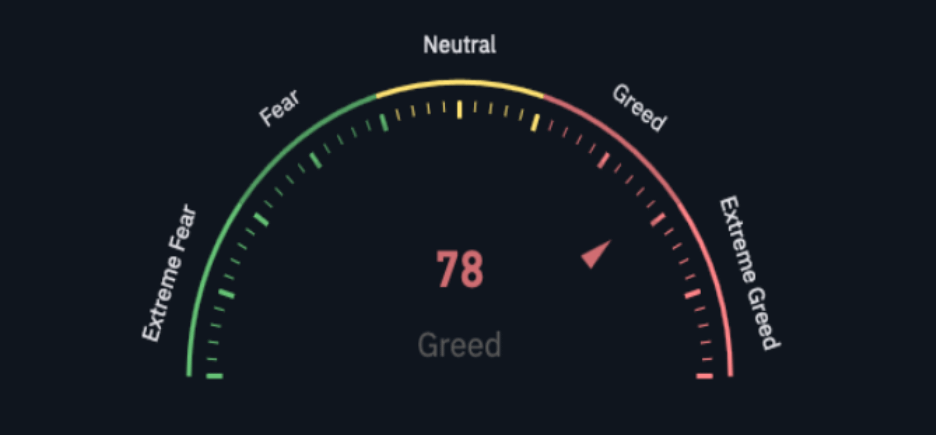
How Greed Drives the Market

Greed dominates during rising markets. Investors want bigger profits and don’t want to miss opportunities. This leads to:

• FOMO (Fear of Missing Out), buying because others are buying

• Overconfidence after quick gains

• High risk leverage trading to amplify profits

• Chasing hype or trending coins

Greed can push prices far above realistic levels, often before sharp corrections.

Why Crypto Amplifies Emotions

Crypto markets react faster than traditional markets because they operate nonstop and information spreads instantly. Key reasons include:

• 24/7 global trading

• Social media driven narratives

• Easy access to high leverage

• Sharp price moves during stress events

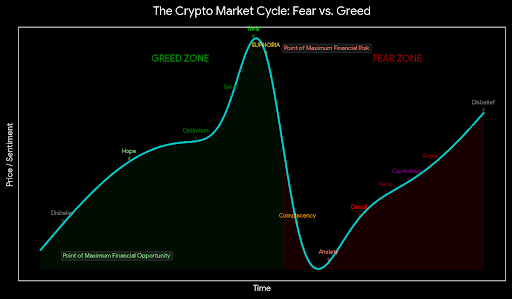
This creates constant emotional cycles.

Why Understanding Fear and Greed Matters

Recognizing emotional phases helps investors avoid common mistakes like selling at the bottom or buying at the peak.

Helpful habits include setting risk limits before trading, avoiding impulsive decisions, focusing on data instead of hype, and choosing a clear long term or short term strategy.

The Bottom Line

Fear and greed are permanent features of crypto markets. They drive boom and bust cycles and influence nearly every price move.

You can’t remove emotions from the market, but understanding them can help you make smarter and more disciplined decisions. In crypto, emotional awareness is a real competitive advantage.