For years, Binance and its founder, Changpeng Zhao (CZ), have rarely enjoyed a "quiet" moment in the media. From regulatory scrutiny and liquidity rumors to internal governance shifts and speculative doom-and-gloom narratives, waves of FUD (Fear, Uncertainty, Doubt) have crashed against the ecosystem in every market cycle.
Yet, a fascinating paradox remains: The more FUD surrounds Binance, the further it expands. Binance hasn't just survived; it has maintained its position as the gravity center of the global crypto industry. This resilience isn't based on blind faith—it is the result of systematic risk management and operational "survival DNA."
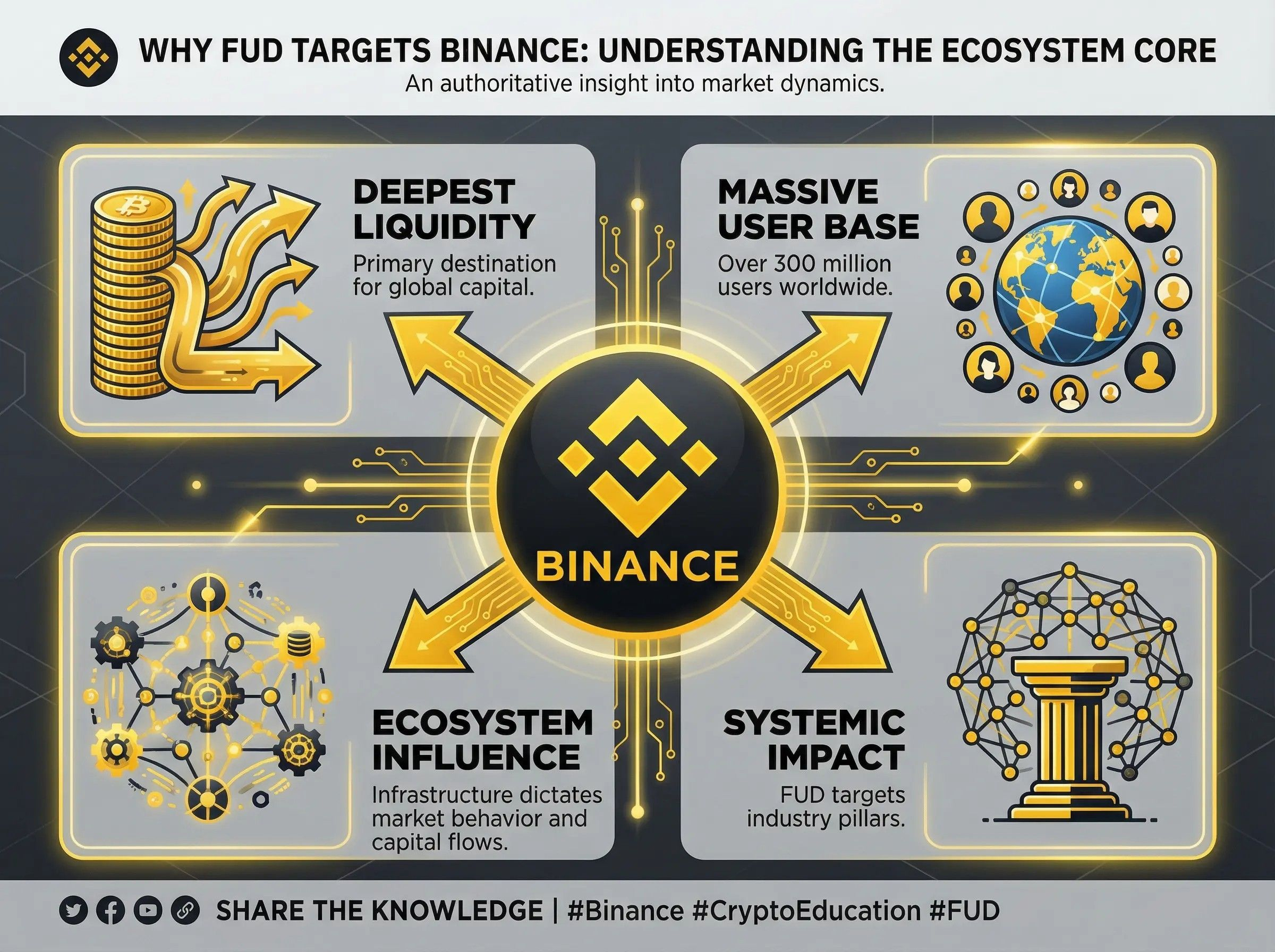
1. The Target: Why Is FUD Always Aimed at Binance?
In any financial system, the entities at the core of the infrastructure naturally bear the most pressure. Binance is one of the few organizations that meets every systemic criteria:
Deepest Liquidity: The primary destination for global capital.
Massive User Base: Surpassing 300 million users worldwide.
Ecosystem Influence: Its infrastructure dictates market behavior and capital flows.
The Rule of Systemic Impact: FUD doesn't target the insignificant. It concentrates on the pillars because a disruption there creates ripples across the entire industry. History shows that organizations without systemic importance are never targeted this relentlessly for this long.
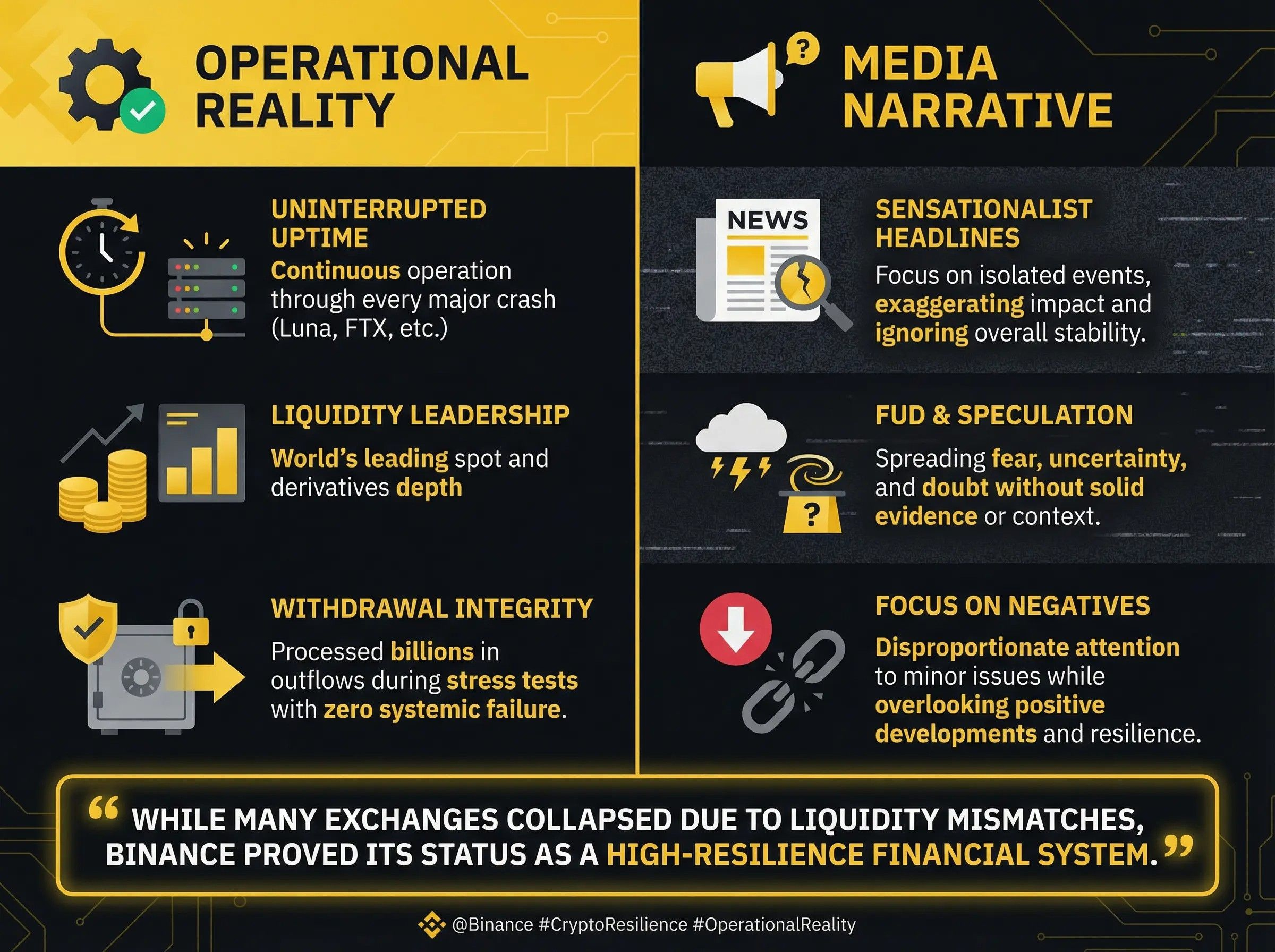
2. Operational Reality vs. Media Narrative
While critics focus on headlines, Binance focuses on data. Instead of engaging in endless public disputes, the platform lets its performance speak for itself:
Uninterrupted Uptime: Operating continuously through every major industry crash (Luna, FTX, etc.).
Liquidity Leadership: Maintaining the world’s leading spot and derivatives depth.
Withdrawal Integrity: Successfully processing billions in outflows during "stress test" periods without a single systemic failure.
"While many exchanges collapsed due to liquidity mismatches, Binance proved its status as a high-resilience financial system."
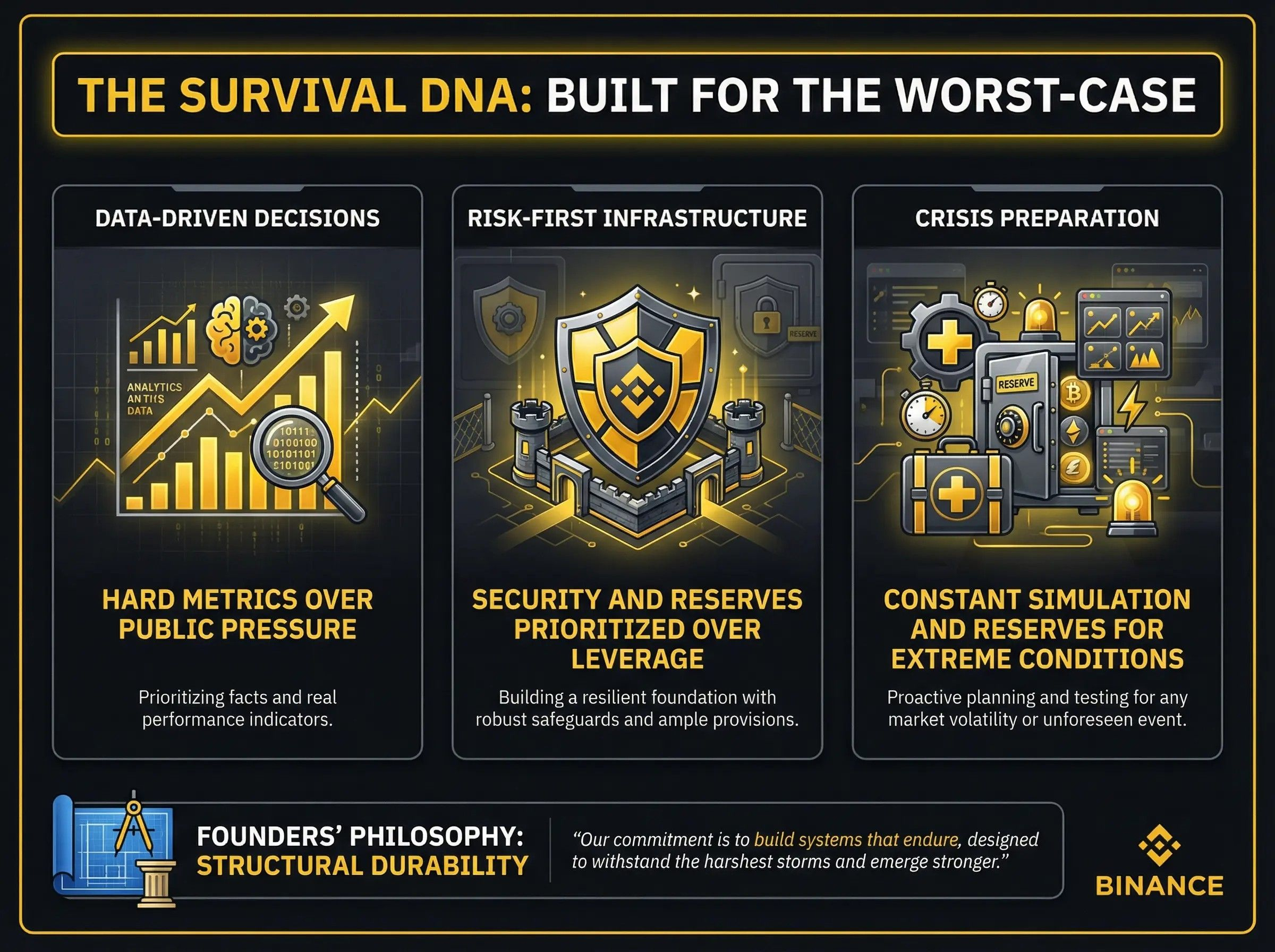
3. The Survival DNA: Built for the Worst-Case
The philosophy established by CZ and Yi He was never about short-term optics; it was about structural durability. This mindset includes:
Data-Driven Decisions: Ignoring public pressure in favor of hard metrics.
Risk-First Infrastructure: Prioritizing security and reserves over aggressive, leverage-driven expansion.
Crisis Preparation: Constantly simulating and maintaining reserves for "extreme" market conditions.
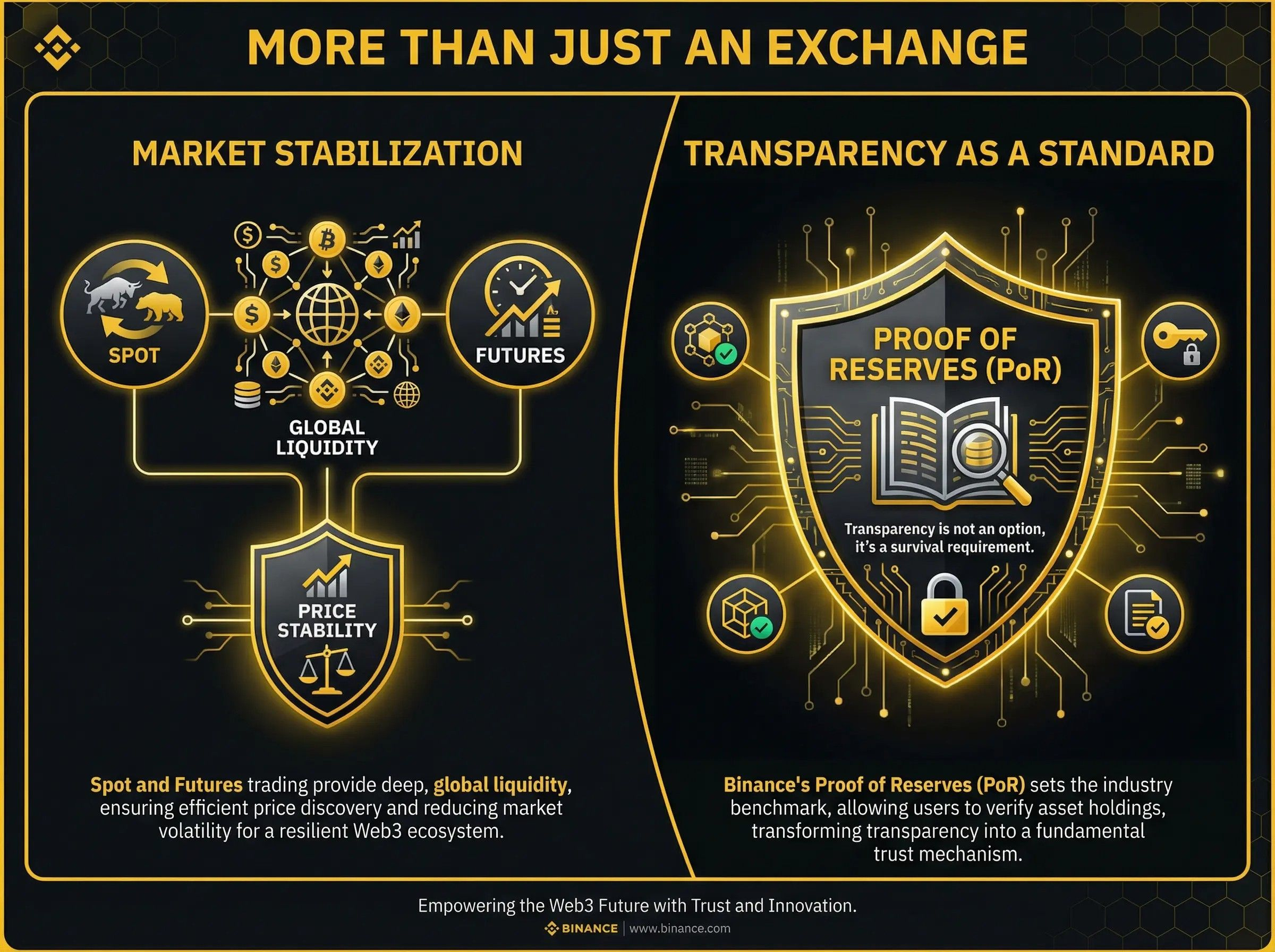
4. More Than Just an Exchange
One reason FUD often misses the mark is that it treats Binance as a single, isolated app. In reality, it is a multi-layered Web3 infrastructure ecosystem.
Market Stabilization: Binance Spot and Futures provide the liquidity and low slippage necessary to stabilize pricing across the entire global market.
Transparency as a Standard: Through Proof of Reserves (PoR), Binance turned transparency from a marketing buzzword into a survival requirement.
5. The Strategic Advisor Role
Perhaps the most telling sign of Binance’s credibility is the role of its leadership. While the media focuses on FUD, several sovereign nations have invited CZ to serve as a strategic advisor. These roles involve:
Designing national blockchain frameworks.
Building digital financial infrastructure.
Developing domestic stablecoin models.
These are not symbolic titles. They require deep technical trust and long-term thinking—the kind of trust that wouldn't exist if the underlying organization were truly as "weak" as the FUD suggests.

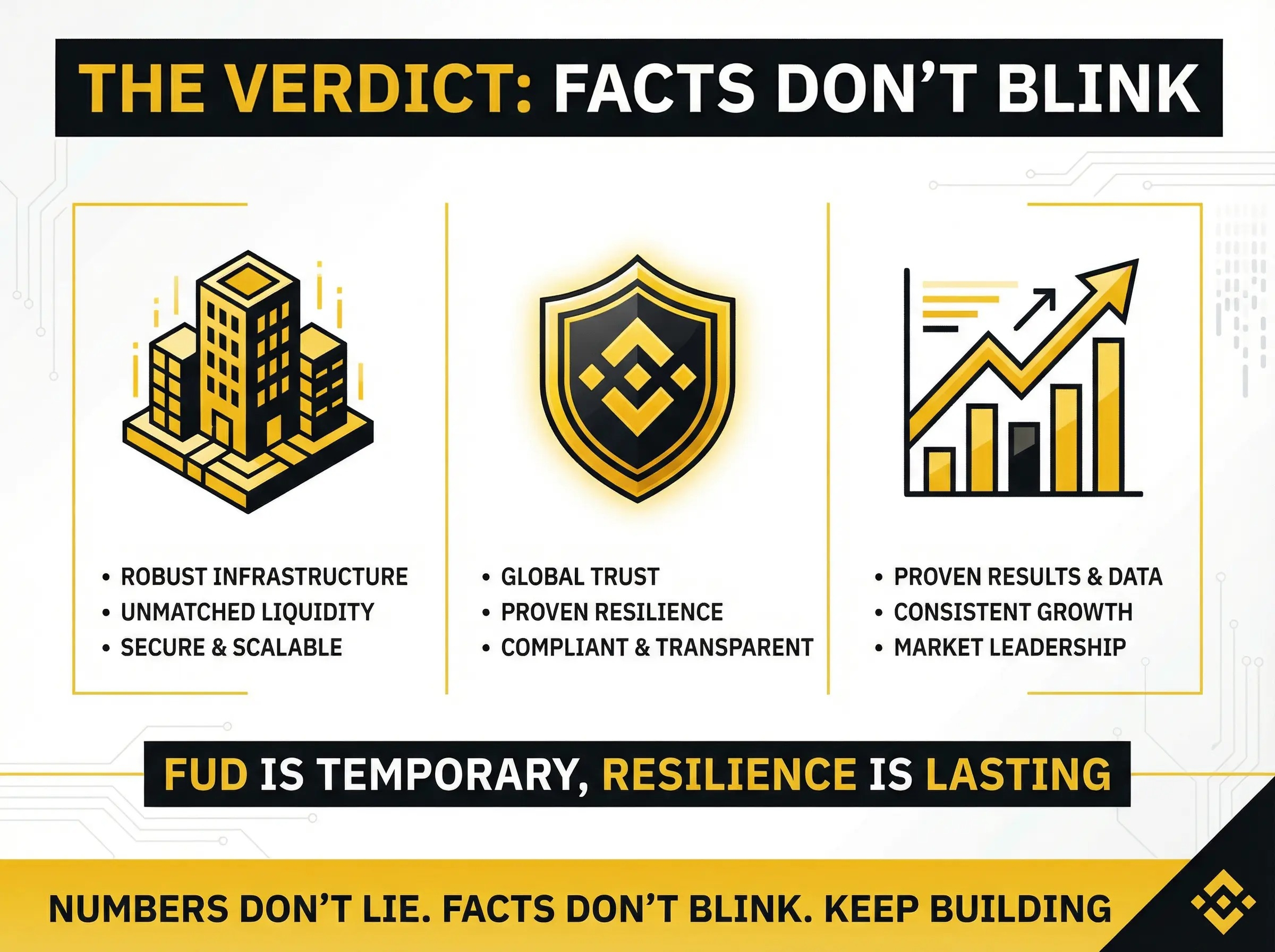
6. The Verdict: Facts Don't Blink
When competitors cannot match Binance in terms of liquidity, infrastructure, or trust, media narratives and psychological pressure become the only tools left to use.
FUD may disrupt market sentiment for a day or a week, but infrastructure and resilience determine who stays standing for a decade. Binance remains the central exchange of the global crypto industry not because of words, but because of what has been built, tested, and proven.
Numbers don’t lie. Facts don’t blink. Keep building.