

#washingtonupdate
washingtonupdate
閲覧回数 3,091
10人が討論中
注目
最新

·
--
記事
翻訳参照
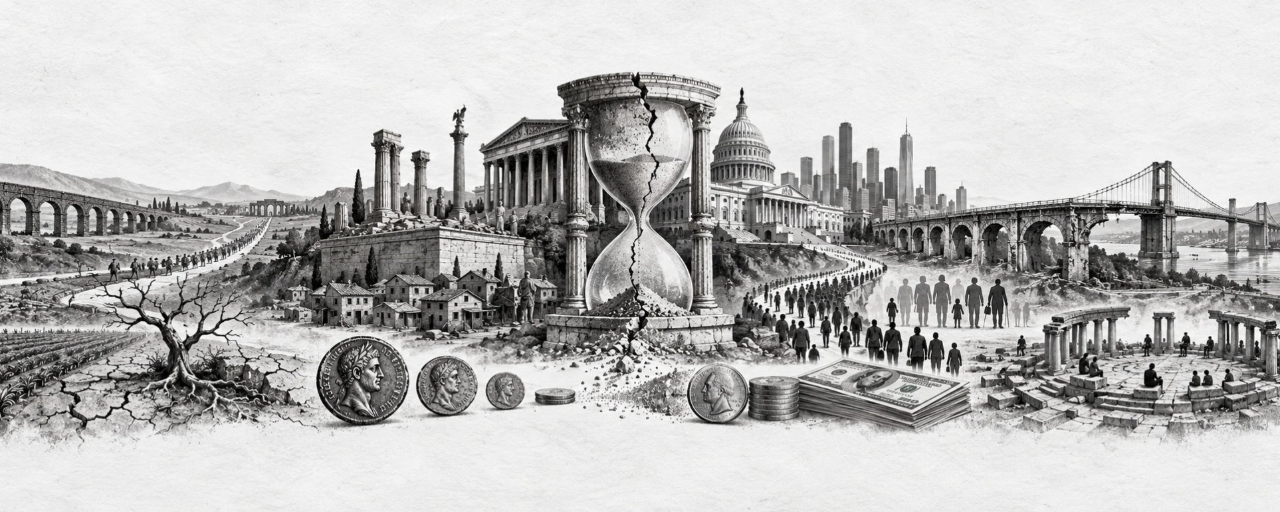
8 Parallels Between the Roman Empire and the United States of AmericaThe Roman Empire and the United States are history's most influential powers. Though separated by time and geography, there are some striking parallels between their rise, development, and potential decline. In this blog post, we'll dive into the similarities and differences between these two mighty civilizations, focusing on the past 40 years of the United States.
1. Political Instability and Corruption
The Roman Empire
The Roman Empire faced significant political instability, especially during its later years. The empire saw a rapid turnover of emperors, many of whom were corrupt, ineffective, or simply not up to the task of ruling such a vast and diverse realm. Corruption was widespread, with officials often using their positions for personal gain rather than the public good.
The United States
The United States, too, has seen a decline in the stability and effectiveness of its political system. Polarization has grown over the past four decades, and trust in institutions has waned. Corruption, though not as pervasive as in Rome, remains a concern in various government sectors.
2. Economic Inequality and Struggles
The Roman Empire
In Rome, wealth was heavily concentrated in the hands of a few elites. Most of the population lived in poverty, leading to social unrest and resentment. This inequality was exacerbated by Rome's tax system, which disproportionately burdened the lower classes.
The United States
Income inequality in the United States has been rising for the past four decades, with the rich getting richer and the poor getting poorer. This has led to social tensions and concerns about the long-term stability of the nation's economic system.
3. Monetary Policy and Inflation
The Roman Empire
The Roman Empire struggled with inflation, particularly in its later years. This was mainly due to the empire's debasement of its currency, reducing the precious-metal content of coins to finance wars and other expenses. This, in turn, led to a loss of confidence in the currency and economic troubles.
The decline in purchasing power resulted from several factors, including inflation, currency debasement, and economic instability. As the Roman Empire expanded, it faced rising costs for its military, administration, and infrastructure. To fund these expenses, the Roman government often resorted to debasing the denarius by reducing its silver content.
Initially, the denarius was made of nearly pure silver, but over time, the silver content was progressively reduced. By mixing silver with base metals like copper, the Roman government could mint more silver coins from the same amount of silver, effectively increasing the money supply. However, this currency debasement led to inflation, as the coins' actual value was less than their face value. The increased money supply diminished the purchasing power of the denarius.
Inflation was further exacerbated by other economic factors, such as wage and price controls, which were implemented to curb rising costs but often led to shortages and black markets. The Roman government also struggled to collect taxes effectively, leading to further financial strain and increasing reliance on currency debasement.
As the denarius became less valuable, people began to lose confidence in the currency. This led to a general decline in trade and economic activity. People began hoarding more valuable commodities such as gold and silver bullion, and merchants became reluctant to accept the debased currency. As the purchasing power of the denarius continued to decline, it contributed to the overall economic instability and eventual decline of the Roman Empire.
The United States
The United States has experienced the same currency debasement as Rome. The passage of the Gold Reserve Act of 1934 meant that the American people could no longer hold gold except in the form of jewelry and collectors' coins.
Silver certificates were introduced in the United States as a form of currency in 1878. These certificates represented a specific amount of silver bullion and could be redeemed for physical silver. The use of silver certificates as currency continued until the 1960s. The issuance of new silver certificates ceased in 1964, and they were discontinued as legal tender after the Coinage Act of 1965, which removed the requirement that U.S. currency be backed by precious metals. Silver certificates that had already been issued remained legal tender and could be used as currency. Also, coinage was no longer made from 90% silver in 1964 and was phased out by 1969, with dollars, half dollars, and dimes made from nickel-plated copper. This is the debasement of coinage, such as the Roman Denarius.
The United States stopped allowing other central banks to convert U.S. dollars into gold on August 15, 1971. This was when President Richard Nixon announced the "Nixon Shock," which effectively ended the Bretton Woods system of fixed exchange rates and took the U.S. off the gold standard. This meant foreign governments could no longer exchange U.S. dollars for gold. The U.S. dollar became a fiat currency, and inflation increased in the 1970s.
The limitation on gold ownership in the United States was repealed after President Gerald Ford signed a bill legalizing private ownership of gold coins, bars, and certificates, codified in Pub. L. 93–373, which went into effect on December 31, 1974.
Inflation has persisted, especially after the 2008 financial crisis and the recent pandemic. The Federal Reserve's monetary policies, which have focused on low interest rates and quantitative easing, have fueled inflation and the risk of long-term economic instability.
4. Military Overreach and Resource Allocation
The Roman Empire
Rome's military was stretched thin across its vast empire. Constant warfare and the need to defend its borders drained resources that could have been used for other purposes, such as infrastructure or social programs. Eventually, Rome's overextended military contributed to its decline.
The United States
The United States has maintained a significant global military presence since World War II. However, in recent decades, critics have argued that the nation's military commitments have become overextended and costly, diverting resources from critical domestic needs.
5. Demographic Shifts and Immigration
The Roman Empire
The Roman Empire experienced a population decline and demographic changes due to migration, disease, and other factors. These shifts impacted Rome's economy and social fabric as new populations and cultures mingled with the traditional Roman way of life.
The United States
Demographic changes in the United States over the past 40 years have included an aging population, slowing birth rates, and increased immigration. These changes have led to debates over immigration policy, cultural assimilation, and the future of American identity.
6. Infrastructure Challenges
The Roman Empire
Maintaining Rome's vast infrastructure, including roads, aqueducts, and public buildings, became increasingly difficult as resources were stretched thin. The empire struggled to keep up with the demands of its aging infrastructure, ultimately contributing to its decline.
The United States
The United States faces similar challenges with its aging infrastructure. Bridges, roads, and public transportation systems have been in decline for decades, and the nation has struggled to allocate the necessary resources for their maintenance and improvement. This has led to concerns about the long-term economic and social impact.
7. The Decline in Civic Values
The Roman Empire
Rome experienced a decline in traditional civic values and social cohesion as its empire expanded. This decline was further exacerbated by political corruption, economic struggles, and the influx of new cultural influences.
The United States
In recent decades, concerns have been raised about the erosion of shared values and social fragmentation in the United States. Political polarization, declining civic engagement, and the influence of social media have contributed to a growing sense of disunity and mistrust among Americans.
8. Agricultural Degradation and Resource Depletion
The Roman Empire
Rome faced challenges with resource depletion and environmental issues, including soil erosion, deforestation, and desertification. These factors contributed to food shortages, economic strain, and social unrest.
The United States
The United States is grappling with the impacts of mining, pollution, and resource depletion. Flooding, extreme weather events, and biodiversity loss threaten the nation's economy, environment, and public health.
Conclusion
While there are many parallels between the Roman Empire and the United States, it's essential to remember that the two civilizations are fundamentally different, and the U.S. faces unique challenges. However, by examining the shared struggles and lessons from Rome's decline, politicians can better understand the potential pitfalls facing the United States and work to address them proactively. In doing so, they can help ensure the nation's continued stability and prosperity for future generations.
“Those that fail to learn from history are doomed to repeat it.” - Winston Churchill.
#usa #WashingtonUpdate #FedWatch #EarningsSeason #USMidtermElections
8 Parallels Between the Roman Empire and the United States of America
The Roman Empire and the United States are history's most influential powers. Though separated by time and geography, there are some striking parallels between their rise, development, and potential decline. In this blog post, we'll dive into the similarities and differences between these two mighty civilizations, focusing on the past 40 years of the United States.
1. Political Instability and Corruption
The Roman Empire
The Roman Empire faced significant political instability, especially during its later years. The empire saw a rapid turnover of emperors, many of whom were corrupt, ineffective, or simply not up to the task of ruling such a vast and diverse realm. Corruption was widespread, with officials often using their positions for personal gain rather than the public good.
The United States
The United States, too, has seen a decline in the stability and effectiveness of its political system. Polarization has grown over the past four decades, and trust in institutions has waned. Corruption, though not as pervasive as in Rome, remains a concern in various government sectors.
2. Economic Inequality and Struggles
The Roman Empire
In Rome, wealth was heavily concentrated in the hands of a few elites. Most of the population lived in poverty, leading to social unrest and resentment. This inequality was exacerbated by Rome's tax system, which disproportionately burdened the lower classes.
The United States
Income inequality in the United States has been rising for the past four decades, with the rich getting richer and the poor getting poorer. This has led to social tensions and concerns about the long-term stability of the nation's economic system.
3. Monetary Policy and Inflation
The Roman Empire
The Roman Empire struggled with inflation, particularly in its later years. This was mainly due to the empire's debasement of its currency, reducing the precious-metal content of coins to finance wars and other expenses. This, in turn, led to a loss of confidence in the currency and economic troubles.
The decline in purchasing power resulted from several factors, including inflation, currency debasement, and economic instability. As the Roman Empire expanded, it faced rising costs for its military, administration, and infrastructure. To fund these expenses, the Roman government often resorted to debasing the denarius by reducing its silver content.
Initially, the denarius was made of nearly pure silver, but over time, the silver content was progressively reduced. By mixing silver with base metals like copper, the Roman government could mint more silver coins from the same amount of silver, effectively increasing the money supply. However, this currency debasement led to inflation, as the coins' actual value was less than their face value. The increased money supply diminished the purchasing power of the denarius.
Inflation was further exacerbated by other economic factors, such as wage and price controls, which were implemented to curb rising costs but often led to shortages and black markets. The Roman government also struggled to collect taxes effectively, leading to further financial strain and increasing reliance on currency debasement.
As the denarius became less valuable, people began to lose confidence in the currency. This led to a general decline in trade and economic activity. People began hoarding more valuable commodities such as gold and silver bullion, and merchants became reluctant to accept the debased currency. As the purchasing power of the denarius continued to decline, it contributed to the overall economic instability and eventual decline of the Roman Empire.
The United States
The United States has experienced the same currency debasement as Rome. The passage of the Gold Reserve Act of 1934 meant that the American people could no longer hold gold except in the form of jewelry and collectors' coins.
Silver certificates were introduced in the United States as a form of currency in 1878. These certificates represented a specific amount of silver bullion and could be redeemed for physical silver. The use of silver certificates as currency continued until the 1960s. The issuance of new silver certificates ceased in 1964, and they were discontinued as legal tender after the Coinage Act of 1965, which removed the requirement that U.S. currency be backed by precious metals. Silver certificates that had already been issued remained legal tender and could be used as currency. Also, coinage was no longer made from 90% silver in 1964 and was phased out by 1969, with dollars, half dollars, and dimes made from nickel-plated copper. This is the debasement of coinage, such as the Roman Denarius.
The United States stopped allowing other central banks to convert U.S. dollars into gold on August 15, 1971. This was when President Richard Nixon announced the "Nixon Shock," which effectively ended the Bretton Woods system of fixed exchange rates and took the U.S. off the gold standard. This meant foreign governments could no longer exchange U.S. dollars for gold. The U.S. dollar became a fiat currency, and inflation increased in the 1970s.
The limitation on gold ownership in the United States was repealed after President Gerald Ford signed a bill legalizing private ownership of gold coins, bars, and certificates, codified in Pub. L. 93–373, which went into effect on December 31, 1974.
Inflation has persisted, especially after the 2008 financial crisis and the recent pandemic. The Federal Reserve's monetary policies, which have focused on low interest rates and quantitative easing, have fueled inflation and the risk of long-term economic instability.
4. Military Overreach and Resource Allocation
The Roman Empire
Rome's military was stretched thin across its vast empire. Constant warfare and the need to defend its borders drained resources that could have been used for other purposes, such as infrastructure or social programs. Eventually, Rome's overextended military contributed to its decline.
The United States
The United States has maintained a significant global military presence since World War II. However, in recent decades, critics have argued that the nation's military commitments have become overextended and costly, diverting resources from critical domestic needs.
5. Demographic Shifts and Immigration
The Roman Empire
The Roman Empire experienced a population decline and demographic changes due to migration, disease, and other factors. These shifts impacted Rome's economy and social fabric as new populations and cultures mingled with the traditional Roman way of life.
The United States
Demographic changes in the United States over the past 40 years have included an aging population, slowing birth rates, and increased immigration. These changes have led to debates over immigration policy, cultural assimilation, and the future of American identity.
6. Infrastructure Challenges
The Roman Empire
Maintaining Rome's vast infrastructure, including roads, aqueducts, and public buildings, became increasingly difficult as resources were stretched thin. The empire struggled to keep up with the demands of its aging infrastructure, ultimately contributing to its decline.
The United States
The United States faces similar challenges with its aging infrastructure. Bridges, roads, and public transportation systems have been in decline for decades, and the nation has struggled to allocate the necessary resources for their maintenance and improvement. This has led to concerns about the long-term economic and social impact.
7. The Decline in Civic Values
The Roman Empire
Rome experienced a decline in traditional civic values and social cohesion as its empire expanded. This decline was further exacerbated by political corruption, economic struggles, and the influx of new cultural influences.
The United States
In recent decades, concerns have been raised about the erosion of shared values and social fragmentation in the United States. Political polarization, declining civic engagement, and the influence of social media have contributed to a growing sense of disunity and mistrust among Americans.
8. Agricultural Degradation and Resource Depletion
The Roman Empire
Rome faced challenges with resource depletion and environmental issues, including soil erosion, deforestation, and desertification. These factors contributed to food shortages, economic strain, and social unrest.
The United States
The United States is grappling with the impacts of mining, pollution, and resource depletion. Flooding, extreme weather events, and biodiversity loss threaten the nation's economy, environment, and public health.
Conclusion
While there are many parallels between the Roman Empire and the United States, it's essential to remember that the two civilizations are fundamentally different, and the U.S. faces unique challenges. However, by examining the shared struggles and lessons from Rome's decline, politicians can better understand the potential pitfalls facing the United States and work to address them proactively. In doing so, they can help ensure the nation's continued stability and prosperity for future generations.
“Those that fail to learn from history are doomed to repeat it.” - Winston Churchill.
#usa #WashingtonUpdate #FedWatch #EarningsSeason #USMidtermElections
1
30

·
--
CLARITY法案
🇺🇸 9月15日が重要な日です。上院ではCLARITY法案に関する手続き上の採決が予定されています。前進するには60票が必要です。共和党は53議席しかないため、超党派の支持が必要です。
🟢 下院金融サービス委員会のフレンチ・ヒル委員長は、上院で十分な票が集まる可能性があり、この法案は11月の中間選挙前に可決される可能性もあると述べています。
🟢 RippleのCEOブラッド・ガーリングハウスは、議員らに立法を早急に完了するよう公に求めており、さらに別の主要な暗号資産業界の人物からの支持も加わっています。
🟢 全米保安官協会は反対の立場から中立へと移行し、法案のAML規定をめぐる抵抗要因の一つが弱まりました。
⚠️ ただし、成立は保証されていません。ステーブルコイン報酬、倫理規定、DeFi、金融犯罪対策の安全措置をめぐる争点は依然として残っています。
📈 これが暗号資産にとって意味すること
9月15日の採決は、潜在的に大きなボラティリティの引き金となる可能性があります。法案が前進すれば、暗号資産には前向きな規制の明確化という物語が生まれる可能性があります。60票を獲得できなければ、法案への期待が高まっているだけに、市場はネガティブに反応する可能性があります。ビットコインは現在約79.6Kドルで、9月11日の米CPIデータも採決前に暗号資産へ影響を与える可能性が高いです。
$BTC 、$ETH 、$XRP 、および主要アルトコインについては、次の重要な流れとして 9月11日CPI → 9月15日CLARITY採決 → 9月16日FRB判断 の順に注目したいところです。
#bitcoin #Ethereum #xrp #CLARITYAct #WashingtonUpdate
{spot}(BTCUSDT)
{spot}(ETHUSDT)
{spot}(XRPUSDT)
CLARITY法案
🇺🇸 9月15日が重要な日です。上院ではCLARITY法案に関する手続き上の採決が予定されています。前進するには60票が必要です。共和党は53議席しかないため、超党派の支持が必要です。
🟢 下院金融サービス委員会のフレンチ・ヒル委員長は、上院で十分な票が集まる可能性があり、この法案は11月の中間選挙前に可決される可能性もあると述べています。
🟢 RippleのCEOブラッド・ガーリングハウスは、議員らに立法を早急に完了するよう公に求めており、さらに別の主要な暗号資産業界の人物からの支持も加わっています。
🟢 全米保安官協会は反対の立場から中立へと移行し、法案のAML規定をめぐる抵抗要因の一つが弱まりました。
⚠️ ただし、成立は保証されていません。ステーブルコイン報酬、倫理規定、DeFi、金融犯罪対策の安全措置をめぐる争点は依然として残っています。
📈 これが暗号資産にとって意味すること
9月15日の採決は、潜在的に大きなボラティリティの引き金となる可能性があります。法案が前進すれば、暗号資産には前向きな規制の明確化という物語が生まれる可能性があります。60票を獲得できなければ、法案への期待が高まっているだけに、市場はネガティブに反応する可能性があります。ビットコインは現在約79.6Kドルで、9月11日の米CPIデータも採決前に暗号資産へ影響を与える可能性が高いです。
$BTC 、$ETH 、$XRP 、および主要アルトコインについては、次の重要な流れとして 9月11日CPI → 9月15日CLARITY採決 → 9月16日FRB判断 の順に注目したいところです。
#bitcoin #Ethereum #xrp #CLARITYAct #WashingtonUpdate
66
ログインして、さらにコンテンツを読む
厳選トピックで世界の暗号資産トレーダーの仲間入り
⚡️ 暗号資産に関する最新かつ有益な情報が見つかります。
💬 世界最大の暗号資産取引所から信頼されています。
👍 認証を受けたクリエイターから、有益なインサイトを得られます。
メール / 電話番号
トレンドトピック
1
#FedWatch
閲覧回数 16.3M
39,348人が討論中
2
#EarningsSeason
閲覧回数 6.4M
32,060人が討論中
3
#USMidtermElections
閲覧回数 37,090
599人が討論中
4
#BitcoinDropsBelow$80K
閲覧回数 25,148
110人が討論中
5
#比特币跌破8万美元
閲覧回数 173,751
115人が討論中
6
#BoEOpensConsultationOnTokenizedCollateralForClearing
閲覧回数 545
25人が討論中
7
#BrazilCryptoExchangesMustApplyForLicensesByFriday
閲覧回数 28,960
494人が討論中
8
#ICEPartnersWithTradeXYZToBringPerpetualContractsToUS
閲覧回数 690
19人が討論中
9
#SolidusLabsReportsSuspected$170MSpoofingOnHyperliquidOilContracts
閲覧回数 1,540
26人が討論中
10
#StanDruckenmillerBecomesInvestorInTradeXYZ
閲覧回数 22,767
433人が討論中