
#unussedleo
unussedleo
閲覧回数 5,114
25人が討論中
注目
最新

·
--
記事
翻訳参照
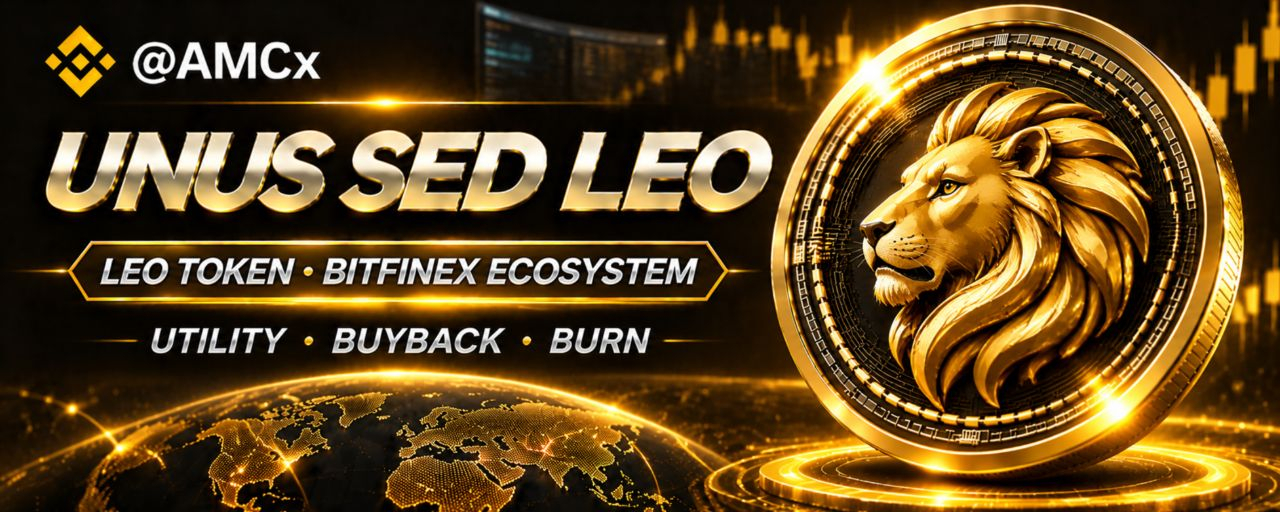
UNUS SED LEO (LEO): Bitfinex's Exchange Token and Its Future — What's Coming in 2027?UNUS SED LEO (LEO) is a cryptocurrency designed to support the iFinex ecosystem, particularly the Bitfinex trading platform.
Unlike Bitcoin or Ethereum, LEO does not operate its own independent blockchain. Instead, it provides ecosystem-related benefits and is connected to a unique token buyback and burn mechanism.
Its value proposition is closely linked to Bitfinex's business activity, platform utility, and the long-term reduction of its circulating supply.
As the cryptocurrency industry continues to evolve, LEO remains an interesting example of how an exchange-related token can connect a company's business performance with a digital asset.
So, what makes LEO different, and what could happen next in 2027?
1. Understanding UNUS SED LEO
UNUS SED LEO was launched in May 2019 by iFinex, the parent company of Bitfinex.
The token was introduced to support the company's ecosystem and provide additional benefits to its users.
LEO is available on Ethereum as an ERC-20 token and on the Vaulta network, formerly known as EOS.
Its main utilities include:
Benefits on eligible Bitfinex services.Reductions in certain platform fees.Benefits related to margin funding.Deposit and withdrawal-related advantages for eligible holders.Participation in the broader iFinex ecosystem.
LEO is not a traditional payment cryptocurrency. Its main purpose is to provide utility within a specific financial platform ecosystem.
2. LEO's Buyback and Burn Mechanism
One of the most important characteristics of LEO is its buyback and burn program.
According to the original LEO whitepaper, iFinex committed to using at least 27% of its previous month's consolidated gross revenue to repurchase LEO tokens from the market and permanently remove them from circulation.
This mechanism is designed to gradually reduce the token supply.
The original supply was 1 billion LEO.
According to Bitfinex's transparency information, approximately 80.14 million LEO had been burned by September 2026.
This means the remaining supply was approximately 919.86 million LEO.
The idea is straightforward: if the token supply decreases while demand remains sustainable, the remaining tokens could become relatively scarcer.
However, token burns do not guarantee higher market prices. Demand, liquidity, company performance, and investor sentiment remain important factors.
3. Important Development: LEO Burn Activity
An important development investors should monitor is the status of LEO's burn activity.
The latest available burn records show that the most recent completed burn was recorded on September 1, 2026.
Bitfinex's transparency information subsequently showed a growing pending-burn balance.
This distinction matters because tokens purchased for a future burn are not necessarily the same as tokens already permanently destroyed.
The community should continue monitoring the official transparency dashboard to determine when pending tokens are actually burned.
Regular buybacks and burns remain a central part of LEO's economic model.
4. The Bitfinex 2016 Hack Recovery: A Potential Major Event
One of the most interesting long-term developments connected to LEO involves the 2016 Bitfinex security breach.
During the incident, approximately 119,756 BTC were stolen from Bitfinex.
A significant portion of the stolen Bitcoin was subsequently recovered by US authorities.
Under the LEO whitepaper, iFinex pledged to use at least 80% of net funds recovered from the 2016 hack to repurchase and burn LEO tokens.
This could become an important event for the token's long-term supply dynamics.
However, there is an important qualification: the legal ownership and distribution process involving the recovered Bitcoin has remained unresolved.
As of November 2026, the full recovery-funded LEO buyback had not been confirmed.
Therefore, investors should treat this as a potential future catalyst rather than an already completed event.
5. LEO's Relationship With Bitfinex
Bitfinex is one of the established cryptocurrency trading platforms in the digital asset industry.
Because LEO is connected to the iFinex ecosystem, its long-term utility depends significantly on the platform's continued operations and development.
Important factors include:
Platform Activity
Trading activity and customer participation influence the broader business environment in which LEO operates.
Financial Performance
The buyback mechanism depends on the revenue generated by iFinex.
User Benefits
LEO can provide eligible holders with certain platform-related advantages.
Transparency
The public burn dashboard allows users to monitor reported token supply reductions.
This makes LEO different from decentralized cryptocurrencies whose development and economics are not directly dependent on one private company.
6. What Could LEO's Future Look Like in 2027?
Several developments could influence LEO's future.
A. Continued Buybacks
The continuation of iFinex's revenue-based buyback program remains an important factor.
B. Completion of Pending Burns
The market will be watching whether accumulated pending-burn balances are permanently destroyed.
C. Bitcoin Recovery Proceedings
Any confirmed progress involving the recovered Bitcoin from the 2016 Bitfinex hack could influence expectations surrounding the additional LEO burn commitment.
D. Bitfinex Ecosystem Development
New platform services, trading products, and financial infrastructure could influence LEO's usefulness.
E. Greater Transparency
Clearer reporting on revenue-based buybacks, pending burns, and token distribution could help improve market confidence.
These are important areas to monitor, not guaranteed future events.
7. LEO Tokenomics: Understanding Its Supply
LEO originally had a total supply of 1 billion tokens.
Unlike mining-based cryptocurrencies, no additional LEO is intended to be issued.
Its supply-reduction mechanism is based primarily on repurchases and permanent token burns.
The main characteristics include:
Original supply: 1 billion LEO.No planned new token issuance.Revenue-based buyback and burn mechanism.Additional burn commitment related to net proceeds from the 2016 hack recovery.Deployment on Ethereum and Vaulta.
The shrinking supply is one of the most important features of LEO's economic model.
However, a declining supply alone does not establish the token's intrinsic value.
8. Risks Investors Should Understand
Despite its unique tokenomics, LEO has several important risks.
Company Dependence: LEO's utility is strongly connected to iFinex and Bitfinex.
Liquidity Risk: Trading activity can be relatively limited compared with major cryptocurrencies. Large transactions may have a significant market impact.
Burn Execution Risk: Announced buybacks and pending burns should not be confused with completed token destruction.
Regulatory Risk: Cryptocurrency exchanges operate under changing legal and regulatory environments.
Transparency Risk: Independent investors cannot directly verify every aspect of a private company's financial performance.
These factors should be considered before evaluating LEO as a long-term investment.
Final Thoughts: LEO Is Different From Traditional Cryptocurrencies
UNUS SED LEO represents a different approach to cryptocurrency utility.
Its value proposition is based on platform benefits, iFinex business activity, and a revenue-linked token buyback and burn mechanism.
Looking toward 2027, the most important developments to watch will be the continuation of token burns, Bitfinex's business performance, and the legal process surrounding the recovered Bitcoin from the 2016 hack.
If these developments progress positively, LEO could remain an interesting asset within the exchange-token sector.
However, its long-term success depends heavily on the performance, transparency, and sustainability of the iFinex ecosystem.
LEO — Connecting Exchange Utility with a Deflationary Token Model.
AMCx | Exploring the Future of Crypto.
#LEO #UnusSedLEO #Bitfinex #Crypto #Blockchain #Tokenomics #TokenBurn #DigitalAssets #BinanceSquare #AMCx
UNUS SED LEO (LEO): Bitfinex's Exchange Token and Its Future — What's Coming in 2027?
UNUS SED LEO (LEO) is a cryptocurrency designed to support the iFinex ecosystem, particularly the Bitfinex trading platform.
Unlike Bitcoin or Ethereum, LEO does not operate its own independent blockchain. Instead, it provides ecosystem-related benefits and is connected to a unique token buyback and burn mechanism.
Its value proposition is closely linked to Bitfinex's business activity, platform utility, and the long-term reduction of its circulating supply.
As the cryptocurrency industry continues to evolve, LEO remains an interesting example of how an exchange-related token can connect a company's business performance with a digital asset.
So, what makes LEO different, and what could happen next in 2027?
1. Understanding UNUS SED LEO
UNUS SED LEO was launched in May 2019 by iFinex, the parent company of Bitfinex.
The token was introduced to support the company's ecosystem and provide additional benefits to its users.
LEO is available on Ethereum as an ERC-20 token and on the Vaulta network, formerly known as EOS.
Its main utilities include:
Benefits on eligible Bitfinex services.Reductions in certain platform fees.Benefits related to margin funding.Deposit and withdrawal-related advantages for eligible holders.Participation in the broader iFinex ecosystem.
LEO is not a traditional payment cryptocurrency. Its main purpose is to provide utility within a specific financial platform ecosystem.
2. LEO's Buyback and Burn Mechanism
One of the most important characteristics of LEO is its buyback and burn program.
According to the original LEO whitepaper, iFinex committed to using at least 27% of its previous month's consolidated gross revenue to repurchase LEO tokens from the market and permanently remove them from circulation.
This mechanism is designed to gradually reduce the token supply.
The original supply was 1 billion LEO.
According to Bitfinex's transparency information, approximately 80.14 million LEO had been burned by September 2026.
This means the remaining supply was approximately 919.86 million LEO.
The idea is straightforward: if the token supply decreases while demand remains sustainable, the remaining tokens could become relatively scarcer.
However, token burns do not guarantee higher market prices. Demand, liquidity, company performance, and investor sentiment remain important factors.
3. Important Development: LEO Burn Activity
An important development investors should monitor is the status of LEO's burn activity.
The latest available burn records show that the most recent completed burn was recorded on September 1, 2026.
Bitfinex's transparency information subsequently showed a growing pending-burn balance.
This distinction matters because tokens purchased for a future burn are not necessarily the same as tokens already permanently destroyed.
The community should continue monitoring the official transparency dashboard to determine when pending tokens are actually burned.
Regular buybacks and burns remain a central part of LEO's economic model.
4. The Bitfinex 2016 Hack Recovery: A Potential Major Event
One of the most interesting long-term developments connected to LEO involves the 2016 Bitfinex security breach.
During the incident, approximately 119,756 BTC were stolen from Bitfinex.
A significant portion of the stolen Bitcoin was subsequently recovered by US authorities.
Under the LEO whitepaper, iFinex pledged to use at least 80% of net funds recovered from the 2016 hack to repurchase and burn LEO tokens.
This could become an important event for the token's long-term supply dynamics.
However, there is an important qualification: the legal ownership and distribution process involving the recovered Bitcoin has remained unresolved.
As of November 2026, the full recovery-funded LEO buyback had not been confirmed.
Therefore, investors should treat this as a potential future catalyst rather than an already completed event.
5. LEO's Relationship With Bitfinex
Bitfinex is one of the established cryptocurrency trading platforms in the digital asset industry.
Because LEO is connected to the iFinex ecosystem, its long-term utility depends significantly on the platform's continued operations and development.
Important factors include:
Platform Activity
Trading activity and customer participation influence the broader business environment in which LEO operates.
Financial Performance
The buyback mechanism depends on the revenue generated by iFinex.
User Benefits
LEO can provide eligible holders with certain platform-related advantages.
Transparency
The public burn dashboard allows users to monitor reported token supply reductions.
This makes LEO different from decentralized cryptocurrencies whose development and economics are not directly dependent on one private company.
6. What Could LEO's Future Look Like in 2027?
Several developments could influence LEO's future.
A. Continued Buybacks
The continuation of iFinex's revenue-based buyback program remains an important factor.
B. Completion of Pending Burns
The market will be watching whether accumulated pending-burn balances are permanently destroyed.
C. Bitcoin Recovery Proceedings
Any confirmed progress involving the recovered Bitcoin from the 2016 Bitfinex hack could influence expectations surrounding the additional LEO burn commitment.
D. Bitfinex Ecosystem Development
New platform services, trading products, and financial infrastructure could influence LEO's usefulness.
E. Greater Transparency
Clearer reporting on revenue-based buybacks, pending burns, and token distribution could help improve market confidence.
These are important areas to monitor, not guaranteed future events.
7. LEO Tokenomics: Understanding Its Supply
LEO originally had a total supply of 1 billion tokens.
Unlike mining-based cryptocurrencies, no additional LEO is intended to be issued.
Its supply-reduction mechanism is based primarily on repurchases and permanent token burns.
The main characteristics include:
Original supply: 1 billion LEO.No planned new token issuance.Revenue-based buyback and burn mechanism.Additional burn commitment related to net proceeds from the 2016 hack recovery.Deployment on Ethereum and Vaulta.
The shrinking supply is one of the most important features of LEO's economic model.
However, a declining supply alone does not establish the token's intrinsic value.
8. Risks Investors Should Understand
Despite its unique tokenomics, LEO has several important risks.
Company Dependence: LEO's utility is strongly connected to iFinex and Bitfinex.
Liquidity Risk: Trading activity can be relatively limited compared with major cryptocurrencies. Large transactions may have a significant market impact.
Burn Execution Risk: Announced buybacks and pending burns should not be confused with completed token destruction.
Regulatory Risk: Cryptocurrency exchanges operate under changing legal and regulatory environments.
Transparency Risk: Independent investors cannot directly verify every aspect of a private company's financial performance.
These factors should be considered before evaluating LEO as a long-term investment.
Final Thoughts: LEO Is Different From Traditional Cryptocurrencies
UNUS SED LEO represents a different approach to cryptocurrency utility.
Its value proposition is based on platform benefits, iFinex business activity, and a revenue-linked token buyback and burn mechanism.
Looking toward 2027, the most important developments to watch will be the continuation of token burns, Bitfinex's business performance, and the legal process surrounding the recovered Bitcoin from the 2016 hack.
If these developments progress positively, LEO could remain an interesting asset within the exchange-token sector.
However, its long-term success depends heavily on the performance, transparency, and sustainability of the iFinex ecosystem.
LEO — Connecting Exchange Utility with a Deflationary Token Model.
AMCx | Exploring the Future of Crypto.
#LEO #UnusSedLEO #Bitfinex #Crypto #Blockchain #Tokenomics #TokenBurn #DigitalAssets #BinanceSquare #AMCx
1
91

·
--
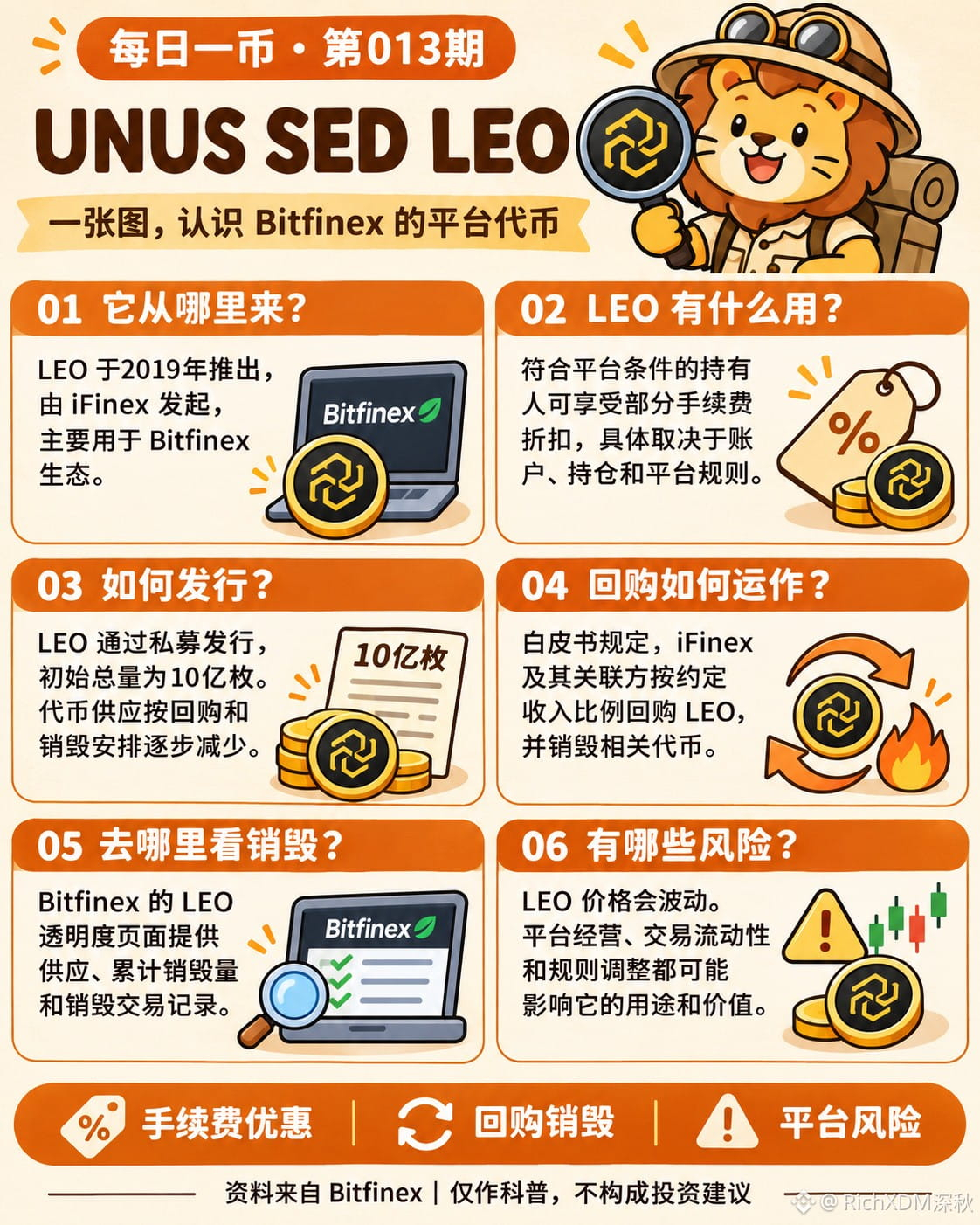
1日1コイン|013 UNUS SED LEO 🦁
プラットフォームトークンはどう使う?この図で、LEOの手数料割引、買い戻しとバーン、供給量の変化をチェック👇
プラットフォームトークンについて知るとき、まず実際の用途と供給ルールのどちらに注目しますか?
#每日一币 #UNUSSEDLEO $LEO
教育目的のみであり、投資助言を構成するものではありません。
1日1コイン|013 UNUS SED LEO 🦁
プラットフォームトークンはどう使う?この図で、LEOの手数料割引、買い戻しとバーン、供給量の変化をチェック👇
プラットフォームトークンについて知るとき、まず実際の用途と供給ルールのどちらに注目しますか?
#每日一币 #UNUSSEDLEO $LEO
教育目的のみであり、投資助言を構成するものではありません。
プラットフォームトークンはどう使う?この図で、LEOの手数料割引、買い戻しとバーン、供給量の変化をチェック👇
プラットフォームトークンについて知るとき、まず実際の用途と供給ルールのどちらに注目しますか?
#每日一币 #UNUSSEDLEO $LEO
教育目的のみであり、投資助言を構成するものではありません。
86

·
--
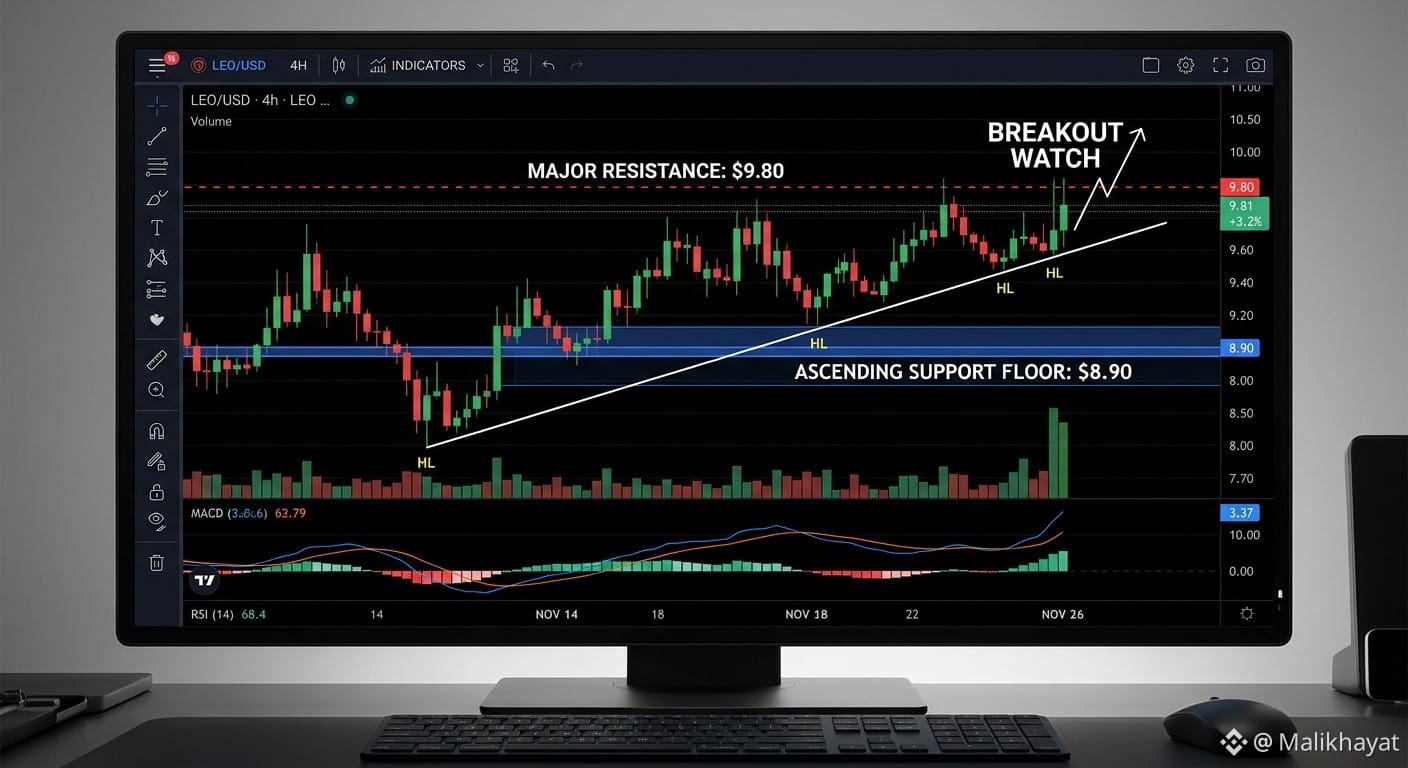
$LEOは1日で0.65%上昇し、比較的安定した値動きを維持しています。上昇三角形の形成、日足ボリンジャーバンドの収縮、20日移動平均線および50日移動平均線を上回る位置から、保ち合いの形成が進んでいることがうかがえます。トレーダーは、価格が9.80ドルのレジスタンスに挑戦できるか注目しています。流動性の低さは、引き続き重要な執行リスクです。
📈 バイアス:やや強気/中立 | 🎯 エントリー:9.10~9.25ドル | 🛡 サポート:8.90ドル/8.50ドル | 🚧 レジスタンス:9.80ドル/10.50ドル | 🎯 目標価格:9.75ドル/10.20ドル/10.90ドル | ❌ 無効化水準:8.35ドル
戦略:サポートでのエントリーを検討するか、9.80ドルを上抜けたことが確認されるまで待ちましょう。
#LEO #UNUSSEDLEO #CryptoTrading #TechnicalAnalysis #BinanceSquare
📈 バイアス:やや強気/中立 | 🎯 エントリー:9.10~9.25ドル | 🛡 サポート:8.90ドル/8.50ドル | 🚧 レジスタンス:9.80ドル/10.50ドル | 🎯 目標価格:9.75ドル/10.20ドル/10.90ドル | ❌ 無効化水準:8.35ドル
戦略:サポートでのエントリーを検討するか、9.80ドルを上抜けたことが確認されるまで待ちましょう。
#LEO #UNUSSEDLEO #CryptoTrading #TechnicalAnalysis #BinanceSquare
5

·
--
ブリッシュ
⚙️ UNUS SED LEO ($BTC LEO): トークン以上の存在、それはあなたのエコシステムの鍵!🔑📊
取引所のユーティリティトークンの世界で、LEOは目的の明確さで際立っています。この画像はそれを完璧に捉えています:LEOは孤立した資産ではなく、複雑なデジタルインフラの網を通じて価値を放射する重要なハブです。
💡 コアユーティリティ:あなたの体験をパワーアップ
LEOの強みは単なる取引にとどまらず、Bitfinexエコシステム内で提供される即時の利益にあります。
テイカー手数料の削減:LEOを保有することで、自動的に取引手数料の割引が適用され、アクティブなトレーダーにとっての主な利点です。
貸出手数料の削減:LEOホルダーは貸出手数料が減少し、パッシブ収入の可能性を高めます。
アフィリエイトリベート:特定のLEO関連プログラムを通じてアフィリエイト収益を増やしましょう。
📊 ユーティリティを超えて:なぜ$LEVER が際立つのか
LEOのユニークな特徴は、その持続可能性へのコミットメントです。このプロジェクトには、循環供給を常に減少させるために設計された特定の買い戻しと焼却メカニズムがあります。これはエコシステムの収益に直接関連しています。
👥 コミュニティの質問:
回路ラインはグローバルアクセスを表しています。あなたは主に手数料の削減のためにLEOを使用していますか、それともデフレ買い戻しモデルの長期的信者ですか?
あなたの戦略を下にシェアしてください!LEOはあなたのアクティブなトレーディングツールキットにどれほど重要ですか?戦略について話しましょう!👇
#LEO #UNUSSEDLEO #UtilityToken #BinanceSquare #CryptoMetrics
1
65
ログインして、さらにコンテンツを読む
厳選トピックで世界の暗号資産トレーダーの仲間入り
⚡️ 暗号資産に関する最新かつ有益な情報が見つかります。
💬 世界最大の暗号資産取引所から信頼されています。
👍 認証を受けたクリエイターから、有益なインサイトを得られます。
メール / 電話番号
トレンドトピック
1
#CanBTCReboundAfterFallingBelow60K?
閲覧回数 0
139人が討論中
2
#GlobalStocksFaceLongestLosingStreakSince2023
閲覧回数 0
279人が討論中
3
#AnthropicPlungesTowardIPOPriceonDay2
閲覧回数 0
47人が討論中
4
#GaoTengBitcoinETFListsOnHKEX
閲覧回数 0
265人が討論中
5
#TradFiForBeginners
閲覧回数 946,825
5,542人が討論中
6
#NvidiaBoardReportedlySplitOverHuang’sReturn
閲覧回数 258,674
2,419人が討論中
7
#TetherBurns8BillionUSDTInPast20Days
閲覧回数 0
104人が討論中
8
#BitcoinWalletSignatureFlawExploitableWithinSeconds
閲覧回数 0
45人が討論中
9
#CanGTA6'sLaunchLiftTTWOShares?
閲覧回数 207,868
1,719人が討論中
10
#HongKongProposesSFCLicensingForFourVirtualAssetServices
閲覧回数 404
32人が討論中