
#snxxb
snxxb
閲覧回数 101,562
2,159人が討論中
注目
最新

·
--
翻訳参照
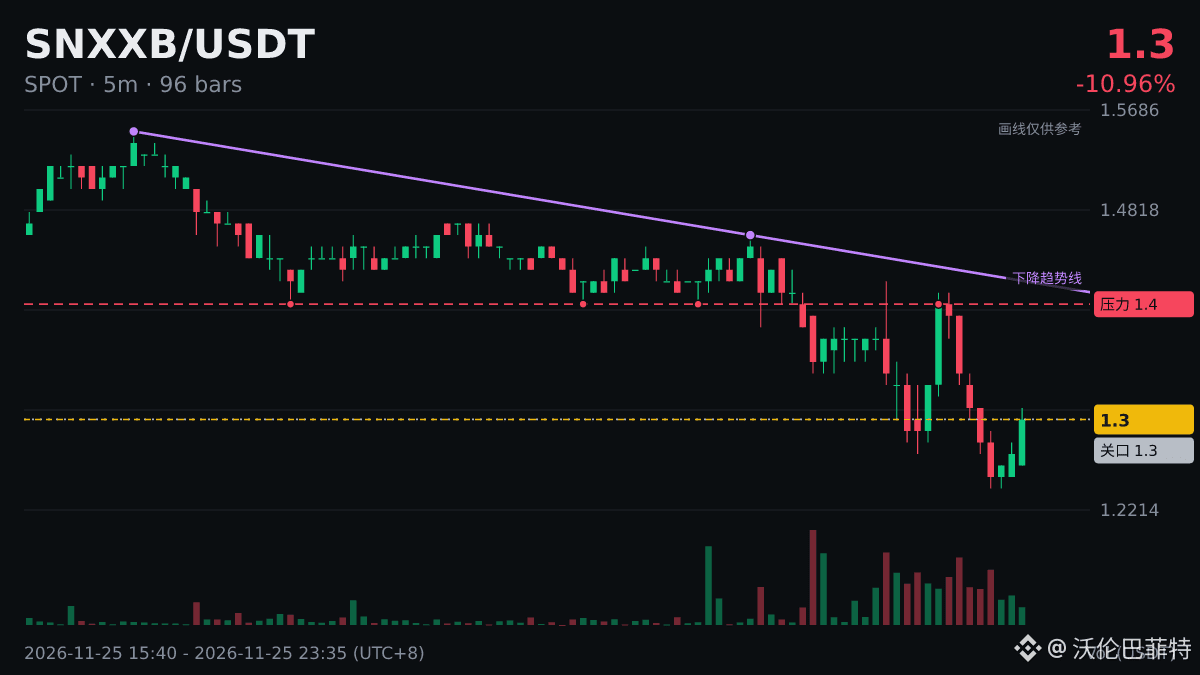
感恩节美股休市,SNXXB短线料低位震荡⚡
趋势判断:震荡(偏弱整理)
截至北京时间11月26日10:25,币安代币化ETF产品SNXXBUSDT在1.41–1.44 USDT区间徘徊。该代币1:1映射2倍做多闪迪(SNDK)的杠杆ETF(SNXX)。受TrendForce下调NAND闪存价格预期及美股科技板块抛压拖累,11月25日美股费城半导体指数大跌约7.3%,纳斯达克100指数跌约4%,SNDK收报73.58美元,SNXX单日重挫逾11%至1.46美元收盘。
由于今日(11月26日)为美国感恩节,美股全天休市,未来4–24小时SNXXB缺乏底层正股实时锚定,场内流动性可能收窄,预计以消化前一日跌幅、围绕1.40–1.46 USDT弱势震荡为主。
关键价位(SNXXBUSDT):
支撑位看1.40–1.41 USDT,若放量跌破,下行空间或指向1.20–1.25 USDT前期低点区;阻力位看1.46–1.50 USDT,有效站稳1.50 USDT上方则偏弱震荡判断失效,有望测试1.60 USDT一线。
短期展望:重点关注美股股指期货情绪及明日美股半日市(北京时间27日晚)复牌前的跳空风险。SNXX属于2倍日内杠杆ETF,叠加节假日点差扩大与每日重置损耗,短线波动风险较高,操作宜控制仓位。📉
#SNXXB #SNDK #半导体 #ETF #RWA
208


翻訳参照
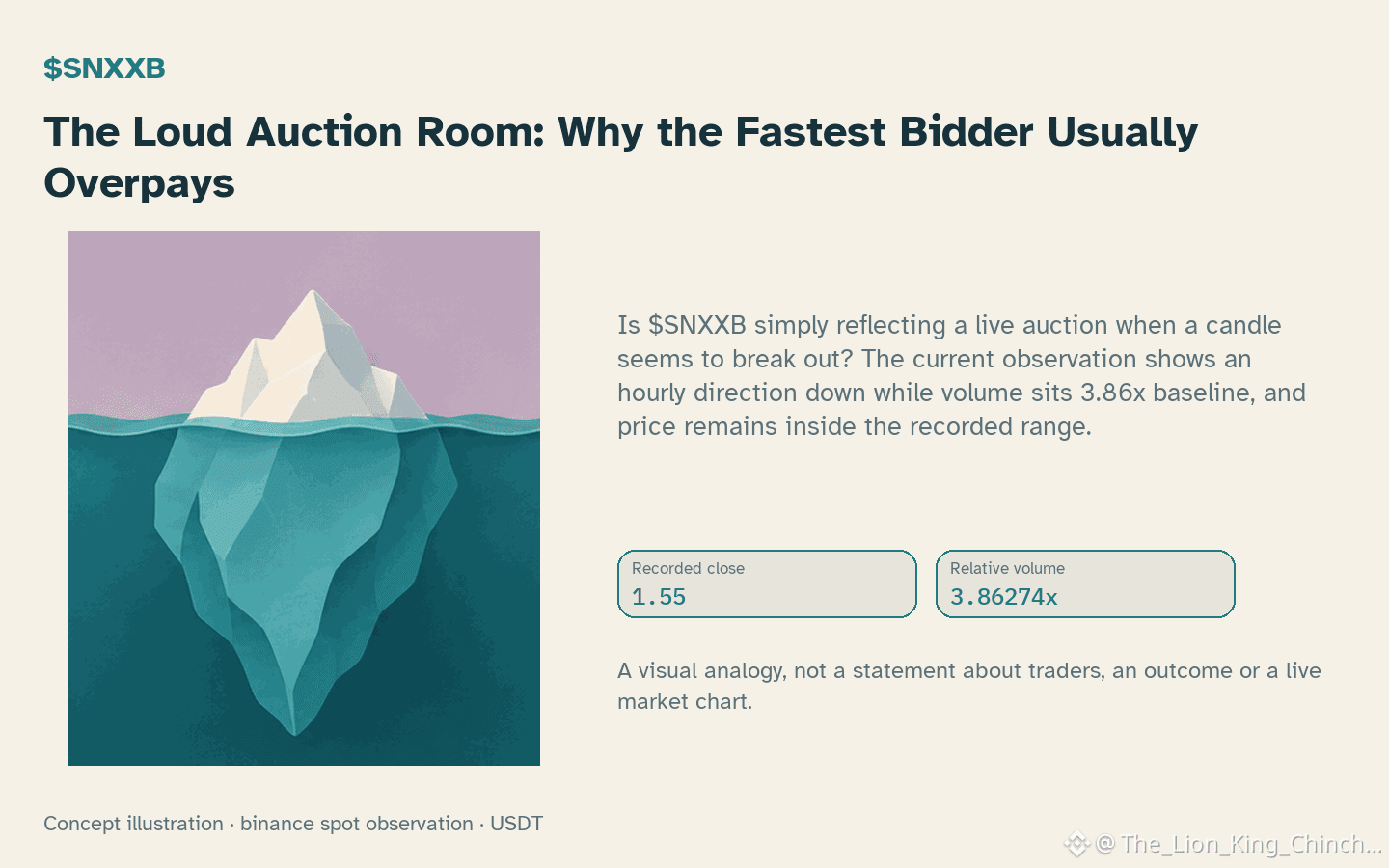
$SNXXB: The Loud Auction Room: Why the Fastest Bidder Usually Overpays
Is $SNXXB simply reflecting a live auction when a candle seems to break out? The current observation shows an hourly direction down while volume sits 3.86x baseline, and price remains inside the recorded range.
A hypothetical decision: imagine a gallery where a painting is auctioned the moment a bidder raises their paddle. In a live auction, the first high bid often wins because later participants lack the immediate information of the price trajectory. Translating this to a breakout candle, the first trader to act on a rapid price move may pay a premium before the market absorbs the new level. The analogy helps illustrate how momentary liquidity spikes can push the price briefly beyond support or resistance, creating a visual breakout that later settles back inside the range.
Where the analogy fails: real crypto markets involve limit orders, market orders, and hidden depth that differ from a single‑bid auction. Not every volume surge originates from eager buyers; it may stem from stop‑loss cascades or algorithmic rebalancing. Moreover, the observed hourly down move and above‑baseline volume do not guarantee that a breakout will occur, nor that the first entrant will always overpay.
A counterexample would be a candle that spikes up on high volume but quickly retraces, leaving early entrants with no advantage. To reassess the hypothesis, watch for a closed candle where price stays beyond the prior range and volume remains elevated; if the price re‑enters the range despite continued high volume, the auction‑dynamic explanation weakens.
Probabilistic market research, not a recommendation or guaranteed return.
#SNXXB
$SNXXB : The Loud Auction Room: Why the Fastest Bidder Usually Overpays
Is $SNXXB simply reflecting a live auction when a candle seems to break out? The current observation shows an hourly direction down while volume sits 3.86x baseline, and price remains inside the recorded range.
A hypothetical decision: imagine a gallery where a painting is auctioned the moment a bidder raises their paddle. In a live auction, the first high bid often wins because later participants lack the immediate information of the price trajectory. Translating this to a breakout candle, the first trader to act on a rapid price move may pay a premium before the market absorbs the new level. The analogy helps illustrate how momentary liquidity spikes can push the price briefly beyond support or resistance, creating a visual breakout that later settles back inside the range.
Where the analogy fails: real crypto markets involve limit orders, market orders, and hidden depth that differ from a single‑bid auction. Not every volume surge originates from eager buyers; it may stem from stop‑loss cascades or algorithmic rebalancing. Moreover, the observed hourly down move and above‑baseline volume do not guarantee that a breakout will occur, nor that the first entrant will always overpay.
A counterexample would be a candle that spikes up on high volume but quickly retraces, leaving early entrants with no advantage. To reassess the hypothesis, watch for a closed candle where price stays beyond the prior range and volume remains elevated; if the price re‑enters the range despite continued high volume, the auction‑dynamic explanation weakens.
Probabilistic market research, not a recommendation or guaranteed return.
#SNXXB
69


·
--
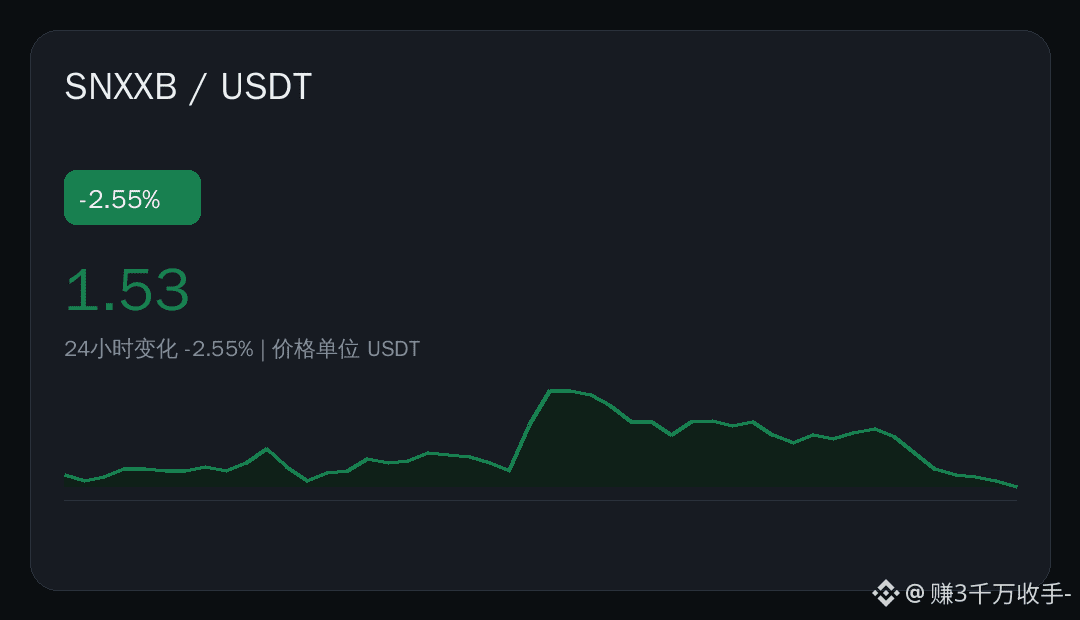
$SNXXB が連続して急変:24時間で9.4%下落、現在価格は1.45。今回が初めてのランクインではありません。
連続してランクインするコインには2種類あります。ひとつは本当に強く、資金が継続して流入するもの。もうひとつはババ抜きのようなもので、後になるほどリスクが高まります。見分け方は簡単です——急変のたびに出来高が増えているか、減っているかを見ましょう。
$SNXXB はどちらだと思いますか?#SNXXB
本内容は情報交換のみを目的としており、投資助言ではありません。
$SNXXB が連続して急変:24時間で9.4%下落、現在価格は1.45。今回が初めてのランクインではありません。
連続してランクインするコインには2種類あります。ひとつは本当に強く、資金が継続して流入するもの。もうひとつはババ抜きのようなもので、後になるほどリスクが高まります。見分け方は簡単です——急変のたびに出来高が増えているか、減っているかを見ましょう。
$SNXXB はどちらだと思いますか?#SNXXB
本内容は情報交換のみを目的としており、投資助言ではありません。
連続してランクインするコインには2種類あります。ひとつは本当に強く、資金が継続して流入するもの。もうひとつはババ抜きのようなもので、後になるほどリスクが高まります。見分け方は簡単です——急変のたびに出来高が増えているか、減っているかを見ましょう。
$SNXXB はどちらだと思いますか?#SNXXB
本内容は情報交換のみを目的としており、投資助言ではありません。
12

·
--
ブリッシュ
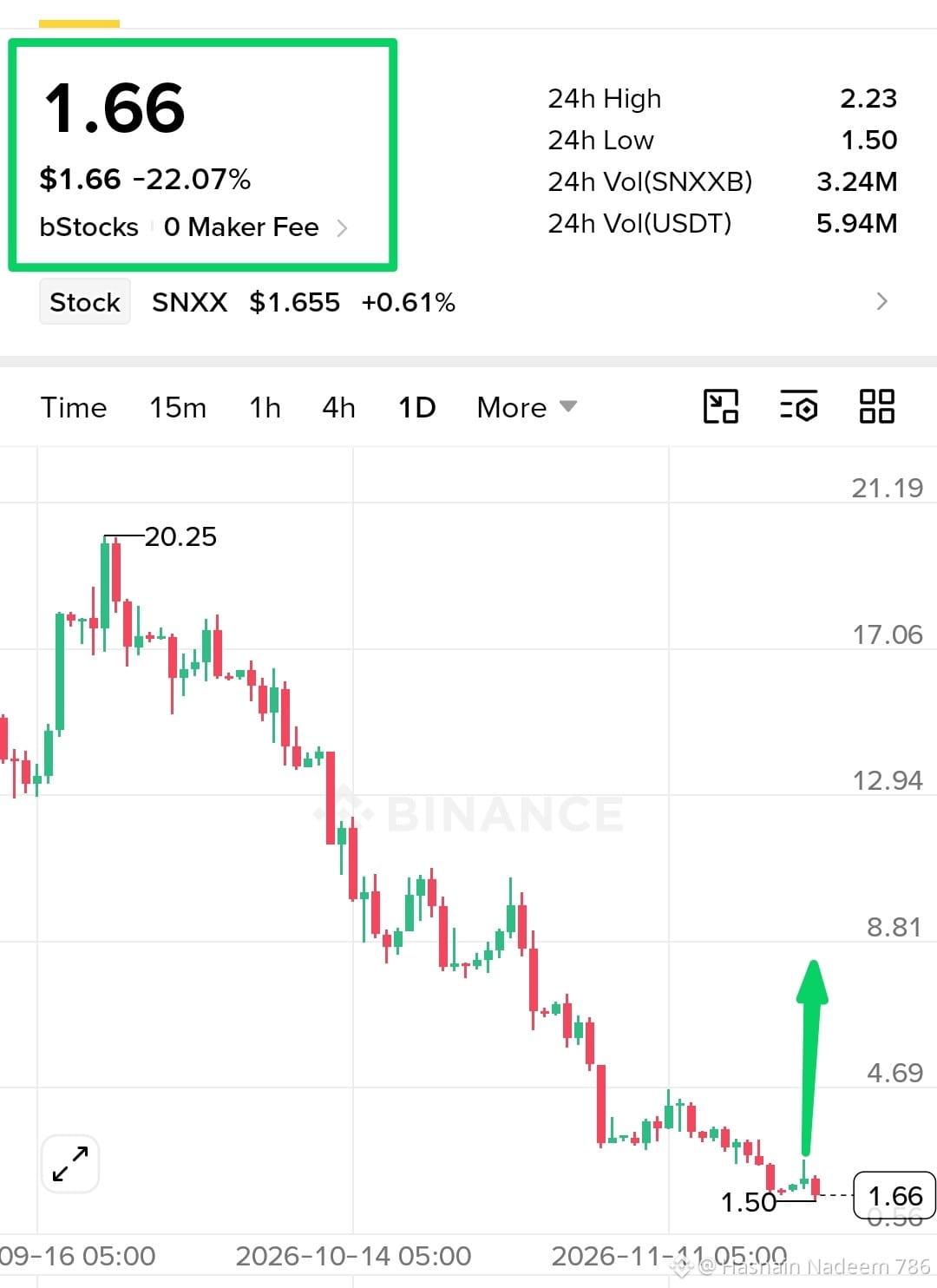
みんな、$SNXXB はもうすぐ3ドル以上に急騰するよ。押し目を逃さないで 🚀
買い水準 $1.50 $1.60
損切り $1.38
目標 $1.80 $2.10 $2.40 $2.70 $3.00+
あなたの計画は?買う?それともバイバイ?
毎日利益につながるシグナルを受け取るにはフォローしてね。
ここで取引してね。DYOR(自分で調べてね)👇
{spot}(SNXXBUSDT)
#SNXXB #HASNAINNADEEM786 #Binance $OPG $LISTA
{future}(LISTAUSDT)
{future}(OPGUSDT)
みんな、$SNXXB はもうすぐ3ドル以上に急騰するよ。押し目を逃さないで 🚀
買い水準 $1.50 $1.60
損切り $1.38
目標 $1.80 $2.10 $2.40 $2.70 $3.00+
あなたの計画は?買う?それともバイバイ?
毎日利益につながるシグナルを受け取るにはフォローしてね。
ここで取引してね。DYOR(自分で調べてね)👇
#SNXXB #HASNAINNADEEM786 #Binance $OPG $LISTA
買い水準 $1.50 $1.60
損切り $1.38
目標 $1.80 $2.10 $2.40 $2.70 $3.00+
あなたの計画は?買う?それともバイバイ?
毎日利益につながるシグナルを受け取るにはフォローしてね。
ここで取引してね。DYOR(自分で調べてね)👇
#SNXXB #HASNAINNADEEM786 #Binance $OPG $LISTA
2
2.1k


·
--
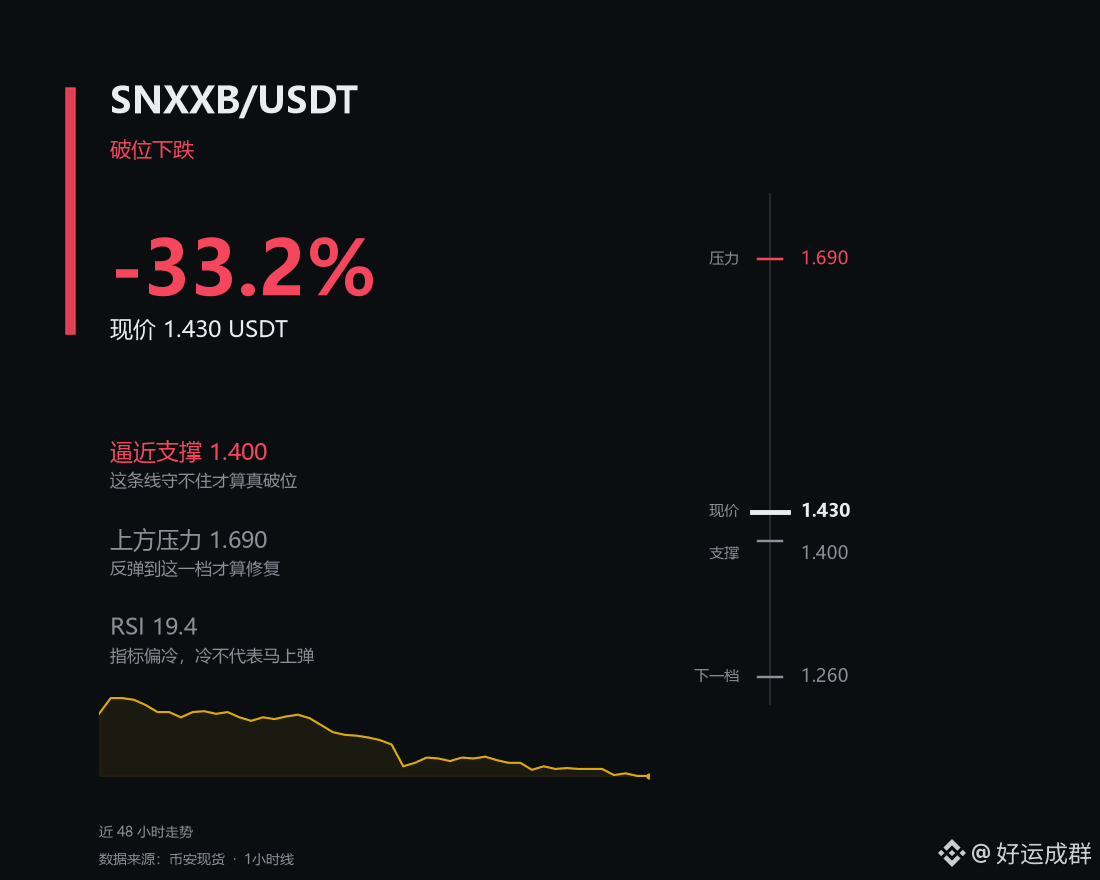
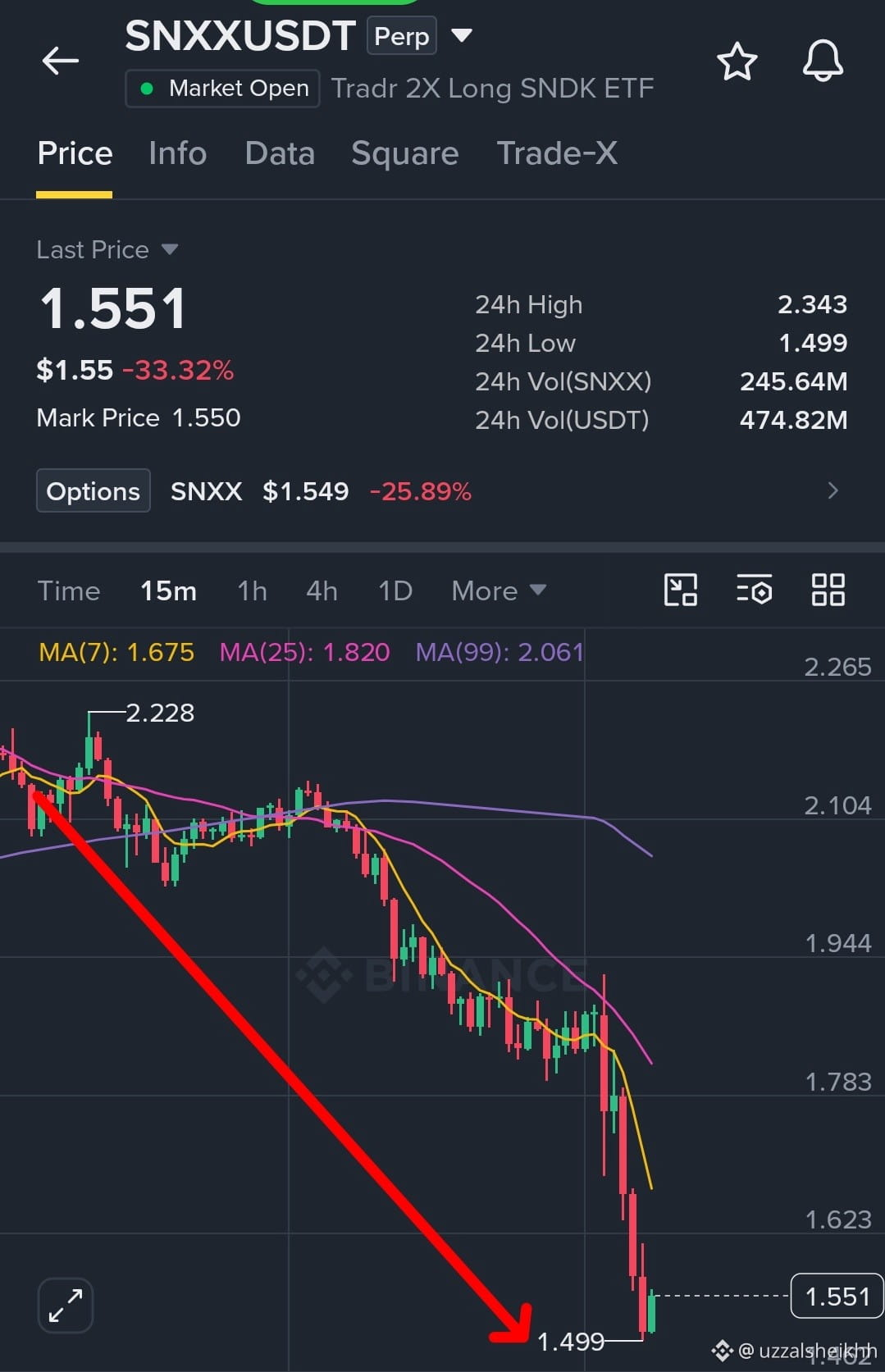
$SNXXB は今日-33.2%、$BTCよりひどい。$BTC は今日-2.2%。
こういう値動きがいちばん疲れる。上がってもすっきりしないし、下がるときもすっぱり下がらない。
1.43という価格は、上には1.69の重し、下には1.4の支え。RSIは19.4。
率直に言えば、今は誰も予言者ぶるな。押し目買いした?それとも逃げた?
高値追い・安値売りの素早い手さばきも、最後は手数料に消える。
#币圈 #SNXXB
$SNXXB は今日-33.2%、$BTC よりひどい。$BTC は今日-2.2%。
こういう値動きがいちばん疲れる。上がってもすっきりしないし、下がるときもすっぱり下がらない。
1.43という価格は、上には1.69の重し、下には1.4の支え。RSIは19.4。
率直に言えば、今は誰も予言者ぶるな。押し目買いした?それとも逃げた?
高値追い・安値売りの素早い手さばきも、最後は手数料に消える。
#币圈 #SNXXB
こういう値動きがいちばん疲れる。上がってもすっきりしないし、下がるときもすっぱり下がらない。
1.43という価格は、上には1.69の重し、下には1.4の支え。RSIは19.4。
率直に言えば、今は誰も予言者ぶるな。押し目買いした?それとも逃げた?
高値追い・安値売りの素早い手さばきも、最後は手数料に消える。
#币圈 #SNXXB
39

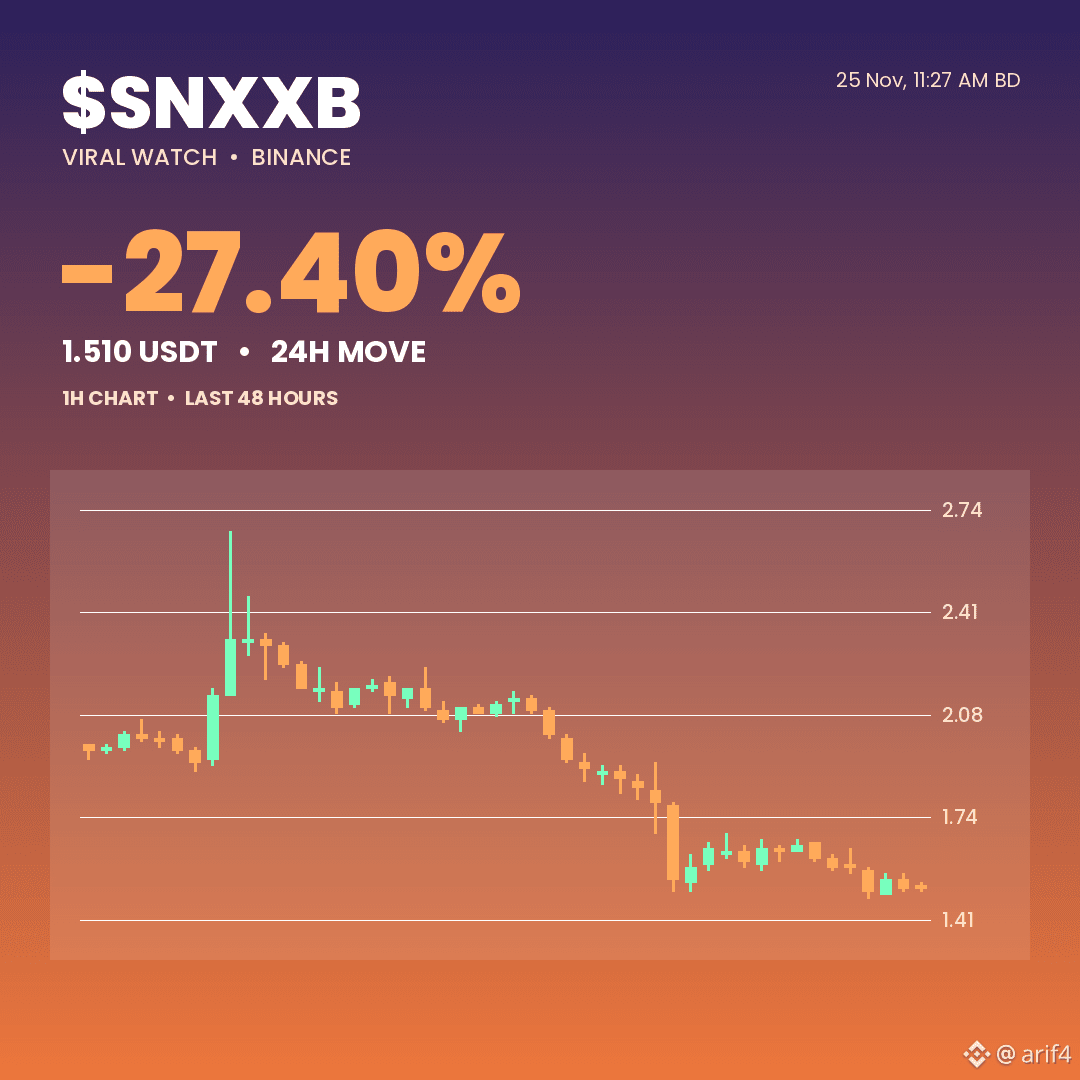
🔻 $SNXXB は今日、大きく売り込まれています。
24時間で-27.40%下落し、1.510 USDTに。売り手優勢のなか、5.8M USDTが取引されました。24時間安値の1.480 USDTが注目ラインです——ここを割ると、売りがさらに加速する可能性があります。SNXXBの押し目を狙う?それとも距離を置く?正直にどうぞ👇
#SNXXB #Crypto #Binance #BinanceSquare #暗号資産取引
🔻 $SNXXB は今日、大きく売り込まれています。
24時間で-27.40%下落し、1.510 USDTに。売り手優勢のなか、5.8M USDTが取引されました。24時間安値の1.480 USDTが注目ラインです——ここを割ると、売りがさらに加速する可能性があります。SNXXBの押し目を狙う?それとも距離を置く?正直にどうぞ👇
#SNXXB #Crypto #Binance #BinanceSquare #暗号資産取引
24時間で-27.40%下落し、1.510 USDTに。売り手優勢のなか、5.8M USDTが取引されました。24時間安値の1.480 USDTが注目ラインです——ここを割ると、売りがさらに加速する可能性があります。SNXXBの押し目を狙う?それとも距離を置く?正直にどうぞ👇
#SNXXB #Crypto #Binance #BinanceSquare #暗号資産取引
85
·
--
翻訳参照
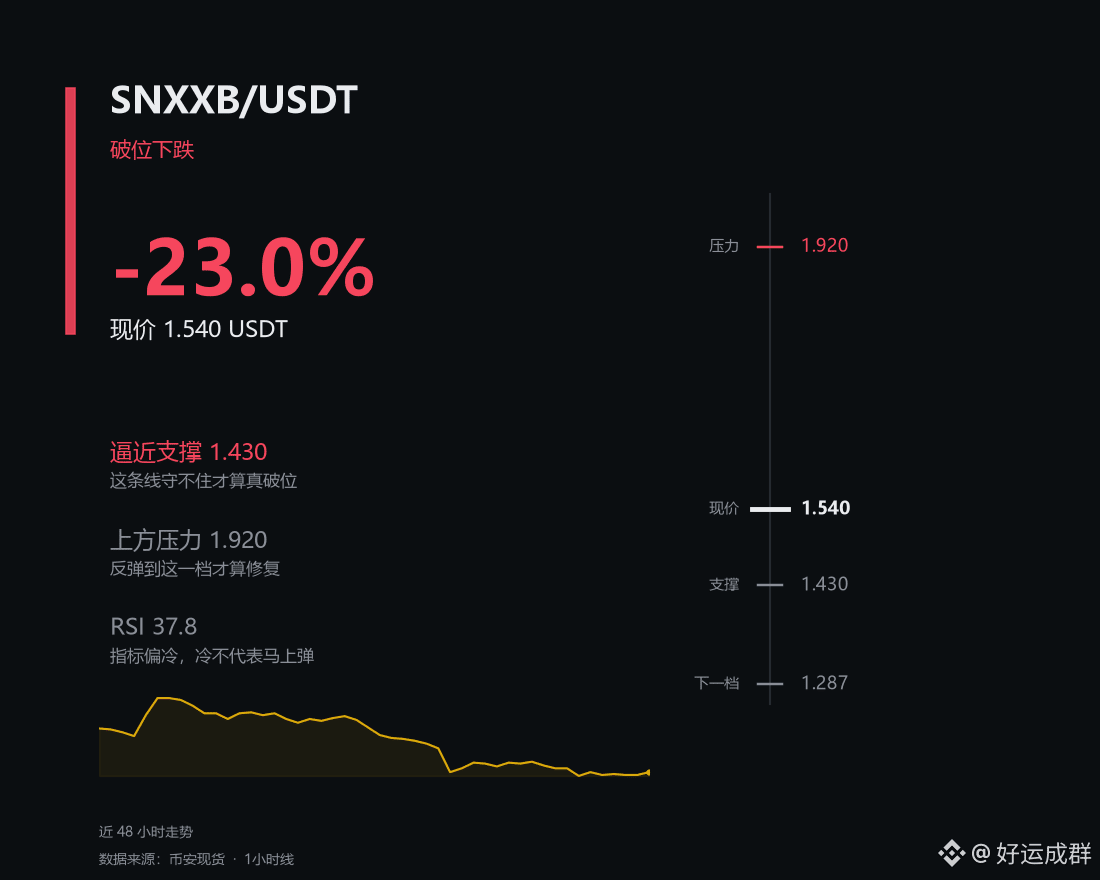
$SNXXB 今天-23.0%,连大饼的腿都跟不上。$BTC 今天-1.1%。
上次2026-11-25 10:53说SNXXB在$1.49,现在$1.54,涨了3.4%。
上次那个判断,算兑现还是算打脸,各自心里有数。
区间 1.43 到 1.92,RSI 37.8。你怎么看?
#币圈 #SNXXB
$SNXXB 今天-23.0%,连大饼的腿都跟不上。$BTC 今天-1.1%。
上次2026-11-25 10:53说SNXXB在$1.49,现在$1.54,涨了3.4%。
上次那个判断,算兑现还是算打脸,各自心里有数。
区间 1.43 到 1.92,RSI 37.8。你怎么看?
#币圈 #SNXXB
上次2026-11-25 10:53说SNXXB在$1.49,现在$1.54,涨了3.4%。
上次那个判断,算兑现还是算打脸,各自心里有数。
区间 1.43 到 1.92,RSI 37.8。你怎么看?
#币圈 #SNXXB
42

·
--
ブリッシュ
🚀 強気シグナル:$SNXXB /USDT 📈
(Tradr 2X Long SNDK ETF)
{spot}(SNXXBUSDT)
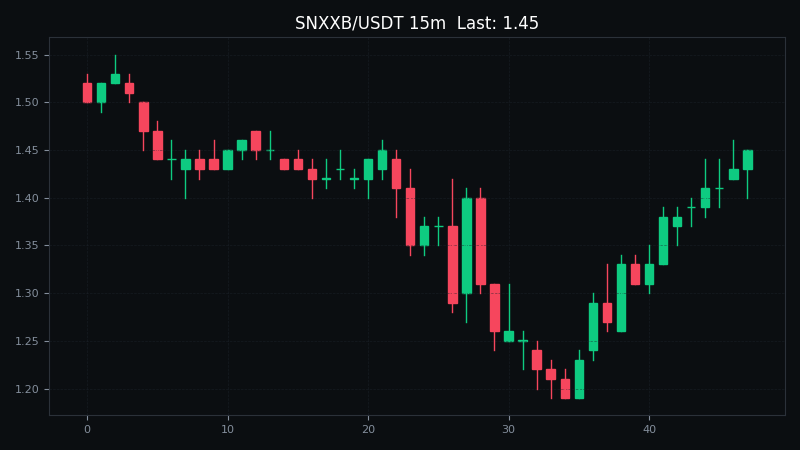
4時間足チャートで急落した後、価格は1.50ドルのサポートゾーンから反発しており、戻りの初期兆候が見られます。
方向性:ロング/強気 🟢
レバレッジ:5倍~10倍(この商品はすでに2倍レバレッジのETFなので、控えめにしてください)
エントリーゾーン:1.58ドル~1.62ドル(現在値:1.61ドル)
損切り(強め):1.42ドル(1.50ドルの安値とチャート上の1.44ドルの水準を下回る位置)
利確目標1:1.85ドル 🎯
利確目標2:2.05ドル 🎯
利確目標3:2.20ドル 🚀
ここからSNXXB/USDTは2.00ドルに向けて戻すと思いますか?それとも、もう一段下落する前の一時的な反発にすぎないでしょうか?ぜひ下にご意見をお寄せください! 👇
こちらから取引👇🏻
$LISTA
{future}(LISTAUSDT)
$OPG
{future}(OPGUSDT)
#SNXXB #BinanceSquare #CryptoTrading #Altcoins #alizbahcrypto
(これは投資助言ではありません。常にリスク管理を徹底してください。)
🚀 強気シグナル:$SNXXB /USDT 📈
(Tradr 2X Long SNDK ETF)
4時間足チャートで急落した後、価格は1.50ドルのサポートゾーンから反発しており、戻りの初期兆候が見られます。
方向性:ロング/強気 🟢
レバレッジ:5倍~10倍(この商品はすでに2倍レバレッジのETFなので、控えめにしてください)
エントリーゾーン:1.58ドル~1.62ドル(現在値:1.61ドル)
損切り(強め):1.42ドル(1.50ドルの安値とチャート上の1.44ドルの水準を下回る位置)
利確目標1:1.85ドル 🎯
利確目標2:2.05ドル 🎯
利確目標3:2.20ドル 🚀
ここからSNXXB/USDTは2.00ドルに向けて戻すと思いますか?それとも、もう一段下落する前の一時的な反発にすぎないでしょうか?ぜひ下にご意見をお寄せください! 👇
こちらから取引👇🏻
$LISTA
$OPG
#SNXXB #BinanceSquare #CryptoTrading #Altcoins #alizbahcrypto
(これは投資助言ではありません。常にリスク管理を徹底してください。)

HasiX:
soon pump
1
5
3.3k

·
--
翻訳参照
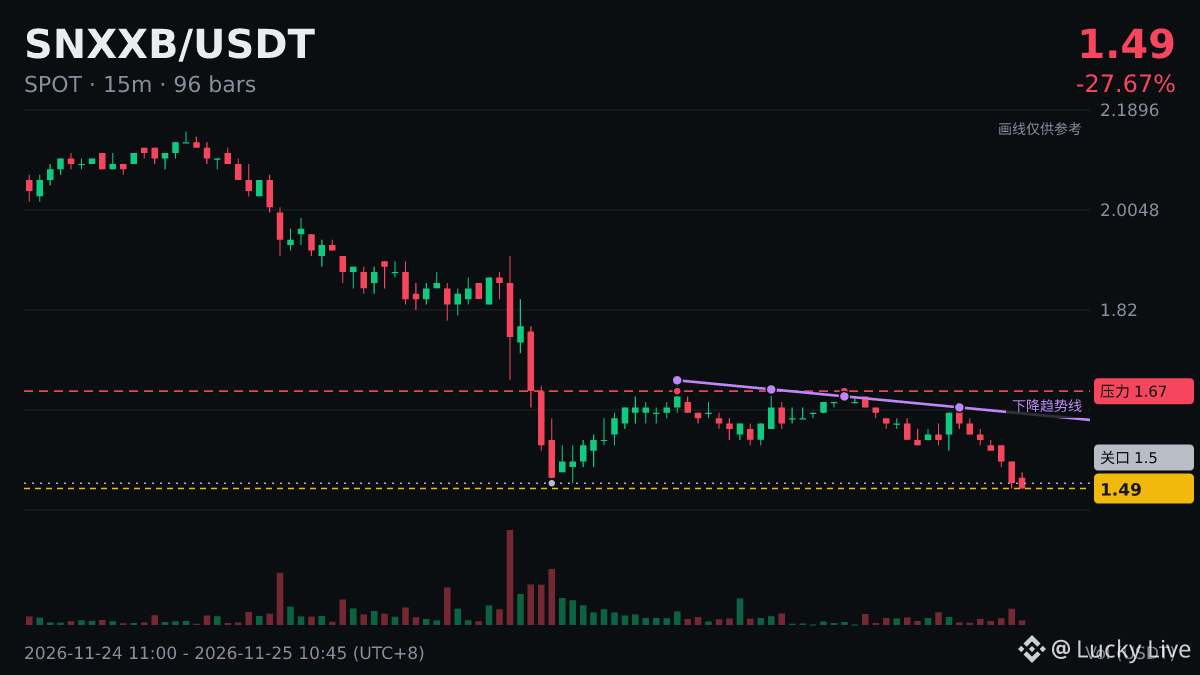
$SNXXB 跌穿 30日新低,抛压还没结束。
现价 1.5,跌破前低 1.5,24h 成交额 519万美元。
前低下方通常挂着不少多单止损,击穿后可能引发连环爆仓;盯有没有大资金在低位承接。
#SNXXB
数据仅供参考,别当真。
$SNXXB 跌穿 30日新低,抛压还没结束。
现价 1.5,跌破前低 1.5,24h 成交额 519万美元。
前低下方通常挂着不少多单止损,击穿后可能引发连环爆仓;盯有没有大资金在低位承接。
#SNXXB
数据仅供参考,别当真。
现价 1.5,跌破前低 1.5,24h 成交额 519万美元。
前低下方通常挂着不少多单止损,击穿后可能引发连环爆仓;盯有没有大资金在低位承接。
#SNXXB
数据仅供参考,别当真。
2
·
--
翻訳参照
$SNXXB 跌出 30日新低 1.48⚠️
前低 1.5:我尽力了。
抄底的我:原来我还不在最低处。
K线又开始做心电图了,还是低血糖那种。
如果你笑了,说明你也是过来人。
#SNXXB
仅作参考,非投资建议。
$SNXXB 跌出 30日新低 1.48⚠️
前低 1.5:我尽力了。
抄底的我:原来我还不在最低处。
K线又开始做心电图了,还是低血糖那种。
如果你笑了,说明你也是过来人。
#SNXXB
仅作参考,非投资建议。
前低 1.5:我尽力了。
抄底的我:原来我还不在最低处。
K线又开始做心电图了,还是低血糖那种。
如果你笑了,说明你也是过来人。
#SNXXB
仅作参考,非投资建议。
52
·
--
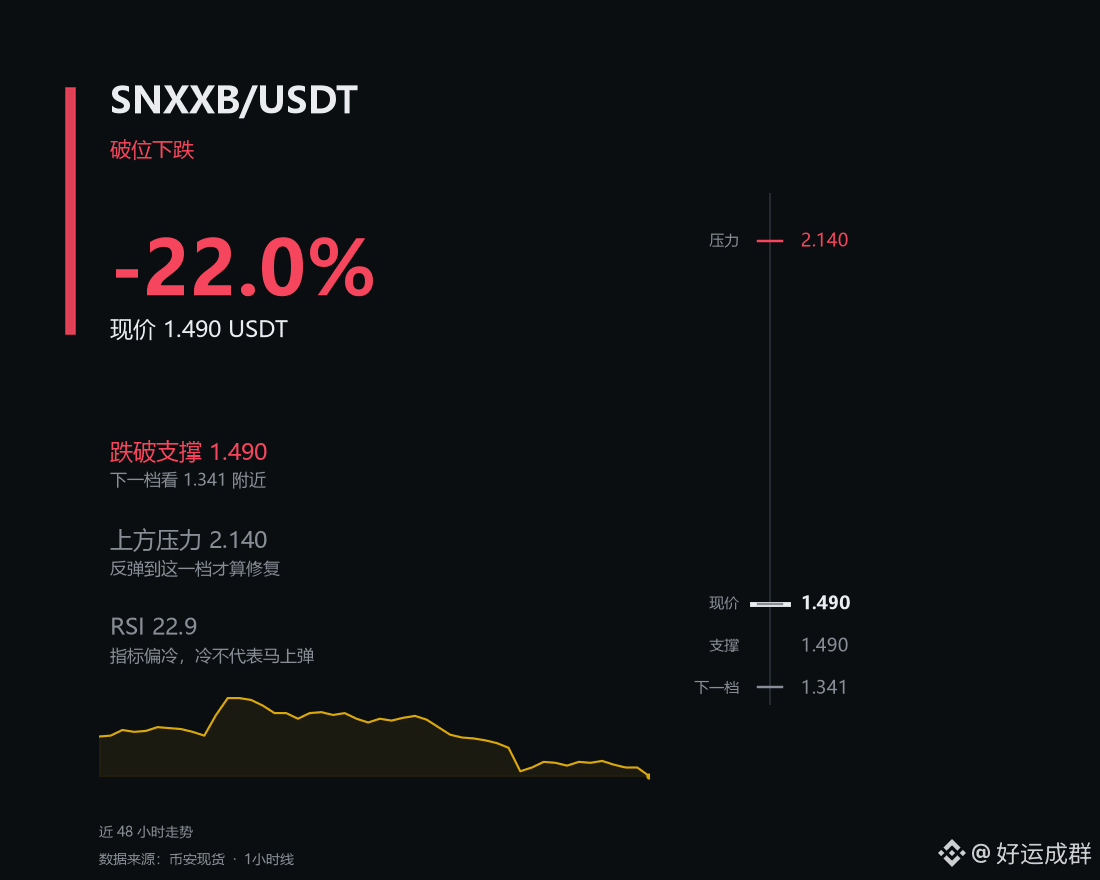
$SNXXB 今日は-22.0%、$BTCよりひどい。現在価格は1.49。
2.14の水準で売っているのは誰?1.49の水準で買っているのは誰?
RSIは22.9。この数字が示しているのは、誰かが焦っているということ?それとも焦っているふりをしているだけ?
明日の寄り付きで窓を開けたら、今のポジションは耐えられる?
シグナルを待っている?それとも、もう乗り込んだ?
ローソク足1本だけで結論を出さないで。それ自体、まだ安定していない。
#币圈 #SNXXB
$SNXXB 今日は-22.0%、$BTC よりひどい。現在価格は1.49。
2.14の水準で売っているのは誰?1.49の水準で買っているのは誰?
RSIは22.9。この数字が示しているのは、誰かが焦っているということ?それとも焦っているふりをしているだけ?
明日の寄り付きで窓を開けたら、今のポジションは耐えられる?
シグナルを待っている?それとも、もう乗り込んだ?
ローソク足1本だけで結論を出さないで。それ自体、まだ安定していない。
#币圈 #SNXXB
2.14の水準で売っているのは誰?1.49の水準で買っているのは誰?
RSIは22.9。この数字が示しているのは、誰かが焦っているということ?それとも焦っているふりをしているだけ?
明日の寄り付きで窓を開けたら、今のポジションは耐えられる?
シグナルを待っている?それとも、もう乗り込んだ?
ローソク足1本だけで結論を出さないで。それ自体、まだ安定していない。
#币圈 #SNXXB
38

·
--
🔍 $SNXXB 下落率の分析
5分:+0.00%
1時間:+0.00%
4時間:-1.24%
24時間:-24.64%
現在価格 1.59、24時間の取引高 $530万
下落の大部分は4時間以内に集中しており、突発的な急落です。
これは感情的な売り逃げだと思いますか?それともトレンドが崩れたのでしょうか? 👇
(データ分析であり、投資助言ではありません。DYOR)
#SNXXB
🔍 $SNXXB 下落率の分析
5分:+0.00%
1時間:+0.00%
4時間:-1.24%
24時間:-24.64%
現在価格 1.59、24時間の取引高 $530万
下落の大部分は4時間以内に集中しており、突発的な急落です。
これは感情的な売り逃げだと思いますか?それともトレンドが崩れたのでしょうか? 👇
(データ分析であり、投資助言ではありません。DYOR)
#SNXXB
5分:+0.00%
1時間:+0.00%
4時間:-1.24%
24時間:-24.64%
現在価格 1.59、24時間の取引高 $530万
下落の大部分は4時間以内に集中しており、突発的な急落です。
これは感情的な売り逃げだと思いますか?それともトレンドが崩れたのでしょうか? 👇
(データ分析であり、投資助言ではありません。DYOR)
#SNXXB

·
--
ブリッシュ
Alizbahcrypto:
When you call a bullish setup with a $3 TP3 with this much confidence, I honestly trust your analysis more than the chart itself 🔥📈 How fast do you think TP1 is hitting?"
2
2
1.3k

·
--
翻訳参照
$SNXXB In the last 24 hours, there has been liquidation of about $2.4 million. Of this, $1.17 million has been liquidated in long, which is 49 percent, and $1.23 million has been liquidated in short, which is 51 percent. In the last 7 days, liquidation has been between $14 million and $14.4 million. In the last 7 days, long has died by 88.7 percent, short has died by only 11.3 percent. This means that long has died more in these 7 days.! #SNXXB
$SNXXB In the last 24 hours, there has been liquidation of about $2.4 million. Of this, $1.17 million has been liquidated in long, which is 49 percent, and $1.23 million has been liquidated in short, which is 51 percent. In the last 7 days, liquidation has been between $14 million and $14.4 million. In the last 7 days, long has died by 88.7 percent, short has died by only 11.3 percent. This means that long has died more in these 7 days.! #SNXXB
1
549

·
--
弱気相場
本人確認中
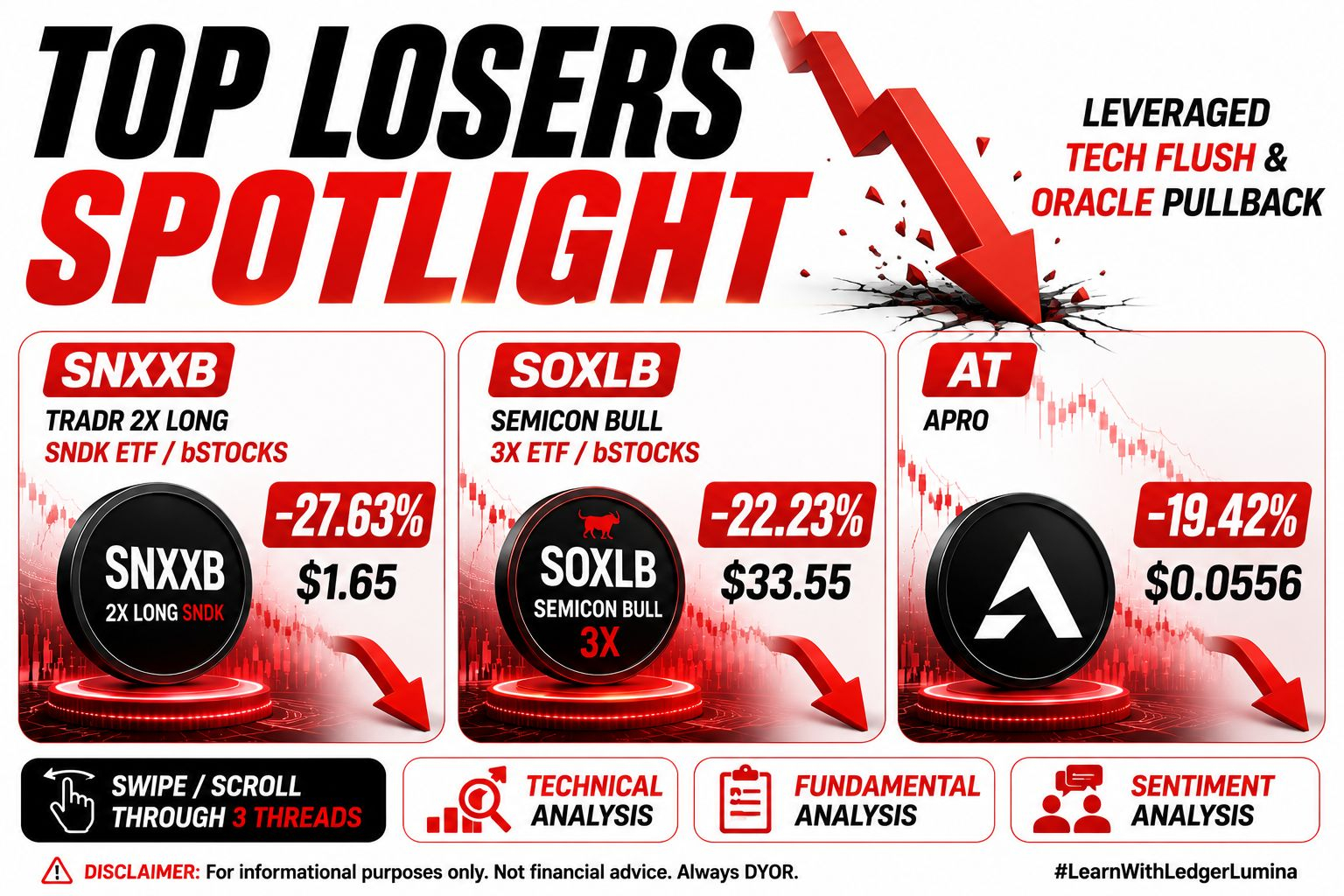
スレッド2:ファンダメンタル分析 🏗️
$SNXXB (Tradr 2X Long SNDK ETF — トークン化bStocks):米国の規制下にある原株によって1対1で完全に裏付けられており、SanDisk(SNDK)の2倍の日次ロング・エクスポージャーに、24時間365日オンチェーンでアクセスできます。価格下落は、オンチェーン・プロトコルの問題ではなく、2倍の日次リセットの仕組みによって増幅された、ストレージ/ハードウェア関連株の売りに直接起因しています。
{future}(SNXXUSDT)
$SOXLB (Semicon Bull 3X ETF — トークン化bStocks):3倍レバレッジの半導体強気ETFのトークン化株式を表します。本日の上昇銘柄ボードと直接連動している点に注目してください。半導体の逆連動エクスポージャー(SOXSB)が+20.33%急騰する一方で、3倍強気エクスポージャー(SOXLB)は、半導体の下落局面の正反対の影響を受けました。
{future}(SOXLUSDT)
$AT (APRO):APROは分散型オラクル・インフラネットワークとして機能し、15以上の主要ブロックチェーンでリアルタイムのData PushおよびData Pull価格フィードを提供しています。クロスチェーンのオラクルとして確かな実用性がある一方で、中小型のインフラトークンは、市場全体がリスク回避に傾く局面では、流通供給量の圧力や流動性のローテーションの影響を受けやすいままです。
{future}(ATUSDT)
#SNXXB #APRO #fundamentalanalysis
#LearnWithLedgerLumina
スレッド2:ファンダメンタル分析 🏗️
$SNXXB (Tradr 2X Long SNDK ETF — トークン化bStocks):米国の規制下にある原株によって1対1で完全に裏付けられており、SanDisk(SNDK)の2倍の日次ロング・エクスポージャーに、24時間365日オンチェーンでアクセスできます。価格下落は、オンチェーン・プロトコルの問題ではなく、2倍の日次リセットの仕組みによって増幅された、ストレージ/ハードウェア関連株の売りに直接起因しています。
$SOXLB (Semicon Bull 3X ETF — トークン化bStocks):3倍レバレッジの半導体強気ETFのトークン化株式を表します。本日の上昇銘柄ボードと直接連動している点に注目してください。半導体の逆連動エクスポージャー(SOXSB)が+20.33%急騰する一方で、3倍強気エクスポージャー(SOXLB)は、半導体の下落局面の正反対の影響を受けました。
$AT (APRO):APROは分散型オラクル・インフラネットワークとして機能し、15以上の主要ブロックチェーンでリアルタイムのData PushおよびData Pull価格フィードを提供しています。クロスチェーンのオラクルとして確かな実用性がある一方で、中小型のインフラトークンは、市場全体がリスク回避に傾く局面では、流通供給量の圧力や流動性のローテーションの影響を受けやすいままです。
#SNXXB #APRO #fundamentalanalysis
#LearnWithLedgerLumina
Ledger Lumina
·
--
弱気相場スレッド1:テクニカル分析 📊
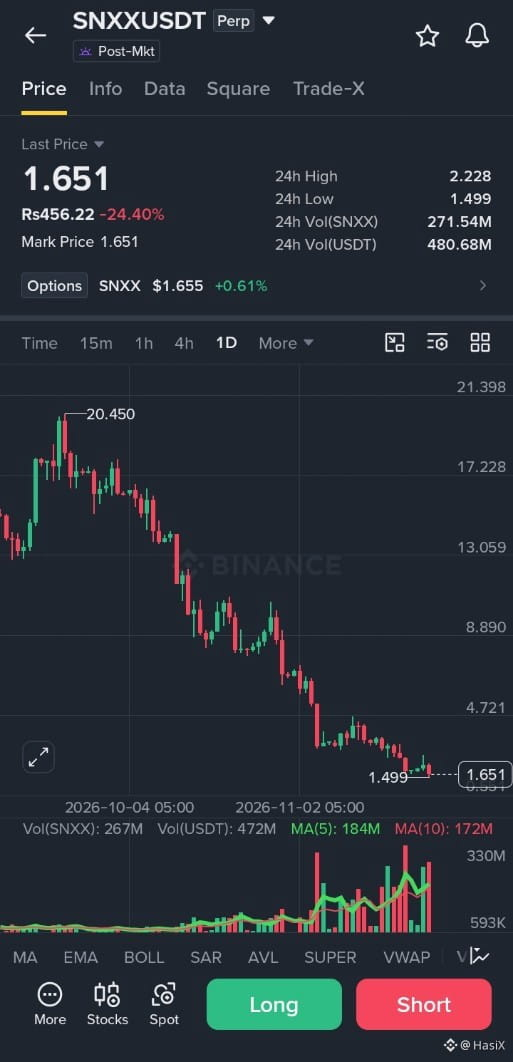
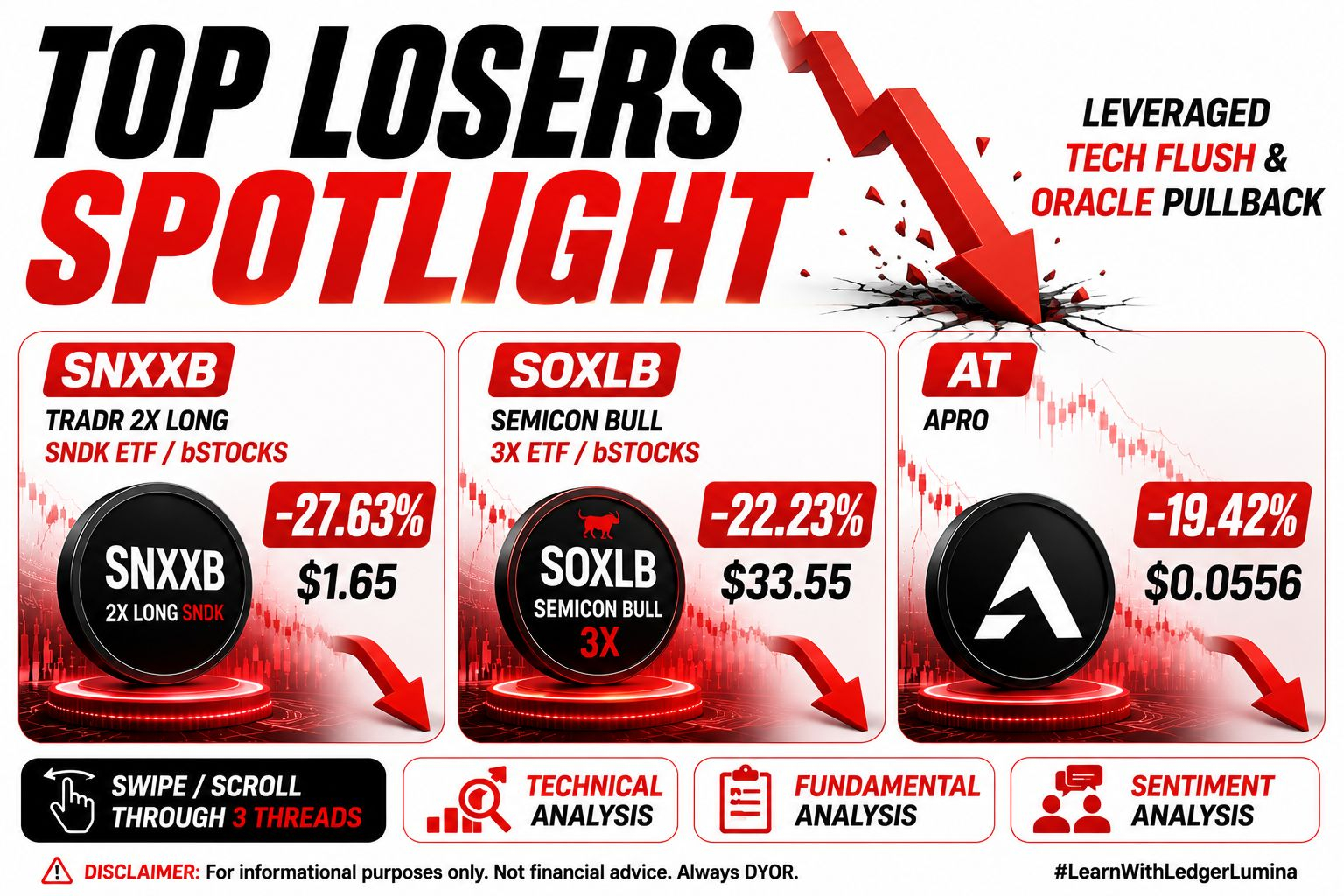
$SNXXB ($1.65 | -27.63%): すでに数週間にわたる急な下降トレンドのなかで、急激な下落ブレイクが発生。2倍レバレッジのbStocksが日中サポートを失うと、強制的なポジション解消によって下落が加速します。勢いに逆らってエントリーする前に、大商いを伴う投げ売りの下ヒゲと、より高い安値が確定するかに注目しましょう。
$SOXLB ($33.55 | -22.23%): 22%超の大幅な下落により、価格は最近の下値圏にある需要ゾーン、30~33ドル付近へ押し戻されています。3倍の日次レバレッジは、方向感のない相場でボラティリティを増幅させるため、反発しても、原資産の半導体指数が主要な移動平均線を回復するまでは、上値に段階的な抵抗が待ち受けています。
$AT ($0.0556 | -19.42%): 直近高値から明確に反落し、過去24時間の値動きでは売り手が優勢です。いま注目すべきなのは、買い手が0.050~0.055ドルの心理的な下値支持線を守ってダブルボトムを形成できるか、それとも薄い板の流動性により、さらに一段の下落を招くかです。
#LearnWithLedgerLumina #SNXXB #SOXSB
#technicalanalyst #TechnicalAnalysiss
1
1
448
·
--
弱気相場
スレッド1:テクニカル分析 📊
$SNXXB ($1.65 | -27.63%): すでに数週間にわたる急な下降トレンドのなかで、急激な下落ブレイクが発生。2倍レバレッジのbStocksが日中サポートを失うと、強制的なポジション解消によって下落が加速します。勢いに逆らってエントリーする前に、大商いを伴う投げ売りの下ヒゲと、より高い安値が確定するかに注目しましょう。
{future}(SNXXUSDT)
$SOXLB ($33.55 | -22.23%): 22%超の大幅な下落により、価格は最近の下値圏にある需要ゾーン、30~33ドル付近へ押し戻されています。3倍の日次レバレッジは、方向感のない相場でボラティリティを増幅させるため、反発しても、原資産の半導体指数が主要な移動平均線を回復するまでは、上値に段階的な抵抗が待ち受けています。
{future}(SOXLUSDT)
$AT ($0.0556 | -19.42%): 直近高値から明確に反落し、過去24時間の値動きでは売り手が優勢です。いま注目すべきなのは、買い手が0.050~0.055ドルの心理的な下値支持線を守ってダブルボトムを形成できるか、それとも薄い板の流動性により、さらに一段の下落を招くかです。
{future}(ATUSDT)
#LearnWithLedgerLumina #SNXXB #SOXSB
#technicalanalyst #TechnicalAnalysiss
スレッド1:テクニカル分析 📊
$SNXXB ($1.65 | -27.63%): すでに数週間にわたる急な下降トレンドのなかで、急激な下落ブレイクが発生。2倍レバレッジのbStocksが日中サポートを失うと、強制的なポジション解消によって下落が加速します。勢いに逆らってエントリーする前に、大商いを伴う投げ売りの下ヒゲと、より高い安値が確定するかに注目しましょう。
$SOXLB ($33.55 | -22.23%): 22%超の大幅な下落により、価格は最近の下値圏にある需要ゾーン、30~33ドル付近へ押し戻されています。3倍の日次レバレッジは、方向感のない相場でボラティリティを増幅させるため、反発しても、原資産の半導体指数が主要な移動平均線を回復するまでは、上値に段階的な抵抗が待ち受けています。
$AT ($0.0556 | -19.42%): 直近高値から明確に反落し、過去24時間の値動きでは売り手が優勢です。いま注目すべきなのは、買い手が0.050~0.055ドルの心理的な下値支持線を守ってダブルボトムを形成できるか、それとも薄い板の流動性により、さらに一段の下落を招くかです。
#LearnWithLedgerLumina #SNXXB #SOXSB
#technicalanalyst #TechnicalAnalysiss
Ledger Lumina
·
--
下落率上位に注目 — レバレッジ・テック急落&オラクル反落📉📊
#CryptoAnalysis"
今日は市場全体で大幅安。レバレッジをかけた半導体・ハードウェア関連銘柄が売られる一方、アルトコインでは利益確定の動きが広がっています。
$SNXXB (Tradr 2X Long SNDK ETF / bStocks):$1.65(-27.63%)
$SOXLB (Semicon Bull 3X ETF / bStocks):$33.55(-22.23%)
$AT (APRO):$0.0556(-19.42%)
本日の下落率上位銘柄について、テクニカル分析、ファンダメンタル分析、センチメント分析を扱った以下の3つのスレッドをご覧ください。
#LearnWithLedgerLumina #altcoins #SNX #TechnicalAnalysiss
免責事項:情報提供のみを目的としています。投資助言ではありません。必ずご自身で調査してください。
1
2
503
·
--
弱気相場
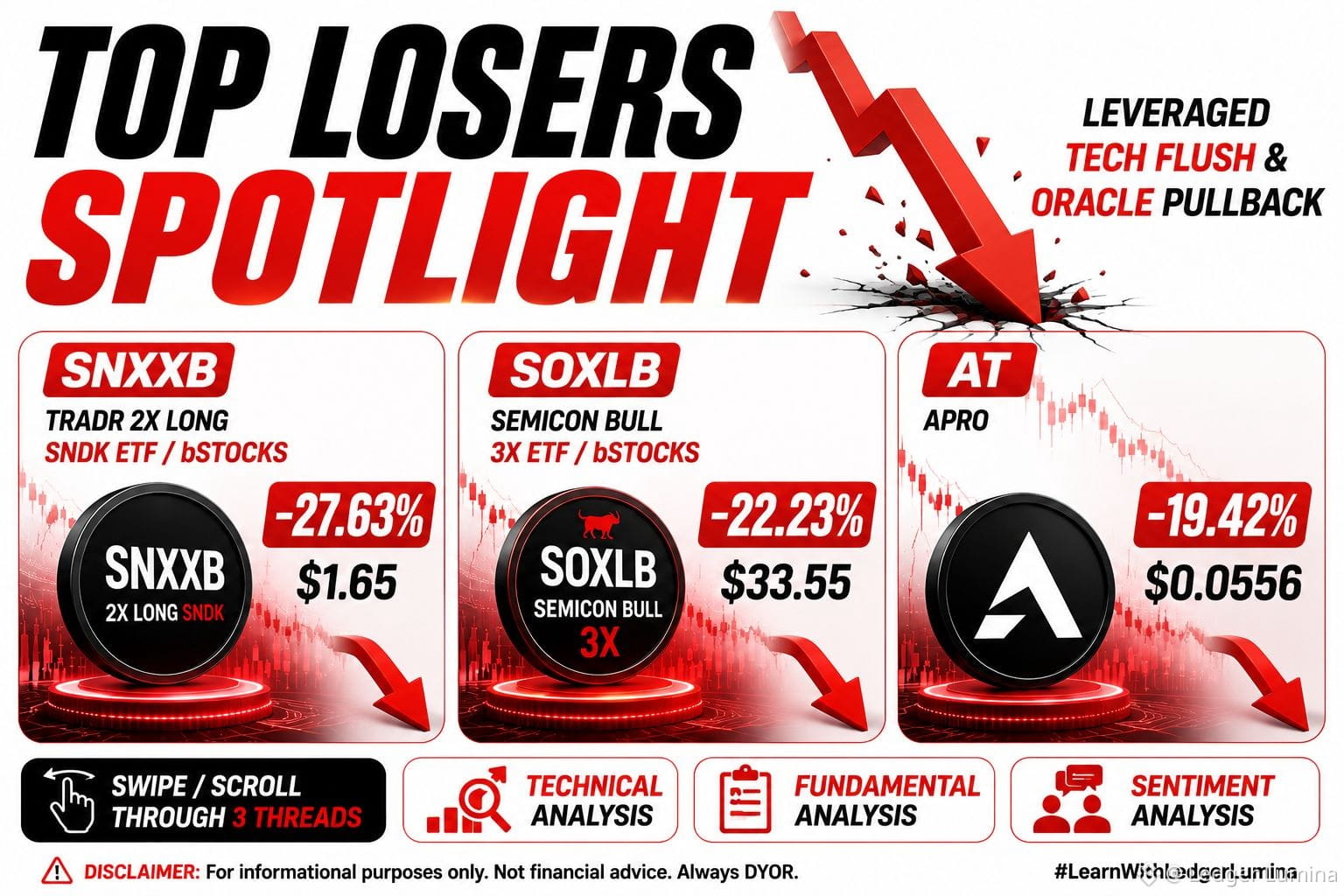
スレッド3:センチメント分析 🧠
$SNXXB : レバレッジをかけた押し目買い勢がこの1か月、何度も痛手を受けており、センチメントは大きく傷ついています。関連するハードウェア株が安定するまでは、トレーダーは反発をトレンド転換ではなく、短期的な一時回復と見ています。
{future}(SNXXUSDT)
$SOXLB : コミュニティやトレーダーのポジション状況には、ベータ値の高いAI銘柄や半導体銘柄で、リスク回避を強めてレバレッジを解消する動きが表れています。22%下落する中で24時間の売買高が高水準に達していることは、静かな買い集めではなく、積極的なヘッジや逆指値注文の連鎖を示しています。
{future}(SOXLUSDT)
$AT : モメンタム重視のトレーダーが最近値上がりした銘柄からディフェンシブ銘柄へ資金を移しており、短期的なセンチメントは慎重になっています。押し目買い勢は、出来高が落ち着き、サポートが維持されるのを見極めてから、確信を取り戻そうとしています。
{spot}(ATUSDT)
#LearnWithLedgerLumina #APRO #Marketsentimentstoday #SNXXB
スレッド3:センチメント分析 🧠
$SNXXB : レバレッジをかけた押し目買い勢がこの1か月、何度も痛手を受けており、センチメントは大きく傷ついています。関連するハードウェア株が安定するまでは、トレーダーは反発をトレンド転換ではなく、短期的な一時回復と見ています。
$SOXLB : コミュニティやトレーダーのポジション状況には、ベータ値の高いAI銘柄や半導体銘柄で、リスク回避を強めてレバレッジを解消する動きが表れています。22%下落する中で24時間の売買高が高水準に達していることは、静かな買い集めではなく、積極的なヘッジや逆指値注文の連鎖を示しています。
$AT : モメンタム重視のトレーダーが最近値上がりした銘柄からディフェンシブ銘柄へ資金を移しており、短期的なセンチメントは慎重になっています。押し目買い勢は、出来高が落ち着き、サポートが維持されるのを見極めてから、確信を取り戻そうとしています。
#LearnWithLedgerLumina #APRO #Marketsentimentstoday #SNXXB
Ledger Lumina
·
--
弱気相場スレッド2:ファンダメンタル分析 🏗️
$SNXXB (Tradr 2X Long SNDK ETF — トークン化bStocks):米国の規制下にある原株によって1対1で完全に裏付けられており、SanDisk(SNDK)の2倍の日次ロング・エクスポージャーに、24時間365日オンチェーンでアクセスできます。価格下落は、オンチェーン・プロトコルの問題ではなく、2倍の日次リセットの仕組みによって増幅された、ストレージ/ハードウェア関連株の売りに直接起因しています。
$SOXLB (Semicon Bull 3X ETF — トークン化bStocks):3倍レバレッジの半導体強気ETFのトークン化株式を表します。本日の上昇銘柄ボードと直接連動している点に注目してください。半導体の逆連動エクスポージャー(SOXSB)が+20.33%急騰する一方で、3倍強気エクスポージャー(SOXLB)は、半導体の下落局面の正反対の影響を受けました。
$AT (APRO):APROは分散型オラクル・インフラネットワークとして機能し、15以上の主要ブロックチェーンでリアルタイムのData PushおよびData Pull価格フィードを提供しています。クロスチェーンのオラクルとして確かな実用性がある一方で、中小型のインフラトークンは、市場全体がリスク回避に傾く局面では、流通供給量の圧力や流動性のローテーションの影響を受けやすいままです。
#SNXXB #APRO #fundamentalanalysis
#LearnWithLedgerLumina
1
833
·
--
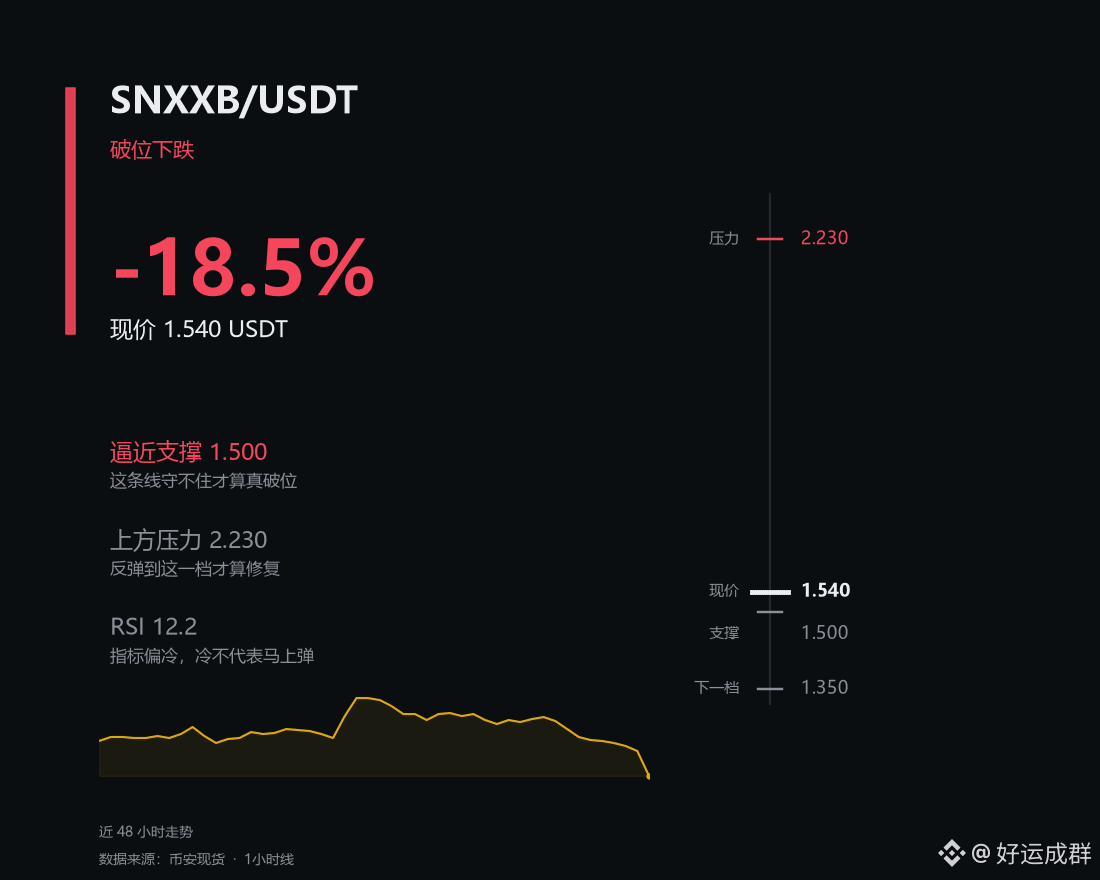
$SNXXB 今日は-18.5%。ビットコインにすらついていけていない。$BTC 今日は-3.8%。
相場は静かすぎるくらいで、指値注文は紙のように薄い。
1.54の価格は、上は2.23に押さえられ、下は1.5で支えられている。RSIは12.2。
率直に言えば、今は誰も予言者ぶらないほうがいい。ここで買い増しますか?
相場がじりじりと人を消耗させるときこそ、誰が計画に沿って動いているかがよく分かる。
#币圈 #SNXXB
$SNXXB 今日は-18.5%。ビットコインにすらついていけていない。$BTC 今日は-3.8%。
相場は静かすぎるくらいで、指値注文は紙のように薄い。
1.54の価格は、上は2.23に押さえられ、下は1.5で支えられている。RSIは12.2。
率直に言えば、今は誰も予言者ぶらないほうがいい。ここで買い増しますか?
相場がじりじりと人を消耗させるときこそ、誰が計画に沿って動いているかがよく分かる。
#币圈 #SNXXB
相場は静かすぎるくらいで、指値注文は紙のように薄い。
1.54の価格は、上は2.23に押さえられ、下は1.5で支えられている。RSIは12.2。
率直に言えば、今は誰も予言者ぶらないほうがいい。ここで買い増しますか?
相場がじりじりと人を消耗させるときこそ、誰が計画に沿って動いているかがよく分かる。
#币圈 #SNXXB
64
ログインして、さらにコンテンツを読む
厳選トピックで世界の暗号資産トレーダーの仲間入り
⚡️ 暗号資産に関する最新かつ有益な情報が見つかります。
💬 世界最大の暗号資産取引所から信頼されています。
👍 認証を受けたクリエイターから、有益なインサイトを得られます。
メール / 電話番号
トレンドトピック
1
#CanMarketsReboundAfterThanksgiving?
閲覧回数 11,336
279人が討論中
2
#CouldSpaceX’sOrbitalDataCentersBoostAIChipDemand?
閲覧回数 7,111
184人が討論中
3
#EvolveAtBinanceBlockchainWeek
閲覧回数 648,041
6,815人が討論中
4
#CorePCEBeatLiftsFedHikeOdds
閲覧回数 157,370
1,246人が討論中
5
#BitcoinAndStocksSlipAgainAmidTrump’sTariffPlans
閲覧回数 210,822
2,027人が討論中
6
#JensenHuangSaysNvidiaDoesn’tNeedASuccessionPlan
閲覧回数 101,105
1,228人が討論中
7
#NasdaqFuturesSlideMoreThan3%
閲覧回数 41,061
369人が討論中
8
#USOctoberPCEPriceIndexAt0.3%MoM
閲覧回数 46,656
373人が討論中
9
#BitcoinETFsPostRecord$4.94BNovemberOutflows
閲覧回数 9,016
48人が討論中
10
#TetherInvestsInArgentinasLemon
閲覧回数 17,802
211人が討論中