

#render
render
閲覧回数 3.2M
9,614人が討論中
注目
最新

翻訳参照
RENDER HACIA LOS 15 USD? ⚠️ ESTO ES LO QUE NO ESTAS VIENDO ⚠️
¡Hola a todos! 👋 Hoy analizamos a $RENDER , que muestra pequeñas recuperaciones en su precio, pero...
¿por qué no sube con más fuerza❓️❓️
¿Qué pasa con la meta de los $15 USD ❓️❓️
Aquí se los explico a detalle.
📌 Situación Actual:
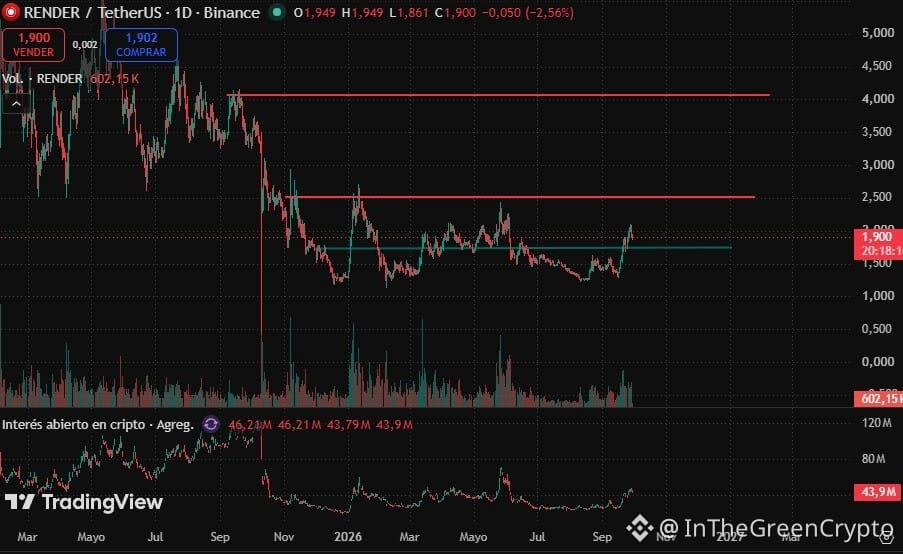
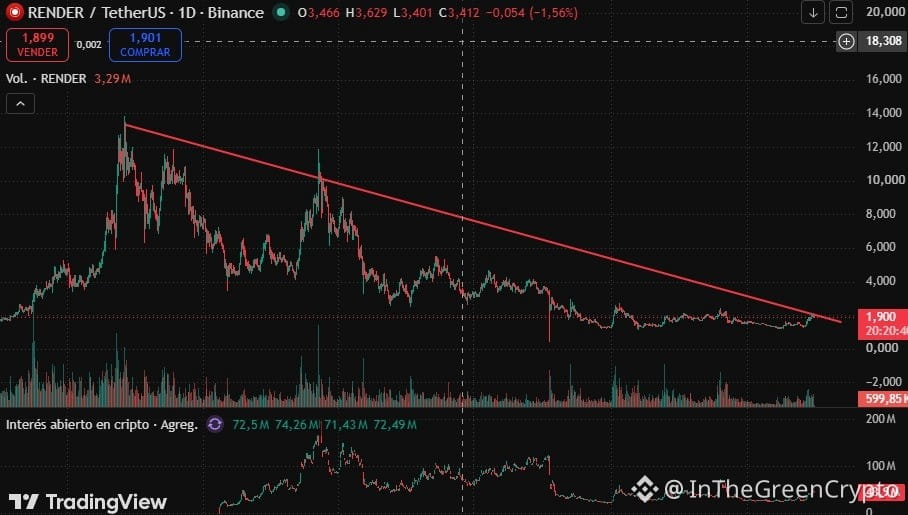
Actualmente, $RENDER se encuentra atrapado debajo de una línea de tendencia bajista principal en gráfico diario (D1) que aún no ha logrado romper de forma firme.
🚀 ¿Qué se necesita para cambiar de estructura?
⭕️Primer obstáculo clave: Tiene una resistencia importante en los $2.50 USD.
📊¿Si rompe los $2.50 USD iría directo a los $15 USD? La respuesta corta es NO de inmediato, pero romper este nivel confirmaría la posible salida de la línea de tendencia bajista, abriendo camino para una recuperación gradual y constante fuera de la zona de acumulación en la que se encuentra actualmente.
💲💲Posibles Zonas de rebote
Actualmente esta corrigiendo por la ultima subida que tuvo y unas zonas donde buscar un rebote es en 💲1.830 - 1.730 tambien podria tocar el precio de 💲1.60 pero esto ya no seria positivo para su grafica
PERO DIME
¿Tienes $RENDER en su portafolio? ¿A qué precios están esperando para tomar ganancias o vender?
👇 ¡Los leo en los comentarios!
⚠️ Contenido únicamente educativo y de análisis técnico. No es asesoramiento financiero. Haz tu propia investigación (DYOR).
🏷️ Hashtags Sugeridos:
#RENDER #AI #DePIN #CryptoAnalysis #BinanceSquare
RENDER HACIA LOS 15 USD? ⚠️ ESTO ES LO QUE NO ESTAS VIENDO ⚠️
¡Hola a todos! 👋 Hoy analizamos a $RENDER , que muestra pequeñas recuperaciones en su precio, pero...
¿por qué no sube con más fuerza❓️❓️
¿Qué pasa con la meta de los $15 USD ❓️❓️
Aquí se los explico a detalle.
📌 Situación Actual:
Actualmente, $RENDER se encuentra atrapado debajo de una línea de tendencia bajista principal en gráfico diario (D1) que aún no ha logrado romper de forma firme.
🚀 ¿Qué se necesita para cambiar de estructura?
⭕️Primer obstáculo clave: Tiene una resistencia importante en los $2.50 USD.
📊¿Si rompe los $2.50 USD iría directo a los $15 USD? La respuesta corta es NO de inmediato, pero romper este nivel confirmaría la posible salida de la línea de tendencia bajista, abriendo camino para una recuperación gradual y constante fuera de la zona de acumulación en la que se encuentra actualmente.
💲💲Posibles Zonas de rebote
Actualmente esta corrigiendo por la ultima subida que tuvo y unas zonas donde buscar un rebote es en 💲1.830 - 1.730 tambien podria tocar el precio de 💲1.60 pero esto ya no seria positivo para su grafica
PERO DIME
¿Tienes $RENDER en su portafolio? ¿A qué precios están esperando para tomar ganancias o vender?
👇 ¡Los leo en los comentarios!
⚠️ Contenido únicamente educativo y de análisis técnico. No es asesoramiento financiero. Haz tu propia investigación (DYOR).
🏷️ Hashtags Sugeridos:
#RENDER #AI #DePIN #CryptoAnalysis #BinanceSquare
¡Hola a todos! 👋 Hoy analizamos a $RENDER , que muestra pequeñas recuperaciones en su precio, pero...
¿por qué no sube con más fuerza❓️❓️
¿Qué pasa con la meta de los $15 USD ❓️❓️
Aquí se los explico a detalle.
📌 Situación Actual:
Actualmente, $RENDER se encuentra atrapado debajo de una línea de tendencia bajista principal en gráfico diario (D1) que aún no ha logrado romper de forma firme.
🚀 ¿Qué se necesita para cambiar de estructura?
⭕️Primer obstáculo clave: Tiene una resistencia importante en los $2.50 USD.
📊¿Si rompe los $2.50 USD iría directo a los $15 USD? La respuesta corta es NO de inmediato, pero romper este nivel confirmaría la posible salida de la línea de tendencia bajista, abriendo camino para una recuperación gradual y constante fuera de la zona de acumulación en la que se encuentra actualmente.
💲💲Posibles Zonas de rebote
Actualmente esta corrigiendo por la ultima subida que tuvo y unas zonas donde buscar un rebote es en 💲1.830 - 1.730 tambien podria tocar el precio de 💲1.60 pero esto ya no seria positivo para su grafica
PERO DIME
¿Tienes $RENDER en su portafolio? ¿A qué precios están esperando para tomar ganancias o vender?
👇 ¡Los leo en los comentarios!
⚠️ Contenido únicamente educativo y de análisis técnico. No es asesoramiento financiero. Haz tu propia investigación (DYOR).
🏷️ Hashtags Sugeridos:
#RENDER #AI #DePIN #CryptoAnalysis #BinanceSquare
1
425

·
--
ブリッシュ
一部該当
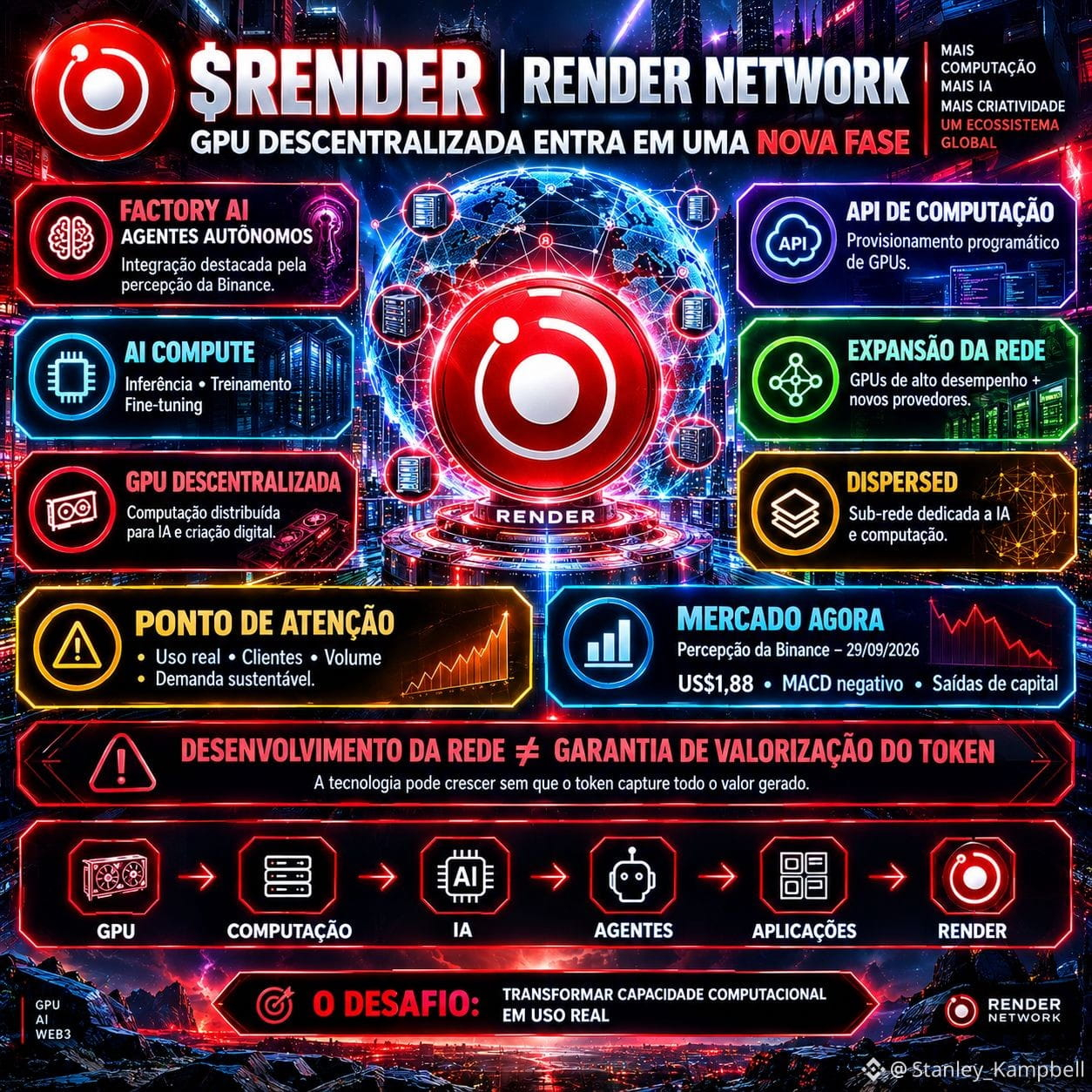
$RENDER | RENDER NETWORK: GPU ディセントラリゼーションが新たな段階へ
.
.
O $RENDER は過去24時間で5.5%下落したが、最近の開発状況は、このプロジェクトのストーリーがチャート以上のものだと示している。
Binance の9月29日の見解によれば、Factory AI との統合により、自律エージェントがコードを管理し計算リソースをプロビジョニングできるようになり、自律AIが分散GPUインフラに近づく。
Render 自体も、アプリケーションがGPU計算能力を機械学習、生成AI、その他のワークロード向けにプロビジョニングできるAPIを提供している。
何が伸びているのか?
Render は3Dレンダリングの枠を超えてネットワークを拡大している。
Render Compute Network は、推論、トレーニング、ファインチューニング、データ処理といった用途のために分散GPUをAI開発者に接続する。さらに、高性能GPUのサポートや、大規模なハードウェアセットを持つプロバイダーのオンボーディングも備えている。
GPU → 計算 → AI → アプリケーション → 課題(需要) → RENDER
最も重要なポイント
インフラ拡大は技術的な論旨にとって重要だが、トークンの価値が自動的に上がることを意味するわけではない。
RENDER は計算能力を実際の利用、顧客、作業量、持続可能な需要へと変える必要がある。
そして短期的な圧力も存在する。
Binance の見解は、価格が約 1.88米ドル近辺、MACDがマイナス、資本の純流出を示している。一方でAI分野では規制上の不確実性と計算コストの上昇に直面している。
何を追うべきか?
Factory AI と自律エージェント
GPU の拡張
AI Compute と Dispersed
顧客と実際のワークロード
利用される計算量
Burn and Mint の均衡
AIエコシステムの進化
RENDER への需要
プロジェクトにとって大きな論点はこうだ:
分散したインフラは、AI計算に対する増え続ける世界的需要の一部を取り込めるのだろうか?
#RENDER → GPU → 計算 → AI → エージェント → アプリケーション
.
.
{spot}(RENDERUSDT)
$RENDER | RENDER NETWORK: GPU ディセントラリゼーションが新たな段階へ
.
.
O $RENDER は過去24時間で5.5%下落したが、最近の開発状況は、このプロジェクトのストーリーがチャート以上のものだと示している。
Binance の9月29日の見解によれば、Factory AI との統合により、自律エージェントがコードを管理し計算リソースをプロビジョニングできるようになり、自律AIが分散GPUインフラに近づく。
Render 自体も、アプリケーションがGPU計算能力を機械学習、生成AI、その他のワークロード向けにプロビジョニングできるAPIを提供している。
何が伸びているのか?
Render は3Dレンダリングの枠を超えてネットワークを拡大している。
Render Compute Network は、推論、トレーニング、ファインチューニング、データ処理といった用途のために分散GPUをAI開発者に接続する。さらに、高性能GPUのサポートや、大規模なハードウェアセットを持つプロバイダーのオンボーディングも備えている。
GPU → 計算 → AI → アプリケーション → 課題(需要) → RENDER
最も重要なポイント
インフラ拡大は技術的な論旨にとって重要だが、トークンの価値が自動的に上がることを意味するわけではない。
RENDER は計算能力を実際の利用、顧客、作業量、持続可能な需要へと変える必要がある。
そして短期的な圧力も存在する。
Binance の見解は、価格が約 1.88米ドル近辺、MACDがマイナス、資本の純流出を示している。一方でAI分野では規制上の不確実性と計算コストの上昇に直面している。
何を追うべきか?
Factory AI と自律エージェント
GPU の拡張
AI Compute と Dispersed
顧客と実際のワークロード
利用される計算量
Burn and Mint の均衡
AIエコシステムの進化
RENDER への需要
プロジェクトにとって大きな論点はこうだ:
分散したインフラは、AI計算に対する増え続ける世界的需要の一部を取り込めるのだろうか?
#RENDER → GPU → 計算 → AI → エージェント → アプリケーション
.
.
.
.
O $RENDER は過去24時間で5.5%下落したが、最近の開発状況は、このプロジェクトのストーリーがチャート以上のものだと示している。
Binance の9月29日の見解によれば、Factory AI との統合により、自律エージェントがコードを管理し計算リソースをプロビジョニングできるようになり、自律AIが分散GPUインフラに近づく。
Render 自体も、アプリケーションがGPU計算能力を機械学習、生成AI、その他のワークロード向けにプロビジョニングできるAPIを提供している。
何が伸びているのか?
Render は3Dレンダリングの枠を超えてネットワークを拡大している。
Render Compute Network は、推論、トレーニング、ファインチューニング、データ処理といった用途のために分散GPUをAI開発者に接続する。さらに、高性能GPUのサポートや、大規模なハードウェアセットを持つプロバイダーのオンボーディングも備えている。
GPU → 計算 → AI → アプリケーション → 課題(需要) → RENDER
最も重要なポイント
インフラ拡大は技術的な論旨にとって重要だが、トークンの価値が自動的に上がることを意味するわけではない。
RENDER は計算能力を実際の利用、顧客、作業量、持続可能な需要へと変える必要がある。
そして短期的な圧力も存在する。
Binance の見解は、価格が約 1.88米ドル近辺、MACDがマイナス、資本の純流出を示している。一方でAI分野では規制上の不確実性と計算コストの上昇に直面している。
何を追うべきか?
Factory AI と自律エージェント
GPU の拡張
AI Compute と Dispersed
顧客と実際のワークロード
利用される計算量
Burn and Mint の均衡
AIエコシステムの進化
RENDER への需要
プロジェクトにとって大きな論点はこうだ:
分散したインフラは、AI計算に対する増え続ける世界的需要の一部を取り込めるのだろうか?
#RENDER → GPU → 計算 → AI → エージェント → アプリケーション
.
.
DeilsonD3:
Essa moeda é o meu projeto 2030 eu acredito que ela pode chegar ou passar dos 200 usdt até lá, pelo simples motivo ela está construindo a via por onde qq IA terá que passa.
3
4
946

·
--
一部該当
🚨 レンダーに大きな新展開が動き出している──そしてそれは“ネットワークそのもの”についてだ
レンダーは単にGPU容量を追加しているだけではありません。そのガバナンスは現在、大規模なProtocol 28 + Mainnet Adapterのアップグレードに向けて動いています。
でも、ここが面白い部分…
このアップグレードは、ネットワークが従来の3Dレンダリングを超えて、AI、空間コンピューティング、分散型GPUワークロードへと広がっていく中で、レンダーのインフラを進化させ続けることを目的としています。
そしてレンダーは、エージェンティックAIや計算基盤をめぐる競争に焦点を当てた最近の業界での露出を通じて、成長するAIコンピュート経済のど真ん中に自らの位置づけを強めています。
大きな話題は“1つの提携”ではありません。
レンダーが、成長するAIコンピュート需要を、持続的なネットワーク利用へと変えられるかどうかです。
下の$RENDER をクリックして、いまのライブ価格を確認してください。
$RENDER
{future}(RENDERUSDT)
.
.
.
.
#render #RENDER #Write2Earn
※金融アドバイスではありません。DYOR。
🚨 レンダーに大きな新展開が動き出している──そしてそれは“ネットワークそのもの”についてだ
レンダーは単にGPU容量を追加しているだけではありません。そのガバナンスは現在、大規模なProtocol 28 + Mainnet Adapterのアップグレードに向けて動いています。
でも、ここが面白い部分…
このアップグレードは、ネットワークが従来の3Dレンダリングを超えて、AI、空間コンピューティング、分散型GPUワークロードへと広がっていく中で、レンダーのインフラを進化させ続けることを目的としています。
そしてレンダーは、エージェンティックAIや計算基盤をめぐる競争に焦点を当てた最近の業界での露出を通じて、成長するAIコンピュート経済のど真ん中に自らの位置づけを強めています。
大きな話題は“1つの提携”ではありません。
レンダーが、成長するAIコンピュート需要を、持続的なネットワーク利用へと変えられるかどうかです。
下の$RENDER をクリックして、いまのライブ価格を確認してください。
$RENDER
.
.
.
.
#render #RENDER #Write2Earn
※金融アドバイスではありません。DYOR。
レンダーは単にGPU容量を追加しているだけではありません。そのガバナンスは現在、大規模なProtocol 28 + Mainnet Adapterのアップグレードに向けて動いています。
でも、ここが面白い部分…
このアップグレードは、ネットワークが従来の3Dレンダリングを超えて、AI、空間コンピューティング、分散型GPUワークロードへと広がっていく中で、レンダーのインフラを進化させ続けることを目的としています。
そしてレンダーは、エージェンティックAIや計算基盤をめぐる競争に焦点を当てた最近の業界での露出を通じて、成長するAIコンピュート経済のど真ん中に自らの位置づけを強めています。
大きな話題は“1つの提携”ではありません。
レンダーが、成長するAIコンピュート需要を、持続的なネットワーク利用へと変えられるかどうかです。
下の$RENDER をクリックして、いまのライブ価格を確認してください。
$RENDER
.
.
.
.
#render #RENDER #Write2Earn
※金融アドバイスではありません。DYOR。
2
970

·
--
ブリッシュ
翻訳参照
🚨 $RENDER IS BACK IN THE SPOTLIGHT 👀
#RENDER is gaining momentum as capital rotates back into AI and DePIN-related crypto projects.
The latest move appears driven by sector rotation and renewed trading interest rather than a major new fundamental announcement.
Could AI + DePIN be the next narrative to heat up? 🔥
What’s your take?
{spot}(RENDERUSDT)
🚨 $RENDER IS BACK IN THE SPOTLIGHT 👀
#RENDER is gaining momentum as capital rotates back into AI and DePIN-related crypto projects.
The latest move appears driven by sector rotation and renewed trading interest rather than a major new fundamental announcement.
Could AI + DePIN be the next narrative to heat up? 🔥
What’s your take?
#RENDER is gaining momentum as capital rotates back into AI and DePIN-related crypto projects.
The latest move appears driven by sector rotation and renewed trading interest rather than a major new fundamental announcement.
Could AI + DePIN be the next narrative to heat up? 🔥
What’s your take?
36


·
--
翻訳参照
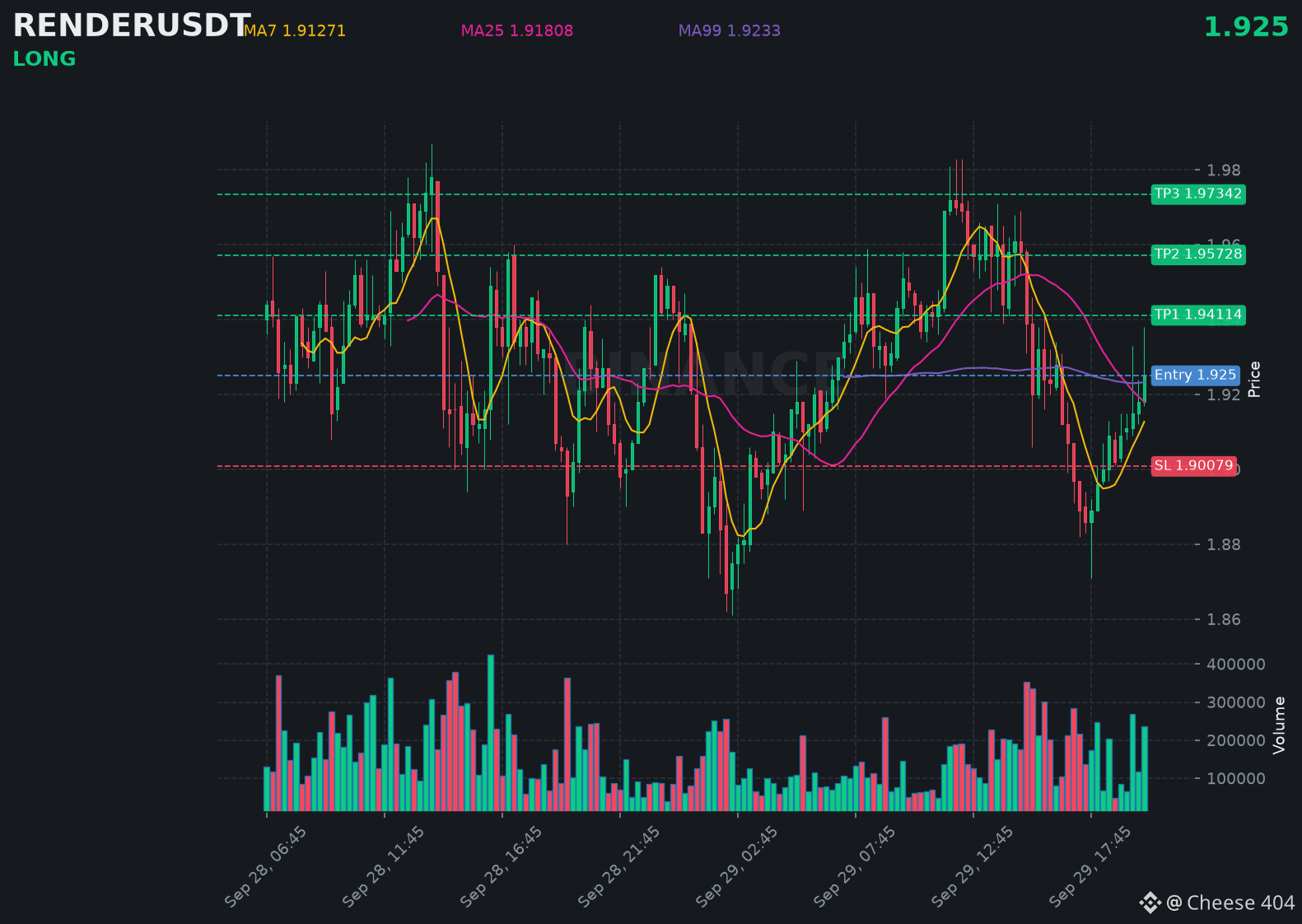
$RENDER is gaining strong bullish momentum as volume rises and price breaks key resistance.
📍 @ 1.925 | Volume: 0.45M USD
RSI 54 | EMA20: 1.91527 USD
📈 Trade Plan:
📈 Entry: 1.92016 – 1.92984
🛑 Stop Loss: 1.90079
🎯 TP1: 1.94114
🎯 TP2: 1.95728
🎯 TP3: 1.97342
Waiting for a retest, then riding the uptrend.
👉 $RENDER 👈 Catch it
#RENDER
$RENDER is gaining strong bullish momentum as volume rises and price breaks key resistance.
📍 @ 1.925 | Volume: 0.45M USD
RSI 54 | EMA20: 1.91527 USD
📈 Trade Plan:
📈 Entry: 1.92016 – 1.92984
🛑 Stop Loss: 1.90079
🎯 TP1: 1.94114
🎯 TP2: 1.95728
🎯 TP3: 1.97342
Waiting for a retest, then riding the uptrend.
👉 $RENDER 👈 Catch it
#RENDER
📍 @ 1.925 | Volume: 0.45M USD
RSI 54 | EMA20: 1.91527 USD
📈 Trade Plan:
📈 Entry: 1.92016 – 1.92984
🛑 Stop Loss: 1.90079
🎯 TP1: 1.94114
🎯 TP2: 1.95728
🎯 TP3: 1.97342
Waiting for a retest, then riding the uptrend.
👉 $RENDER 👈 Catch it
#RENDER
138

翻訳参照
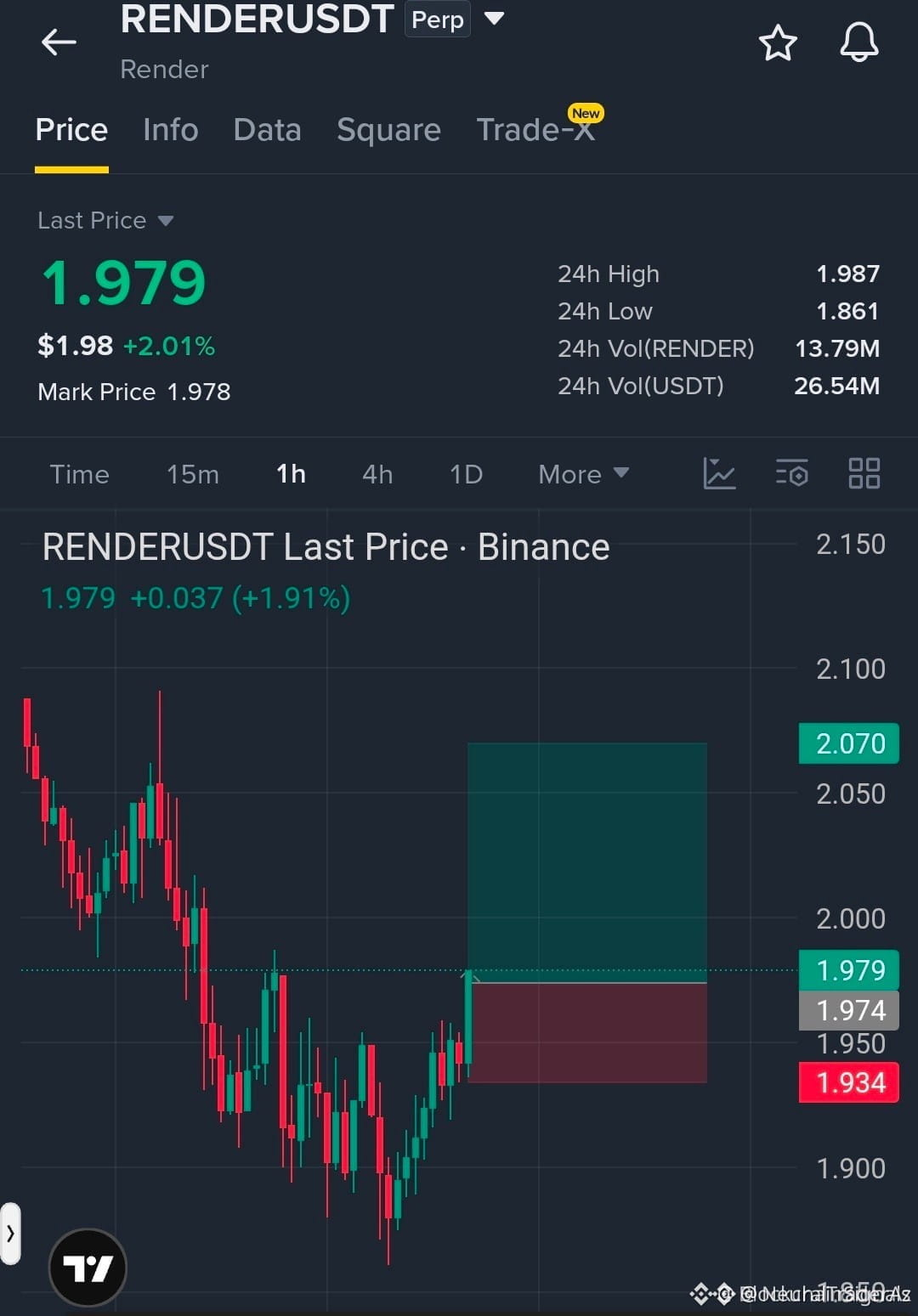
🟢 $RENDER RECLAIMS CRITICAL DEMAND ZONE AS INSTITUTIONAL ACCUMULATION FUELS EXPANSION 🚀
Entry: 1.974–1.979 ⚡
Target: 2.070 / 2.100 / 2.150 🚀
Stop Loss: 1.934 ⚠️
📌 Smart money absorbed sell-side liquidity near the recent lows, establishing a firm structural floor around the 1.970 zone. 📊 Price action has successfully flipped the intraday order block back into support, signalling that institutional buyers are actively positioning for an inefficiency fill toward overhead resistance targets.
💡 As long as the invalidation level at 1.934 remains intact, order flow heavily favors momentum expanding into upper liquidity pools. 💬 Are you positioning on this structural reclaim or waiting for a confirmation close above 2.070? 👇
⚠️ Not financial advice. Always manage your risk. 🛡️
🏷️ #RENDER #LongSetup #MarketStructure #Trading #Crypto
🎯 🦈
🟢 $RENDER RECLAIMS CRITICAL DEMAND ZONE AS INSTITUTIONAL ACCUMULATION FUELS EXPANSION 🚀
Entry: 1.974–1.979 ⚡
Target: 2.070 / 2.100 / 2.150 🚀
Stop Loss: 1.934 ⚠️
📌 Smart money absorbed sell-side liquidity near the recent lows, establishing a firm structural floor around the 1.970 zone. 📊 Price action has successfully flipped the intraday order block back into support, signalling that institutional buyers are actively positioning for an inefficiency fill toward overhead resistance targets.
💡 As long as the invalidation level at 1.934 remains intact, order flow heavily favors momentum expanding into upper liquidity pools. 💬 Are you positioning on this structural reclaim or waiting for a confirmation close above 2.070? 👇
⚠️ Not financial advice. Always manage your risk. 🛡️
🏷️ #RENDER #LongSetup #MarketStructure #Trading #Crypto
🎯 🦈
Entry: 1.974–1.979 ⚡
Target: 2.070 / 2.100 / 2.150 🚀
Stop Loss: 1.934 ⚠️
📌 Smart money absorbed sell-side liquidity near the recent lows, establishing a firm structural floor around the 1.970 zone. 📊 Price action has successfully flipped the intraday order block back into support, signalling that institutional buyers are actively positioning for an inefficiency fill toward overhead resistance targets.
💡 As long as the invalidation level at 1.934 remains intact, order flow heavily favors momentum expanding into upper liquidity pools. 💬 Are you positioning on this structural reclaim or waiting for a confirmation close above 2.070? 👇
⚠️ Not financial advice. Always manage your risk. 🛡️
🏷️ #RENDER #LongSetup #MarketStructure #Trading #Crypto
🎯 🦈
9

翻訳参照
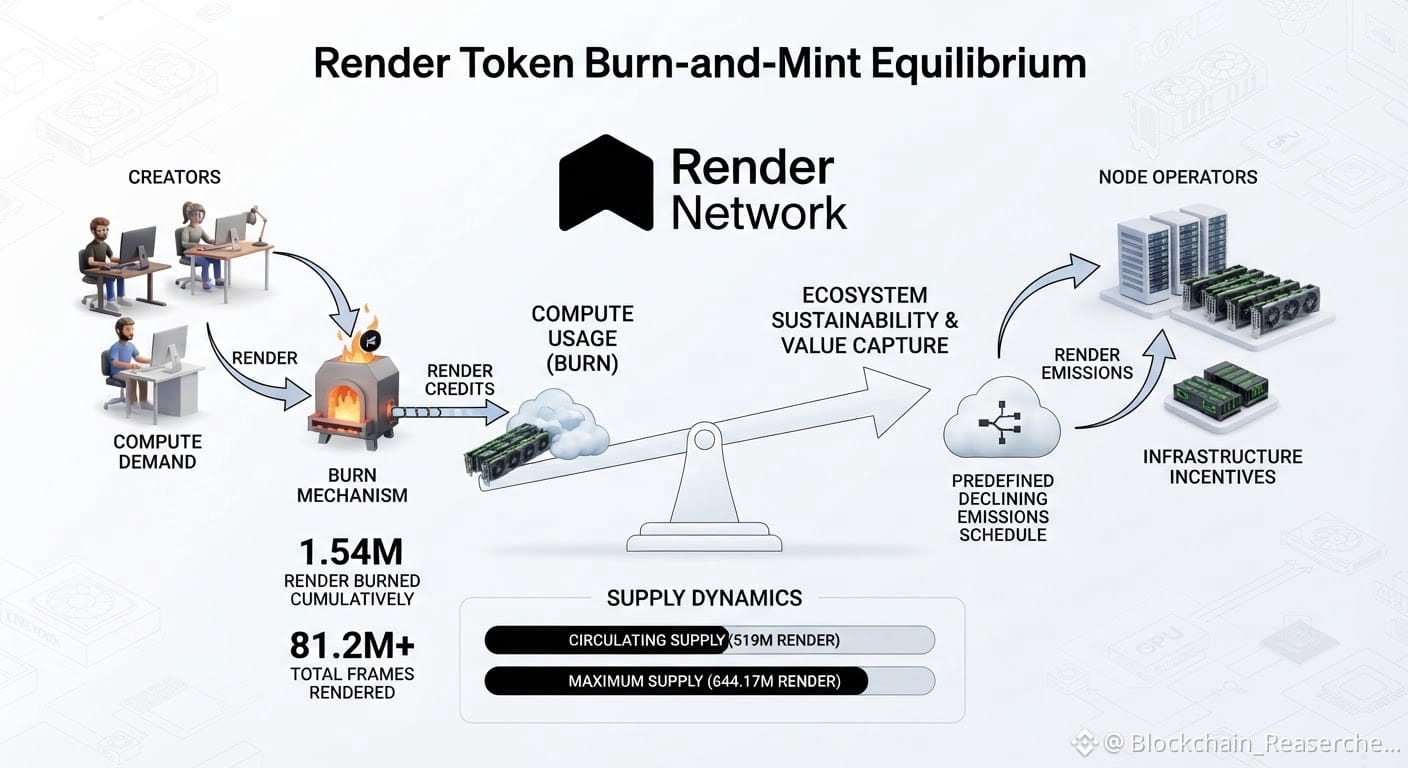
Most of the Render conversation still revolves around AI and GPU demand, but I think the more interesting part is happening inside the token model itself.
RENDER uses a Burn-and-Mint Equilibrium: creators pay for compute by burning RENDER for Render Credits, while node operators receive RENDER emissions for supplying GPU power. In other words, actual network demand and infrastructure incentives are connected through the token.
And the scale is worth looking at.
Render’s official dashboard currently reports 81.2M+ total frames rendered and 5,600 nodes since inception, with 1.54M RENDER burned cumulatively.
That creates an important distinction.
A large GPU network does not automatically mean strong token demand. The economic question is how much real compute usage is being converted into token burns relative to the emissions required to keep GPU suppliers participating.
That is also why I wouldn’t treat the headline “AI compute is growing” as the complete RENDER thesis.
There is already real infrastructure usage, but the token’s value capture still depends on the balance between compute demand, burns, and emissions. The protocol itself describes emissions as a predefined declining schedule, while network usage determines the burn side of the equation.
One more detail caught my attention: public market trackers currently show roughly 519M RENDER circulating versus a 644.17M maximum supply, while Render’s own dashboard uses a different circulating-supply calculation.
So the question I’d watch isn’t simply “Is Render growing?”
It’s: Is real compute demand growing fast enough to make RENDER’s burn side increasingly important relative to its emission side?
#Render $RENDER
{future}(RENDERUSDT)
Most of the Render conversation still revolves around AI and GPU demand, but I think the more interesting part is happening inside the token model itself.
RENDER uses a Burn-and-Mint Equilibrium: creators pay for compute by burning RENDER for Render Credits, while node operators receive RENDER emissions for supplying GPU power. In other words, actual network demand and infrastructure incentives are connected through the token.
And the scale is worth looking at.
Render’s official dashboard currently reports 81.2M+ total frames rendered and 5,600 nodes since inception, with 1.54M RENDER burned cumulatively.
That creates an important distinction.
A large GPU network does not automatically mean strong token demand. The economic question is how much real compute usage is being converted into token burns relative to the emissions required to keep GPU suppliers participating.
That is also why I wouldn’t treat the headline “AI compute is growing” as the complete RENDER thesis.
There is already real infrastructure usage, but the token’s value capture still depends on the balance between compute demand, burns, and emissions. The protocol itself describes emissions as a predefined declining schedule, while network usage determines the burn side of the equation.
One more detail caught my attention: public market trackers currently show roughly 519M RENDER circulating versus a 644.17M maximum supply, while Render’s own dashboard uses a different circulating-supply calculation.
So the question I’d watch isn’t simply “Is Render growing?”
It’s: Is real compute demand growing fast enough to make RENDER’s burn side increasingly important relative to its emission side?
#Render $RENDER
RENDER uses a Burn-and-Mint Equilibrium: creators pay for compute by burning RENDER for Render Credits, while node operators receive RENDER emissions for supplying GPU power. In other words, actual network demand and infrastructure incentives are connected through the token.
And the scale is worth looking at.
Render’s official dashboard currently reports 81.2M+ total frames rendered and 5,600 nodes since inception, with 1.54M RENDER burned cumulatively.
That creates an important distinction.
A large GPU network does not automatically mean strong token demand. The economic question is how much real compute usage is being converted into token burns relative to the emissions required to keep GPU suppliers participating.
That is also why I wouldn’t treat the headline “AI compute is growing” as the complete RENDER thesis.
There is already real infrastructure usage, but the token’s value capture still depends on the balance between compute demand, burns, and emissions. The protocol itself describes emissions as a predefined declining schedule, while network usage determines the burn side of the equation.
One more detail caught my attention: public market trackers currently show roughly 519M RENDER circulating versus a 644.17M maximum supply, while Render’s own dashboard uses a different circulating-supply calculation.
So the question I’d watch isn’t simply “Is Render growing?”
It’s: Is real compute demand growing fast enough to make RENDER’s burn side increasingly important relative to its emission side?
#Render $RENDER
81

·
--
翻訳参照
💎 Render Network ($RENDER): A Revolução da Nuvem de GPU com Tokenomics de Alta Pressão Compradora
O volume de transações na rede reflete a adoção real da tecnologia, colocando RENDER no centro das atenções de grandes fundos e investidores institucionais que buscam utilidade tangível no setor cripto.
O diferencial estrutural de RENDER reside em sua robusta mecânica econômica. O protocolo opera com um modelo deflacionário de utilidade direta: criadores pagam pelo poder computacional em tokens, enquanto provedores de nós são recompensados, equilibrando a circulação. Além disso, os mecanismos de queima e governança reduzem a oferta líquida à medida que a demanda por IA e computação gráfica escala. Essa assimetria entre oferta controlada e utilidade prática gera uma pressão compradora orgânica e sustentável a longo prazo.
No Binance Square, traders experientes monitoram de perto a liquidez e a volatilidade do par $RENDERUSDT em busca de pontos estratégicos de acumulação. Zonas de suporte relevantes têm atraído fluxo comprador agressivo, sinalizando que o mercado antecipa novas ondas de alta com base nos fundamentos da rede. A formação de preços reflete um interesse crescente na conversão de valor entre a economia real de computação e a especulação saudável nos livros de ordens da exchange.
📊 Você está posicionado em RENDER ou aguardando um novo teste de suporte? Acompanhe o book de ofertas na Binance e compartilhe sua meta nos comentários!
RENDER BTC
#RENDER #Crypto #BinanceSquare
💎 Render Network ($RENDER ): A Revolução da Nuvem de GPU com Tokenomics de Alta Pressão Compradora
O volume de transações na rede reflete a adoção real da tecnologia, colocando RENDER no centro das atenções de grandes fundos e investidores institucionais que buscam utilidade tangível no setor cripto.
O diferencial estrutural de RENDER reside em sua robusta mecânica econômica. O protocolo opera com um modelo deflacionário de utilidade direta: criadores pagam pelo poder computacional em tokens, enquanto provedores de nós são recompensados, equilibrando a circulação. Além disso, os mecanismos de queima e governança reduzem a oferta líquida à medida que a demanda por IA e computação gráfica escala. Essa assimetria entre oferta controlada e utilidade prática gera uma pressão compradora orgânica e sustentável a longo prazo.
No Binance Square, traders experientes monitoram de perto a liquidez e a volatilidade do par $RENDERUSDT em busca de pontos estratégicos de acumulação. Zonas de suporte relevantes têm atraído fluxo comprador agressivo, sinalizando que o mercado antecipa novas ondas de alta com base nos fundamentos da rede. A formação de preços reflete um interesse crescente na conversão de valor entre a economia real de computação e a especulação saudável nos livros de ordens da exchange.
📊 Você está posicionado em RENDER ou aguardando um novo teste de suporte? Acompanhe o book de ofertas na Binance e compartilhe sua meta nos comentários!
RENDER BTC
#RENDER #Crypto #BinanceSquare
O volume de transações na rede reflete a adoção real da tecnologia, colocando RENDER no centro das atenções de grandes fundos e investidores institucionais que buscam utilidade tangível no setor cripto.
O diferencial estrutural de RENDER reside em sua robusta mecânica econômica. O protocolo opera com um modelo deflacionário de utilidade direta: criadores pagam pelo poder computacional em tokens, enquanto provedores de nós são recompensados, equilibrando a circulação. Além disso, os mecanismos de queima e governança reduzem a oferta líquida à medida que a demanda por IA e computação gráfica escala. Essa assimetria entre oferta controlada e utilidade prática gera uma pressão compradora orgânica e sustentável a longo prazo.
No Binance Square, traders experientes monitoram de perto a liquidez e a volatilidade do par $RENDERUSDT em busca de pontos estratégicos de acumulação. Zonas de suporte relevantes têm atraído fluxo comprador agressivo, sinalizando que o mercado antecipa novas ondas de alta com base nos fundamentos da rede. A formação de preços reflete um interesse crescente na conversão de valor entre a economia real de computação e a especulação saudável nos livros de ordens da exchange.
📊 Você está posicionado em RENDER ou aguardando um novo teste de suporte? Acompanhe o book de ofertas na Binance e compartilhe sua meta nos comentários!
RENDER BTC
#RENDER #Crypto #BinanceSquare
14

·
--
🚨 $RENDER — モメンタム&ブレイクアウト取引セットアップ
⚠️ ローソク足を追いかけないでください — 確認を待ちましょう。
$RENDER はBinanceのスポットで$1.55付近を取引しています。最近のボラティリティの後、この水準では忍耐が重要です。つまり、買い手が出来高とともにレジスタンスを取り返すか、価格がより良い押し目のエントリーを提供するかです。
🎯 取引プラン
🟢 優先エントリーゾーン:
$1.50 – $1.55
🎯 ターゲット1:
$1.62
🎯 ターゲット2:
$1.72
🎯 ターゲット3:
$1.85
📈 ブレイクアウト・エントリー:
出来高が増加しながら$1.62を上抜ける強い値動きは、上位ターゲットに向けた継続を示唆する可能性があります。
❌ 無効条件:
$1.43を下回る場合
🐋 注目ポイント:
• $1.50のサポートが維持されるか
• スポット出来高の増加
• $1.62のクリーンな取り返し
• 1H/4Hチャートでのより高い安値
• エントリー前のBTCの方向性
💡 スポットトレーダーの計画:
エントリーゾーンへ向けたコントロールされた押し(プルバック)を待つか、または$1.62を上回る確定ブレイクアウトを待ちます。
No FOMO(飛び乗り恐怖なし)。盲目的なエントリーなし。価格がセットアップを確認するのを待ちましょう。
⚠️ テクニカル分析のみ — 投資助言ではありません。暗号資産は非常に値動きが激しいです。リスク管理を行い、必ず自己調査(DYOR)してください。
#RENDER #Render #Binance #Crypto #CryptoAnalysis
{future}(RENDERUSDT)
🚨 $RENDER — モメンタム&ブレイクアウト取引セットアップ
⚠️ ローソク足を追いかけないでください — 確認を待ちましょう。
$RENDER はBinanceのスポットで$1.55付近を取引しています。最近のボラティリティの後、この水準では忍耐が重要です。つまり、買い手が出来高とともにレジスタンスを取り返すか、価格がより良い押し目のエントリーを提供するかです。
🎯 取引プラン
🟢 優先エントリーゾーン:
$1.50 – $1.55
🎯 ターゲット1:
$1.62
🎯 ターゲット2:
$1.72
🎯 ターゲット3:
$1.85
📈 ブレイクアウト・エントリー:
出来高が増加しながら$1.62を上抜ける強い値動きは、上位ターゲットに向けた継続を示唆する可能性があります。
❌ 無効条件:
$1.43を下回る場合
🐋 注目ポイント:
• $1.50のサポートが維持されるか
• スポット出来高の増加
• $1.62のクリーンな取り返し
• 1H/4Hチャートでのより高い安値
• エントリー前のBTCの方向性
💡 スポットトレーダーの計画:
エントリーゾーンへ向けたコントロールされた押し(プルバック)を待つか、または$1.62を上回る確定ブレイクアウトを待ちます。
No FOMO(飛び乗り恐怖なし)。盲目的なエントリーなし。価格がセットアップを確認するのを待ちましょう。
⚠️ テクニカル分析のみ — 投資助言ではありません。暗号資産は非常に値動きが激しいです。リスク管理を行い、必ず自己調査(DYOR)してください。
#RENDER #Render #Binance #Crypto #CryptoAnalysis
⚠️ ローソク足を追いかけないでください — 確認を待ちましょう。
$RENDER はBinanceのスポットで$1.55付近を取引しています。最近のボラティリティの後、この水準では忍耐が重要です。つまり、買い手が出来高とともにレジスタンスを取り返すか、価格がより良い押し目のエントリーを提供するかです。
🎯 取引プラン
🟢 優先エントリーゾーン:
$1.50 – $1.55
🎯 ターゲット1:
$1.62
🎯 ターゲット2:
$1.72
🎯 ターゲット3:
$1.85
📈 ブレイクアウト・エントリー:
出来高が増加しながら$1.62を上抜ける強い値動きは、上位ターゲットに向けた継続を示唆する可能性があります。
❌ 無効条件:
$1.43を下回る場合
🐋 注目ポイント:
• $1.50のサポートが維持されるか
• スポット出来高の増加
• $1.62のクリーンな取り返し
• 1H/4Hチャートでのより高い安値
• エントリー前のBTCの方向性
💡 スポットトレーダーの計画:
エントリーゾーンへ向けたコントロールされた押し(プルバック)を待つか、または$1.62を上回る確定ブレイクアウトを待ちます。
No FOMO(飛び乗り恐怖なし)。盲目的なエントリーなし。価格がセットアップを確認するのを待ちましょう。
⚠️ テクニカル分析のみ — 投資助言ではありません。暗号資産は非常に値動きが激しいです。リスク管理を行い、必ず自己調査(DYOR)してください。
#RENDER #Render #Binance #Crypto #CryptoAnalysis
57

·
--
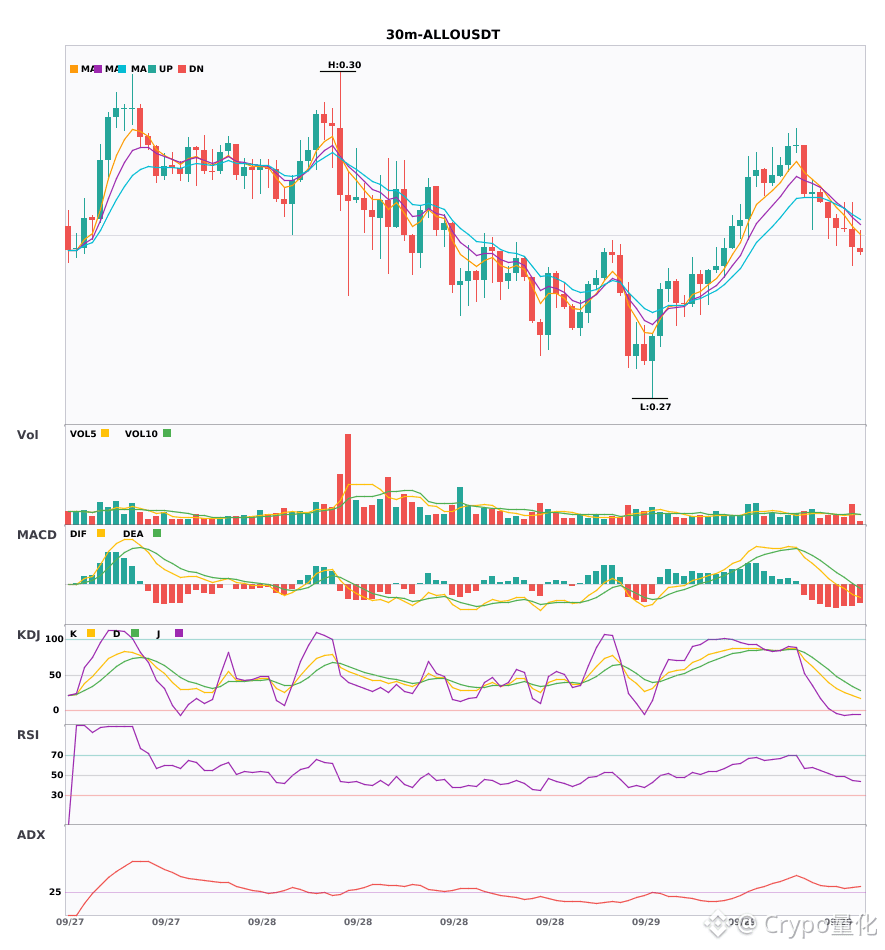
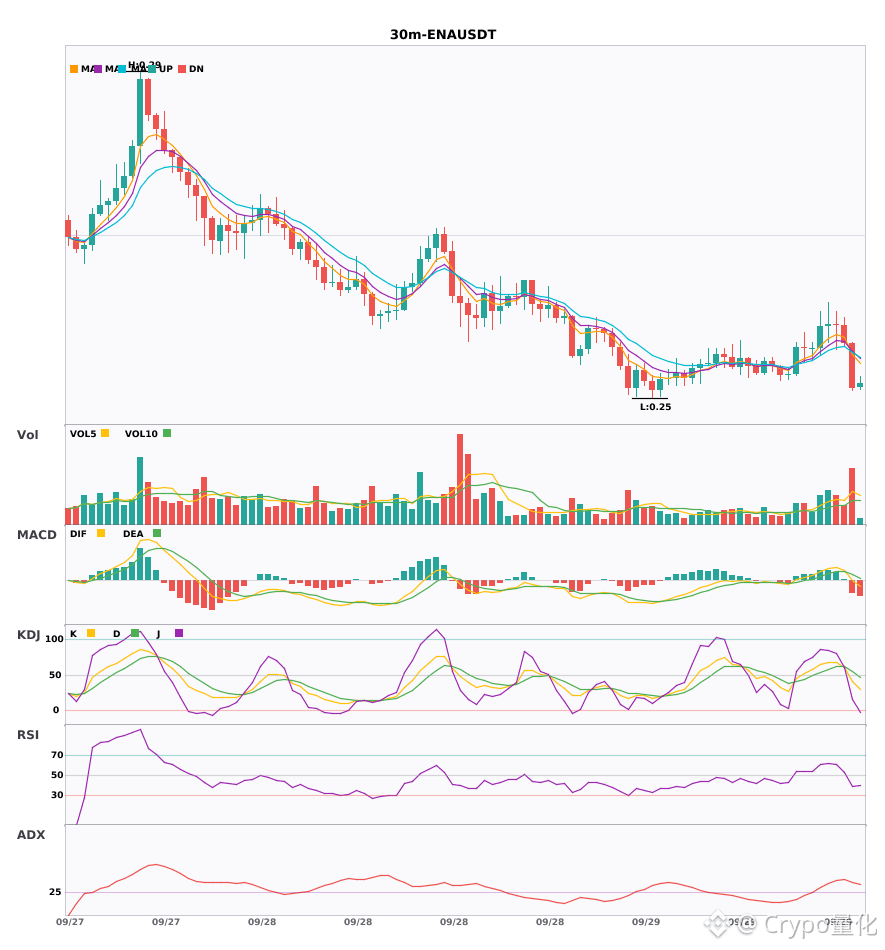
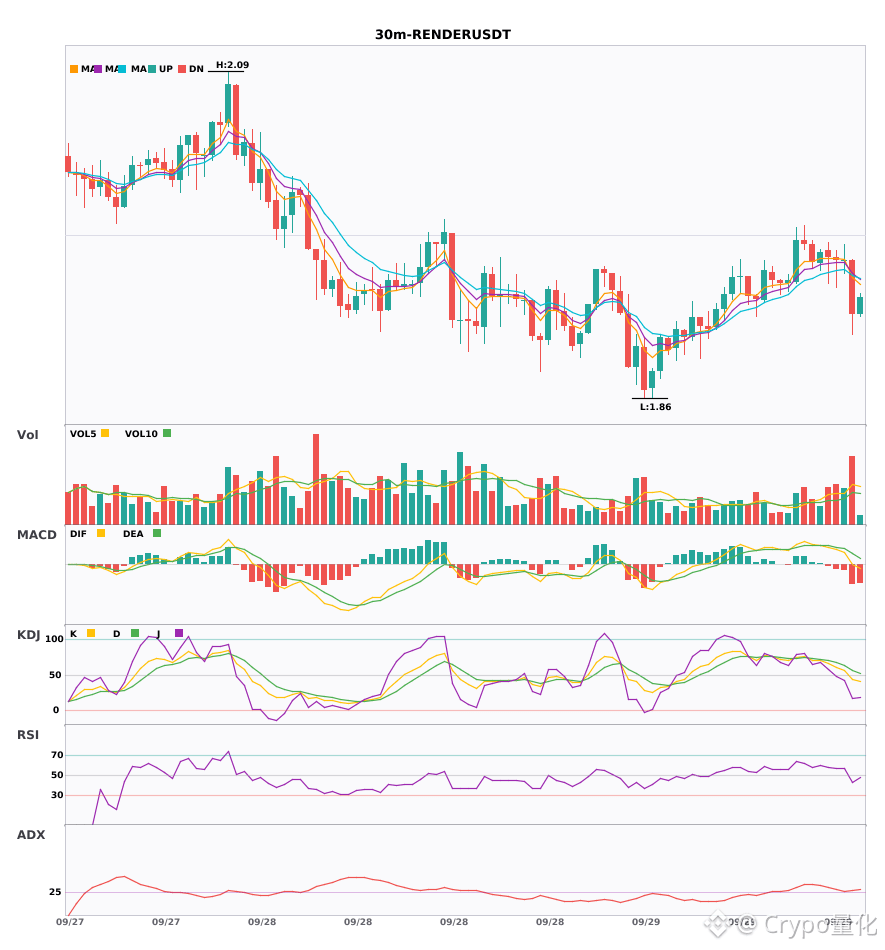
$ALLO/$ENA/$RENDER 30分間の“空中走り”で短期のプレッシャーが大🔥
════════════════════
🟢 $ALLO 30分間 売り(空頭)シグナル
⚠️ テクニカル:ADXが35まで到達し、トレンドはかなり明確。MACDはデッドクロス後、緑の棒が縮小しており、勢いが弱まっている。移動平均線は売り方の並びで分散しながら下方向へ。KDJではKがDの下で弱々しく推移(K 20.9 D 34.1)。売り方が優勢。出来高は1.8倍に増加。
════════════════════
🟢 $ENA 30分間 売り(空頭)シグナル
⚠️ テクニカル:ADX41でトレンドが非常に強い。MACDがマイナス圏でデッドクロスし、売り圧が強まっている。EMA5がEMA8を下抜け、短期的に売り転換。出来高は2.3倍に拡大。
════════════════════
🟢 $RENDER 30分間 売り(空頭)シグナル
⚠️ テクニカル:ADXはトレンド形成の兆しを示しているので見ておける。ただしMACDが0ラインを割って反転し、売りへ。短期の平均線がデッドクロスし、出来高は2.1倍。まずは様子見
════════════════════
🔔 最初の相場の変動を取得することに注目 🔔
#技术分析 #ALLO #ENA #RENDER
📌 取引時はローソク足の形が条件に合っているか確認してください
$ALLO /$ENA /$RENDER 30分間の“空中走り”で短期のプレッシャーが大🔥
════════════════════
🟢 $ALLO 30分間 売り(空頭)シグナル
⚠️ テクニカル:ADXが35まで到達し、トレンドはかなり明確。MACDはデッドクロス後、緑の棒が縮小しており、勢いが弱まっている。移動平均線は売り方の並びで分散しながら下方向へ。KDJではKがDの下で弱々しく推移(K 20.9 D 34.1)。売り方が優勢。出来高は1.8倍に増加。
════════════════════
🟢 $ENA 30分間 売り(空頭)シグナル
⚠️ テクニカル:ADX41でトレンドが非常に強い。MACDがマイナス圏でデッドクロスし、売り圧が強まっている。EMA5がEMA8を下抜け、短期的に売り転換。出来高は2.3倍に拡大。
════════════════════
🟢 $RENDER 30分間 売り(空頭)シグナル
⚠️ テクニカル:ADXはトレンド形成の兆しを示しているので見ておける。ただしMACDが0ラインを割って反転し、売りへ。短期の平均線がデッドクロスし、出来高は2.1倍。まずは様子見
════════════════════
🔔 最初の相場の変動を取得することに注目 🔔
#技术分析 #ALLO #ENA #RENDER
📌 取引時はローソク足の形が条件に合っているか確認してください
════════════════════
🟢 $ALLO 30分間 売り(空頭)シグナル
⚠️ テクニカル:ADXが35まで到達し、トレンドはかなり明確。MACDはデッドクロス後、緑の棒が縮小しており、勢いが弱まっている。移動平均線は売り方の並びで分散しながら下方向へ。KDJではKがDの下で弱々しく推移(K 20.9 D 34.1)。売り方が優勢。出来高は1.8倍に増加。
════════════════════
🟢 $ENA 30分間 売り(空頭)シグナル
⚠️ テクニカル:ADX41でトレンドが非常に強い。MACDがマイナス圏でデッドクロスし、売り圧が強まっている。EMA5がEMA8を下抜け、短期的に売り転換。出来高は2.3倍に拡大。
════════════════════
🟢 $RENDER 30分間 売り(空頭)シグナル
⚠️ テクニカル:ADXはトレンド形成の兆しを示しているので見ておける。ただしMACDが0ラインを割って反転し、売りへ。短期の平均線がデッドクロスし、出来高は2.1倍。まずは様子見
════════════════════
🔔 最初の相場の変動を取得することに注目 🔔
#技术分析 #ALLO #ENA #RENDER
📌 取引時はローソク足の形が条件に合っているか確認してください
32

·
--
ブリッシュ
翻訳参照
$RENDER
$RENDER remains one of the better-known AI and decentralized GPU-related crypto projects. $RENDER
{future}(RENDERUSDT)
can attract attention whenever AI and decentralized computing narratives become strong. Today, traders should separate the project narrative from short-term price action. Watch support, resistance, and volume carefully. If price breaks resistance with strong participation and holds the breakout area, momentum may improve. If the move fails quickly, traders should reassess instead of chasing. Bitcoin’s current weakness remains a broader risk for high-beta assets. Avoid oversized positions during uncertain conditions. A good trading plan should include an entry area, invalidation level, and realistic profit target. The objective is consistent risk control, not catching every sudden RENDER move. #RENDER
$RENDER
$RENDER remains one of the better-known AI and decentralized GPU-related crypto projects. $RENDER
can attract attention whenever AI and decentralized computing narratives become strong. Today, traders should separate the project narrative from short-term price action. Watch support, resistance, and volume carefully. If price breaks resistance with strong participation and holds the breakout area, momentum may improve. If the move fails quickly, traders should reassess instead of chasing. Bitcoin’s current weakness remains a broader risk for high-beta assets. Avoid oversized positions during uncertain conditions. A good trading plan should include an entry area, invalidation level, and realistic profit target. The objective is consistent risk control, not catching every sudden RENDER move. #RENDER
$RENDER remains one of the better-known AI and decentralized GPU-related crypto projects. $RENDER
can attract attention whenever AI and decentralized computing narratives become strong. Today, traders should separate the project narrative from short-term price action. Watch support, resistance, and volume carefully. If price breaks resistance with strong participation and holds the breakout area, momentum may improve. If the move fails quickly, traders should reassess instead of chasing. Bitcoin’s current weakness remains a broader risk for high-beta assets. Avoid oversized positions during uncertain conditions. A good trading plan should include an entry area, invalidation level, and realistic profit target. The objective is consistent risk control, not catching every sudden RENDER move. #RENDER
10

·
--
🚨 AIエージェントがGPUカーネルを書き換えて3倍速に—$RENDER がブレイクアウトに向けて準備開始! 💥
Databricksは、自律型AIエージェントが継続的なフィードバックループで235のGPUカーネルを最適化し、トークンコストたった$70kでほぼ3倍のスピードアップを実現したことを実証しました。 📊 このレベルの自動化された計算効率は、分散型GPUネットワークが複雑なAI推論を処理する方法を直接的に作り替えています。
💡 速いカーネル性能はボトルネックを減らし、$RENDER や$FET のようなコンピュートトークンへの需要を加速させるため、賢い資金がこの構造的な変化を注意深く見ています。 🔍 自律型AIインフラをめぐる物語の勢いは急速に拡大中です。 💬 次の流動性の波が来る前に、分散型コンピュートへポジションを取りにいっていますか? 👇
⚠️ 金融助言ではありません。常にリスク管理を行ってください。 🛡️
🏷️ #RENDER #AI #Crypto #Infrastructure #FetchAI
⚡ 💎
🚨 AIエージェントがGPUカーネルを書き換えて3倍速に—$RENDER がブレイクアウトに向けて準備開始! 💥
Databricksは、自律型AIエージェントが継続的なフィードバックループで235のGPUカーネルを最適化し、トークンコストたった$70kでほぼ3倍のスピードアップを実現したことを実証しました。 📊 このレベルの自動化された計算効率は、分散型GPUネットワークが複雑なAI推論を処理する方法を直接的に作り替えています。
💡 速いカーネル性能はボトルネックを減らし、$RENDER や$FET のようなコンピュートトークンへの需要を加速させるため、賢い資金がこの構造的な変化を注意深く見ています。 🔍 自律型AIインフラをめぐる物語の勢いは急速に拡大中です。 💬 次の流動性の波が来る前に、分散型コンピュートへポジションを取りにいっていますか? 👇
⚠️ 金融助言ではありません。常にリスク管理を行ってください。 🛡️
🏷️ #RENDER #AI #Crypto #Infrastructure #FetchAI
⚡ 💎
Databricksは、自律型AIエージェントが継続的なフィードバックループで235のGPUカーネルを最適化し、トークンコストたった$70kでほぼ3倍のスピードアップを実現したことを実証しました。 📊 このレベルの自動化された計算効率は、分散型GPUネットワークが複雑なAI推論を処理する方法を直接的に作り替えています。
💡 速いカーネル性能はボトルネックを減らし、$RENDER や$FET のようなコンピュートトークンへの需要を加速させるため、賢い資金がこの構造的な変化を注意深く見ています。 🔍 自律型AIインフラをめぐる物語の勢いは急速に拡大中です。 💬 次の流動性の波が来る前に、分散型コンピュートへポジションを取りにいっていますか? 👇
⚠️ 金融助言ではありません。常にリスク管理を行ってください。 🛡️
🏷️ #RENDER #AI #Crypto #Infrastructure #FetchAI
⚡ 💎
97
·
--
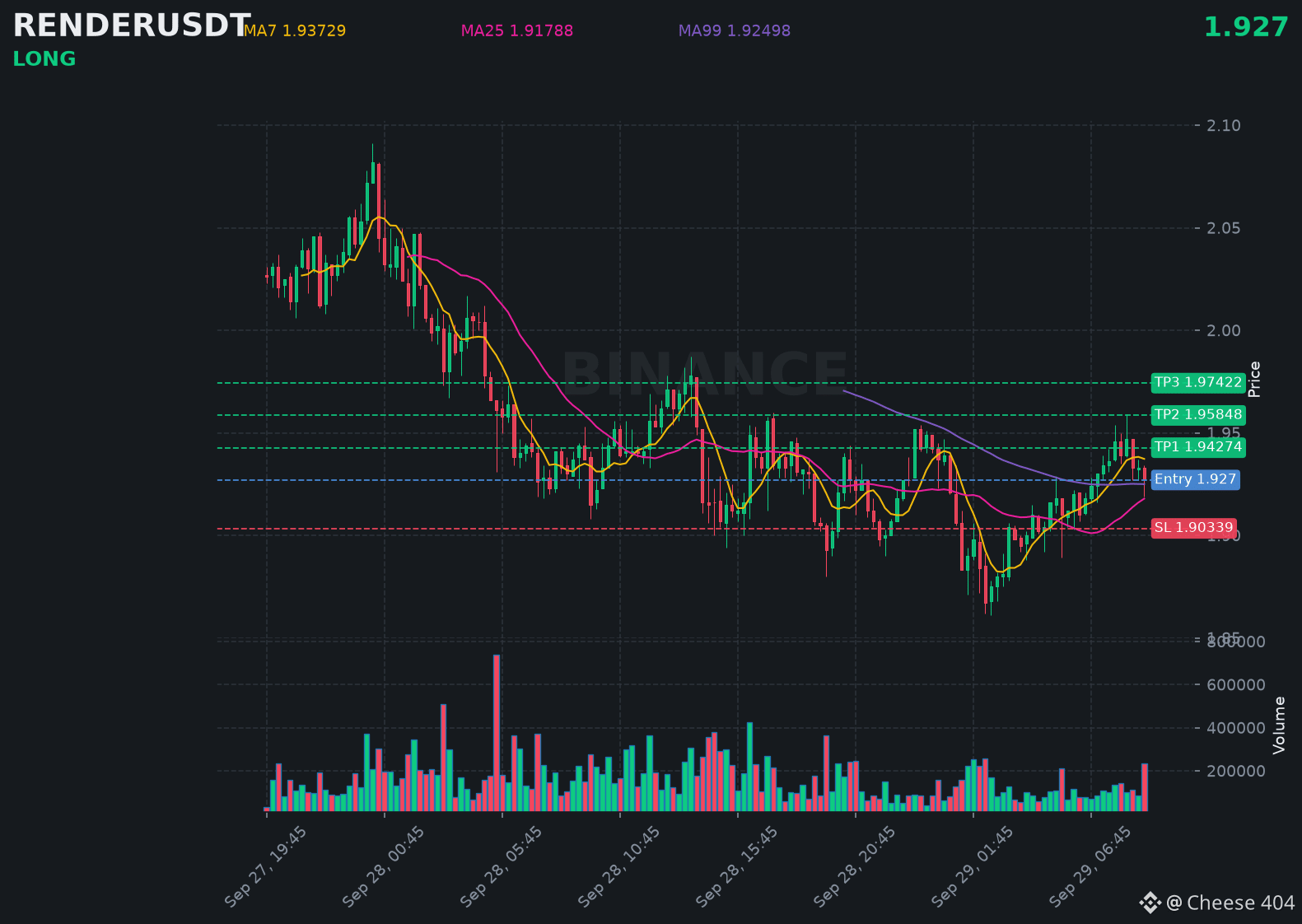
$RENDER はサポートの上で安定して推移しており、今後数時間でさらなる上昇局面が訪れることを示唆しています。
📍 @ 1.927 | 出来高: 0.45M USD
RSI 52 | EMA20: 1.92526 USD
📈 取引プラン:
📈 エントリー: 1.92228 – 1.93172
🛑 ストップロス: 1.90339
🎯 TP1: 1.94274
🎯 TP2: 1.95848
🎯 TP3: 1.97422
いったん再テストを待ってから、上昇トレンドに乗ります。
👉 $RENDER 👈 つかまえよう
#RENDER
$RENDER はサポートの上で安定して推移しており、今後数時間でさらなる上昇局面が訪れることを示唆しています。
📍 @ 1.927 | 出来高: 0.45M USD
RSI 52 | EMA20: 1.92526 USD
📈 取引プラン:
📈 エントリー: 1.92228 – 1.93172
🛑 ストップロス: 1.90339
🎯 TP1: 1.94274
🎯 TP2: 1.95848
🎯 TP3: 1.97422
いったん再テストを待ってから、上昇トレンドに乗ります。
👉 $RENDER 👈 つかまえよう
#RENDER
📍 @ 1.927 | 出来高: 0.45M USD
RSI 52 | EMA20: 1.92526 USD
📈 取引プラン:
📈 エントリー: 1.92228 – 1.93172
🛑 ストップロス: 1.90339
🎯 TP1: 1.94274
🎯 TP2: 1.95848
🎯 TP3: 1.97422
いったん再テストを待ってから、上昇トレンドに乗ります。
👉 $RENDER 👈 つかまえよう
#RENDER
71

·
--
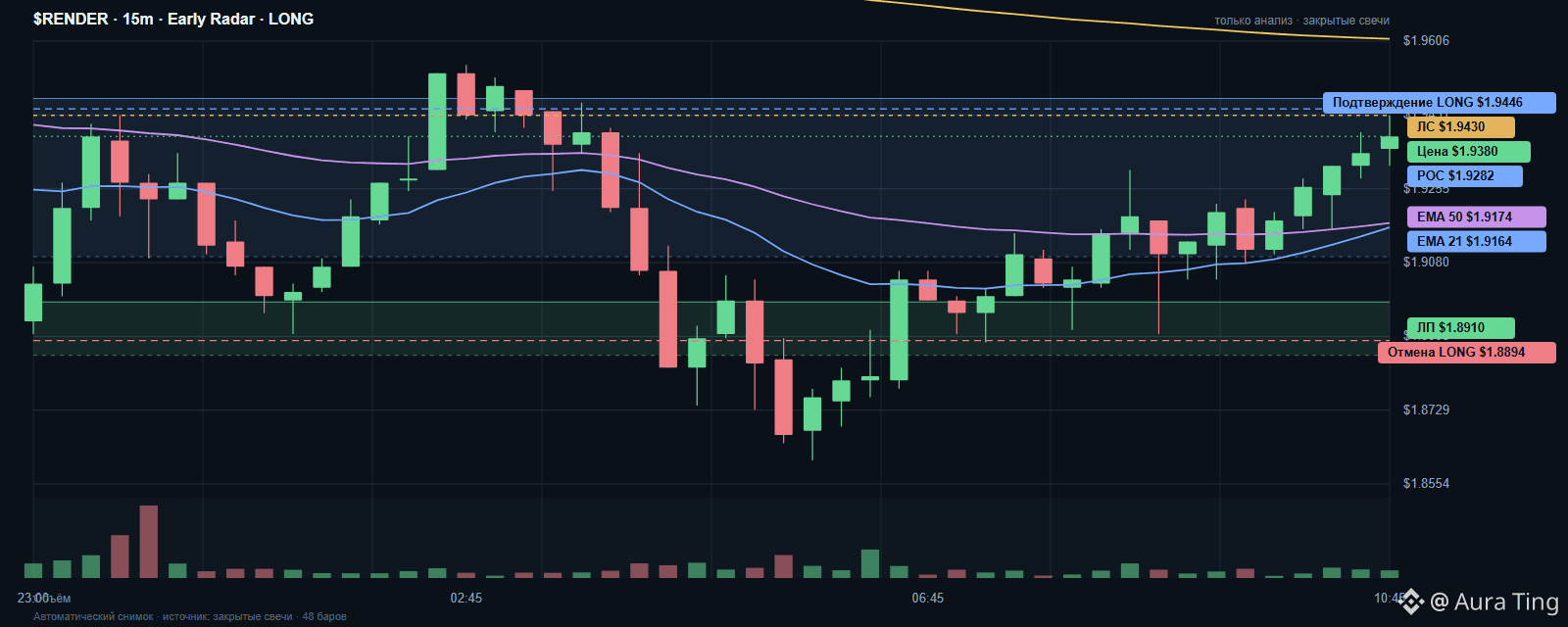
記事
RENDER · Early Radar⚡ LONGのブレイクは、1.94レベルで5mのクローズにより確認済み。
クローズ 1.95 / レベル 1.94 · 出来高 3.54× / 指標 1.25×
🧩 リテスト待ち:$RENDER (RENDER/USDT) · ⏱️ 15m · 文脈;トリガー 5m
📊 Binance スポットのスナップショット:
💰 価格:$1.95 · ⏱️ 1h:+1.04% · 📅 24h:+1.14%。
💧 1時間の出来高 $263,343 · 🔁 取引 $1,339。
📊 M5の動き:出来高 $17,581 · 取引 142 · アクティビティスコア 42/100
RENDER · Early Radar
⚡ LONGのブレイクは、1.94レベルで5mのクローズにより確認済み。
クローズ 1.95 / レベル 1.94 · 出来高 3.54× / 指標 1.25×
🧩 リテスト待ち:$RENDER (RENDER/USDT) · ⏱️ 15m · 文脈;トリガー 5m
📊 Binance スポットのスナップショット:
💰 価格:$1.95 · ⏱️ 1h:+1.04% · 📅 24h:+1.14%。
💧 1時間の出来高 $263,343 · 🔁 取引 $1,339。
📊 M5の動き:出来高 $17,581 · 取引 142 · アクティビティスコア 42/100
クローズ 1.95 / レベル 1.94 · 出来高 3.54× / 指標 1.25×
🧩 リテスト待ち:$RENDER (RENDER/USDT) · ⏱️ 15m · 文脈;トリガー 5m
📊 Binance スポットのスナップショット:
💰 価格:$1.95 · ⏱️ 1h:+1.04% · 📅 24h:+1.14%。
💧 1時間の出来高 $263,343 · 🔁 取引 $1,339。
📊 M5の動き:出来高 $17,581 · 取引 142 · アクティビティスコア 42/100
29

·
--
$RENDER は本日5%下落しており、誰が売っているのかを確認する必要があります
個人投資家はいつも、その日の高値で緑のローソク足を追いかけます
今、$RENDER は1.9260にあり、直近24時間のレンジのわずか21%の地点です
つまり、大きな売りが入って2.0920の高値から一気に押し戻されたということです
出来高は週平均の1.2倍で、かなり多くの手が取引しています
日次の安値付近でコインを買うと、もっと下で買った誰かからの「落ちてくるナイフ」を掴むことになります
1時間足のRSIは43で、勢いは横ばい、あるいは低下している状態です
資金を危険にさらす前に、資産が下落を止めるのを待ってください
トークンは、数時間前に一番の上昇銘柄(トップゲイナー)だったからという理由だけで買わないでください
ローカル安値を掴まないための、あなたの主なフィルターは何ですか?
#RENDER #TradingTips
$RENDER は本日5%下落しており、誰が売っているのかを確認する必要があります
個人投資家はいつも、その日の高値で緑のローソク足を追いかけます
今、$RENDER は1.9260にあり、直近24時間のレンジのわずか21%の地点です
つまり、大きな売りが入って2.0920の高値から一気に押し戻されたということです
出来高は週平均の1.2倍で、かなり多くの手が取引しています
日次の安値付近でコインを買うと、もっと下で買った誰かからの「落ちてくるナイフ」を掴むことになります
1時間足のRSIは43で、勢いは横ばい、あるいは低下している状態です
資金を危険にさらす前に、資産が下落を止めるのを待ってください
トークンは、数時間前に一番の上昇銘柄(トップゲイナー)だったからという理由だけで買わないでください
ローカル安値を掴まないための、あなたの主なフィルターは何ですか?
#RENDER #TradingTips
個人投資家はいつも、その日の高値で緑のローソク足を追いかけます
今、$RENDER は1.9260にあり、直近24時間のレンジのわずか21%の地点です
つまり、大きな売りが入って2.0920の高値から一気に押し戻されたということです
出来高は週平均の1.2倍で、かなり多くの手が取引しています
日次の安値付近でコインを買うと、もっと下で買った誰かからの「落ちてくるナイフ」を掴むことになります
1時間足のRSIは43で、勢いは横ばい、あるいは低下している状態です
資金を危険にさらす前に、資産が下落を止めるのを待ってください
トークンは、数時間前に一番の上昇銘柄(トップゲイナー)だったからという理由だけで買わないでください
ローカル安値を掴まないための、あなたの主なフィルターは何ですか?
#RENDER #TradingTips
15

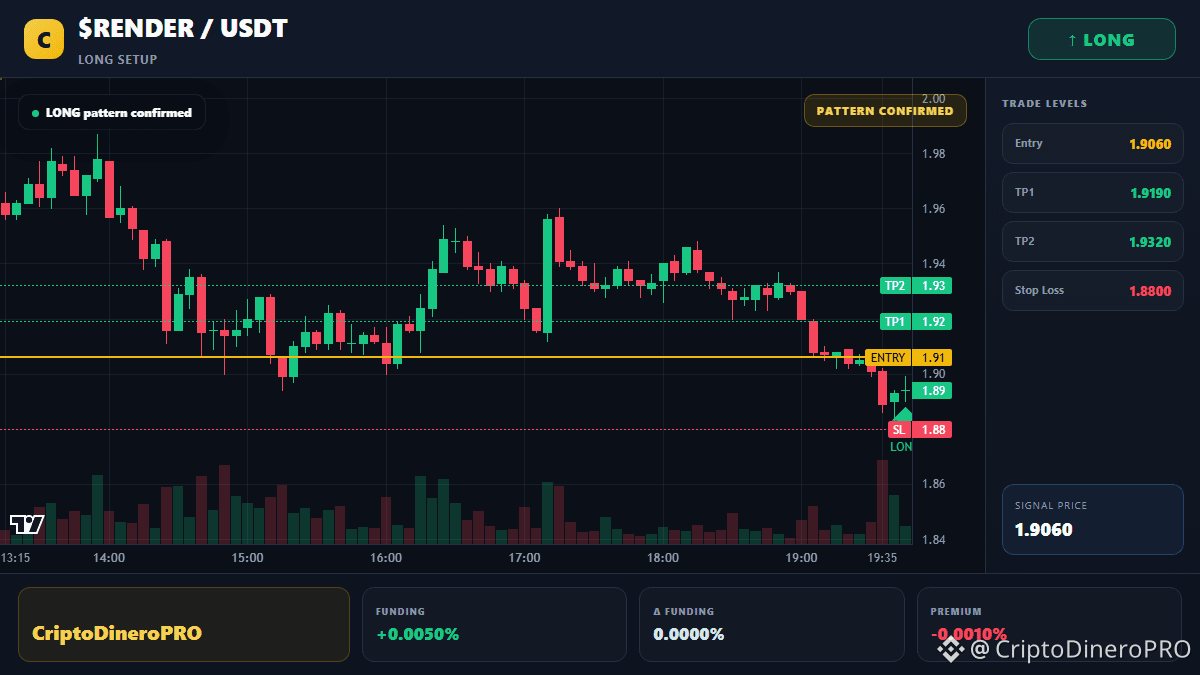
$RENDER - 新鮮な強気の動き 🟢
{future}(RENDERUSDT)
📍 エントリー: 1.9060
🛑 ストップロス: 1.8800 未満
🎯 想定目標:
• TP1: 1.9190
• TP2: 1.9320 超え
自己判断で(DYOR)。
#RENDER #RENDERUSDT
$RENDER - 新鮮な強気の動き 🟢
📍 エントリー: 1.9060
🛑 ストップロス: 1.8800 未満
🎯 想定目標:
• TP1: 1.9190
• TP2: 1.9320 超え
自己判断で(DYOR)。
#RENDER #RENDERUSDT
📍 エントリー: 1.9060
🛑 ストップロス: 1.8800 未満
🎯 想定目標:
• TP1: 1.9190
• TP2: 1.9320 超え
自己判断で(DYOR)。
#RENDER #RENDERUSDT
204
·
--
一部該当
🚨 レンダーがGPUのさらなる拡張シグナルをもう1度送ってきた——そしてAIの物語が冷めていない 🚨
$RENDER には、注目すべき新しい開発があります。
まず、このネットワークはGPUの能力を拡大しています。
新たなオンボーディングのラウンドがRenderノードのオペレーター向けに開かれ、4台未満のGPUを運用していて、少なくとも16GBのVRAMを持つオペレーターを対象にしています。
しかし、ここからがより面白い…
RenderはAIインフラへさらに踏み込んでもいます。
ネットワークの9月の活動には、Protocol 28とMainnet Adapterをめぐるガバナンス投票が含まれ、またRenderの代表者たちはエージェント型AIや、計算インフラをめぐる競争について話し合ってきました。
そして、パズルにはもう1つのピースがあります:
Renderは、自社のネットワークが3Dレンダリング、AI、機械学習のための分散型GPUコンピューティングを中心に構築されていると言っています。
より多くのGPU。
プロトコル開発。
AI計算需要。
そこで問題は、ネットワークの成長が継続的な現実の利用につながるのかどうかです。
$RENDER
{future}(RENDERUSDT)
.
.
#render #AI #Write2Earn
🚨 レンダーがGPUのさらなる拡張シグナルをもう1度送ってきた——そしてAIの物語が冷めていない 🚨
$RENDER には、注目すべき新しい開発があります。
まず、このネットワークはGPUの能力を拡大しています。
新たなオンボーディングのラウンドがRenderノードのオペレーター向けに開かれ、4台未満のGPUを運用していて、少なくとも16GBのVRAMを持つオペレーターを対象にしています。
しかし、ここからがより面白い…
RenderはAIインフラへさらに踏み込んでもいます。
ネットワークの9月の活動には、Protocol 28とMainnet Adapterをめぐるガバナンス投票が含まれ、またRenderの代表者たちはエージェント型AIや、計算インフラをめぐる競争について話し合ってきました。
そして、パズルにはもう1つのピースがあります:
Renderは、自社のネットワークが3Dレンダリング、AI、機械学習のための分散型GPUコンピューティングを中心に構築されていると言っています。
より多くのGPU。
プロトコル開発。
AI計算需要。
そこで問題は、ネットワークの成長が継続的な現実の利用につながるのかどうかです。
$RENDER
.
.
#render #AI #Write2Earn
$RENDER には、注目すべき新しい開発があります。
まず、このネットワークはGPUの能力を拡大しています。
新たなオンボーディングのラウンドがRenderノードのオペレーター向けに開かれ、4台未満のGPUを運用していて、少なくとも16GBのVRAMを持つオペレーターを対象にしています。
しかし、ここからがより面白い…
RenderはAIインフラへさらに踏み込んでもいます。
ネットワークの9月の活動には、Protocol 28とMainnet Adapterをめぐるガバナンス投票が含まれ、またRenderの代表者たちはエージェント型AIや、計算インフラをめぐる競争について話し合ってきました。
そして、パズルにはもう1つのピースがあります:
Renderは、自社のネットワークが3Dレンダリング、AI、機械学習のための分散型GPUコンピューティングを中心に構築されていると言っています。
より多くのGPU。
プロトコル開発。
AI計算需要。
そこで問題は、ネットワークの成長が継続的な現実の利用につながるのかどうかです。
$RENDER
.
.
#render #AI #Write2Earn
528
·
--
⚡ 【Render Network($RENDER)がGPUクラウドの革命を歴史的需要でリード】
このシナリオにおいて、Render Networkは業界の主要な分散型インフラとして確固たる地位を築き、大規模な資本の流入を受け入れるとともに、暗号資産エコシステムの主要プレイヤーから世界的な注目を集めています。
RENDERに向かう力強い資本フローは偶然ではありません。映像効果(VFX)業界における新たな戦略的パートナーシップや、世界の取引所での積極的な流動性拡大といった、強固な触媒によって支えられています。高性能ノードの継続的な統合はネットワークの能力を引き上げ、プロジェクトを現在進行中の技術革命の中心に位置づけ、強い上昇モメンタムを生み出しています。
Binance Squareでは経験豊富なトレーダーが、$RENDERUSDTの価格動向を注意深く監視し、重要なレジスタンスのブレイクを狙っています。板(オーダーブック)の厚みは、機関投資家および個人投資家のリスク志向が高まっていることを示唆しており、健全なボラティリティと、フローを読みこなせる人にとっての超短期の戦術的チャンスを見込めます。
📊 あなたはRENDERにポジションを持っていますか?それともサポートの新たなテストを待っていますか?Binanceの板(オーダーブック)をチェックして、コメント欄で目標を共有してください!
RENDER BTC #RENDER #Crypto #BinanceSquare
⚡ 【Render Network($RENDER )がGPUクラウドの革命を歴史的需要でリード】
このシナリオにおいて、Render Networkは業界の主要な分散型インフラとして確固たる地位を築き、大規模な資本の流入を受け入れるとともに、暗号資産エコシステムの主要プレイヤーから世界的な注目を集めています。
RENDERに向かう力強い資本フローは偶然ではありません。映像効果(VFX)業界における新たな戦略的パートナーシップや、世界の取引所での積極的な流動性拡大といった、強固な触媒によって支えられています。高性能ノードの継続的な統合はネットワークの能力を引き上げ、プロジェクトを現在進行中の技術革命の中心に位置づけ、強い上昇モメンタムを生み出しています。
Binance Squareでは経験豊富なトレーダーが、$RENDERUSDTの価格動向を注意深く監視し、重要なレジスタンスのブレイクを狙っています。板(オーダーブック)の厚みは、機関投資家および個人投資家のリスク志向が高まっていることを示唆しており、健全なボラティリティと、フローを読みこなせる人にとっての超短期の戦術的チャンスを見込めます。
📊 あなたはRENDERにポジションを持っていますか?それともサポートの新たなテストを待っていますか?Binanceの板(オーダーブック)をチェックして、コメント欄で目標を共有してください!
RENDER BTC #RENDER #Crypto #BinanceSquare
このシナリオにおいて、Render Networkは業界の主要な分散型インフラとして確固たる地位を築き、大規模な資本の流入を受け入れるとともに、暗号資産エコシステムの主要プレイヤーから世界的な注目を集めています。
RENDERに向かう力強い資本フローは偶然ではありません。映像効果(VFX)業界における新たな戦略的パートナーシップや、世界の取引所での積極的な流動性拡大といった、強固な触媒によって支えられています。高性能ノードの継続的な統合はネットワークの能力を引き上げ、プロジェクトを現在進行中の技術革命の中心に位置づけ、強い上昇モメンタムを生み出しています。
Binance Squareでは経験豊富なトレーダーが、$RENDERUSDTの価格動向を注意深く監視し、重要なレジスタンスのブレイクを狙っています。板(オーダーブック)の厚みは、機関投資家および個人投資家のリスク志向が高まっていることを示唆しており、健全なボラティリティと、フローを読みこなせる人にとっての超短期の戦術的チャンスを見込めます。
📊 あなたはRENDERにポジションを持っていますか?それともサポートの新たなテストを待っていますか?Binanceの板(オーダーブック)をチェックして、コメント欄で目標を共有してください!
RENDER BTC #RENDER #Crypto #BinanceSquare
1
62
·
--
ブリッシュ
レンダー($RENDER )
レンダーは、クリプト市場における重要なAIおよび分散コンピューティングの物語として、依然として重要です。$RENDER
{spot}(RENDERUSDT)
は、AI関連トークンに勢いが戻るとトレーダーを引きつけることができます。今日の鍵は、物語と実際の価格確認を切り分けることです。強い値動きは、理想的には健全な出来高とサポートを伴うべきです。価格がレジスタンスをブレイクしてそれを維持すれば、トレーダーはフォローの動きを見続ける可能性があります。もしブレイク水準の下にすぐに戻るなら、注意が必要です。物語が強そうだからといって、急なAI関連ラリーを追いかけるべきではありません。市場はファンダメンタルズの先に進んだり、しばらく無視したりすることがあります。常に、コントロールされたリスクでチャートを取引してください。#RENDER
レンダー($RENDER )
レンダーは、クリプト市場における重要なAIおよび分散コンピューティングの物語として、依然として重要です。$RENDER
は、AI関連トークンに勢いが戻るとトレーダーを引きつけることができます。今日の鍵は、物語と実際の価格確認を切り分けることです。強い値動きは、理想的には健全な出来高とサポートを伴うべきです。価格がレジスタンスをブレイクしてそれを維持すれば、トレーダーはフォローの動きを見続ける可能性があります。もしブレイク水準の下にすぐに戻るなら、注意が必要です。物語が強そうだからといって、急なAI関連ラリーを追いかけるべきではありません。市場はファンダメンタルズの先に進んだり、しばらく無視したりすることがあります。常に、コントロールされたリスクでチャートを取引してください。#RENDER
レンダーは、クリプト市場における重要なAIおよび分散コンピューティングの物語として、依然として重要です。$RENDER
は、AI関連トークンに勢いが戻るとトレーダーを引きつけることができます。今日の鍵は、物語と実際の価格確認を切り分けることです。強い値動きは、理想的には健全な出来高とサポートを伴うべきです。価格がレジスタンスをブレイクしてそれを維持すれば、トレーダーはフォローの動きを見続ける可能性があります。もしブレイク水準の下にすぐに戻るなら、注意が必要です。物語が強そうだからといって、急なAI関連ラリーを追いかけるべきではありません。市場はファンダメンタルズの先に進んだり、しばらく無視したりすることがあります。常に、コントロールされたリスクでチャートを取引してください。#RENDER
9
🚨 アンソピック 45B AI コンピュート ディール パイプラインが、$RENDER ! に対する機関投資家の需要に火をつける 🦈
アンソピックは450億ドルをメガ規模の計算インフラへ投入しており、分散型コンピュート・プロトコルにとって大きなマクロの追い風を示しています。 📊 「スマートマネー」はすでにこの資本流入を追跡しており、機関投資家の資金が、特化したAI処理能力に対する差し迫った世界的需要を裏付けています。
従来のデータセンターがキャパシティのボトルネックに直面する中、分散型GPUネットワークは二次的なフローを吸収する立場にあります。 🔍 資本がAI関連の触媒へ回転することで加速する中、構造的な需要ブロック全体でクリーンな蓄積の足跡が観測されています。 🤔 分散型コンピュートはこの機関投資家側の供給ギャップを埋められるのでしょうか?それとも、流動性が低い局面でのスイープを待っていますか? 👇
⚠️ 金融助言ではありません。常にリスク管理を行ってください。 🛡️
🏷️ #RENDER #AI #Crypto #SmartMoney #Altcoins
🎯 🦈
🚨 アンソピック 45B AI コンピュート ディール パイプラインが、$RENDER ! に対する機関投資家の需要に火をつける 🦈
アンソピックは450億ドルをメガ規模の計算インフラへ投入しており、分散型コンピュート・プロトコルにとって大きなマクロの追い風を示しています。 📊 「スマートマネー」はすでにこの資本流入を追跡しており、機関投資家の資金が、特化したAI処理能力に対する差し迫った世界的需要を裏付けています。
従来のデータセンターがキャパシティのボトルネックに直面する中、分散型GPUネットワークは二次的なフローを吸収する立場にあります。 🔍 資本がAI関連の触媒へ回転することで加速する中、構造的な需要ブロック全体でクリーンな蓄積の足跡が観測されています。 🤔 分散型コンピュートはこの機関投資家側の供給ギャップを埋められるのでしょうか?それとも、流動性が低い局面でのスイープを待っていますか? 👇
⚠️ 金融助言ではありません。常にリスク管理を行ってください。 🛡️
🏷️ #RENDER #AI #Crypto #SmartMoney #Altcoins
🎯 🦈
アンソピックは450億ドルをメガ規模の計算インフラへ投入しており、分散型コンピュート・プロトコルにとって大きなマクロの追い風を示しています。 📊 「スマートマネー」はすでにこの資本流入を追跡しており、機関投資家の資金が、特化したAI処理能力に対する差し迫った世界的需要を裏付けています。
従来のデータセンターがキャパシティのボトルネックに直面する中、分散型GPUネットワークは二次的なフローを吸収する立場にあります。 🔍 資本がAI関連の触媒へ回転することで加速する中、構造的な需要ブロック全体でクリーンな蓄積の足跡が観測されています。 🤔 分散型コンピュートはこの機関投資家側の供給ギャップを埋められるのでしょうか?それとも、流動性が低い局面でのスイープを待っていますか? 👇
⚠️ 金融助言ではありません。常にリスク管理を行ってください。 🛡️
🏷️ #RENDER #AI #Crypto #SmartMoney #Altcoins
🎯 🦈
37
ログインして、さらにコンテンツを読む
厳選トピックで世界の暗号資産トレーダーの仲間入り
⚡️ 暗号資産に関する最新かつ有益な情報が見つかります。
💬 世界最大の暗号資産取引所から信頼されています。
👍 認証を受けたクリエイターから、有益なインサイトを得られます。
メール / 電話番号
トレンドトピック
1
#EarningsSeason
閲覧回数 389,446
2,959人が討論中
2
#SECChairWantsStockMarketsOnChain
閲覧回数 1,142
58人が討論中
3
#MulticoinInvestsInGrass
閲覧回数 187
35人が討論中
4
#CEARenamesToBNBStandardUnderBNC
閲覧回数 1,291
70人が討論中
5
#BitwiseLaunchesFirstSpotNEARETF
閲覧回数 47,493
699人が討論中
6
#USJobOpeningsFallToFiveMonthLow
閲覧回数 52,272
536人が討論中
7
#ECBToTestAIAgentsInDigitalEuroPayments
閲覧回数 35,159
596人が討論中
8
#JapanFSABacksFourthStablecoinTradeSettlementPilot
閲覧回数 39,849
624人が討論中
9
#BitgetHackerFailsToMoveStolenFunds
閲覧回数 56,952
682人が討論中
10
#BitMineETHHoldingsTop6Million
閲覧回数 44,533
750人が討論中