
Kerwin7
2.9k Posts

Kerwin7
 Square Verified
链上小玩家 | 日常撸毛打新冲土狗 | 广场内容创作者 | 分享零碎思考 | 所有推文均不构成任何投资建议
946 Following
37.3K+ Followers
18.2K+ Liked
Posts
All
Quotes
Videos
Live
y


币安Binance华语
·
--
🔥 #安友周一观察团 – Assemble on time. This week’s hot topics are here!
This week is packed with information—what’s the most worth hitting the follow button for? 🧐
💬 Vote and share your reasons in the comments. RT or share other hot topics you’re paying attention to—five lucky winners will receive 30U!
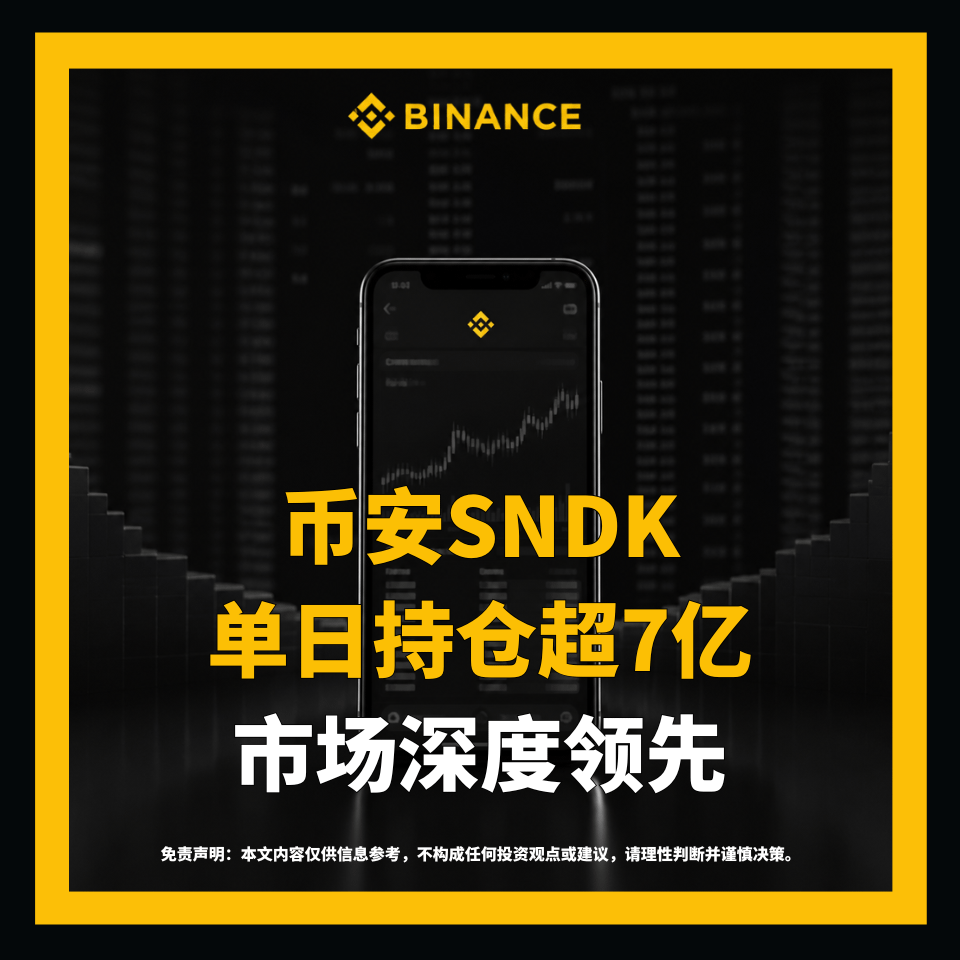
A. Binance SNDK: daily holdings exceed 700 million, leading in market depth
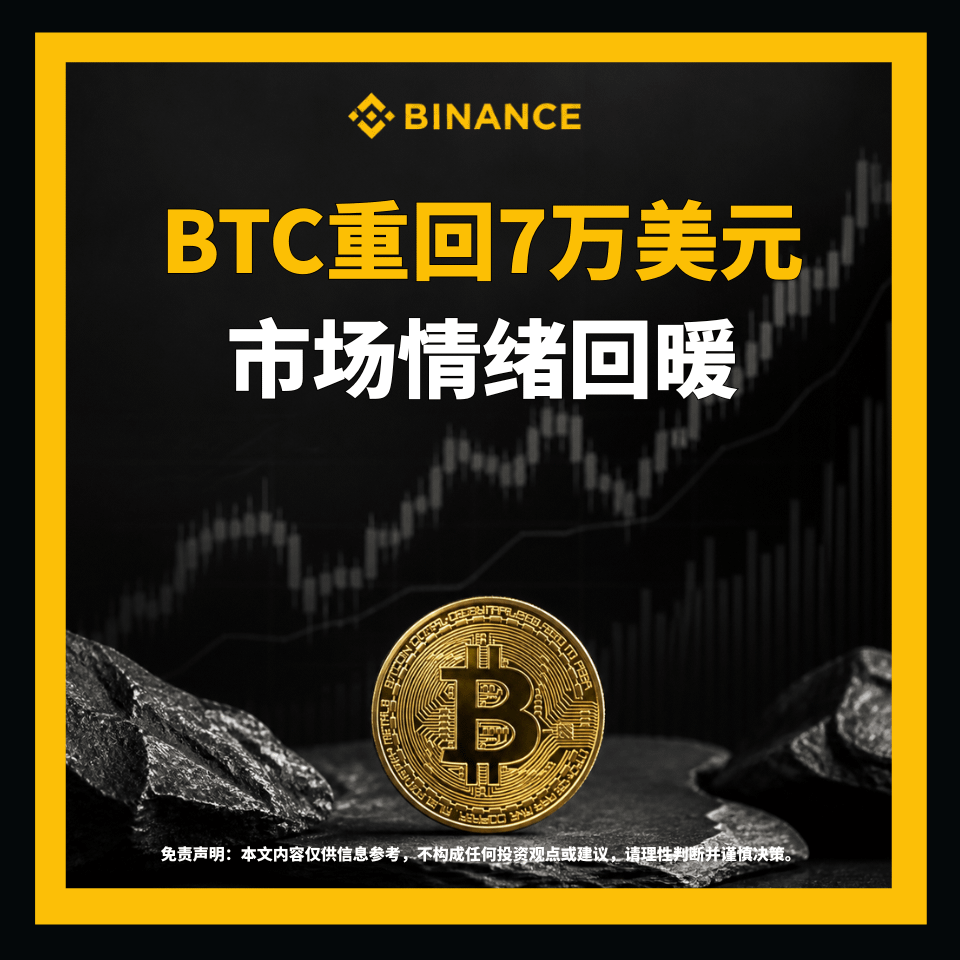
B. BTC returns to $700,000, and market sentiment is warming up
C. Micron invests $10 billion in R&D to ramp up AI chips
D. Japan’s government bond yields hit a new high, pressuring global bond markets
This week is packed with information—what’s the most worth hitting the follow button for? 🧐
💬 Vote and share your reasons in the comments. RT or share other hot topics you’re paying attention to—five lucky winners will receive 30U!
A. Binance SNDK: daily holdings exceed 700 million, leading in market depth
B. BTC returns to $700,000, and market sentiment is warming up
C. Micron invests $10 billion in R&D to ramp up AI chips
D. Japan’s government bond yields hit a new high, pressuring global bond markets


#币安聪明钱跟单
I’d like to share with everyone a hidden gem trader with strong overall capabilities ✨
Over the past 30 days, the profit and loss reached 166323.12 USDT, with a return rate of 83.16%. Assets under management: 402985.72 USDT.
The focus is a high win-rate approach, using multi-asset diversified allocation. The strategy emphasizes low drawdown and risk control. On the basis of maintaining account stability, it aims to capture returns.
The maximum drawdown over 30 days was only 2.61%, which is outstanding risk control performance on the leaderboard. The account equity curve is smooth in its trend.
This is more suitable for those who are afraid of large drawdowns—wanting to balance returns with account safety and not wanting to endure significant unrealized losses.
It’s recommended that you definitely review the complete historical trade records to confirm whether the trading style matches your own, and after fully assessing market risk, decide whether to start following.
@Binance BiBi
Risk warning: The above is only for event sharing and does not constitute investment advice. There is a risk of losses when following trades.
I’d like to share with everyone a hidden gem trader with strong overall capabilities ✨
Over the past 30 days, the profit and loss reached 166323.12 USDT, with a return rate of 83.16%. Assets under management: 402985.72 USDT.
The focus is a high win-rate approach, using multi-asset diversified allocation. The strategy emphasizes low drawdown and risk control. On the basis of maintaining account stability, it aims to capture returns.
The maximum drawdown over 30 days was only 2.61%, which is outstanding risk control performance on the leaderboard. The account equity curve is smooth in its trend.
This is more suitable for those who are afraid of large drawdowns—wanting to balance returns with account safety and not wanting to endure significant unrealized losses.
It’s recommended that you definitely review the complete historical trade records to confirm whether the trading style matches your own, and after fully assessing market risk, decide whether to start following.
@Binance BiBi
Risk warning: The above is only for event sharing and does not constitute investment advice. There is a risk of losses when following trades.
币安Binance华语
·
--
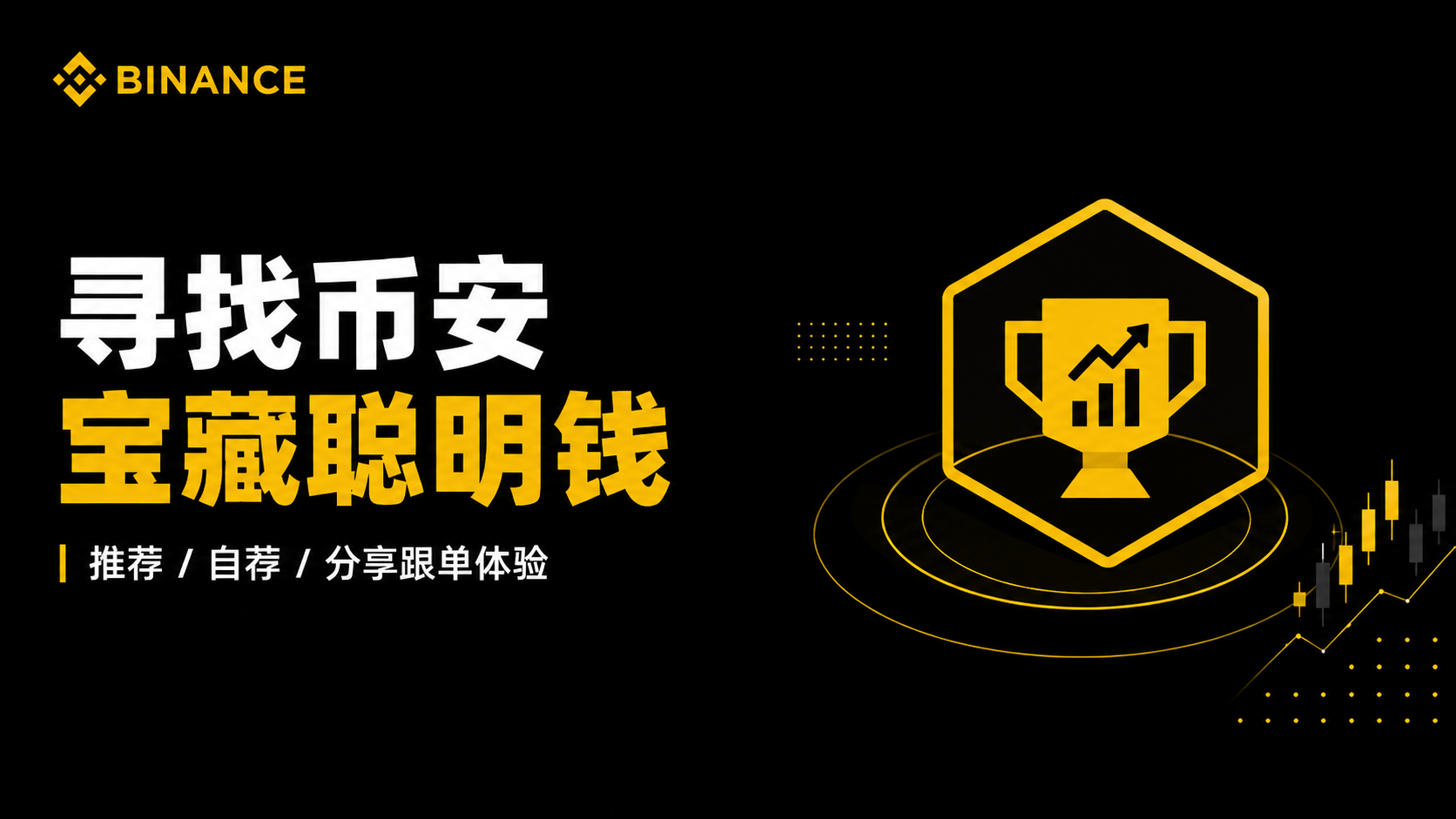
👀 Looking for someone across the whole internet: who is your secretly saved treasure—an intelligent money copy-trader?
Binance Intelligent Money “Signal Copy Trading” is now live. It lets you view traders’ performance and automatically copy their trades.
Retweet and recommend a treasure Binance copy-trader with #BinanceIntelligentMoney copy trading, or share your contract copy-trading/copying experience to join the event! Traders are also welcome to self-nominate 👏
🎁 1000 USDT to be shared among 20 high-quality sharing replies
Great traders deserve to be seen—ready when you are 😎
Binance Intelligent Money “Signal Copy Trading” is now live. It lets you view traders’ performance and automatically copy their trades.
Retweet and recommend a treasure Binance copy-trader with #BinanceIntelligentMoney copy trading, or share your contract copy-trading/copying experience to join the event! Traders are also welcome to self-nominate 👏
🎁 1000 USDT to be shared among 20 high-quality sharing replies
Great traders deserve to be seen—ready when you are 😎
Pretty good
币安Binance华语
·
--
【Binance AMA】Inflation, Interest Rates, and Market Trends—Which Set of Data Should the Market Believe?
Tomorrow at 8 PM (UTC+8) come to #币安广场 and let’s talk about it!
🎙️Host: @Miya- VIP Manager
🧑💼Guest: @大漠哥 @TraderS @Rocky
One-click like + share + comment with your questions about the topic, and we’ll pick 5 people to receive 30U🧧
Click the link below to subscribe immediately👇
Tomorrow at 8 PM (UTC+8) come to #币安广场 and let’s talk about it!
🎙️Host: @Miya- VIP Manager
🧑💼Guest: @大漠哥 @TraderS @Rocky
One-click like + share + comment with your questions about the topic, and we’ll pick 5 people to receive 30U🧧
Click the link below to subscribe immediately👇

#termmax @TermMax has completed its thinking, referring to 6 sources
When I previously researched DeFi leverage, I often got sidetracked by the phrase “one-click loop borrowing.” At first glance, it seems like just packaging what used to be a manual, seven- or eight-step process on Aave into a single button—essentially a step-saving automation tool. But after I disassembled the contract logic of TermMax, I realized that what’s hidden under that button is far more than what the three words “automation” can describe.
At the beginning, I assumed that TermMax simply replaced the traditional floating-rate pool with a Maker-Taker order-book model. It didn’t appear to break out of the old lending-protocol track. However, after I worked through the equivalence relationships among FT/XT, the NFT wrapping logic of GT, and then the mechanism of physical settlement, it became clear that what it is truly doing is re-dividing—across the entire lending chain—“who bears which part of the risk.” FT discounts future cash flows into a zero-coupon receivable; XT takes on the remaining risk exposure; GT then encapsulates the entire set of operations of the flash-loan loop. If a default occurs, the collateral is directly allocated to the FT holders, and the process does not go through the liquidation auction sequence.
When it comes to the concrete leverage execution flow, when a borrower initiates a leverage operation, the protocol first borrows the underlying asset via a flash loan, exchanges it for the corresponding collateral and locks it into GT, while also minting FT and selling it to the capital lender. The lender buys FT at a discounted price, and redeems it at face value at maturity—the discount in between is the fixed yield that’s locked in. If a default ultimately occurs, the protocol does not trigger a conventional liquidation auction; instead, it delivers the underlying collateral to the lender via physical settlement. From the very beginning, TermMax didn’t try to eliminate default risk entirely through oracles. Rather, it designed an exit path that lets the lender directly take possession of the underlying assets.
In my view, what TermMax truly solves is the problem that in the past, interest-rate discovery, leverage execution, and risk allocation were all tightly bound within the same liquidity pool. But the complexity of this design is also reflected right here: each independent market is an isolated unit of risk, and the physical settlement model also requires that lenders be able to handle the disposal of low-liquidity collateral.
When I previously researched DeFi leverage, I often got sidetracked by the phrase “one-click loop borrowing.” At first glance, it seems like just packaging what used to be a manual, seven- or eight-step process on Aave into a single button—essentially a step-saving automation tool. But after I disassembled the contract logic of TermMax, I realized that what’s hidden under that button is far more than what the three words “automation” can describe.
At the beginning, I assumed that TermMax simply replaced the traditional floating-rate pool with a Maker-Taker order-book model. It didn’t appear to break out of the old lending-protocol track. However, after I worked through the equivalence relationships among FT/XT, the NFT wrapping logic of GT, and then the mechanism of physical settlement, it became clear that what it is truly doing is re-dividing—across the entire lending chain—“who bears which part of the risk.” FT discounts future cash flows into a zero-coupon receivable; XT takes on the remaining risk exposure; GT then encapsulates the entire set of operations of the flash-loan loop. If a default occurs, the collateral is directly allocated to the FT holders, and the process does not go through the liquidation auction sequence.
When it comes to the concrete leverage execution flow, when a borrower initiates a leverage operation, the protocol first borrows the underlying asset via a flash loan, exchanges it for the corresponding collateral and locks it into GT, while also minting FT and selling it to the capital lender. The lender buys FT at a discounted price, and redeems it at face value at maturity—the discount in between is the fixed yield that’s locked in. If a default ultimately occurs, the protocol does not trigger a conventional liquidation auction; instead, it delivers the underlying collateral to the lender via physical settlement. From the very beginning, TermMax didn’t try to eliminate default risk entirely through oracles. Rather, it designed an exit path that lets the lender directly take possession of the underlying assets.
In my view, what TermMax truly solves is the problem that in the past, interest-rate discovery, leverage execution, and risk allocation were all tightly bound within the same liquidity pool. But the complexity of this design is also reflected right here: each independent market is an isolated unit of risk, and the physical settlement model also requires that lenders be able to handle the disposal of low-liquidity collateral.
#termmax @TermMax People who have done bond over-the-counter trading will naturally be more wary of the two characters “term/maturity.” The difficulty usually isn’t in calculating interest, but in whether there will be enough counterparties to take the trade when it comes due. The real pain point in the fixed-income market has never been pricing; it’s that every maturity date is an independent trading market, yet the total market liquidity is limited.$RE
At first, I understood that @TermMax’s fixed-rate framework is mainly meant to solve the problem of uncontrolled returns caused by floating interest rates. After carefully reading through the document, I realized that while it addresses the old issue, it also introduces a more troublesome structural contradiction.$SKYAI
Let’s first clarify the underlying mechanism: the protocol hard-codes the token identity—at any moment, 1 FT + 1 XT is equivalent to 1 debt token. This isn’t an equilibrium price derived from market bargaining; it’s an identity relationship written into the contract’s foundation. FT can be directly redeemed for debt tokens at maturity; in contrast, XT has no redemption value after maturity—its value will go to zero.
The fee design is also quite clean: the 2% protocol fee is charged only on the interest portion and does not touch the principal. For example, in a one-year loan position with an annualized 10% rate, the actual cost is only 0.20% of the principal. If you choose a shorter term, the fee will be even lower. Looking purely at the pricing logic, there’s hardly anything wrong—but the true risk doesn’t lie in pricing.
A fixed-term model means that for each maturity cycle, you have to maintain a separate order book. 30 days, 90 days, 180 days—each becomes an independent trading pool, and each pool has its own trading depth. With the same amount of capital, placing it in a floating-rate pool preserves a complete piece of liquidity; switching to a multi-maturity fixed-rate market fragments and cuts it up. The more possible maturity dates there are, the richer users’ choices become, but the liquidity of each individual pool becomes thinner.
This architecture brings two unavoidable costs—features inherent to fixed-maturity products rather than a simple design bug.
First is the rollover/maturity extension risk. After the borrower’s term ends, they must either settle the debt or choose to roll it over (extend the borrowing). When a large number of positions mature at the same time, the market faces concentrated rollover demand. At that point, the cost of finding counterparties for the trade can rise sharply.
At first, I understood that @TermMax’s fixed-rate framework is mainly meant to solve the problem of uncontrolled returns caused by floating interest rates. After carefully reading through the document, I realized that while it addresses the old issue, it also introduces a more troublesome structural contradiction.$SKYAI
Let’s first clarify the underlying mechanism: the protocol hard-codes the token identity—at any moment, 1 FT + 1 XT is equivalent to 1 debt token. This isn’t an equilibrium price derived from market bargaining; it’s an identity relationship written into the contract’s foundation. FT can be directly redeemed for debt tokens at maturity; in contrast, XT has no redemption value after maturity—its value will go to zero.
The fee design is also quite clean: the 2% protocol fee is charged only on the interest portion and does not touch the principal. For example, in a one-year loan position with an annualized 10% rate, the actual cost is only 0.20% of the principal. If you choose a shorter term, the fee will be even lower. Looking purely at the pricing logic, there’s hardly anything wrong—but the true risk doesn’t lie in pricing.
A fixed-term model means that for each maturity cycle, you have to maintain a separate order book. 30 days, 90 days, 180 days—each becomes an independent trading pool, and each pool has its own trading depth. With the same amount of capital, placing it in a floating-rate pool preserves a complete piece of liquidity; switching to a multi-maturity fixed-rate market fragments and cuts it up. The more possible maturity dates there are, the richer users’ choices become, but the liquidity of each individual pool becomes thinner.
This architecture brings two unavoidable costs—features inherent to fixed-maturity products rather than a simple design bug.
First is the rollover/maturity extension risk. After the borrower’s term ends, they must either settle the debt or choose to roll it over (extend the borrowing). When a large number of positions mature at the same time, the market faces concentrated rollover demand. At that point, the cost of finding counterparties for the trade can rise sharply.
#termmax @TermMax The first time I saw TermMax and started using it, I assumed it was just another lending project piggybacking on fixed-rate yield hotspots—wrapping the familiar mechanics of AMM-based lending in a fixed-term interest-bearing shell. I didn’t realize how shallow that understanding was until I spent an entire night mapping out the underlying smart contract logic of its debt structure.
Most explanations on the market focus on how much APR it can lock in, but what truly caught my attention was its granular breakdown of the time cost of capital. In traditional liquidity pool models, the interest rate passively floats with the capital utilization rate, meaning users are always facing a dynamically changing cost of funds. For large players who manage long-term allocations, this kind of “mystery box” model filled with uncertainty fundamentally doesn’t support long-horizon risk control and duration management—this is one of the core reasons DeFi has struggled to accommodate institutional long-term capital.
Digging further into the contract logic, I found that TermMax disassembles both liquidity depth and differentiated interest-rate demand into discrete range orders. The debt instruments generated when users borrow are not a single unified certificate; at the lowest level, they are split into two independent units: principal and interest. The interest portion then goes directly into the corresponding pool, where it is exchanged and matched against market order flow.
This is the most critical part of the design: it doesn’t “calculate” a market interest rate using a conventional AMM algorithm. Instead, it enables all market participants to truly “trade” the interest rate itself through a pricing curve. The original abstract relationship between supply and demand for capital is transformed into concrete buy-and-sell order book levels on the screen.
When I finally understood this engineering detail, I was genuinely moved. It takes the extremely abstract time value of liquidity and makes it a structured product that can be priced and matched directly on-chain. Even risks at the tail end of extreme market conditions are proactively designed: if an extreme scenario on the maturity date causes conventional liquidation to fail, its physical settlement mechanism will directly settle using the underlying collateral assets—skipping the “panic stampede” process of concentrated sell-offs, and locking in the adverse outcomes of extreme paths in advance.
In essence, this approach of using structured order flow to underwrite fixed-term debt is—at its core—the application of traditional finance’s actuarial thinking to reconstruct the foundational logic of on-chain credit.
Most explanations on the market focus on how much APR it can lock in, but what truly caught my attention was its granular breakdown of the time cost of capital. In traditional liquidity pool models, the interest rate passively floats with the capital utilization rate, meaning users are always facing a dynamically changing cost of funds. For large players who manage long-term allocations, this kind of “mystery box” model filled with uncertainty fundamentally doesn’t support long-horizon risk control and duration management—this is one of the core reasons DeFi has struggled to accommodate institutional long-term capital.
Digging further into the contract logic, I found that TermMax disassembles both liquidity depth and differentiated interest-rate demand into discrete range orders. The debt instruments generated when users borrow are not a single unified certificate; at the lowest level, they are split into two independent units: principal and interest. The interest portion then goes directly into the corresponding pool, where it is exchanged and matched against market order flow.
This is the most critical part of the design: it doesn’t “calculate” a market interest rate using a conventional AMM algorithm. Instead, it enables all market participants to truly “trade” the interest rate itself through a pricing curve. The original abstract relationship between supply and demand for capital is transformed into concrete buy-and-sell order book levels on the screen.
When I finally understood this engineering detail, I was genuinely moved. It takes the extremely abstract time value of liquidity and makes it a structured product that can be priced and matched directly on-chain. Even risks at the tail end of extreme market conditions are proactively designed: if an extreme scenario on the maturity date causes conventional liquidation to fail, its physical settlement mechanism will directly settle using the underlying collateral assets—skipping the “panic stampede” process of concentrated sell-offs, and locking in the adverse outcomes of extreme paths in advance.
In essence, this approach of using structured order flow to underwrite fixed-term debt is—at its core—the application of traditional finance’s actuarial thinking to reconstruct the foundational logic of on-chain credit.
#termmax @TermMax TermMax: Moving fixed-income into DeFi—real demand or a false proposition?
I happened to dig up TermMax while scrolling through the marketplace. After reading through its mechanism, my biggest takeaway is this: the project is determined to cram the traditional finance playbook of “fixed interest rate + fixed term” directly into the logic of DeFi lending.
Old players should know this—back in the days of using Aave or Compound, the most frustrating pitfall was an interest-rate surprise. I personally fell into it once. In a bull market, I added more by borrowing, but when market volatility tightened the liquidity pool, the borrowing cost shot up to an unbelievable level. My position didn’t get liquidated by the coin price first—it basically exploded because the interest suddenly spiked. I lost money in a way that felt completely unclear.
TermMax is targeting that exact pain point: when you open the position, it locks in the entire cycle’s interest and term. How much principal you borrow and the total amount you owe at maturity are defined up front in the contract—there’s no room for post-hoc floating changes.
What’s even more interesting is that it’s not just building a single lending product. It also integrates the Vault treasury, leveraged tokens, and even option-like derivatives into the same overall system. From the look of it, it wants to fully transplant an entire fixed-income product line from traditional finance onto the blockchain.
But honestly, I’ve been left with a question mark: can a model of “absolute certainty” really work in DeFi’s ecosystem? Fixed interest sounds stable, but fundamentally it still relies on real demand on both sides of lending: lenders have to believe the fixed returns are compelling enough to give up the potential upside of floating rates; borrowers also need to be willing to accept a locked-in term for the sake of certainty, trading away the flexibility of repaying at any time. If later liquidity can’t keep up and supply doesn’t match demand, that so-called “fixed” return can quickly turn into a shallow mirage with no depth.
Digging deeper, this actually highlights a contradiction the DeFi industry has never truly resolved: do we need predictable, plan-able financing instruments—or do we prefer the freedom that comes with floating interest rates? After all, since DeFi was born, it has been built around “no lockups, enter and exit whenever you want.” Suddenly wrapping everything in a fixed-term framework feels somewhat counterintuitive. Will it ultimately end up being incompatible with DeFi’s soil and fail to take root?
It’s still too early to say whether it’s a success or a failure. In essence, TermMax is using the entire DeFi ecosystem as a testbed.
I happened to dig up TermMax while scrolling through the marketplace. After reading through its mechanism, my biggest takeaway is this: the project is determined to cram the traditional finance playbook of “fixed interest rate + fixed term” directly into the logic of DeFi lending.
Old players should know this—back in the days of using Aave or Compound, the most frustrating pitfall was an interest-rate surprise. I personally fell into it once. In a bull market, I added more by borrowing, but when market volatility tightened the liquidity pool, the borrowing cost shot up to an unbelievable level. My position didn’t get liquidated by the coin price first—it basically exploded because the interest suddenly spiked. I lost money in a way that felt completely unclear.
TermMax is targeting that exact pain point: when you open the position, it locks in the entire cycle’s interest and term. How much principal you borrow and the total amount you owe at maturity are defined up front in the contract—there’s no room for post-hoc floating changes.
What’s even more interesting is that it’s not just building a single lending product. It also integrates the Vault treasury, leveraged tokens, and even option-like derivatives into the same overall system. From the look of it, it wants to fully transplant an entire fixed-income product line from traditional finance onto the blockchain.
But honestly, I’ve been left with a question mark: can a model of “absolute certainty” really work in DeFi’s ecosystem? Fixed interest sounds stable, but fundamentally it still relies on real demand on both sides of lending: lenders have to believe the fixed returns are compelling enough to give up the potential upside of floating rates; borrowers also need to be willing to accept a locked-in term for the sake of certainty, trading away the flexibility of repaying at any time. If later liquidity can’t keep up and supply doesn’t match demand, that so-called “fixed” return can quickly turn into a shallow mirage with no depth.
Digging deeper, this actually highlights a contradiction the DeFi industry has never truly resolved: do we need predictable, plan-able financing instruments—or do we prefer the freedom that comes with floating interest rates? After all, since DeFi was born, it has been built around “no lockups, enter and exit whenever you want.” Suddenly wrapping everything in a fixed-term framework feels somewhat counterintuitive. Will it ultimately end up being incompatible with DeFi’s soil and fail to take root?
It’s still too early to say whether it’s a success or a failure. In essence, TermMax is using the entire DeFi ecosystem as a testbed.
Verified
#termmax @TermMax TermMax:Tokenized Fixed-Rate Bonds, Rebuilding the Certainty Base for DeFi Lending
In the DeFi lending space, the uncertainty of floating rates is always the core barrier for long-term capital to enter. For ordinary users, deposit yields may be slashed rapidly as funds flow in. For leveraged traders, sudden spikes in borrowing rates can directly wipe out profits or even trigger liquidations. This unpredictability keeps DeFi in a game dominated by short-term arbitrage, making it difficult to accommodate capital seeking stable, allocation-style returns. With the arrival of TermMax, the industry’s shortcoming is being addressed through a foundational design for tokenized fixed-rate yields.$POL
At the core of TermMax is an interest-rate tokenization mechanism based on a zero-coupon bond model. Unlike traditional liquidity pools that dynamically adjust interest rates based on supply and demand, TermMax breaks fixed income into tradable tokens: when users purchase fixed-rate tokens corresponding to a specific maturity, they can accurately calculate the yield at maturity. During the entire period, the yield rate is unaffected by market funding changes. For lenders, this means returns are fully predictable—no need to constantly move between different protocols chasing rates. For borrowers, financing costs are locked in upfront, with no need to set aside additional collateral for rate fluctuations, and position planning becomes more controllable. Meanwhile, the tokenized design grants fixed-income positions secondary-market liquidity: if funds are needed mid-term, the tokens can be transferred directly, avoiding the loss associated with locking in traditional fixed-term products.$METAB
In leveraged trading scenarios, TermMax’s Gearing Tokens significantly reduce operational barriers and risk. Traditional revolving lending leverage requires multiple steps of borrowing and supplying, bringing high gas costs and cumbersome procedures. At the same time, floating borrowing rates add further uncertainty. Leveraged tokens encapsulate the entire revolving lending logic: users can buy the desired exposure with a single click. The protocol completes the underlying steps automatically via flash loans, while locking the borrowing cost throughout the process—returns depend only on the performance of the collateral, free from interference caused by interest-rate volatility.
On the liquidation layer, TermMax adopts a physical delivery mechanism instead of traditional auction-based liquidation. Under extreme market conditions, collateral is not dumped all at once to trigger price crashes. Instead, it is delivered to lenders pro rata. This avoids asset haircut losses during sharp downturns, and also eliminates issues such as liquidation bots racing ahead and MEV arbitrage—making default handling more fair and transparent.
$MOVR
In the DeFi lending space, the uncertainty of floating rates is always the core barrier for long-term capital to enter. For ordinary users, deposit yields may be slashed rapidly as funds flow in. For leveraged traders, sudden spikes in borrowing rates can directly wipe out profits or even trigger liquidations. This unpredictability keeps DeFi in a game dominated by short-term arbitrage, making it difficult to accommodate capital seeking stable, allocation-style returns. With the arrival of TermMax, the industry’s shortcoming is being addressed through a foundational design for tokenized fixed-rate yields.$POL
At the core of TermMax is an interest-rate tokenization mechanism based on a zero-coupon bond model. Unlike traditional liquidity pools that dynamically adjust interest rates based on supply and demand, TermMax breaks fixed income into tradable tokens: when users purchase fixed-rate tokens corresponding to a specific maturity, they can accurately calculate the yield at maturity. During the entire period, the yield rate is unaffected by market funding changes. For lenders, this means returns are fully predictable—no need to constantly move between different protocols chasing rates. For borrowers, financing costs are locked in upfront, with no need to set aside additional collateral for rate fluctuations, and position planning becomes more controllable. Meanwhile, the tokenized design grants fixed-income positions secondary-market liquidity: if funds are needed mid-term, the tokens can be transferred directly, avoiding the loss associated with locking in traditional fixed-term products.$METAB
In leveraged trading scenarios, TermMax’s Gearing Tokens significantly reduce operational barriers and risk. Traditional revolving lending leverage requires multiple steps of borrowing and supplying, bringing high gas costs and cumbersome procedures. At the same time, floating borrowing rates add further uncertainty. Leveraged tokens encapsulate the entire revolving lending logic: users can buy the desired exposure with a single click. The protocol completes the underlying steps automatically via flash loans, while locking the borrowing cost throughout the process—returns depend only on the performance of the collateral, free from interference caused by interest-rate volatility.
On the liquidation layer, TermMax adopts a physical delivery mechanism instead of traditional auction-based liquidation. Under extreme market conditions, collateral is not dumped all at once to trigger price crashes. Instead, it is delivered to lenders pro rata. This avoids asset haircut losses during sharp downturns, and also eliminates issues such as liquidation bots racing ahead and MEV arbitrage—making default handling more fair and transparent.
$MOVR
Everyone is Binance’s prince

Yi He
·
--
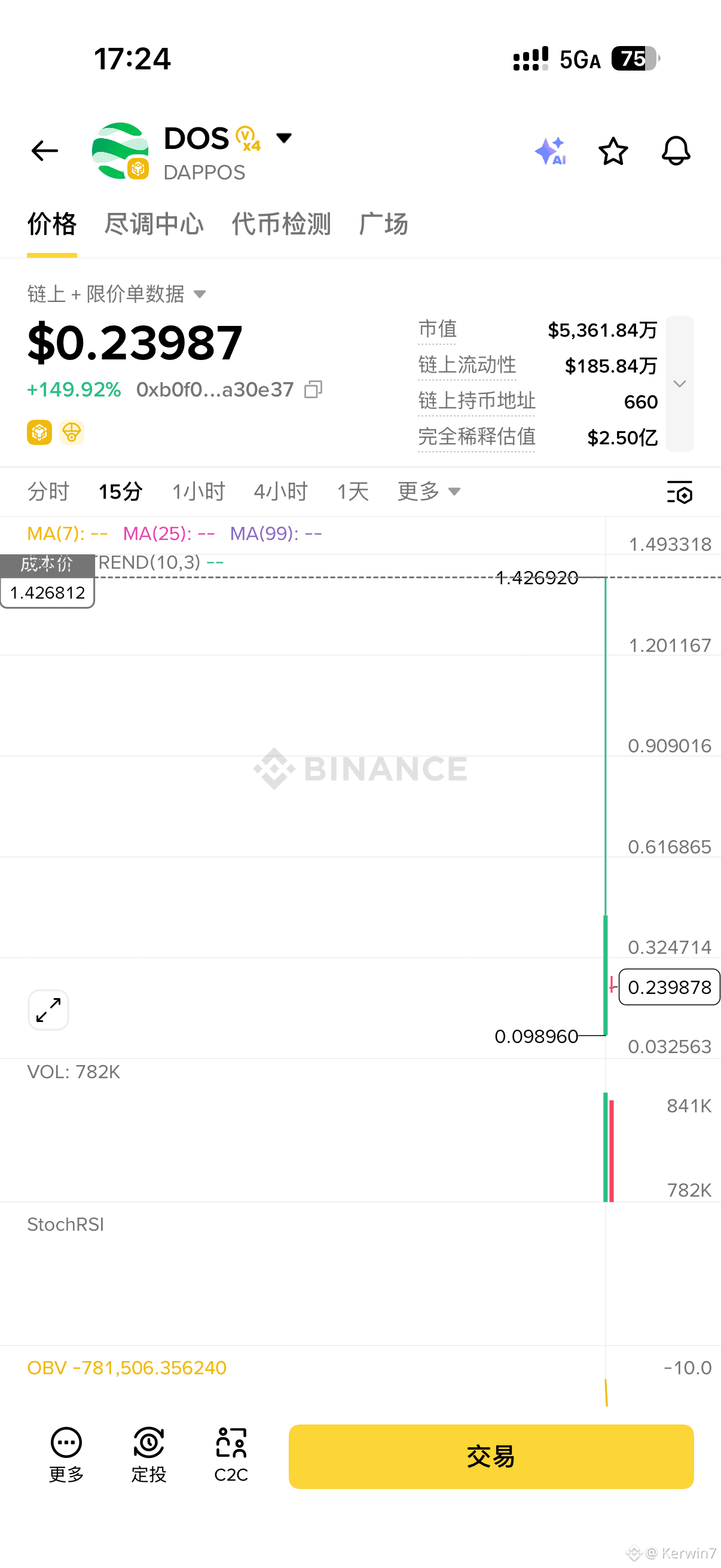
OOTD today:Binance Yellow.
The yellow robe is not an imperial robe; to date, 114 years have passed since the Qing dynasty was overthrown and the country perished.
The yellow robe is not an imperial robe; to date, 114 years have passed since the Qing dynasty was overthrown and the country perished.

Quite不错
币安Binance华语
·
--
[Binance AMA] From AMD to Nonfarm: A Positive Collision Between AI Growth and Interest Rate Expectations 💥
Tonight at 8 PM (UTC+8) on #币安广场 , let’s chat about it!
🎙️ Hosts: Rizi-chan
🧑🏫 Special Guests: Captain Kent, WiseInvest
🧧 One-click like + triple combo, and leave your questions in the comments—we’ll pick 5 people to each receive 30U
Tonight at 8 PM (UTC+8) on #币安广场 , let’s chat about it!
🎙️ Hosts: Rizi-chan
🧑🏫 Special Guests: Captain Kent, WiseInvest
🧧 One-click like + triple combo, and leave your questions in the comments—we’ll pick 5 people to each receive 30U

赞
币安Binance华语
·
--
Today Beginning of Autumn 🍂 #币安节气
In the best season that comes year after year, it is in autumn that the time for丰 harvest arrives 📈
🥤 For the first cup of autumn milk tea, Binance invites you to treat yourself!
RT and share the Binance wealth management product you use most often and why—so 15 of you can get milk tea
In the best season that comes year after year, it is in autumn that the time for丰 harvest arrives 📈
🥤 For the first cup of autumn milk tea, Binance invites you to treat yourself!
RT and share the Binance wealth management product you use most often and why—so 15 of you can get milk tea
The Charisma of Satoshi Nakamoto?!

CG葱哥
·
--
$Satoshi Nakamoto’s “butterfly” 🦋 shot out this Satoshi Nakamoto dividend BTC mechanism—it's really unbeatable. Holding 5 million Satoshi is basically like having a Bitcoin mining rig that automatically pays dividends. The larger the trading volume, the more dividends you get. Right now, it’s still the early stage—hurry up and buy 5 million Satoshi Nakamoto.

AI
币安Binance华语
·
--
[Binance AMA] From AMD to Nonfarm: A Positive Collision Between AI Growth and Interest Rate Expectations 💥
Tonight at 8 PM (UTC+8) on #币安广场 , let’s chat about it!
🎙️ Hosts: Rizi-chan
🧑🏫 Special Guests: Captain Kent, WiseInvest
🧧 One-click like + triple combo, and leave your questions in the comments—we’ll pick 5 people to each receive 30U
Tonight at 8 PM (UTC+8) on #币安广场 , let’s chat about it!
🎙️ Hosts: Rizi-chan
🧑🏫 Special Guests: Captain Kent, WiseInvest
🧧 One-click like + triple combo, and leave your questions in the comments—we’ll pick 5 people to each receive 30U
Igniting August!
币安Binance华语
·
--
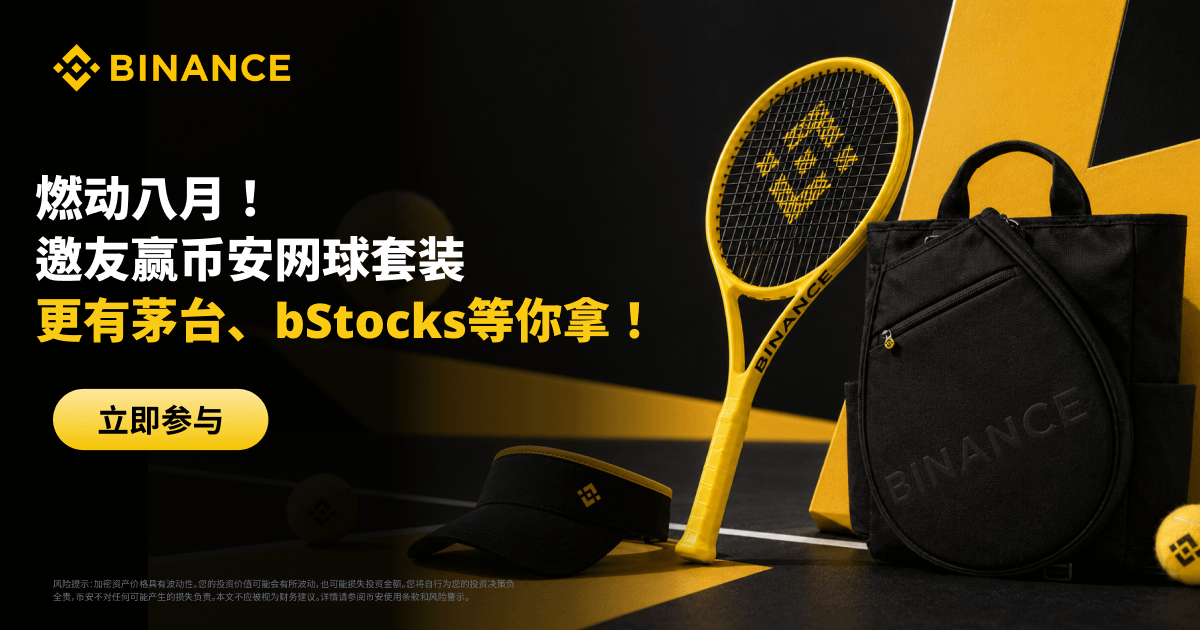
Don’t let your friends just sit on the list—invite TA to join you and unlock great rewards 🎁
Ignite August! Invite friends to win a Binance Tennis Set, plus you can also get Flying Moutai, bStocks, and more!
Share this post, and we’ll randomly pick 5 people to each receive 30U 🧧!
👉 点击了解更多
Ignite August! Invite friends to win a Binance Tennis Set, plus you can also get Flying Moutai, bStocks, and more!
Share this post, and we’ll randomly pick 5 people to each receive 30U 🧧!
👉 点击了解更多
cg Onion Brother 🕺🏿🕺🏿🕺🏿🕺🏿
Get it going, get it going
Get it going, get it going
CG葱哥
·
--
[Ended] 🎙️ Share the First-Level Wealth Code in the Coin Market
1.7k listens
Verified
#TradFi晒单 It is the global DRAM and the second-largest NAND supplier. In particular, it has long been a leader in HBM (high-bandwidth memory, the core high-bandwidth memory for AI chips) and is an important supplier to major customers such as NVIDIA. In the first quarter of 2026, its market share in HBM was approximately 56%, DRAM about 29%, and NAND about 18.5%.
In recent years, benefiting from the explosive growth in AI demand, the company has seen strong performance and rapid revenue growth. In 2024, revenue was about 66.2 trillion won; in 2025 it rose significantly further, and it has already been listed on Nasdaq (ticker SKHY). The company focuses on the memory storage business. Its products are widely used in servers, data centers, mobile phones, PCs, and graphics cards, among others. It is one of the key players in the storage field in the AI era.$SKHYB
In recent years, benefiting from the explosive growth in AI demand, the company has seen strong performance and rapid revenue growth. In 2024, revenue was about 66.2 trillion won; in 2025 it rose significantly further, and it has already been listed on Nasdaq (ticker SKHY). The company focuses on the memory storage business. Its products are widely used in servers, data centers, mobile phones, PCs, and graphics cards, among others. It is one of the key players in the storage field in the AI era.$SKHYB

Log in to explore more content