

Most blockchain narratives still revolve around execution layers or DeFi cycles. But a quieter constraint is starting to matter more: data availability at scale, especially for Web3 and AI-driven workloads. What many people still call “just storage” is turning into foundational infrastructure, and Walrus is one of the few protocols addressing that shift directly.
Walrus isn’t another generic “Web3 utility token.” It’s a decentralized storage and data availability protocol built on the Sui blockchain, designed to handle large files and complex datasets while maintaining security, resilience, and cost efficiency for decentralized applications. This isn’t speculation. It’s infrastructure logic playing out in real time.
What Makes Walrus Infrastructure, Not Hype
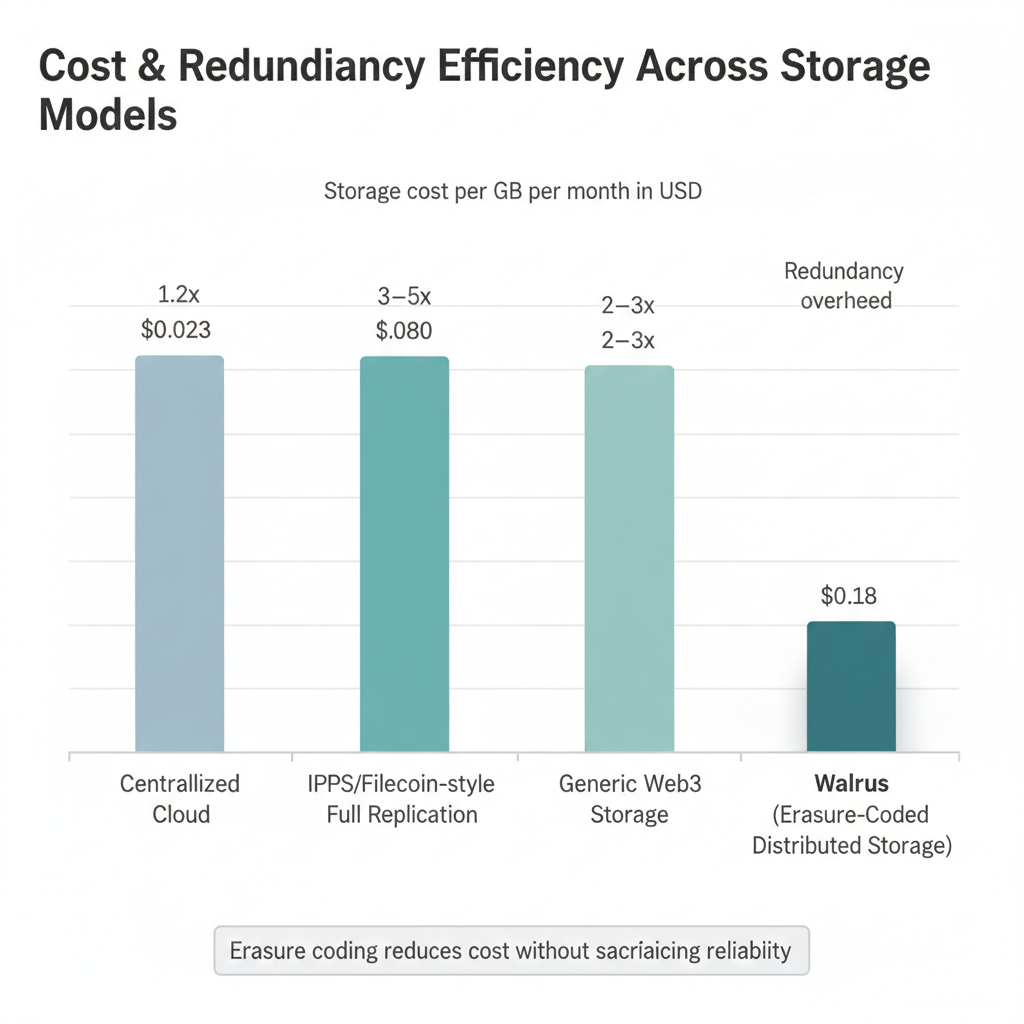
Most crypto storage solutions have struggled in familiar ways. Some are expensive, some drift toward centralization, and others simply don’t scale well enough for real application demand. Walrus approaches the problem at the architectural level instead of layering fixes on top.
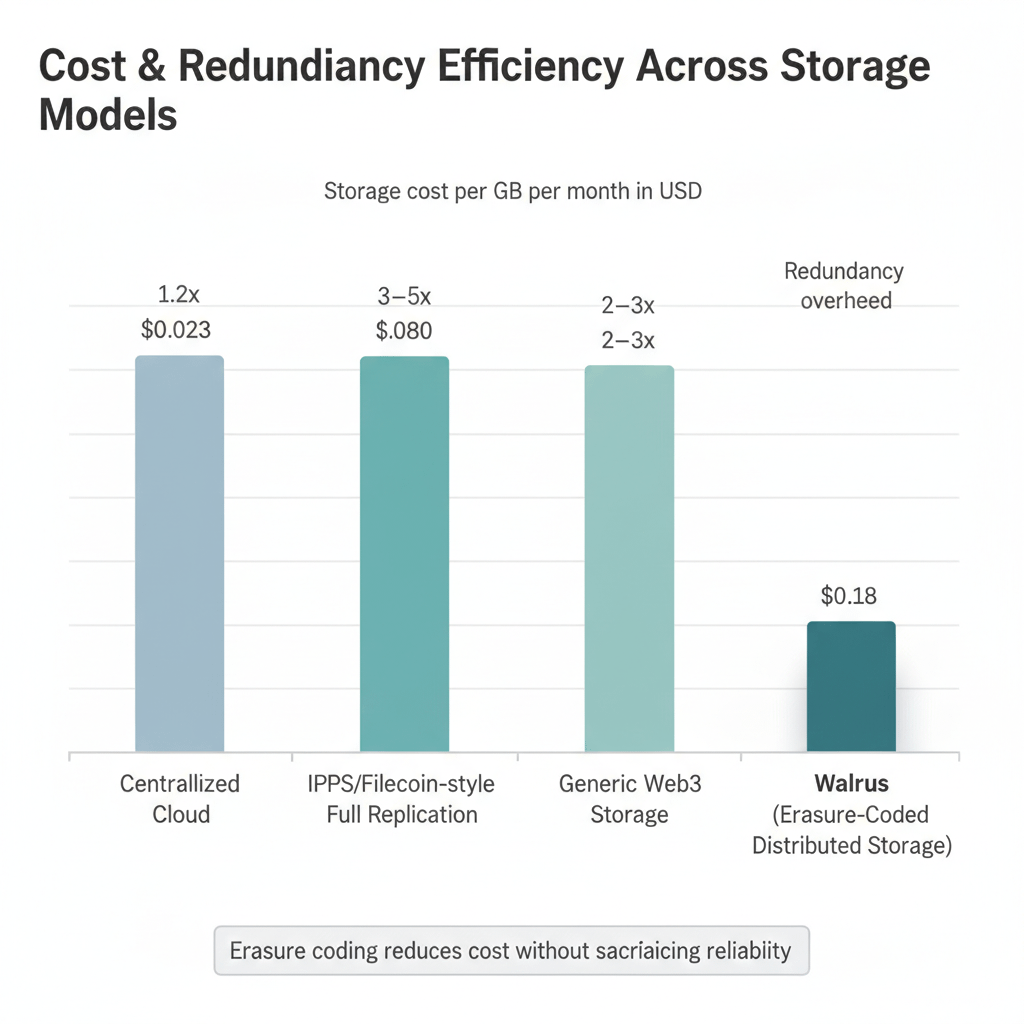
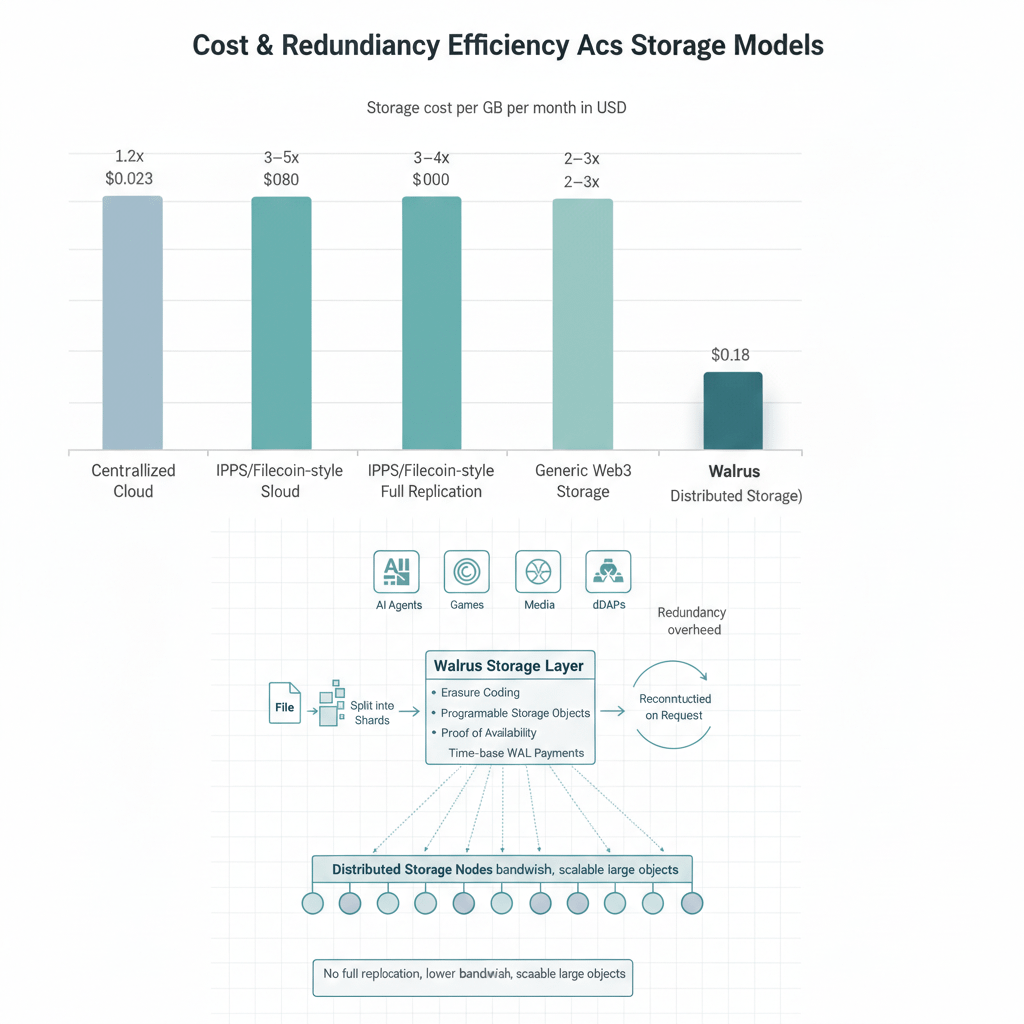
Storage is treated as a programmable asset that can be queried and verified, not an afterthought bolted onto execution. By leveraging Sui’s high-performance environment, Walrus can handle large binary objects efficiently without duplicating every piece of data across the entire network. Erasure coding combined with a distributed node design preserves redundancy and reliability without pushing costs or bandwidth usage out of control. The result is a system that scales more cleanly than traditional approaches.
This goes beyond storage. It’s data availability infrastructure that real applications — from AI and gaming to media platforms — will eventually depend on.
$WAL Token: Payment and Incentive Backbone
$WAL isn’t structured as a speculative asset first. Its role is practical and tied directly to usage. Users pay WAL for defined storage time and write operations on the network. Those payments are distributed to node operators and stakers over the agreed storage period, aligning incentives around actual service delivery.
The time-based payment model also helps stabilize storage costs in real-world terms, reducing the impact of extreme token price swings. Instead of existing mainly for trading, the token stays closely linked to the service it enables.
Walrus in Action: Real Infrastructure Signals
Announcements matter less than usage, and the signals around Walrus point toward substance. Live infrastructure demonstrations already show storage being used by real applications, including sizable content libraries and decentralized apps running active workloads on chain. Recent protocol updates focused on storage optimization and access control suggest ongoing iteration rather than a static design. Developers consistently highlight predictable storage mechanics, a clear payment model, and tight integration with the Sui ecosystem.
Taken together, these are the signs of a backbone layer forming, not just a project following a roadmap.
Why This Matters for Web3 and AI
For Web3 to mature, data has to be more than a hash pointing to an external server. AI agents, immersive games, and media-heavy platforms all require content that can be stored, accessed, and verified in a decentralized way without sacrificing resilience or censorship resistance.
Walrus is positioning itself at exactly that intersection, where data becomes a programmable and accessible part of the stack rather than a detached backend component.
Longer-Term Role for Walrus
If decentralized applications continue to scale, efficient data storage will move from a nice-to-have feature to a hard requirement. Networks that treat it as an afterthought will run into bottlenecks. Protocols like Walrus, which build data availability into the core design, are more likely to sit quietly behind real usage long before narratives catch up.
This is infrastructure with mission-critical implications, not just token economics.
Final Thought
Walrus isn’t promising fireworks. It’s promising structure. And in blockchain, structural solutions usually start quietly before they become indispensable. When data stops being a constraint and starts acting as an enabler, protocols like Walrus are likely to be the threads holding the next generation of decentralized applications together.

