

Crypto has spent years repeating a comforting but flawed assumption: that radical transparency is inherently virtuous, and that more visibility automatically means more trust. This belief sounds principled. In practice, it collapses the moment real financial behavior enters the picture.
In traditional markets, transparency is carefully scoped, not absolute. Fund managers do not publish their positions in real time. Corporations do not expose treasury flows to competitors. Traders do not broadcast intent before execution. They don’t do this because they’re hiding wrongdoing, they do it because full transparency destroys strategy.
When every action is visible, information leakage becomes a tax on participation. Front running becomes trivial. Portfolio construction turns into signaling. Risk management becomes impossible because adversaries can infer constraints, hedges, and time horizons. Markets stop reflecting fundamentals and start reflecting who can extract value fastest from disclosed information.
Public blockchains, by default, ignore this reality. They assume that because something is technically verifiable, it should also be universally observable. The result is a system that works tolerably well for retail speculation but breaks down under professional use. Asset managers, issuers, and institutions are not irrational for avoiding environments where every move is broadcast to the world, they are acting responsibly.
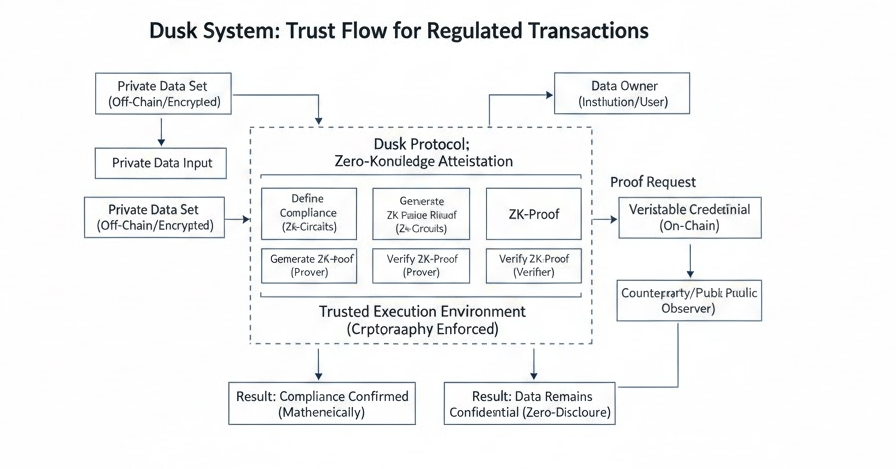
Yet swinging to the opposite extreme doesn’t solve the problem either. Total privacy is not credible in regulated finance. Auditors need to verify balances. A system that offers no lawful visibility is not freedom preserving, it is simply unusable at scale.
It is not a moral disagreement about values. It is a structural deadlock created by treating visibility as binary: either everyone sees everything, or no one sees anything. Real finance does not operate that way, and it never has.
The practical solution lies in selective, programmable visibility, systems where data is hidden by default, but provably accessible to the right parties under the right conditions. This isn’t exotic. It’s how most digital systems already work.
A simple analogy is social media privacy settings. You don’t post your personal photos to the entire internet by default, nor do you lock them in a vault where no one can ever see them. You choose who can view, who can comment, and who can audit past activity. The platform enforces those permissions consistently.
Finance works the same way, just with higher stakes. A regulator may need to see transaction histories. An auditor may need cryptographic proof of reserves. A counterparty may need confirmation that compliance rules were met, without learning proprietary details. Selective visibility allows all of this without turning markets into glass boxes.
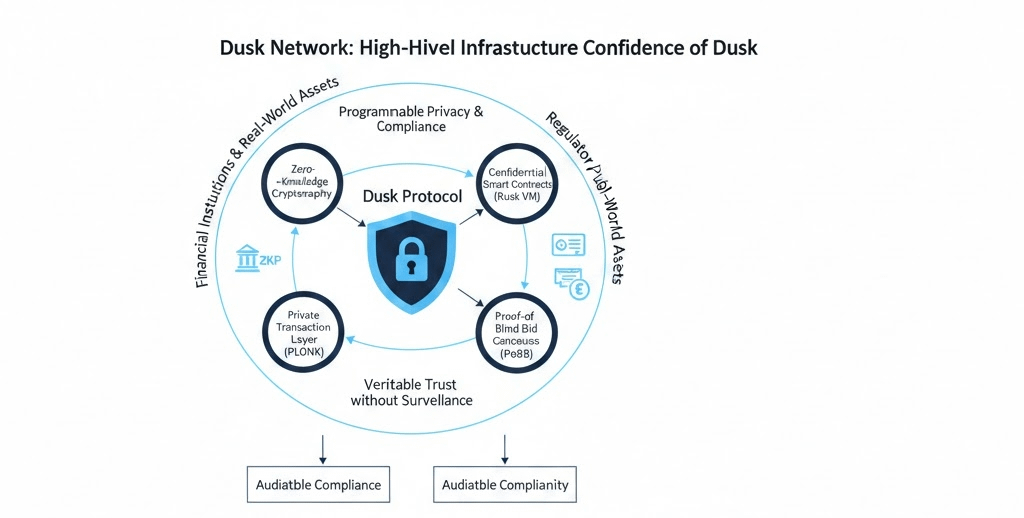
This is where projects like Dusk Network are directionally important, not because they promise secrecy, but because they acknowledge a reality many crypto systems avoid: compliance and privacy are not opposites. They are co requirements.
What Dusk and similar approaches attempt is not to reinvent regulation, but to port mature permission models from Web2 into Web3, without reintroducing trusted intermediaries. In Web2 finance, access control is enforced by institutions and legal contracts. In Web3, it must be enforced by cryptography and protocol design. The function is the same, the enforcement layer changes.
This idea often feels uncomfortable to crypto native culture. Permissions is frequently equated with censorship. Compliance is dismissed as capture. Privacy is romanticized as invisibility rather than control. But these reactions confuse ideology with adoption.
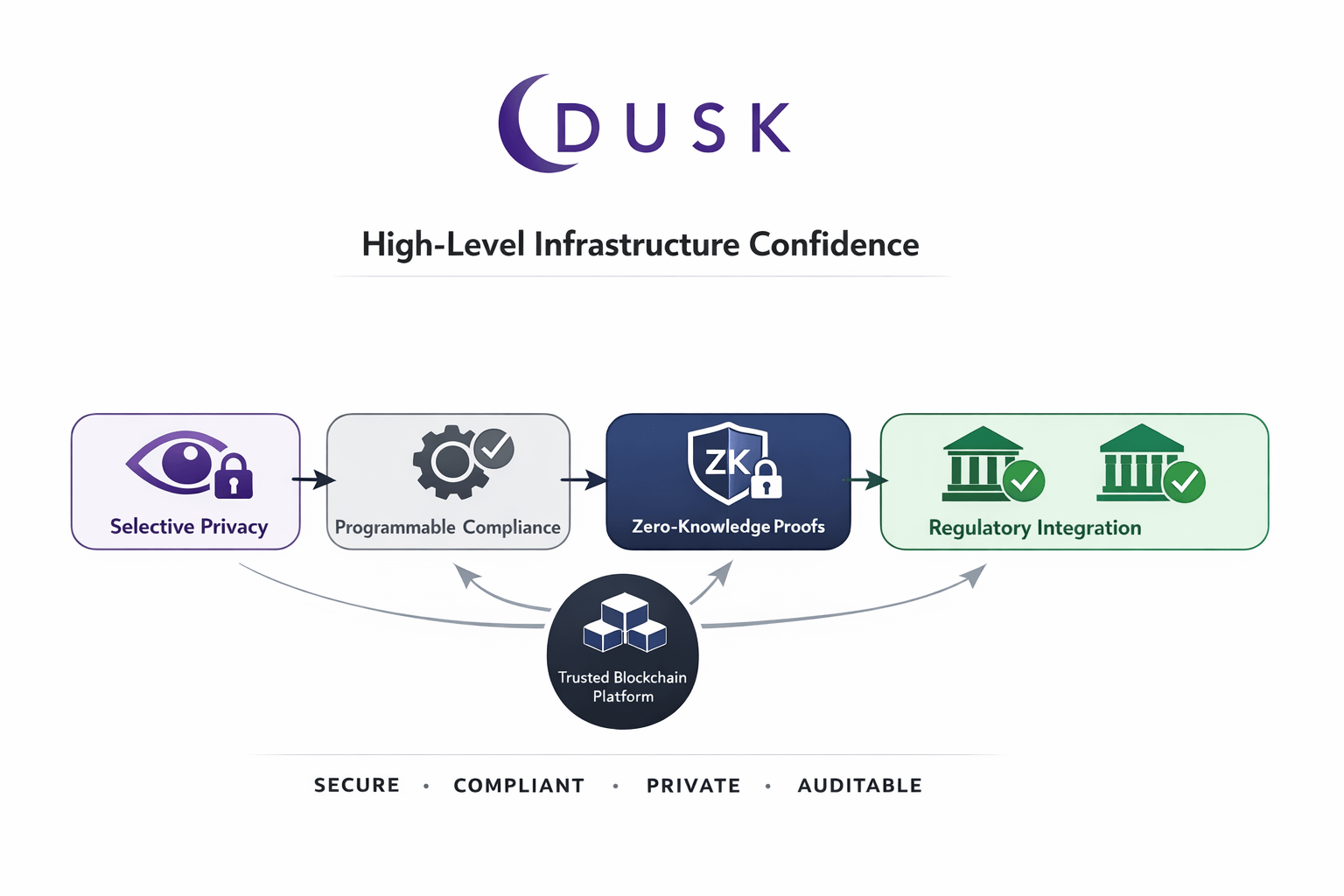
Real businesses do not operate on vibes. They operate on risk models, governance requirements, and accountability. They need systems where rules are enforced predictably and exceptions are auditable. A blockchain that cannot express these constraints is not more decentralized in practice, it is simply excluded from serious use.
The irony is that selective visibility is actually more aligned with decentralization than today’s fully transparent chains. Privacy without permission protects incumbents, privacy with permission levels the field.
This matters most for real world assets. RWAs are not just tokens representing value; they are legal, regulated instruments embedded in existing systems of trust. You cannot onboard bonds, equities, or credit markets onto infrastructure that treats compliance as an afterthought. Until permission management is native, until visibility can be granted without surveillance, RWA growth will remain mostly narrative.
The future of on chain finance is not maximal transparency or maximal secrecy. It is composable, enforceable discretion. Crypto does not need to abandon its principles to reach this future. It needs to mature them.
And that maturity begins by admitting a hard truth: without solving compliance without surveillance, there is no credible path from speculation to infrastructure.
