

Decentralized storage rarely becomes the star of Web3 discussions. It doesn’t grab attention like DeFi rewards or performance benchmarks showing massive transaction speeds. Yet behind the scenes, storage is one of the most critical components that determines whether blockchain applications can truly function at scale. After watching Walrus evolve, it feels like a project shaped by builders who understand real infrastructure challenges rather than chasing hype. That’s likely why conversations among serious developers often circle back to @Walrus 🦭/acc and its ecosystem token WAL.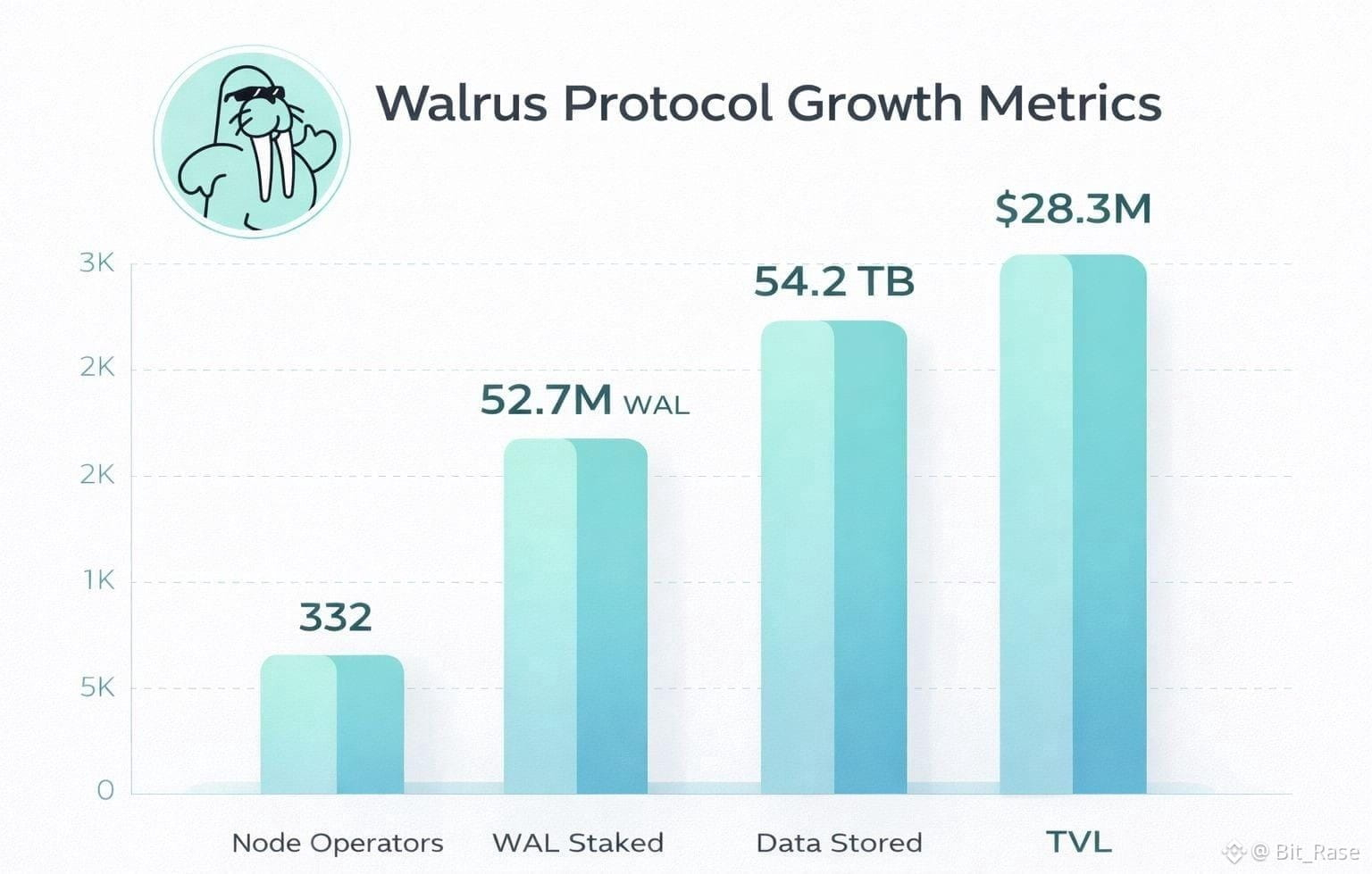
At its foundation, Walrus operates as a decentralized blob storage protocol built to integrate naturally with the Sui network. The term “blob” is important because it refers to large data segments such as media content, enterprise datasets, verification credentials, or digital records. Many blockchain applications still depend on centralized cloud providers to store these types of files simply because reliable decentralized alternatives have been limited. Walrus aims to close that gap while preserving performance, reliability, and ease of integration for developers.
One of the most notable aspects of Walrus is its technical approach to handling stored information. Instead of copying complete files across multiple nodes, Walrus uses deletion coding. This method divides data into smaller fragments and distributes them across the network. Even if certain nodes become unavailable, the system can reconstruct the original data using remaining fragments. This structure improves reliability while avoiding the heavy cost and inefficiency of full file duplication. For developers, it creates predictable storage costs and removes the fear that scaling user demand will dramatically increase expenses.
Walrus also treats storage as a core blockchain function rather than something loosely connected outside the network. Stored data is not simply parked somewhere off-chain. Smart contracts can directly reference stored content, verify its presence, and apply rules governing how it can be accessed or used. This unlocks practical and everyday applications. NFT media can remain permanently accessible. Game ecosystems can safely host assets and player data. Compliance documentation can stay transparent and auditable. Even AI training logs or analytics data can remain tamper-resistant. These scenarios represent real operational needs that projects face once adoption begins to grow.
When comparing Walrus with other decentralized storage systems, its positioning becomes clearer. Filecoin focuses strongly on long-term archival storage and marketplace-driven data storage economics. Arweave is known for delivering permanent data preservation. Walrus, however, concentrates on applications that require frequent interaction with stored data. It prioritizes storage that supports daily operations where data must be read, updated, verified, and actively used. This makes Walrus more aligned with dynamic applications rather than static, permanent storage use cases.
Early adoption trends appear to support this design philosophy. Since launching on mainnet, Walrus has introduced developer tools and SDKs designed to simplify integration. Early real-world usage includes digital intellectual property storage, availability layers for application data, and systems that rely heavily on large and accessible datasets. When infrastructure begins gaining traction among developers testing it under real conditions, it often signals that the technology is solving genuine problems rather than existing as theoretical innovation.
Still, Walrus operates within a competitive and evolving sector, which brings challenges. Storage incentive models must remain sustainable, particularly during difficult market conditions. Regulatory frameworks around sensitive information, identity-related data, and privacy protection continue to evolve worldwide. Even with encryption, decentralized networks must constantly refine privacy tools and access control systems. Additionally, like many emerging blockchain assets, WAL introduces token volatility that projects must consider when planning long-term infrastructure strategies.
For developers considering Walrus, a gradual onboarding strategy makes sense. Starting with non-sensitive files such as public media, metadata, or open datasets allows teams to evaluate performance under real network conditions. Over time, more complex or sensitive data can be introduced using encryption and structured permission systems. Educational visuals explaining how Walrus distributes and reconstructs data can also help partners and users better understand and trust the technology.
Walrus does not attempt to dominate every area of decentralized storage. Instead, it focuses on being efficient, flexible, and practical for builders who need reliable data infrastructure. In the long run, infrastructure projects that prioritize usability and real-world functionality often establish stronger and more sustainable ecosystems. Walrus appears to be positioning itself within that category by solving storage challenges that developers consistently face as Web3 continues expanding.

