


From the 1923 Piggly Wiggly corner to the 2008 Volkswagen surge that briefly made a car manufacturer the most valuable company on Earth, short squeezes have always been the black swans of finance. These market phenomena represent moments when financial theory collides with human psychology, creating some of the most dramatic episodes in trading history.
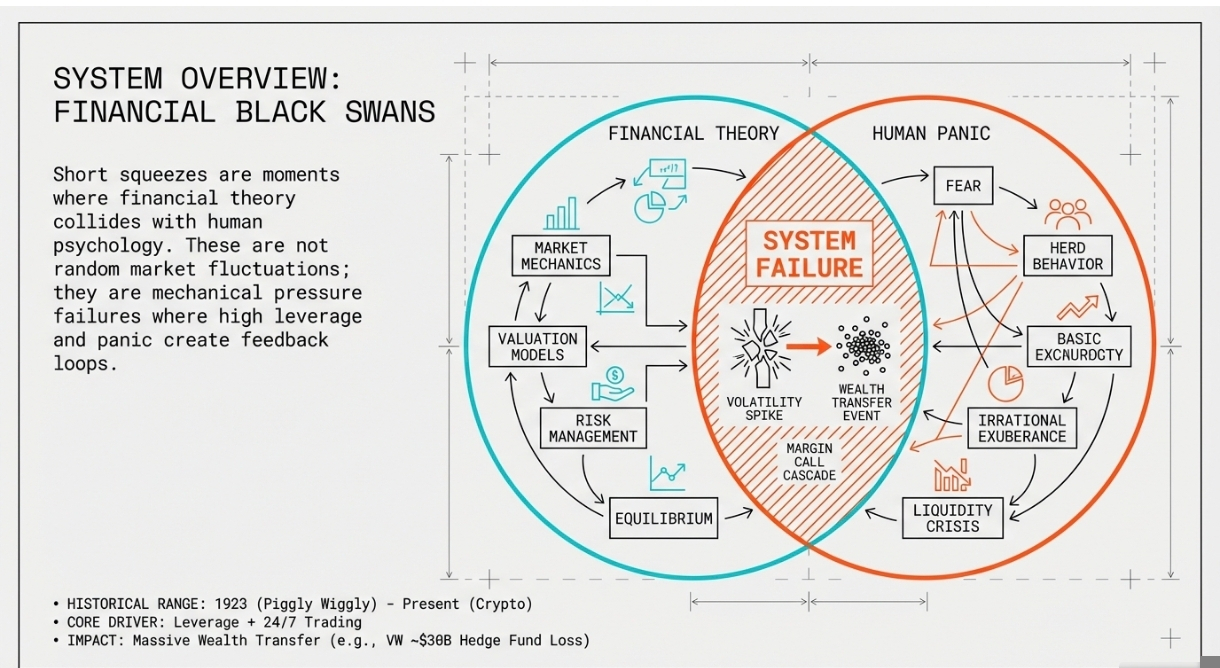
In 1923, Clarence Saunders, the founder of the Piggly Wiggly grocery chain, attempted to corner the market on his own stock after Wall Street short sellers targeted his company. Despite building his empire from nothing and revolutionizing grocery shopping with self-service stores, Saunders found himself battling sophisticated traders who believed his stock was overvalued. He aggressively bought shares, driving the price from $39 to $124, only to see the New York Stock Exchange change rules mid-game, effectively bankrupting him and earning him the nickname "the boob from Tennessee."
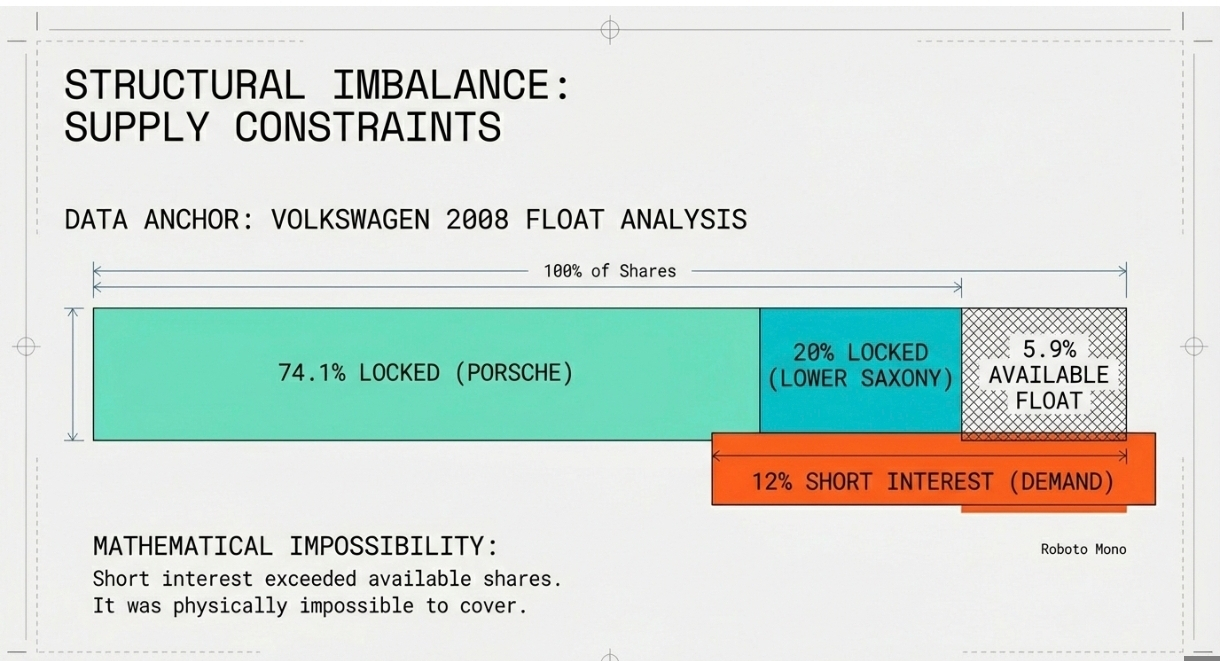
The 2008 Volkswagen squeeze remains the textbook example of modern financial warfare. Porsche secretly accumulated 74.1% of Volkswagen through shares and options while short sellers had bet against 12% of the outstanding stock. When Porsche revealed its position, the resulting panic saw VW shares rocket from €210 to nearly €1,000 in days, briefly making it the world's most valuable company and costing hedge funds an estimated $30 billion.
In cryptocurrency markets, these events occur with even greater frequency and intensity due to higher leverage availability and around-the-clock trading. The mechanisms remain the same, but the speed and magnitude amplify both opportunities and risks for participants.
II. What is a Short Squeeze?
A short squeeze occurs when traders who have bet against an asset (by short selling) are forced to buy it back rapidly as prices rise against their positions. This forced buying creates additional upward pressure, leading to a feedback loop that can cause explosive price movements in a short period.
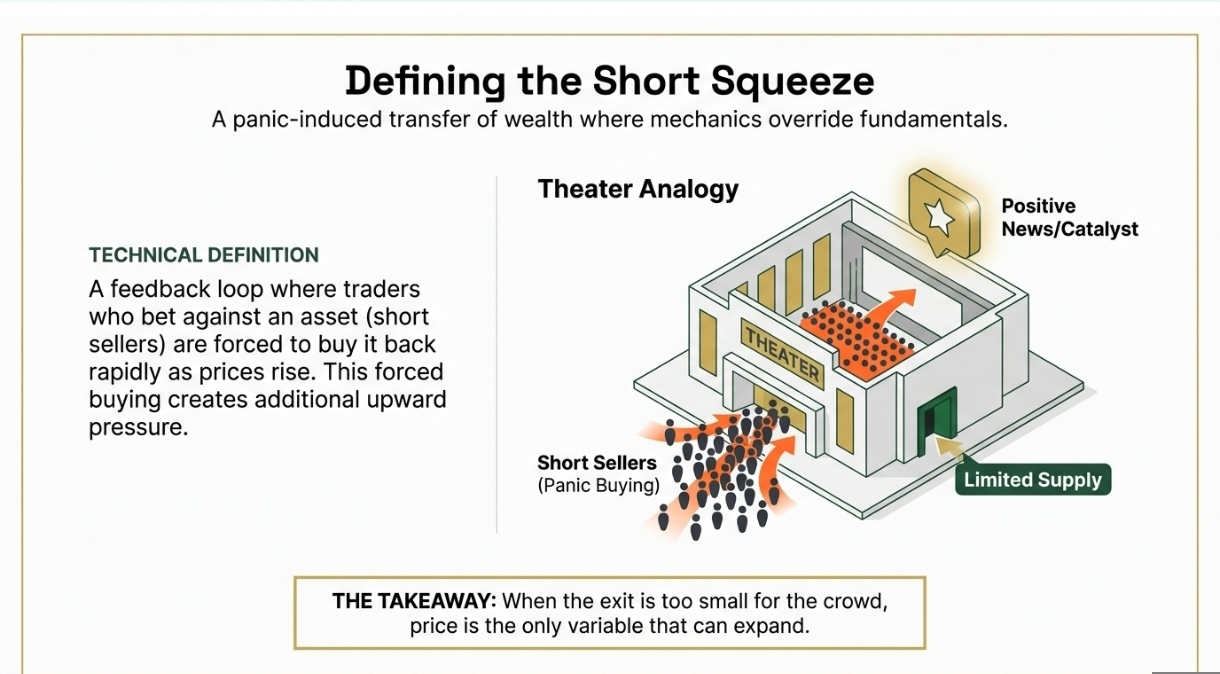
Imagine a popular theater with limited seats. Many people have borrowed tickets from friends, promising to return them later, while betting the show will be bad and ticket prices will drop (short selling). Suddenly, a famous critic gives the show a glowing review, and everyone wants to see it. Those who borrowed tickets now desperately need to buy tickets to return to their friends, but there are very few available. They bid higher and higher prices, creating a frenzy. This is essentially a short squeeze - too many people need to buy something at the same time with limited supply, driving prices dramatically higher.
In financial terms, short sellers must eventually buy back the assets they borrowed and sold. When prices rise instead of fall, their losses mount, and at some point, they're forced to buy regardless of price to limit those losses. This collective panic buying from short sellers fuels the very price increase they feared.
III. Causes of Short Squeezes
Short squeezes don't occur randomly; they require specific market conditions and catalysts. Understanding these underlying causes helps traders anticipate potential squeeze scenarios.
❍ Liquidation Engines and Cascading Orders
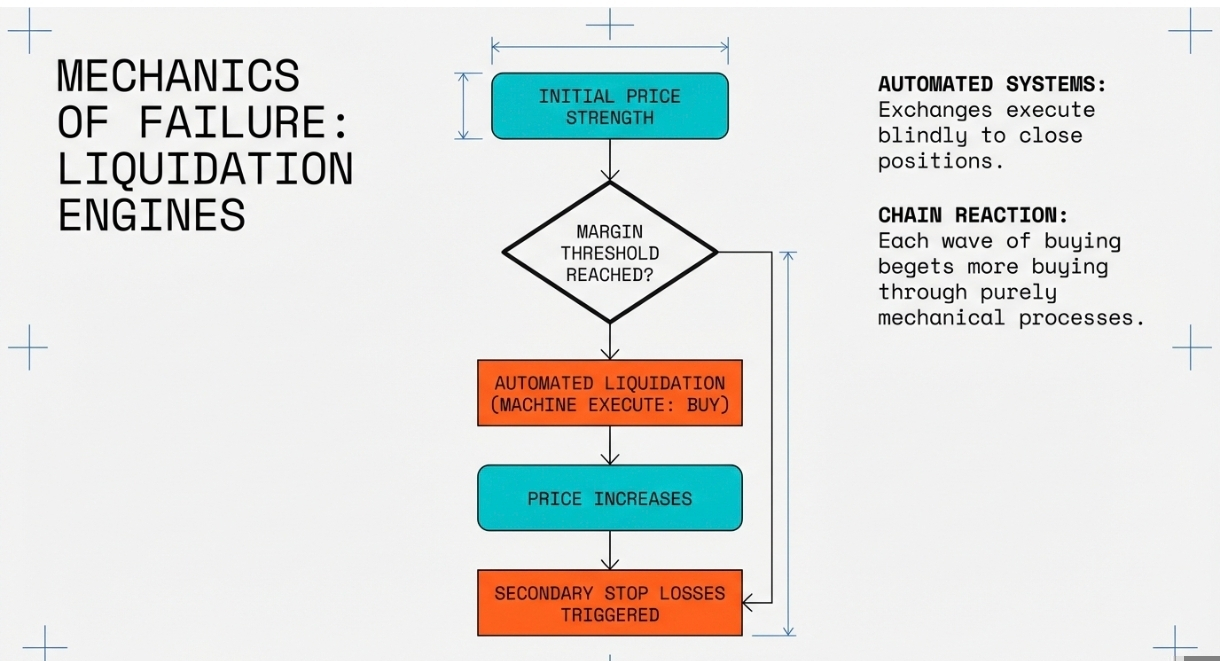
Modern exchanges employ automated liquidation systems that trigger when positions reach certain margin thresholds. These systems don't consider market impact - they simply execute orders to close positions. When multiple traders face liquidation simultaneously, these automated sells (for long positions) or buys (for short positions) can create avalanche effects.
In a short squeeze scenario, initial price strength triggers the first wave of short liquidations. These forced buy orders push prices higher, which triggers the next layer of stop losses and liquidations. This creates a chain reaction where each wave of buying begets more buying through purely mechanical processes.
❍ Market Psychology: Disbelief, Panic, and Crowded Trades
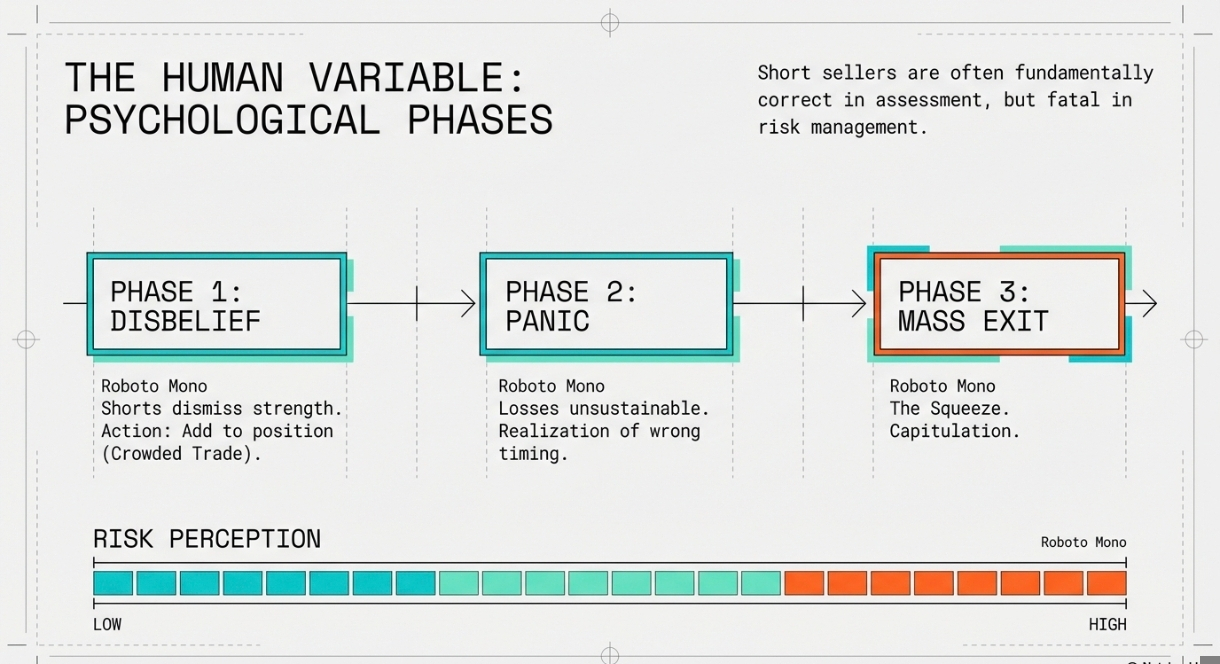
Short squeezes represent a collision between fundamental analysis and market mechanics. Often, short sellers are fundamentally correct in their assessment but wrong in their timing or risk management. When prices move against them, several psychological factors amplify the squeeze.
The "disbelief" phase occurs when shorts dismiss early price strength as temporary, adding to their positions rather than cutting losses. This creates increasingly crowded trades where many participants are positioned the same way. Once prices move beyond a certain point, disbelief turns to panic as losses become unsustainable, triggering the mass exit that fuels the squeeze.
❍ Structural Imbalances and Information Gaps
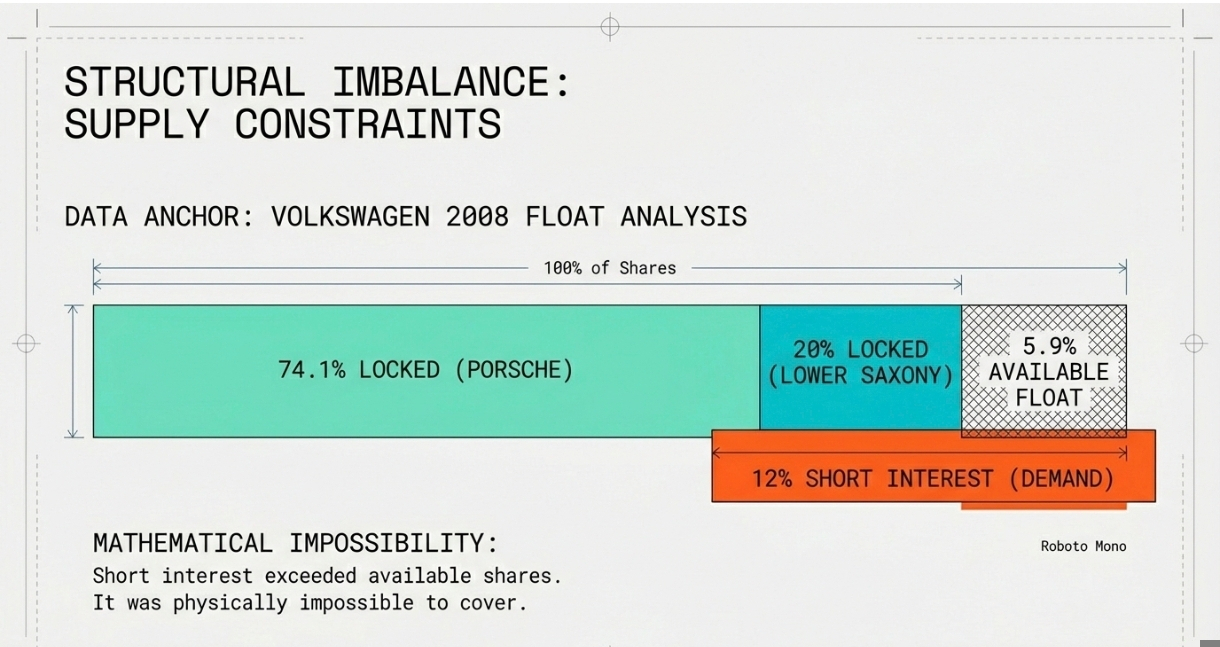
The Volkswagen squeeze demonstrated how structural factors can create squeeze conditions. With Porsche controlling 74.1% of shares and the German state of Lower Saxony holding another 20%, only 5.9% of shares were available for trading - yet short interest stood at 12%. This mathematical impossibility meant short sellers literally could not buy enough shares to close their positions, regardless of price.
In crypto markets, similar structural imbalances occur when large holders (whales) accumulate positions while short interest remains high. The recent convergence of institutional adoption through ETFs with persistent crypto short interest creates conditions ripe for such imbalances.
IV. How to Identify a Potential Short Squeeze
Spotting potential short squeezes requires monitoring specific metrics that indicate crowded short positioning and vulnerability to rapid price moves. These indicators provide early warning signs before squeeze conditions develop.
❍ Funding Rates: The Cost of Betting Against the Market
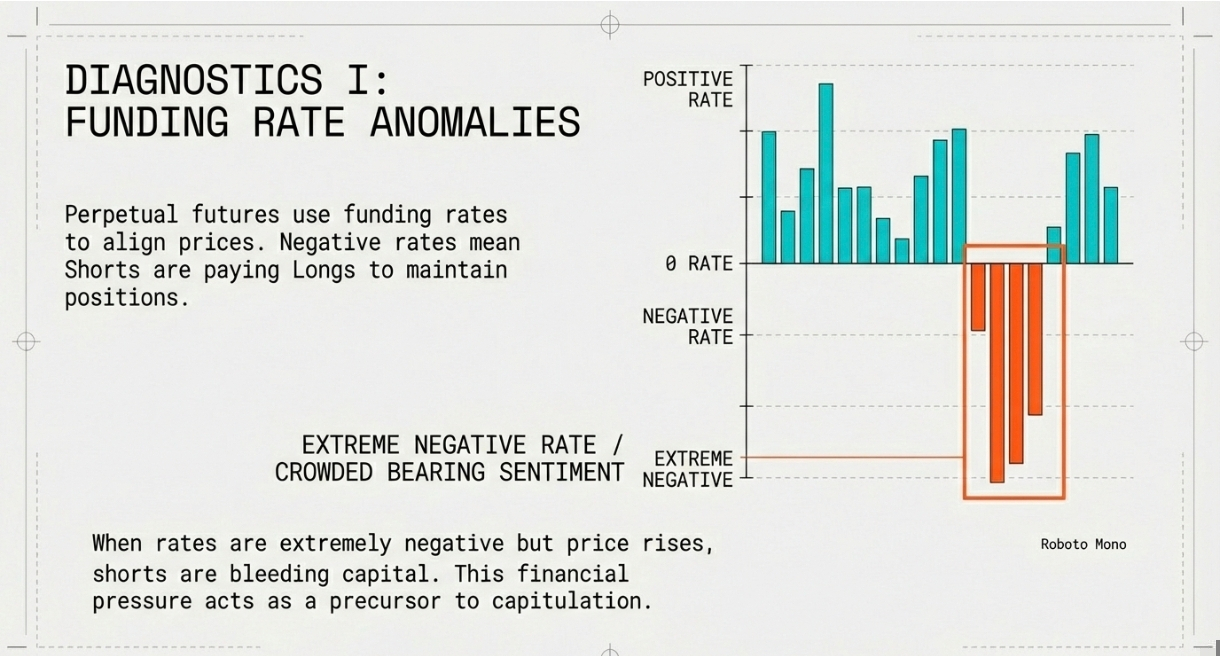
Perpetual futures contracts use funding rates to maintain price alignment with spot markets. These rates represent periodic payments between long and short position holders. Negative funding rates indicate that shorts are paying longs to maintain their positions, suggesting bearish sentiment has become overcrowded.
When funding rates become extremely negative while prices consolidate or show strength, it often signals a potential squeeze setup. Shorts are increasingly paying to maintain their bearish bets, creating financial pressure that accelerates once prices begin moving against them.
❍ Open Interest and Liquidation Data
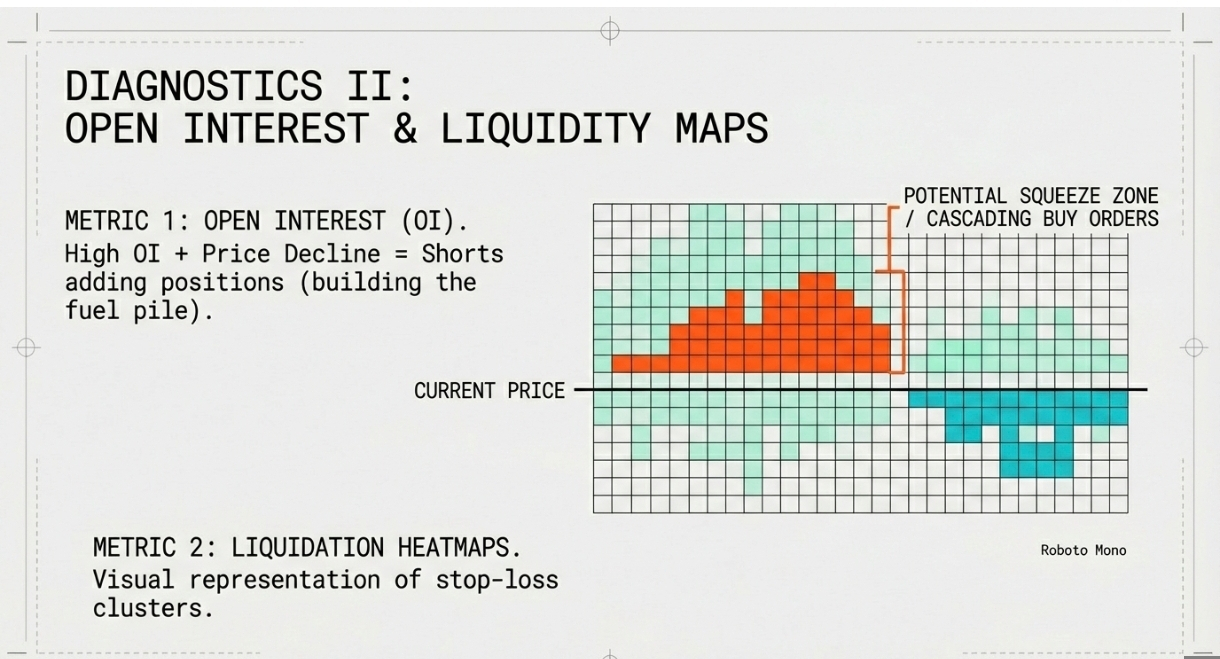
Open interest measures the total number of outstanding derivative contracts. When open interest remains high during price declines, it suggests shorts are adding positions rather than taking profits. This creates a larger pool of potential forced buyers if prices reverse.
Liquidation heatmaps show concentration of stop losses and liquidation levels. Dense clusters of short liquidation levels above current prices indicate potential squeeze zones where price breakthroughs could trigger cascading buy orders.
❍ The Long-to-Short Ratio: Measuring Market Sentiment
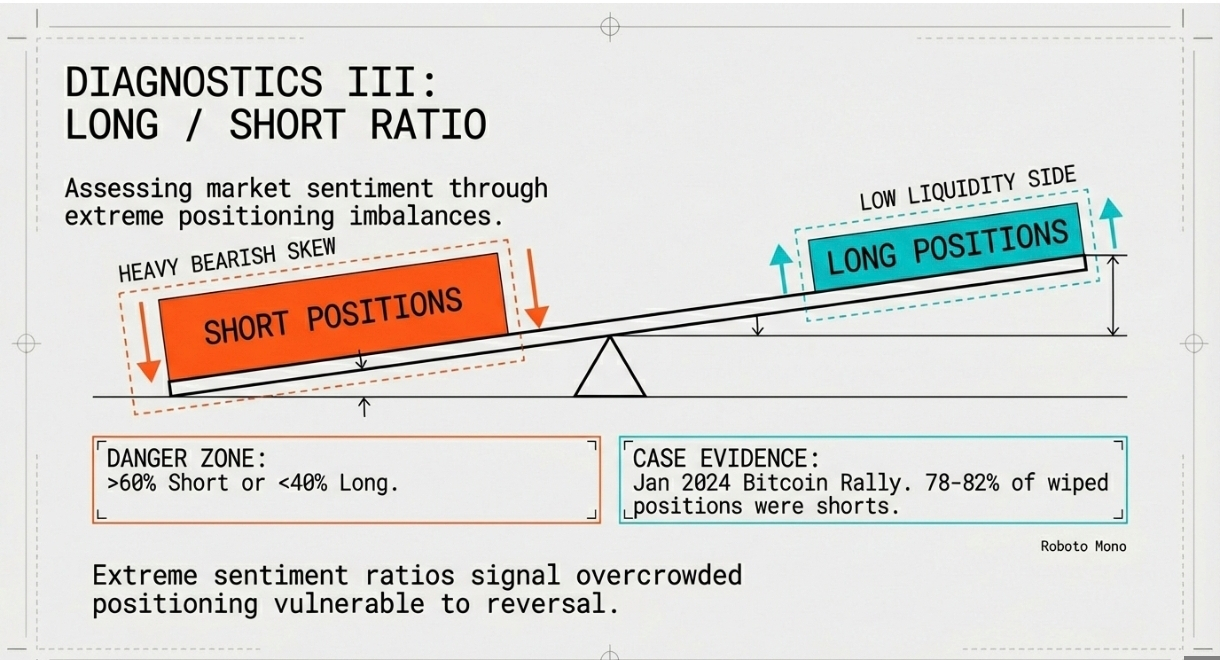
Exchange data on long versus short positioning provides direct insight into trader sentiment. Ratios below 50% long indicate net short positioning across the market. Recent data from major exchanges shows aggregate ratios around 47-52% short positioning for Bitcoin futures, suggesting slight bearish sentiment.
When these ratios reach extremes (below 40% long or above 60% long), they often signal overcrowded positioning that's vulnerable to reversal. The January 2024 Bitcoin rally saw liquidations where 78-82% of wiped positions were shorts, indicating a clear squeeze dynamic.
How To Identify These :
Screen for high short interest: Look for assets with elevated short interest relative to available liquidity
Check funding rates: Extreme negative rates suggest crowded shorts
Analyze liquidation levels: Identify dense clusters of short stops above current price
Monitor news catalysts: Potential positive developments that could trigger short covering
Watch for price突破关键阻力: Technical breakouts often trigger the initial squeeze momentum
V. Famous Crypto Short Squeezes
Cryptocurrency markets have produced some of the most dramatic short squeezes in financial history, amplified by 24/7 trading, high leverage availability, and the emerging asset class's inherent volatility.
❍ January 2023 Bitcoin Rally: The Post-FTX Reclamation
Following the November 2022 FTX collapse, Bitcoin had plummeted to $16,000, and bearish sentiment dominated markets. Short interest reached extreme levels as traders anticipated further declines. However, as the new year began, Bitcoin quietly built momentum, breaking through $20,000 in early January.
The real squeeze occurred as price approached $23,000, triggering cascading liquidations. Over a 24-hour period, more than $700 million in short positions were liquidated as Bitcoin surged nearly 40% from its lows. This move represented a classic squeeze setup: extreme bearish sentiment, high short interest, and a fundamental catalyst (the worst news being priced in).
Ethereum's ETF-Driven Volatility Surges
While the specific late 2023 ETH squeeze mentioned initially couldn't be verified with exact dates, Ethereum has experienced numerous squeeze events around ETF developments. In March 2025, Ethereum led a market-wide liquidation event where $147 million in ETH positions were forcibly closed, with 82.95% being long positions. BitcoinWorld
More recently, Ethereum's price movements around key support levels have created squeeze conditions. The cryptocurrency's breakdown below $2,700 in January 2026 triggered substantial liquidations, but these movements also set up potential squeeze scenarios when combined with high short interest and negative funding rates.
Short squeezes represent one of the most fascinating phenomena in financial markets, where mechanics trump fundamentals and psychology drives price action. From Clarence Saunders' disastrous 1923 attempt to defend his company to Porsche's brilliant 2008 maneuver that cost hedge funds billions, these events remind us that markets are ultimately human systems.
In cryptocurrency trading, squeezes occur with particular frequency and ferocity due to the market's structure. The 24/7 nature, high leverage availability, and fast moving nature of the market seeds the perfect environment for these events.

