


Every cycle in crypto has stars that shine bright for a moment and then fade. But what lasts long term is infrastructure the systems people depend on that work quietly in the background. One of the most important pieces of Web3 infrastructure rising now is Walrus Protocol. It does not chase trends it solves a real problem that will matter as blockchains grow and real applications need reliable storage.
Blockchains like Bitcoin and Ethereum were not built to store large amounts of data. They were made to record transactions and secure value not hold big files. Today modern decentralized apps generate huge amounts of information that must be kept somewhere must be available and must be verifiable for years. This is the problem Walrus is designed to fix.
Walrus does not try to replace blockchains or compete with flashy Layer 1 tokens. It focuses on one thing storing data in a decentralized way that is efficient durable and usable at scale. This is an area that few people talk about until something breaks then everyone notices it is missing.
At its core Walrus is a decentralized storage layer built on the Sui ecosystem. Its job is simple but essential it stores large pieces of data often called blobs and makes sure they stay accessible over time not just today but long after the app or creator has moved on.
One of the biggest design choices in Walrus is its use of erasure coding. Instead of making full copies everywhere the protocol breaks data into fragments and spreads them across many independent storage nodes. Only some of these fragments are needed to rebuild the original file. This makes the system more resilient than old style replication and much more cost efficient. Data stored on Walrus does not vanish if some nodes go offline. The network also does not waste resources storing unnecessary duplicates. The result is a balance between decentralization and real world efficiency something Web3 often struggles to achieve.
A key part of why Walrus stands out is verifiability. In Web2 you trust your storage provider. In Web3 trust is replaced by proofs. Walrus enables cryptographic verification that data is actually being stored and remains retrievable. For developers and users this is a major shift. Storage becomes something you can check not just assume.
This matters deeply as Web3 matures. We are already seeing use cases that depend on long term data availability. AI agents need persistent datasets. Games require large asset libraries that cannot disappear. NFTs are evolving beyond simple images into complex media objects. Social platforms need user content to survive platform changes. None of this works if storage is fragile.
Walrus is built with these realities in mind. Its tight integration with Sui also plays a crucial role. Sui’s high throughput and low latency environment allows Walrus to interact smoothly with onchain logic. Smart contracts can reference stored data without friction. Developers do not need to hack together custom solutions. Storage becomes a native part of the application stack rather than an afterthought.
This is how ecosystems grow up. Instead of every project reinventing storage Walrus provides a shared foundation. Builders can focus on what makes their application unique while relying on a protocol designed specifically for data persistence. Over time this creates network effects. More applications lead to more stored data. More data leads to more demand for storage providers. The system reinforces itself.
The WAL token is central to this incentive structure. Storage providers are rewarded for contributing resources and maintaining availability. Users pay for storage in a transparent way that reflects real network costs. When incentives are aligned correctly networks tend to attract long term participants rather than short term speculators.
What makes Walrus compelling is its understated approach. There is no promise to change the world overnight. There is no attempt to overextend into every narrative. It focuses on doing one hard thing well. That kind of focus is rare in crypto.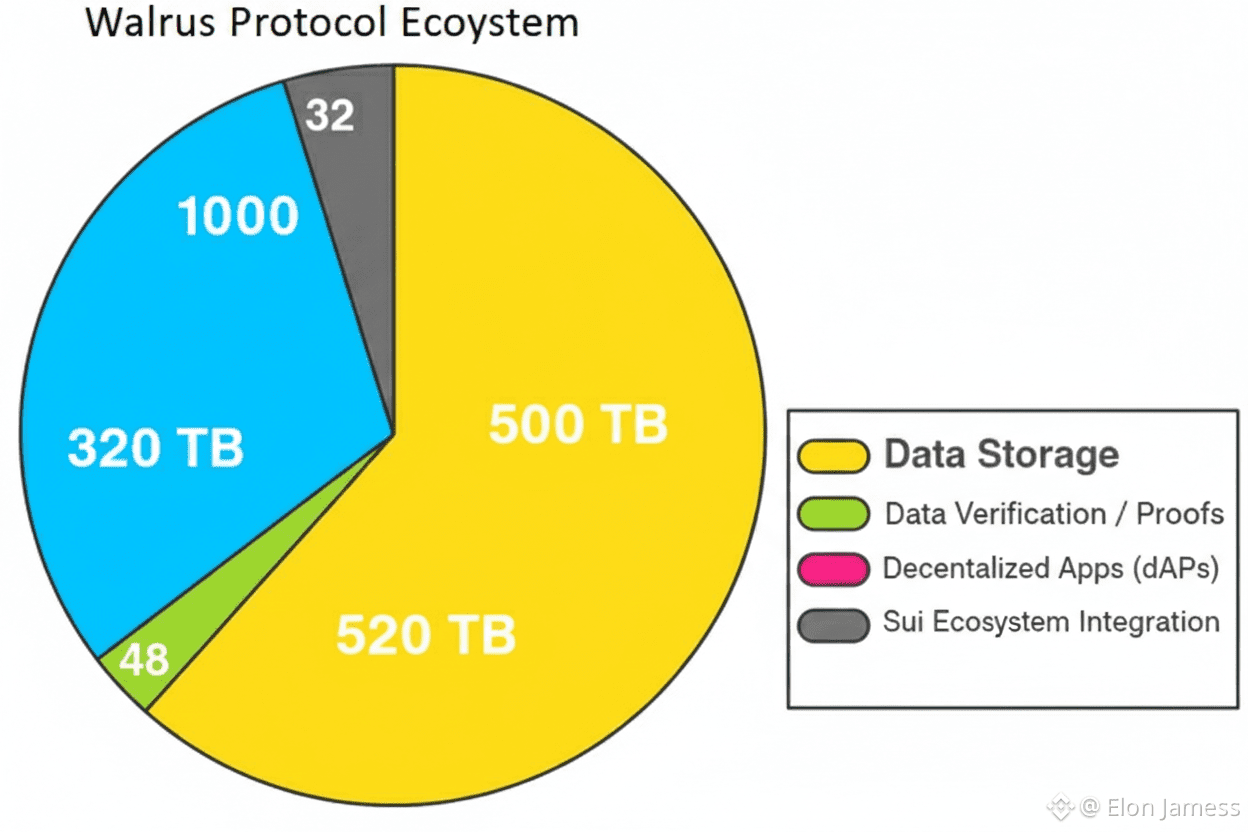
History shows that the most valuable infrastructure layers often look boring at first. Databases cloud storage and content delivery networks all followed this path. Nobody got excited about them until the entire internet depended on them. Decentralized storage is on the same trajectory and Walrus is positioning itself early.
As more real world activity moves onchain the question will no longer be whether decentralized storage is needed. It will be which protocols can actually handle the load which ones are reliable which ones were built with longevity in mind. Walrus feels like a protocol designed for that future not because it promises hype but because it solves a problem that does not go away. Data only grows applications only become more complex the need for durable verifiable storage becomes stronger with time not weaker.
This is why Walrus deserves attention. It is quietly laying down the rails that future Web3 applications will run on. When storage finally becomes a first class concern across the ecosystem Walrus will not need to explain its relevance it will already be there doing the work. Walrus represents more than a utility token. It represents a bet on infrastructure that lasts systems designed for scale and a version of Web3 that takes fundamentals seriously.



