
The decentralized storage landscape has evolved fast, but three major ecosystems continue to dominate the conversation: Walrus Storage, IPFS, and Arweave. While each delivers a unique approach to distributed data hosting, their differences in cost, speed, redundancy, and performance are becoming clearer as real-world adoption grows. In this post, I’ll break down how these networks compare — and why Walrus is emerging as a powerful contender in the next era of scalable Web3 storage.
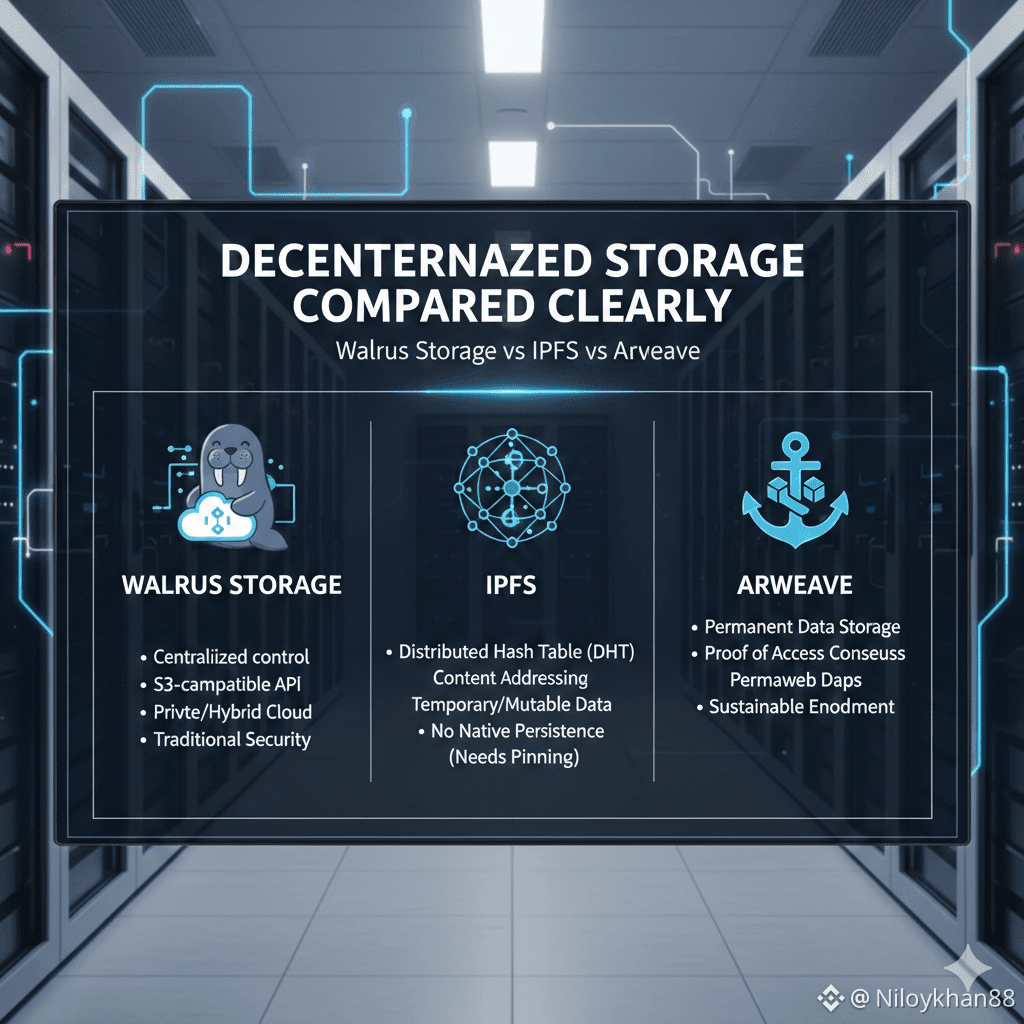
First, IPFS became popular because of its simple, peer-to-peer file sharing system. However, content on IPFS is not permanently stored unless pinned by third-party providers. This creates hidden and ongoing costs that users often overlook. Retrieval speeds also depend heavily on the availability of peers hosting the specific file, meaning performance can vary widely during peak activity.
Arweave, on the other hand, promotes permanent data storage, using a “pay once, store forever” pricing model. While this sounds ideal, upfront costs are significantly higher, making it less flexible for dynamic applications or high-volume user data. Arweave excels for archival content but is not optimized for rapid updates, complex APIs, or high-throughput systems.
This brings us to Walrus Storage, powered by Sui and supported by @walfoundation. What sets Walrus apart is its scalable blob storage, low-cost structure, and efficient redundancy model. Instead of locking users into expensive permanent storage fees, Walrus provides cost-optimized, high-performance storage that adjusts to demand. The redundancy system ensures data availability even when multiple nodes fail, while the network design allows for extremely fast retrieval, ideal for apps that rely on real-time performance.
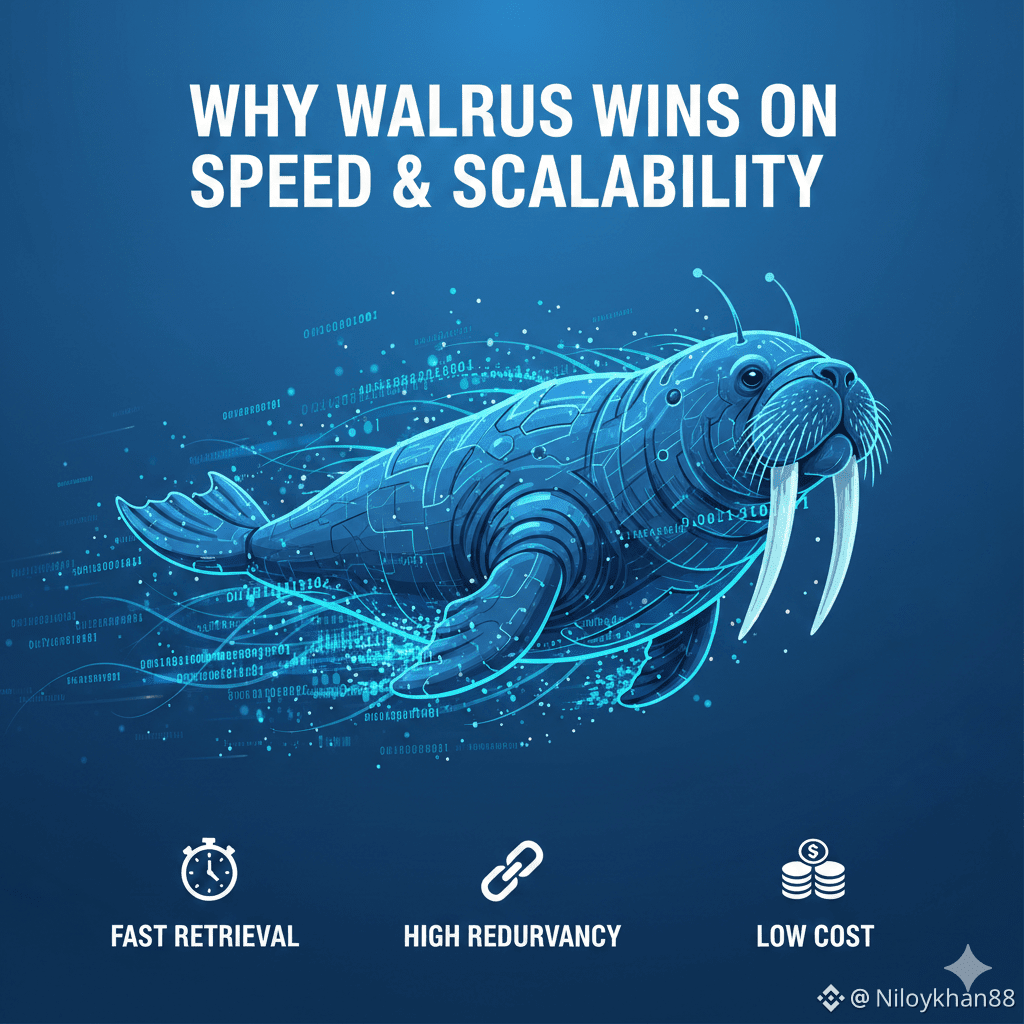
With $Wal as its ecosystem token and an infrastructure built for modern dApps, gaming assets, NFTs, streaming, and large-scale Web3 platforms, Walrus stands out for offering speed comparable to centralized cloud systems, yet with full decentralization and verifiable integrity.
As Web3 applications scale, the industry needs storage solutions that balance cost, speed, and reliability without sacrificing decentralization. Walrus achieves this balance while empowering builders with a flexible, developer-friendly architecture.
The future of decentralized storage won’t be defined by permanence alone — it will be defined by performance. And this is where Walrus is leading the evolution.

