


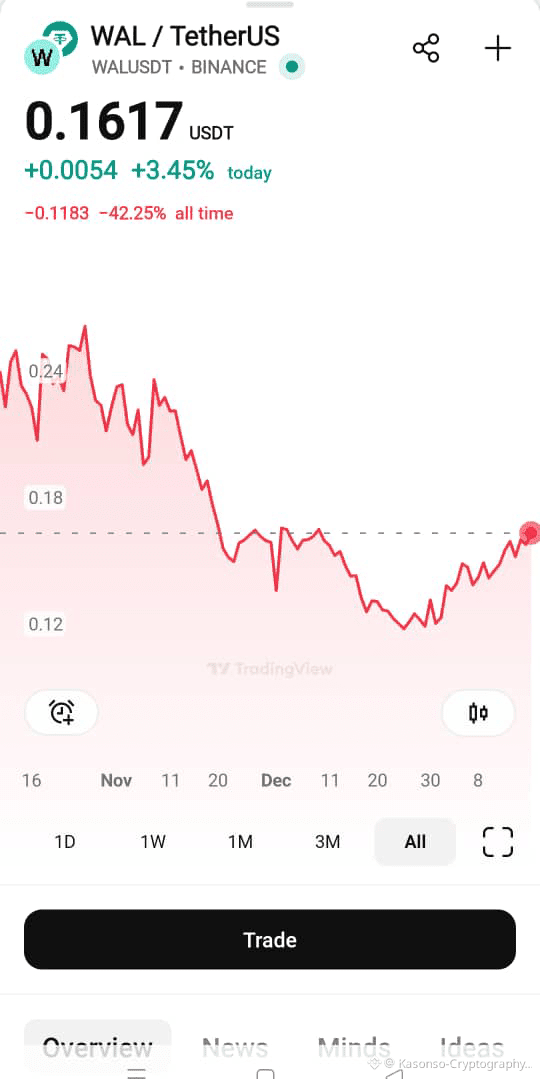
If you look at the chart above, $WAL is slowly waking up again. Price been down for some time, but now you see signs of life. People asking, why Walrus? why now? So let me break it in simple way, not technical, not whitepaper talk.
Walrus is not just about price pumping. It’s more about how the system is built different from old centralized stuff we used to accept without question.
Spreading out power (not one big boss)
On Walrus, power don’t sit in one place. Token holders don’t give everything to one big company or one huge node. Instead, they delegate to many independent storage nodes.
Example:
Instead of 2 or 3 big servers controlling all data, you have hundreds of smaller operators. Even if one node tries funny business, it can’t delete data or censor stuff alone. No single hand on the switch.
That’s how censorship get weaker.
Rewarding performance, not size
This part people miss a lot.
Nodes don’t earn WAL because they are famous or big. They earn because they stay online and do the job right. Uptime and reliability is what matter.
Example:
A small node running from someone with good setup and discipline can earn more WAL than a big node that keep going offline. This makes it fair. Giants don’t automatically win here.
So decentralization is not just word, it’s incentivized.
Bad behavior get punished
In Walrus, if a node perform badly or act dishonest, stake get slashed. Simple.
Example:
If a node promise storage but keep failing or try to manipulate data, it lose WAL. That alone scares away greedy behavior. Nobody want to lose money just to try control the system.
This makes people behave, not because they nice, but because it cost them.
No fast power grabs
Another smart thing is penalties for moving stake too fast.
Why this important?
Because in many networks, big players move stake last minute to influence votes or attacks.
Walrus say no. If you try rush stake around during critical moment, you pay for it. This stop coordinated groups from gaming governance or censoring data when it matters most.
Community decides, not closed doors
Token holders control important parameters. That means decisions don’t happen in private rooms.
As more people join, governance stay spread out. No “trust us bro” situation. You participate, you vote, you matter
Resilience > empty promises
Decentralization is not ideology for tweets. It’s about survival.
Old systems fail when servers go down, when government knock, or when company change rules overnight. Walrus is built to resist that. Attacks, outages, censorship — system keep going.
By rewarding honest work, Walrus make decentralization make economic sense. Nodes earn by being good actors. Users benefit because data stay verifiable and under their control.
You decide who access it. You can check where it came from. And you’re not forced to trust some black box company.
Therefore.
The real question is not does decentralization matter?
We already know it does.
The real question is: will the systems you use today stay decentralized tomorrow?
With Walrus, the design says yes. And if price keep following utility… then this pump might just be getting started, not the end.
Not financial advice. Just how the system works.
