

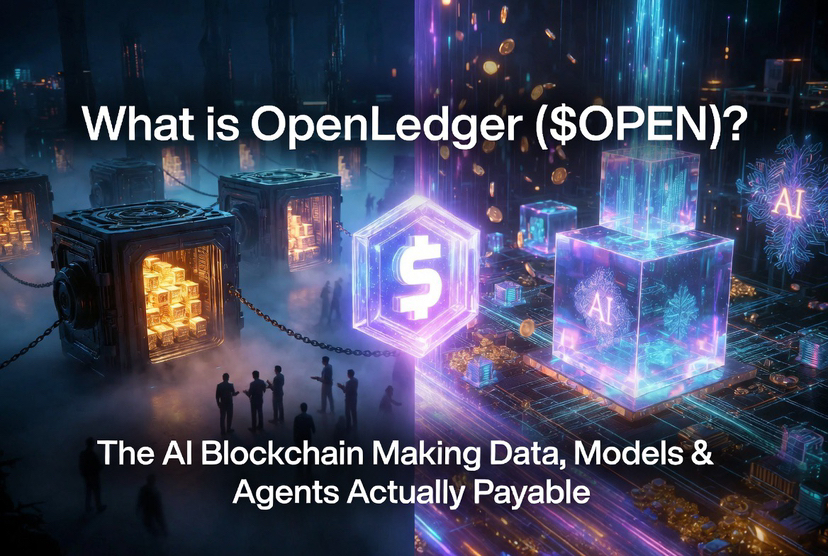
What is OpenLedger ($OPEN)? The AI Blockchain Making Data, Models & Agents Actually Payable
In the AI gold rush, one big problem remains unsolved: Who actually owns and gets paid for the data and intelligence powering everything?
Big Tech hoards datasets, trains models in black boxes, and creators rarely see fair rewards. OpenLedger aims to fix that with a purpose-built AI blockchain that turns data, models, and AI agents into transparent, liquid, monetizable assets.
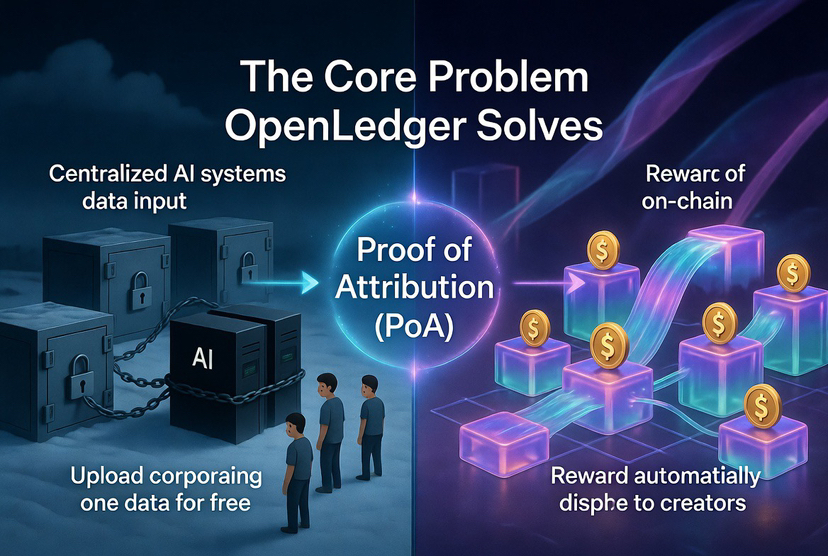
The Core Problem OpenLedger Solves
Today’s AI economy is centralized and opaque. Contributors upload data for free, models get trained behind closed doors, and value flows to a few corporations. OpenLedger flips this by recording every step of the AI lifecycle on-chain — from data contribution to model training, inference, and deployment.
It’s standout innovation? Proof of Attribution (PoA). This cryptographic system traces exactly how a piece of data or model influences an output and automatically distributes rewards to the right creators. Think of it as on-chain provenance for intelligence.
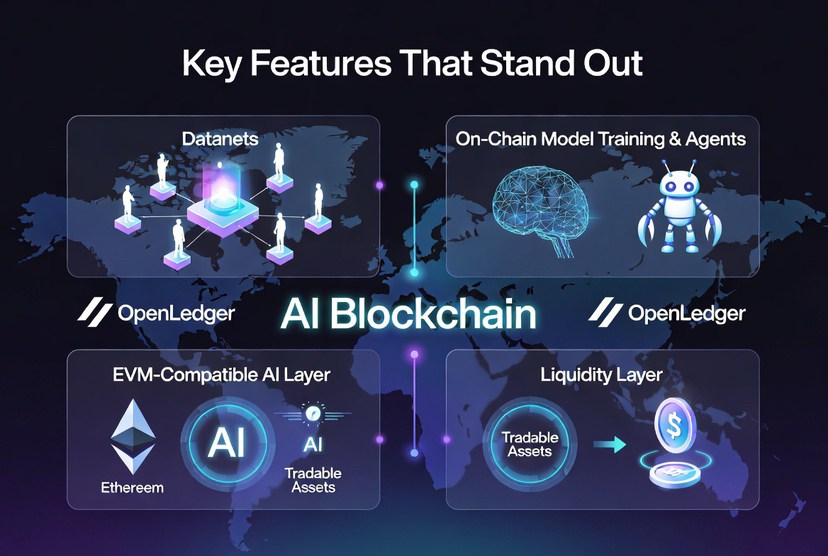
Key Features That Stand Out
• Datanets: Community-owned datasets where anyone can contribute verified data. These power specialized (not general) AI models tailored for niches like finance, healthcare, or crypto.
• On-Chain Model Training & Agents: Build, fine-tune, and deploy models directly on the chain. Tools like OctoClaw let users create and run AI agents in real time.
• EVM-Compatible AI Layer: Easy for developers to build on. It combines blockchain transparency with high-performance AI execution.
• Liquidity Layer: Data, models, and agents become tradable, composable assets — no longer static files.
OpenLedger isn’t “another blockchain with AI features.” It’s designed from the ground up as the AI Blockchain.
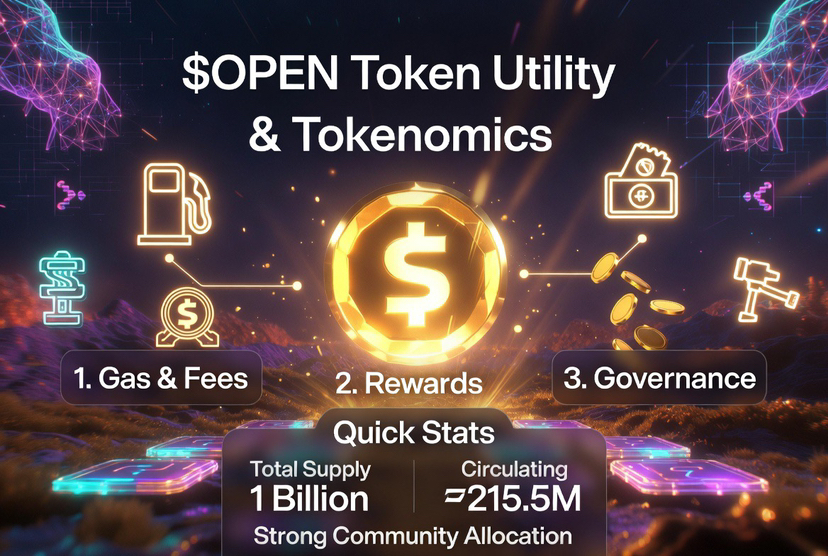
$OPEN Token Utility & Tokenomics
The native token powers the entire ecosystem:
• Gas & Fees: Pay for transactions, model training, inference, and deployment.
• Rewards: Distributed via Proof of Attribution to data providers and model builders.
• Governance: Holders vote on protocol upgrades and ecosystem direction.
Quick Stats:
• Total Supply: 1 Billion OPEN
• Circulating Supply: ~215.5 Million OPEN
• Strong community allocation
This creates real utility beyond speculation — the more AI activity on the network, the more $OPEN is used and valued.
Traction & 2026 Outlook
Mainnet launched in late 2025, and OpenLedger has seen growing on-chain activity, developer adoption, and tools like Model Factory for no-code model building. With specialized AI models gaining traction over massive general ones, OpenLedger’s focus on domain-specific Datanets positions it strongly for the agent economy.
Of course, challenges exist: Competition from other DeAI projects, adoption hurdles, and crypto market volatility. Success depends on real usage and developer mindshare.

Why It Matters
OpenLedger isn’t promising AGI tomorrow — it’s building the economic and accountability layer so that AI can be fairer, more transparent, and truly participatory. In a world racing toward agent economies, having verifiable, rewardable intelligence infrastructure could be huge.
What do you think? Is Proof of Attribution the missing piece for decentralized AI, or is it too early? Drop your thoughts below.
DYOR, check out openledger.xyz and their docs.

#OpenLedger #open #DeAI #AIBlockchain #crypto @OpenLedger $OPEN
