
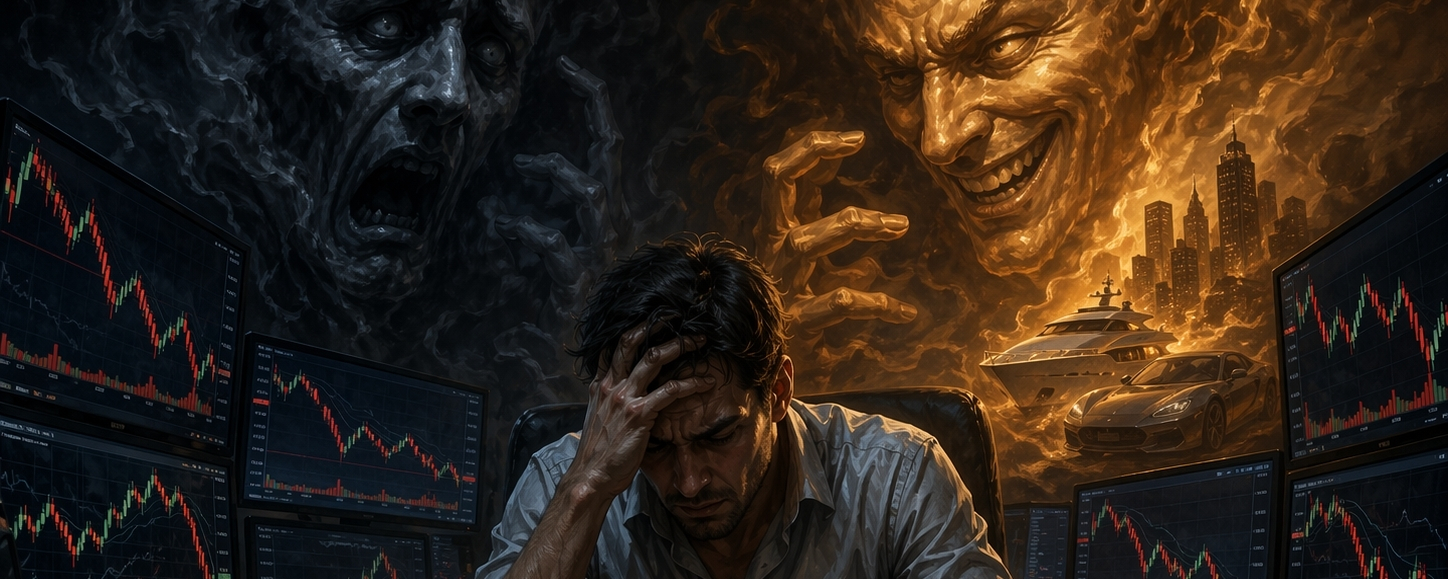
Psychological stress in trading is considered one of the main factors that affect a trader’s behavior and decisions in financial markets. Trading does not depend only on technical analysis or economic knowledge, but also on a person’s ability to control emotions and deal with profit and loss in a balanced and aware manner. Due to the nature of the market, which is characterized by volatility and uncertainty, traders are constantly exposed to different levels of anxiety, fear, and greed, which may push them to make irrational decisions.
The most common signs of psychological stress in trading include hesitation, exiting profitable trades too early, holding losing trades for too long, and rushing to recover losses quickly. These behaviors often result from weak emotional control and the absence of a clear plan. Therefore, reducing psychological stress requires commitment to money management, setting a precise strategy, and accepting loss as a natural part of the trading process.
In conclusion, success in trading is not based on technical skill alone, but also on psychological balance and behavioral discipline. The more a trader is able to control emotions, the greater the ability to make rational and stable decisions.