
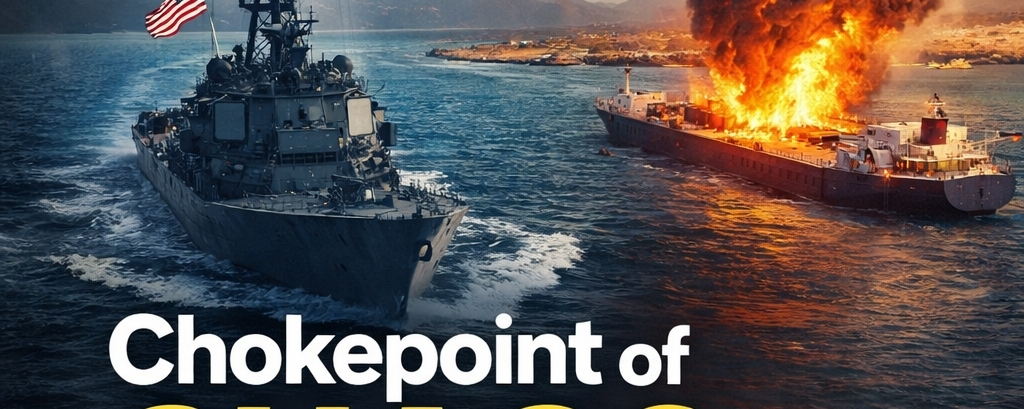

The first thing I noticed wasn’t the headlines—it was the speed. Markets didn’t wait for confirmation, analysis, or diplomacy. The moment news broke about a potential U.S. blockade in the Strait of Hormuz, oil surged, stocks dipped, and uncertainty spread like wildfire. Within hours, Brent crude pushed above $100, and global markets started reacting as if a switch had been flipped from “risk-on” to “survival mode.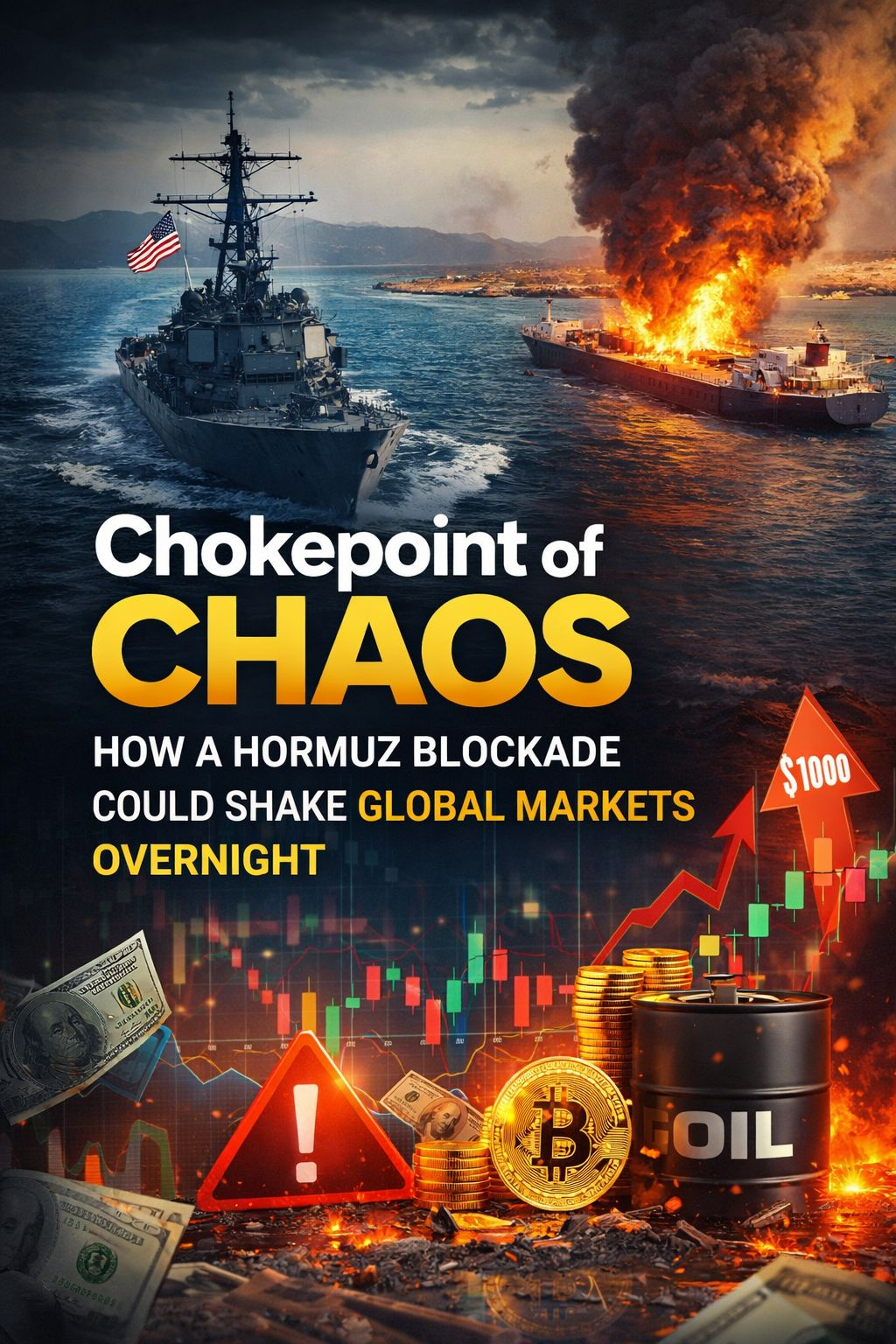
Because the Strait of Hormuz isn’t just another shipping lane—it’s the artery of the global economy. Nearly 20% of the world’s oil supply flows through this narrow passage, making it one of the most critical chokepoints on Earth. When that artery is threatened, the entire system feels it instantly. And that’s exactly what we’re seeing now: not just a geopolitical conflict, but a financial shockwave forming in real time.
The immediate impact is brutally simple—less oil, higher prices. The blockade aims to restrict millions of barrels of Iranian oil from reaching global markets, tightening supply overnight. And markets hate scarcity. Oil jumping above $100 isn’t just a number—it’s a trigger. It feeds into transportation costs, manufacturing, energy bills, and eventually inflation across economies. Countries like India, China, and Japan—heavily dependent on Gulf oil—are now staring at rising costs and potential supply disruptions.
The Times of India
But the real danger isn’t just oil—it’s confidence. Financial markets run on expectations, and this kind of escalation destroys predictability. We’re already seeing stock markets slide across Asia and Europe, while sectors like airlines are getting hit hard due to rising fuel costs. At the same time, oil companies are rallying, showing how capital instantly rotates toward crisis beneficiaries. This is how markets behave under stress—money doesn’t disappear, it moves fast and aggressively.
Then comes the second layer of impact—the global economic slowdown. Research suggests that a disruption of this scale could reduce global GDP growth significantly while pushing oil prices even higher depending on how long the blockade lasts. And here’s the scary part: even the expectation of prolonged disruption can cause economic contraction. In other words, markets don’t need a full shutdown—they react to the fear of it happening.
Federal Reserve Bank of Dallas
And it doesn’t stop at energy. Supply chains begin to fracture almost immediately. Shipping routes become riskier, insurance costs spike, and key exports like fertilizers and food supplies face bottlenecks. What starts as an oil crisis quickly spreads into agriculture, manufacturing, and everyday consumer goods. This is how localized geopolitical tension turns into global economic pressure.
Kpler
Now zoom out, and the picture gets even more complex. Major global powers are already reacting. China has warned that the blockade threatens global stability and energy security, while European leaders are pushing for emergency coordination to restore safe navigation. This isn’t just a regional issue anymore—it’s a global power chess game, where every move carries economic consequences.
And somewhere in all of this chaos, new narratives begin to form. Historically, moments like this reshape financial behavior. Investors start looking for hedges—gold, commodities, and increasingly, crypto. When traditional systems feel unstable, alternative systems gain attention. It’s not guaranteed, but it’s a pattern we’ve seen before: crisis accelerates financial evolution.
The deeper truth is this—Hormuz isn’t just about oil. It’s about control over global flow—of energy, trade, and ultimately, money. When that flow is disrupted, everything downstream reacts. Inflation rises, growth slows, and markets become fragile. And the longer the disruption lasts, the harder it becomes to reverse the damage.
Right now, the world is standing at a tipping point. If this blockade turns into a prolonged standoff, we could be looking at one of the most significant economic shocks since the early 2000s. But if it de-escalates quickly, markets may recover just as fast as they fell.
That’s the nature of modern markets—they don’t move slowly anymore.
They react overnight.#USMilitaryToBlockadeStraitOfHormuz #Write2Earn!