

I used to think the gas problem in crypto was just one of those small annoyances you learn to live with. Like a pop-up you keep closing. But after watching how people actually use onchain apps, I’ve started to see it differently.
Gas isn’t just friction. It’s a breaking point.
Everything can be working perfectly — clean UI, fast chain, smooth onboarding — and then one tiny thing goes wrong: the fee balance runs out. Suddenly the user isn’t “slightly inconvenienced.” They’re stuck. Flow is gone. Confidence drops.
That’s the context where Fogo’s approach starts to make more sense.
They’re not trying to make gas free. They’re trying to make it not your problem anymore.
The small mental burden nobody talks about
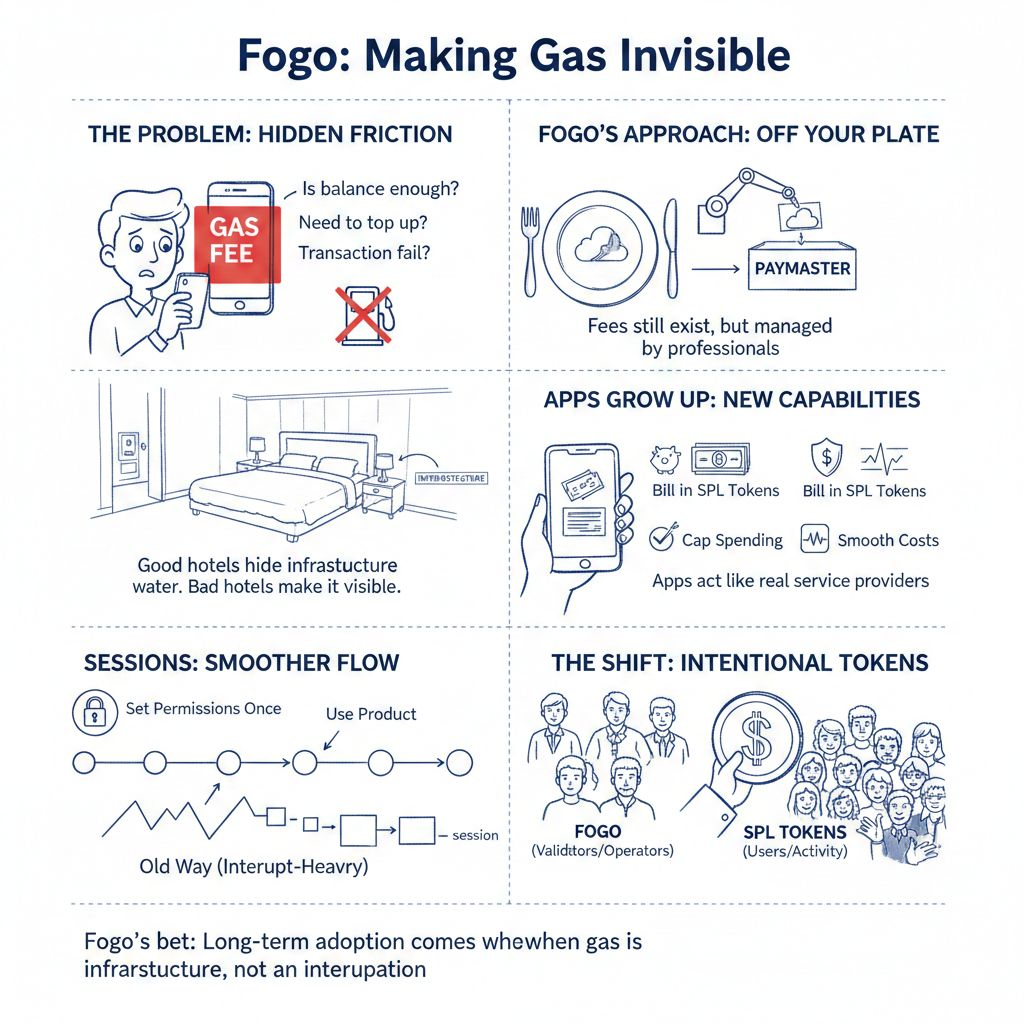
Holding a separate gas token sounds harmless on paper. In reality, it creates a constant background worry:
Is my balance enough?
Do I need to top up?
Will this transaction fail?
Most experienced users don’t even notice this stress anymore. They’ve normalized it. But new users feel it immediately. And many simply leave.
Fogo’s push toward paying fees in SPL tokens — combined with session flows and paymasters — reads like an acknowledgment of something simple but important:
Users don’t wake up wanting to manage plumbing. They just want the product to work.
A more grounded way to think about it
The best analogy I can think of isn’t “Web2 vs Web3.” It’s hotels.
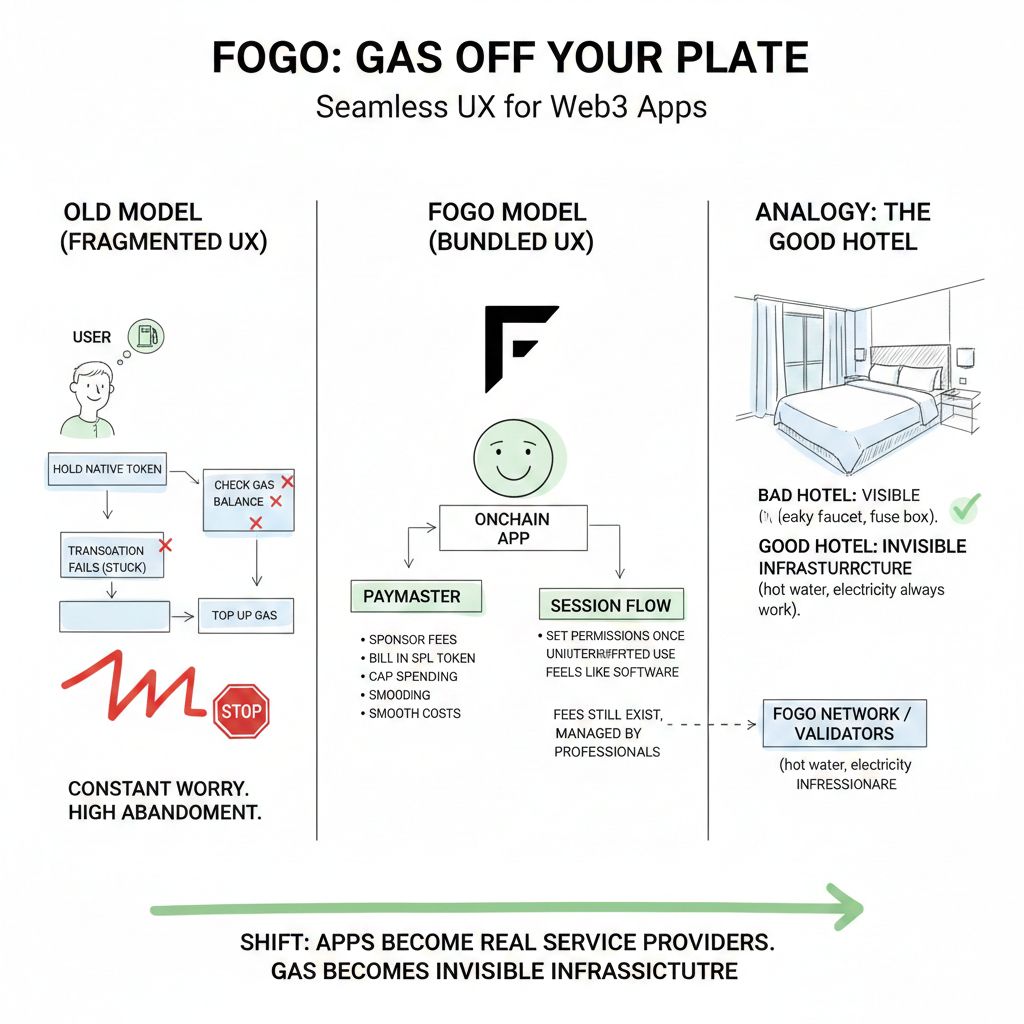
When you stay at a good hotel, you don’t think about electricity, water pressure, or maintenance schedules. Those costs absolutely exist — and they’re carefully managed — but they’re bundled into the experience in a way that feels smooth and predictable.
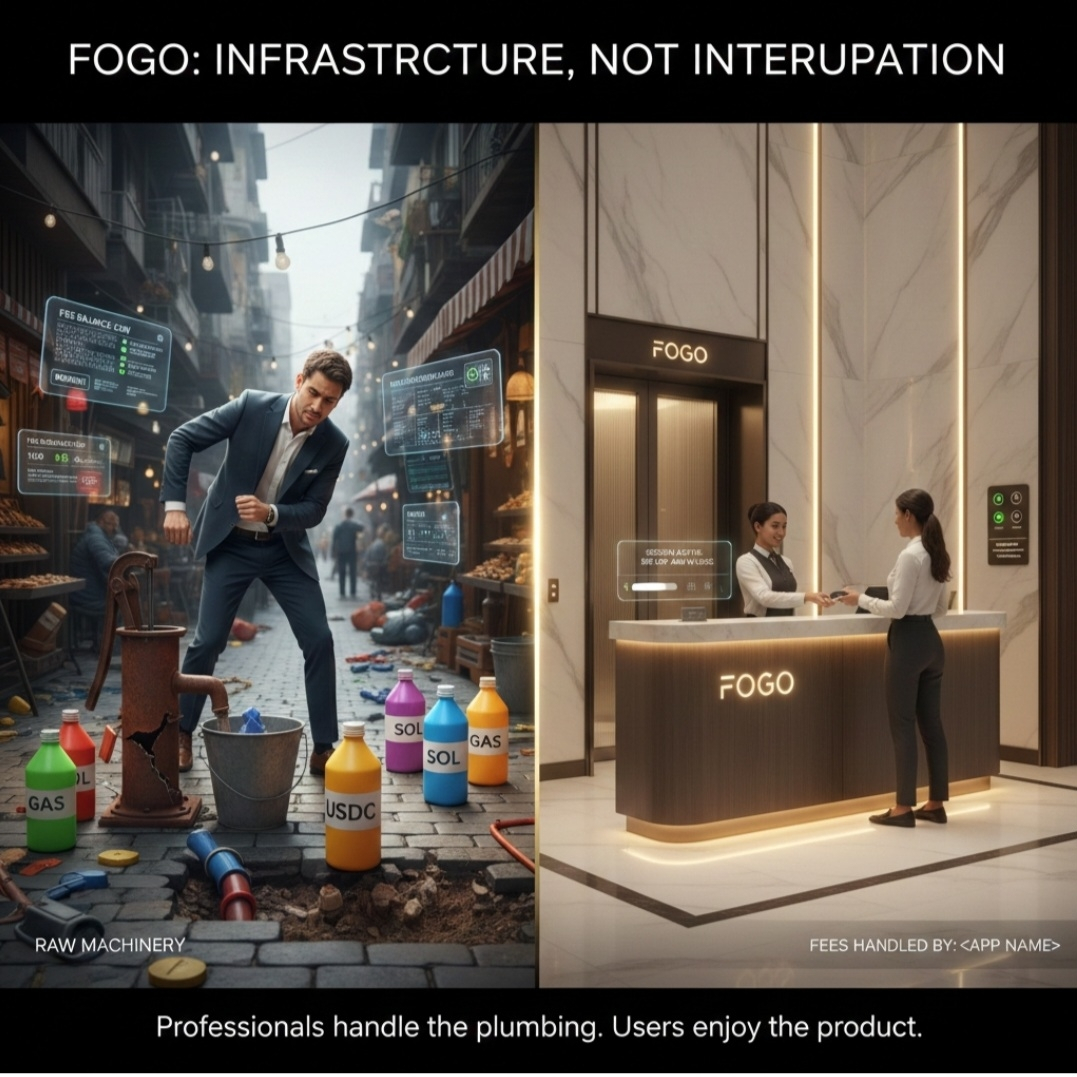
Bad hotels make the infrastructure visible. Good ones make it disappear.
Fogo seems to be aiming for the second model.
Fees still exist. The network still gets paid. But the messy part — converting assets, managing balances, keeping transactions flowing — shifts upward into paymasters and applications that are actually equipped to handle it.
The real shift: apps start acting like grown-ups
In the older model, the chain effectively says to every user:
> “Hold our token first. Then you can use the product.”
Fogo’s direction changes the tone. With paymasters in the loop:
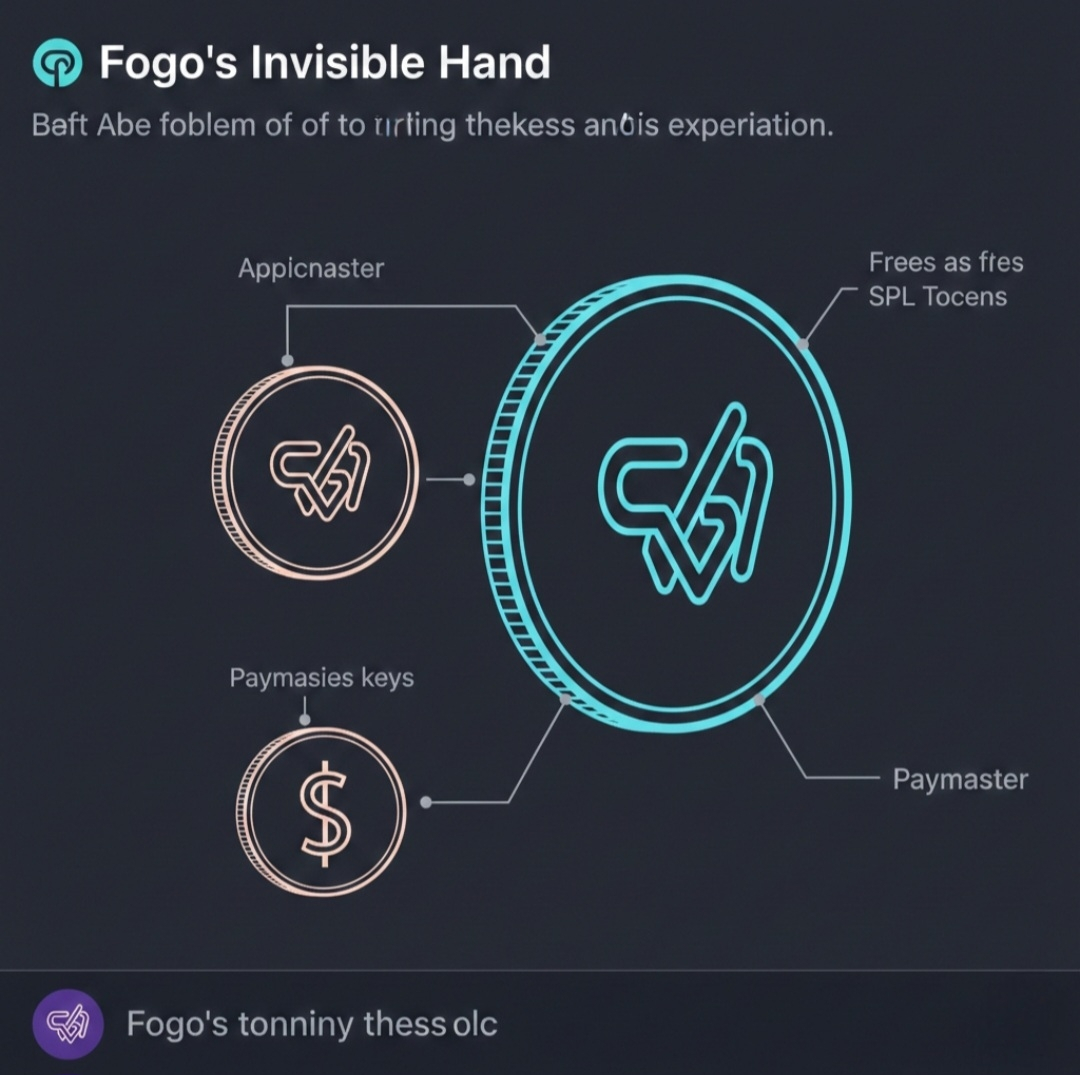
The application can sponsor fees for new users
It can bill you back in a token you already hold
It can cap spending during a session
It can smooth costs in stablecoin terms
In other words, the app starts behaving like a real service provider, not just a frontend glued onto a protocol.
That’s a subtle but meaningful evolution.
Why sessions matter more than people think
Crypto UX has historically been very interrupt-heavy. Click. Sign. Confirm. Check balance. Repeat.
Over time, people started treating this as a feature. But a lot of it is just inherited friction.
Session-based flows are trying to change the rhythm. You set permissions once — what the app can do, how much it can spend, when access expires — and then you move through the product without constant stop-and-go moments.
It feels less like operating machinery and more like using software.
That difference is psychological as much as technical.
The token story becomes more honest
There’s also an economic angle that doesn’t get enough attention.
When every user is forced to hold the native gas token, you create a lot of reluctant holders. People who own it only because they must. That kind of demand is thin — it disappears quickly when alternatives appear.
If Fogo succeeds in pushing everyday activity into SPL tokens while leaving native FOGO primarily in the hands of validators, paymasters, and serious operators, the ownership base could become more intentional.
Not necessarily bigger. But clearer.
And clarity in token roles tends to matter more over time than forced usage.
Of course, the complexity doesn’t vanish
It would be naive to pretend this model is friction-free.
Paymasters must stay competitive or they risk becoming quiet bottlenecks
Multi-token fee acceptance introduces pricing and liquidity challenges
Sponsored flows always create some abuse surface
But there’s a key difference: the complexity moves into a professional layer that is actually incentivized to manage it well.
Personally, I’d rather see sophisticated operators compete to handle this burden than have every user carry a small, constant failure risk in their pocket.
Why this moment feels important
What Fogo is signaling — intentionally or not — is a shift in mindset.
The goal isn’t to make users more tolerant of blockchain mechanics.
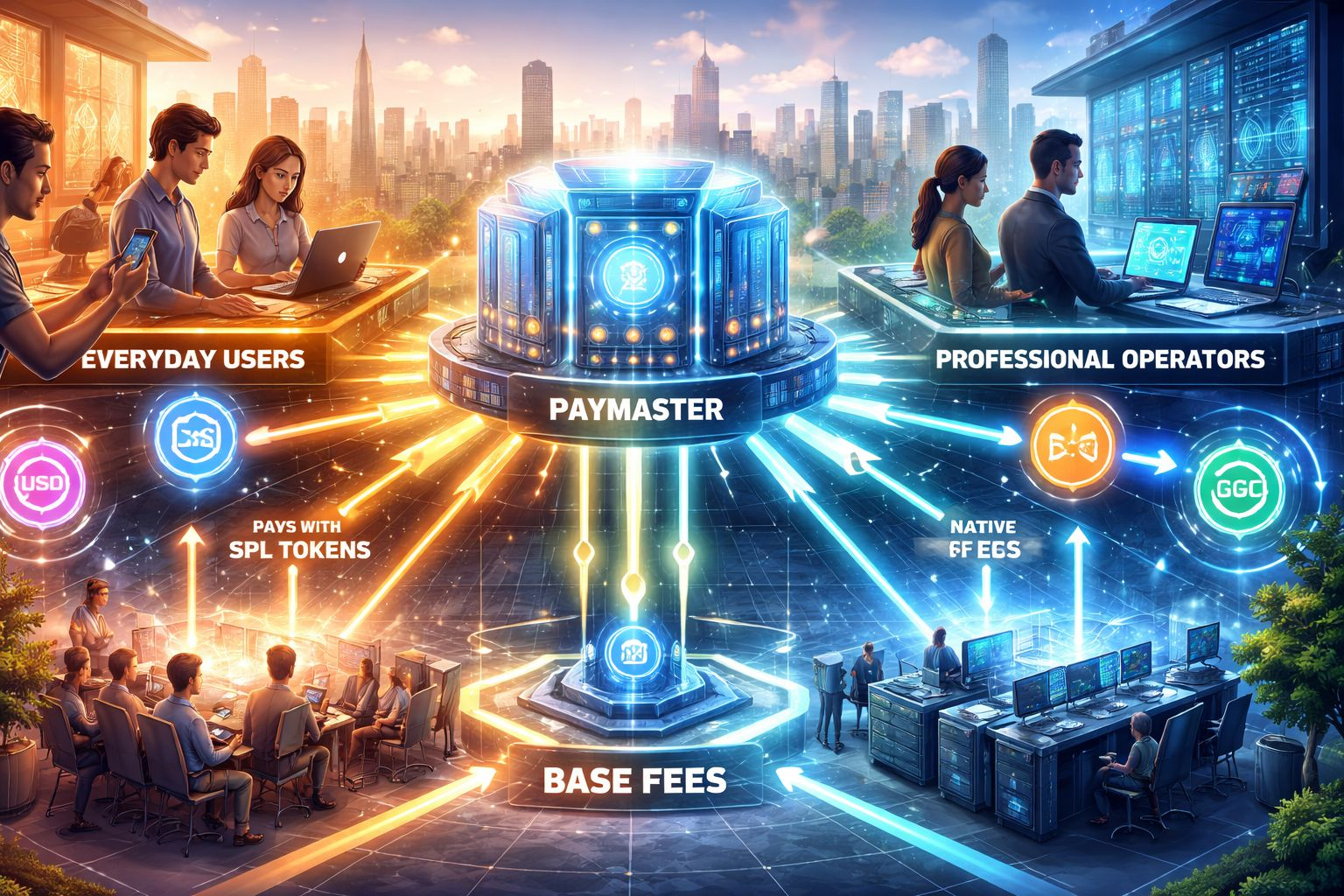
The goal is to design the system so most users don’t have to think about those mechanics at all.
If they execute well, the biggest win won’t be lower fees or faster numbers. It will be something quieter: using the chain will simply stop feeling fragile.
Takeaway: Fogo’s real bet is that long-term adoption comes when gas stops interrupting users and becomes infrastructure that professionals handle behind the scenes.
