Fogo’s Latency Trade: How Zoned Consensus and SVM Execution Aim to Make On-Chain Markets Feel
When I look at Fogo, the first thing I notice is how little it tries to win the usual crypto arguments. It isn’t leaning on vague promises or broad “ecosystem” talk. It’s narrowly focused on one uncomfortable question: why do blockchains feel unreliable the exact moment you need them to behave like a venue? Not “why are they slow on average,” but why execution becomes messy under pressure why confirmation timing stretches, why ordering gets contentious, why the system starts behaving like it’s negotiating with itself instead of settling.
The project’s own framing is blunt: the bottleneck isn’t just compute, it’s coordination across distance and across uneven machines, and the worst performers set the tempo for everyone else. Once you accept that, you stop pretending global participation can also mean tight timing on the critical path. That’s the fork in the road. Most chains choose to live with it and call it decentralization. Fogo chooses to design around it, even if the design is a little politically unfashionable.
The validator zone model is where you can feel the intent. The idea that only one zone participates in consensus during an epoch—and the rest stay synced but don’t propose blocks or vote sounds like a simple scheduling move until you sit with what it does to the system. It’s a way of shrinking the quorum that has to move in lockstep, which is the only real lever you have if you want to reduce latency without lying about physics. It’s basically saying: we can’t make the planet smaller, but we can make the fastest part of consensus depend on a smaller geographic footprint at any given time, and then rotate that footprint over time so the same region doesn’t hold the wheel forever.
That rotation idea matters because it’s the project trying to avoid the obvious failure mode of “fast because it’s permanently concentrated.” If zones rotate by epoch or by time-of-day, the chain is admitting that geographic distribution is still a goal but it’s treating it as something you do across time, not something you demand inside every single block. Whether you like that depends on your worldview, but at least it’s honest about what performance costs.
Then there’s the part most chains dance around: performance enforcement. Fogo doesn’t sound like it wants an environment where ten different clients limp along at different speeds and the network politely tolerates them. It reads more like a venue mindset: you don’t let weak infrastructure degrade everyone’s execution. The docs push a canonical high-performance client path Firedancer as the destination, Frankendancer as the bridge and they’re very explicit about architectural choices that reduce jitter, like splitting work into pipeline “tiles” pinned to cores. That’s not the kind of thing you highlight if you’re chasing narrative points. You do that because you care about predictability and you’re trying to control variance, not just improve averages.
There’s a real trade in that choice, and I don’t think it’s something you can wave away with ideology. A single dominant client reduces variance and helps performance, but it increases systemic risk. If a widely deployed implementation has a bad bug, the blast radius is bigger. So the bet becomes: can operational rigor and engineering maturity substitute for client diversity? Some ecosystems answer “no” by default. Fogo is answering “yes,” because its whole thesis collapses if it allows slow or inconsistent validators to remain on the critical path.
That leads into the curated validator set concept, which is where things get sensitive. Fogo’s position is basically that a small group of underperforming validators can sabotage network performance, so participation needs standards. In a market context, this isn’t weird at all. Venues impose membership requirements because execution quality is the product. In crypto culture, it’s controversial because people want permissionless participation to be the point. Fogo is saying permissionless participation is not the point if your target is real-time financial behavior.
But this is also where governance becomes a risk surface. Once you curate validators, you introduce a potential capture vector. It can drift into politics, favoritism, or informal cartel behavior if the rules aren’t clear and consistently applied. The only way it works long-term is if the criteria for inclusion and removal are transparent, the enforcement process is predictable, and the project is willing to tolerate some short-term discomfort rather than bending standards for convenience. Markets don’t forgive “rules that change when it matters.” They price that as uncertainty.
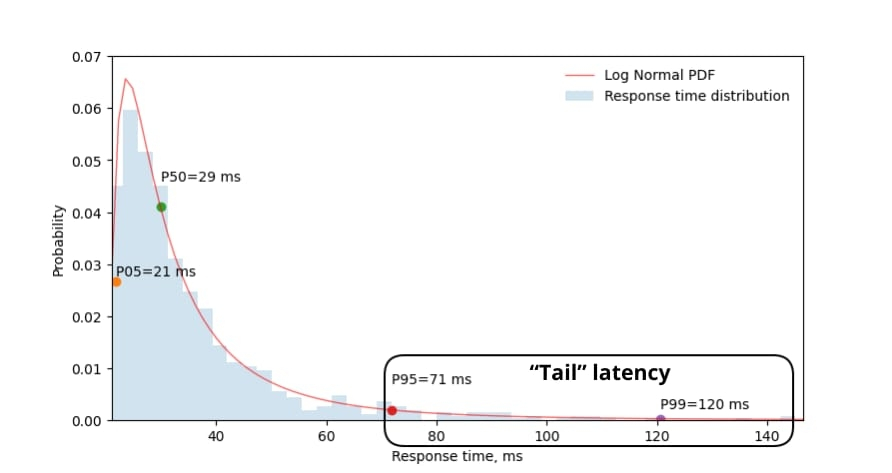
The “real-time” narrative around Fogo things like very short block times gets attention, but I think the more interesting part is what the system is actually optimizing for. In practice, the thing that kills on-chain trading experiences isn’t that blocks are 400ms instead of 40ms. It’s that the user can’t trust how the chain behaves during stress. In capital markets terms, reliability is a distribution problem. You don’t get credit for being fast when nothing is happening. You get credit for staying stable when everyone is trying to do something at once. That’s why Fogo keeps circling back to tail latency and variance. It’s not chasing a trophy; it’s trying to compress uncertainty.
That same lens makes Fogo Sessions more than a “UX feature.” Sessions is the project trying to remove the constant friction of repeated signing and fee management, using scoped permissions and paymasters to make interaction feel smoother. This is practical. People who trade or manage positions don’t want a ritual per click. They want a controlled permission model and a flow that doesn’t collapse into pop-ups. But Sessions also introduces dependencies: paymasters are centralized today and their economics are still evolving. That means the smoothest path through the chain may be mediated by actors with policies, risk limits, and business incentives. That’s not automatically bad traditional finance is full of intermediated rails but it is a real part of the system’s trust model, and it should be treated that way.
On token structure, what stands out to me is that Fogo has been specific about allocations, unlock schedules, and the fact that some community distribution is fully unlocked at genesis. That kind of structure can create immediate selling pressure, but it also reduces the “fake float” problem where price discovery is happening on a tiny circulation while huge overhang sits locked behind the curtain. If you want serious participants to treat the asset like an instrument rather than a story, you usually have to accept the discomfort of real float and real price action early. It’s not pretty, but it’s cleaner.
So when I put all of this together, I don’t see Fogo trying to be everything to everyone. I see it trying to be a specific kind of chain: one that behaves more like infrastructure for time-sensitive execution, and less like a general-purpose experiment where unpredictability is excused as a side effect of openness. The model is coherent: localize the quorum for speed, rotate it over time for broader distribution, standardize the client path to reduce jitter, curate validators to protect performance, then smooth user interaction with Sessions so apps can behave more like products instead of rituals.
The risk is that coherence can also mean fragility if one piece doesn’t mature fast enough. Zone rotation adds operational complexity. Single-client dominance increases systemic exposure. Validator curation becomes a governance pressure point. Paymasters introduce a dependency layer. None of these are fatal on their own, but they’re the places where this design either proves itself or gets exposed.
If you want a simple way to judge whether the thesis is working, I wouldn’t start with marketing metrics. I’d watch behavior under volatility. Does confirmation remain steady when it’s noisy? Do applications that care about execution quality choose to build there because users can feel the difference? Does governance stay consistent when enforcement is unpopular? Do the “smooth rails” around Sessions become more open and competitive over time, or do they concentrate into a small set of gatekeepers? Those are the questions that determine whether Fogo becomes a real settlement venue people rely on, or just another fast chain that looked good until the day it had to handle pressure.