

Most Layer 1 tokens only really make money when the network is crowded. Fees spike. Users complain. Revenue goes up. That is a strange business model. It rewards friction.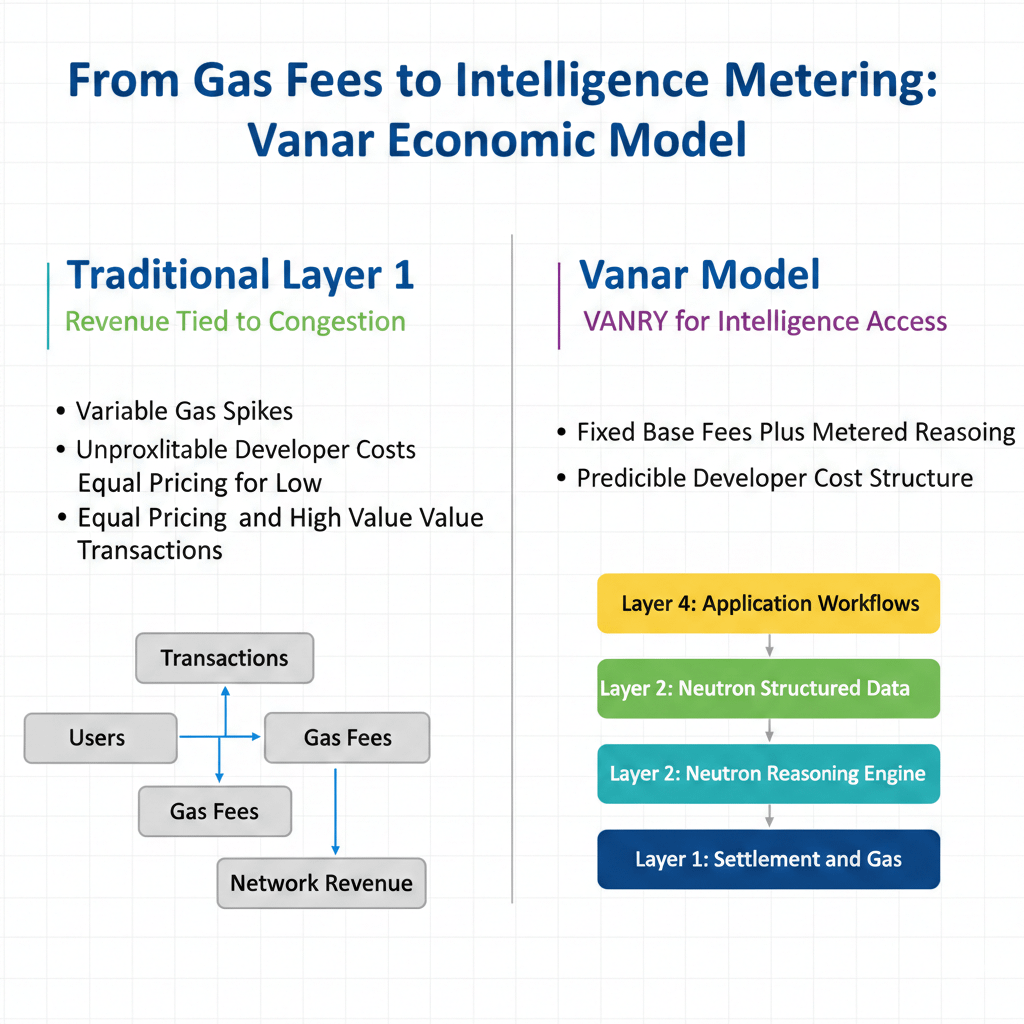
Vanar seems to be moving in a different direction. Instead of depending only on gas fees and blockspace demand, it is building around something more concrete. Charging for intelligence itself. Not just sending transactions, but using memory, verification, structured reasoning. That starts to look more like how cloud platforms charge for API calls or advanced services.
Gas still exists. You still pay to move things around. But the deeper layer is where it gets interesting. The idea is that VANRY is not just for transactions. It is for accessing intelligence features built into the chain.
Gas has always been a weak signal of real value. A serious compliance check and a meaningless spam transaction can cost the same. On many networks, revenue only rises when activity becomes chaotic. That ties income to instability.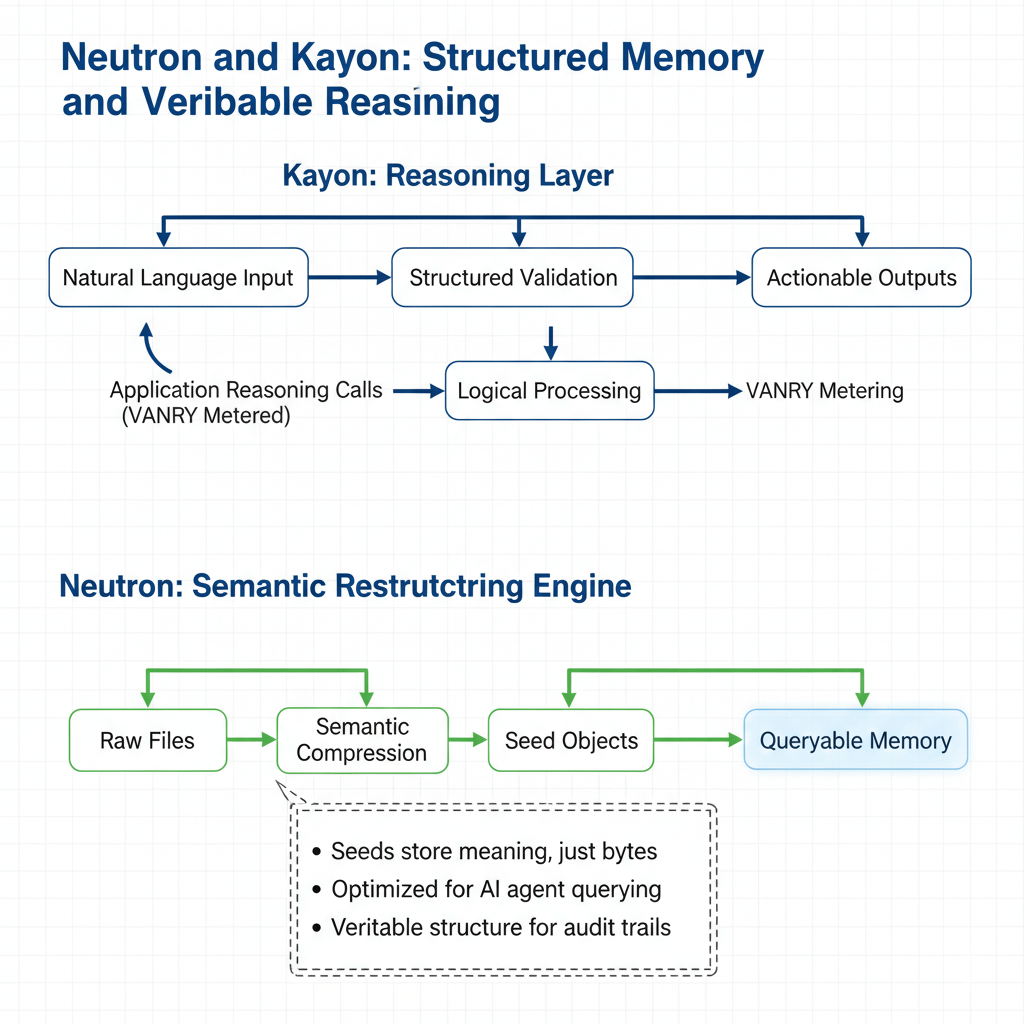
Vanar’s fixed fee approach tries to solve part of that. Developers can predict base costs. That matters if you are building something long term. But the bigger question is this. How does the token capture value when everything is running smoothly?
The answer they are working toward is clear. Gas handles movement. VANRY handles thinking.
Neutron restructures data into what they call Seeds. Instead of storing massive files that just sit there, it compresses meaning into structured objects that agents can query and verify. Data becomes usable, not just stored.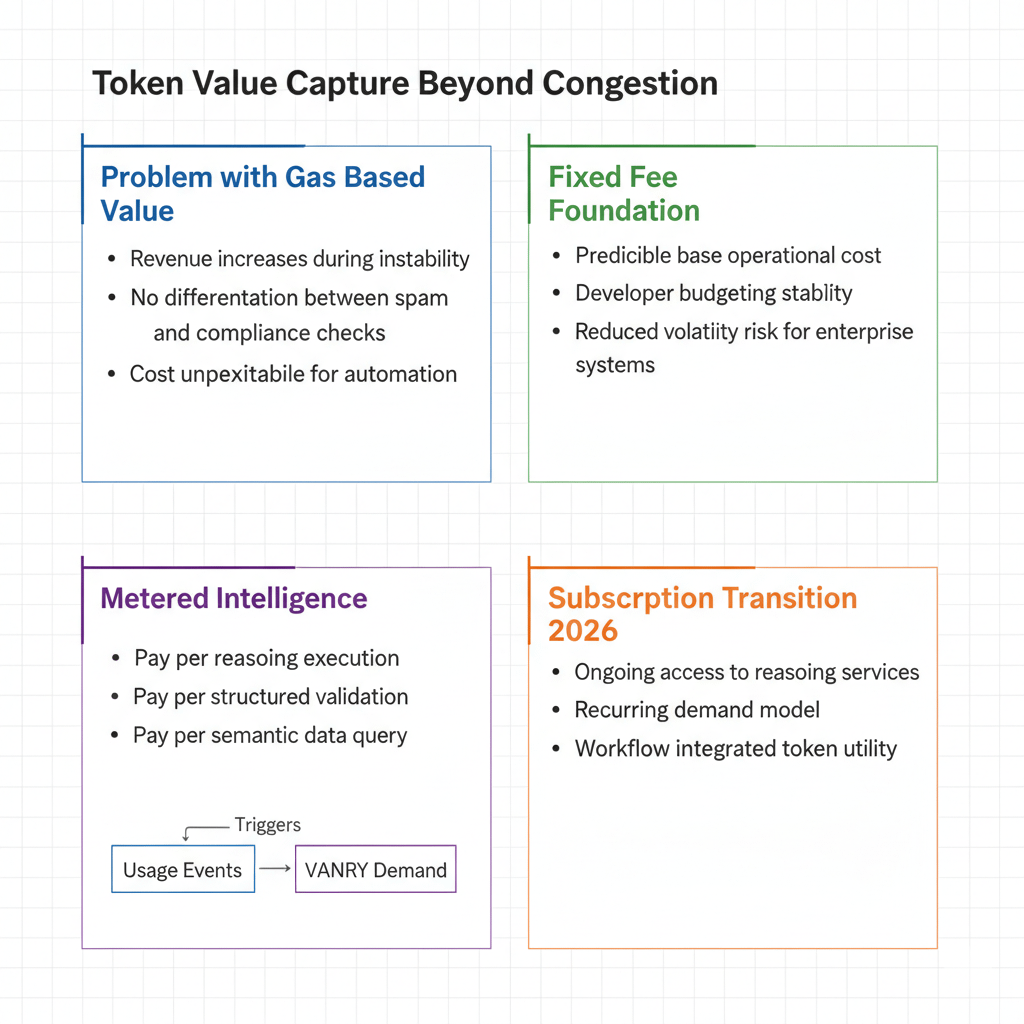
Then Kayon sits on top as a reasoning layer. It processes natural language, validates structured data, and produces outputs that applications can act on. When you use these higher level functions, you pay for them. That is the metering part.
There is also a planned shift toward subscription style pricing in VANRY around 2026. That matters. It moves the token away from being just a volatile utility asset and closer to being a payment rail for ongoing services.
Most people obsess over TVL. But TVL is just capital parked somewhere. It does not guarantee recurring demand. A subscription or usage based model creates a different dynamic. If a company relies on the reasoning layer for compliance checks or document processing, they keep paying because the workflow depends on it. Market cycles do not shut that off.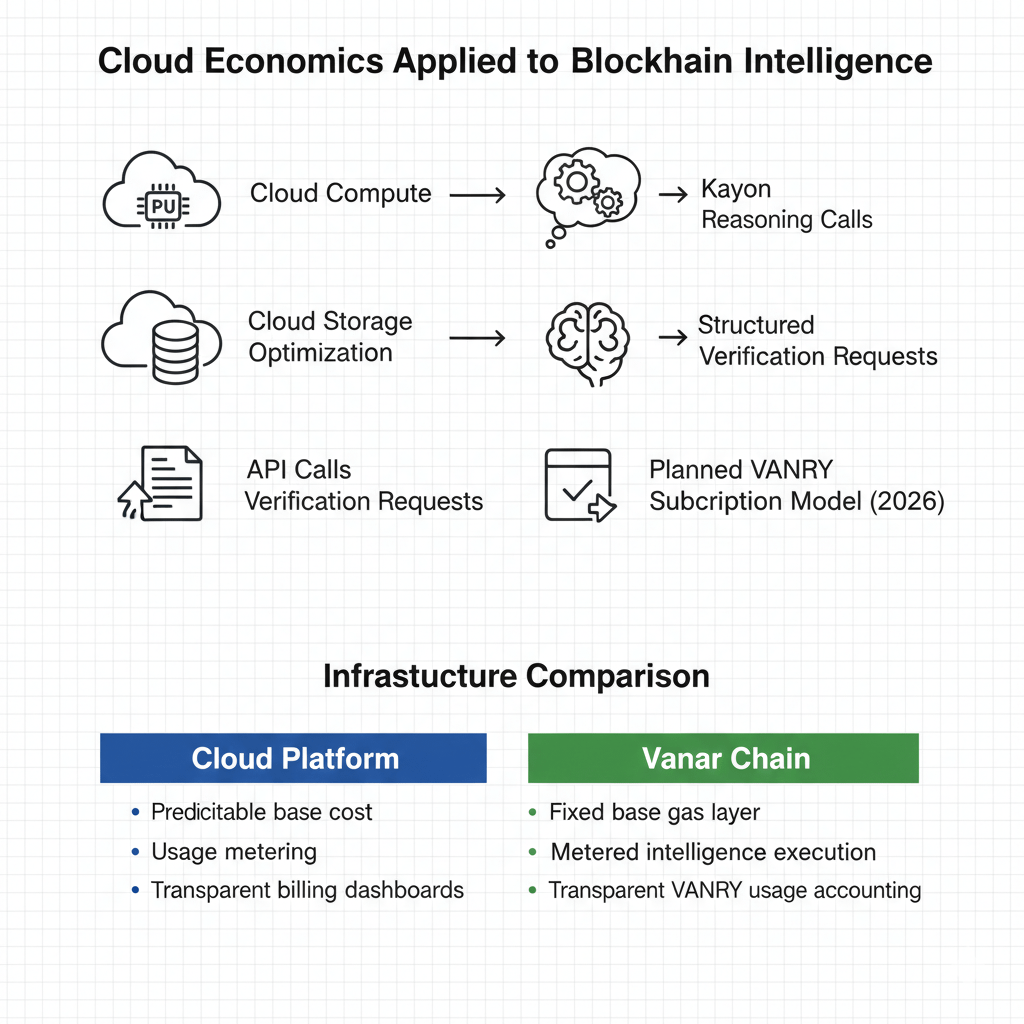
Predictability is the real moat here. AI agents and automated systems need stable cost structures. You cannot run large scale automation if fees swing wildly. Fixed base costs plus metered intelligence creates something closer to cloud economics. You know what basic operations cost. You know what advanced reasoning costs.
Of course, this only works if metering is transparent. Developers need to see exactly what they used and what they paid. If billing feels vague, trust disappears fast.
At its core, the thesis is straightforward. Vanar does not want VANRY to live only as a speculative chip. It wants it to function like a usage key. You access structured proof. You access reasoning. You pay for what you consume.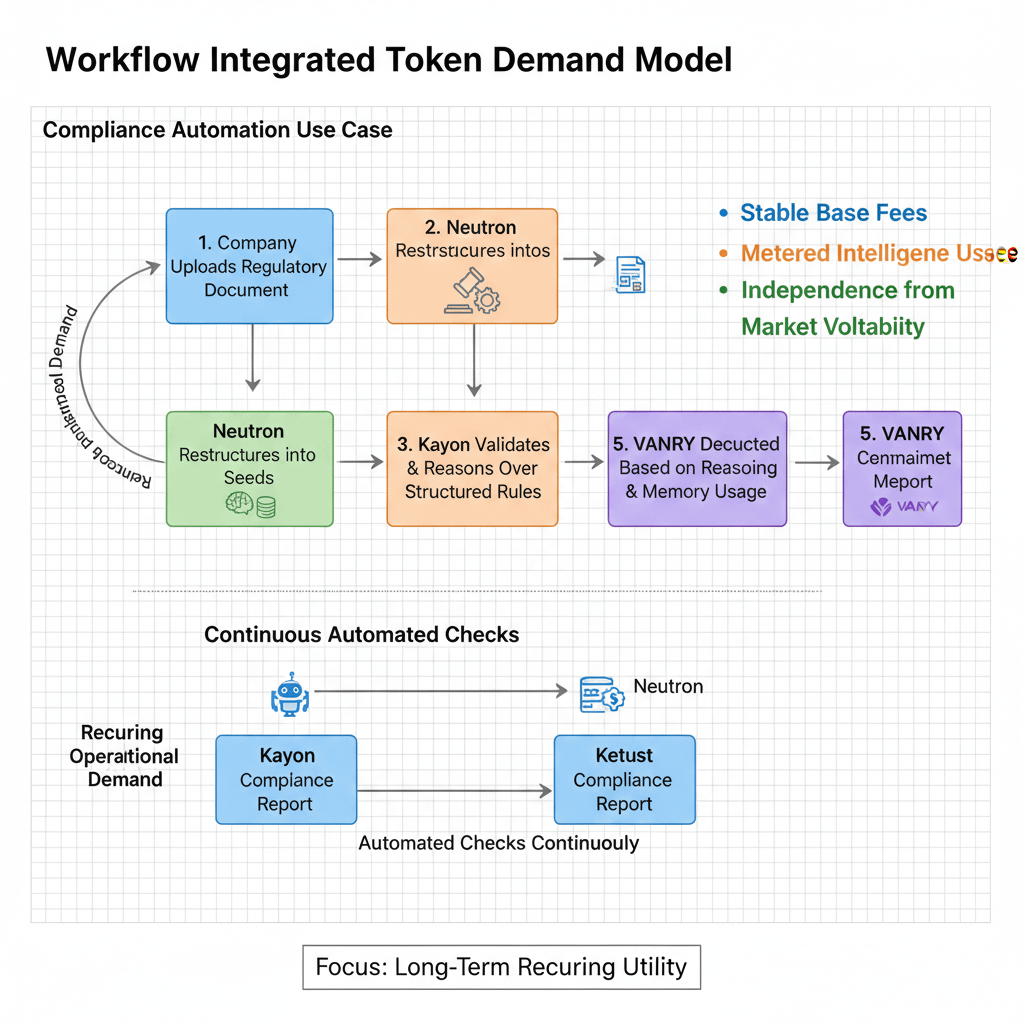
If that model works, growth comes from habit and workflow integration, not from congestion or hype spikes.
