@Fogo Official , I was reviewing a validator dashboard one evening when it hit me that speed is the easy part. Rules are the hard part. You can optimize block times in weeks. You cannot negotiate with regulators that quickly.
Trying to scale a blockchain without thinking about compliance feels like opening a restaurant without checking local health codes. You might get customers on day one. On day thirty, someone shows up with a clipboard.
That is roughly where high-performance Layer 1 networks sit right now. Fogo included.
Fogo’s pitch has always been about performance. Fast confirmations. Structured throughput. Execution logic that feels closer to traditional exchanges than to slower settlement chains. In simple terms, it is built for systems where milliseconds matter. Order books. Real-time trading. On-chain activity that behaves more like financial markets than like static token transfers.
 $
$
And that design choice quietly pulls it into regulatory gravity.
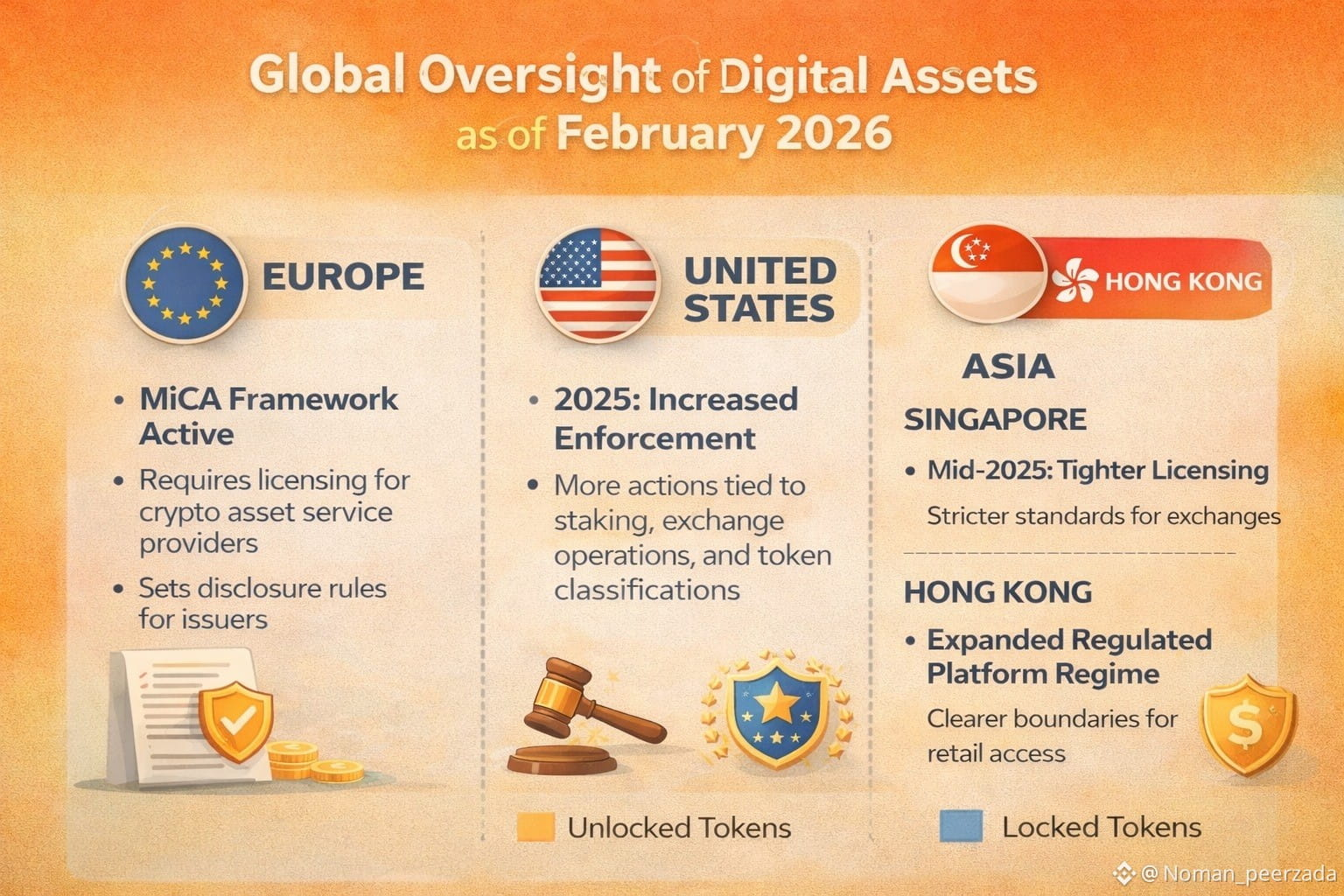
As of February 2026, global oversight around digital assets is no longer vague. Europe’s MiCA framework is active across the EU, requiring licensing for crypto asset service providers and setting disclosure rules for issuers. In the United States, 2025 saw a measurable increase in enforcement actions tied to staking, exchange operations, and token classifications. Asia has taken a split path. Singapore tightened its licensing standards in mid-2025, while Hong Kong expanded its regulated virtual asset platform regime with clearer boundaries for retail access.
Fogo is not an exchange. It does not custody funds. It does not directly list assets. It is infrastructure. That distinction matters legally.
But infrastructure that looks like a trading engine draws different attention than infrastructure that simply stores digital art.
When I first explored Fogo’s early documentation in 2024, most of the energy was technical. Performance metrics dominated. Latency numbers. Compatibility layers. There was less public conversation about regulatory alignment. Not because it was ignored, I suspect, but because the market was still obsessed with raw speed.
By late 2025, that tone had shifted.
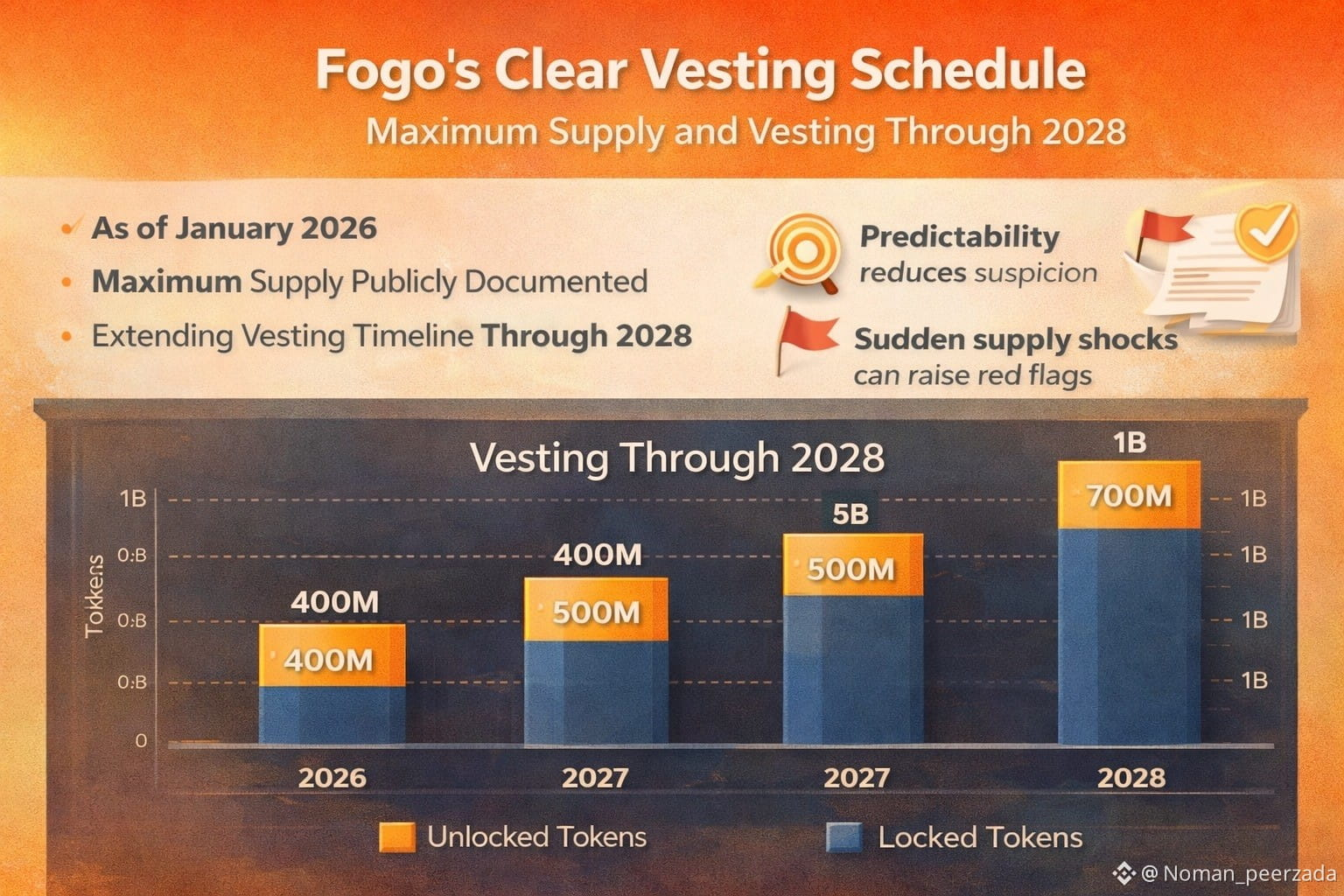
Tokenomics disclosures became more explicit. Vesting schedules were published in clearer formats. As of January 2026, Fogo’s maximum supply and multi-year vesting timeline extending through 2028 are publicly documented. That matters because regulators and institutional analysts look closely at insider allocations and unlock structures. Sudden supply shocks can raise red flags. Predictability reduces suspicion.
Validator distribution is another quiet indicator. As of February 2026, Fogo reports over 120 active validators across different geographic regions. That number is modest compared to older chains with several hundred or thousands of nodes. But context is important. For a network less than two years old, crossing the 100-validator threshold signals movement toward decentralization rather than concentration.
Decentralization is not just philosophical. It is regulatory texture. A widely distributed validator set strengthens the argument that a network operates as neutral infrastructure rather than as a coordinated enterprise controlled by a central party.
Still, decentralization is not binary. It evolves. If governance tokens remain concentrated, or if core development remains tightly controlled, regulators could interpret influence differently. That question remains open.
Liquidity adds another layer.
In late 2025, Fogo expanded listings across multiple centralized exchanges operating in distinct jurisdictions. Exchange compliance teams conduct due diligence before listing new assets. This does not equal regulatory approval, but it indicates a baseline level of risk assessment. When several venues across regions accept an asset, it suggests the project has cleared internal legal reviews.
Yet the more exchange-like Fogo’s ecosystem becomes, the more regulators may examine what is built on top of it.
If a decentralized application uses Fogo to run perpetual futures trading accessible to retail users in Europe, licensing obligations fall on the application. That is the current model. The base layer remains neutral. But neutrality is not immune from scrutiny if application-level activity consistently pushes regulatory boundaries.
There is also the stablecoin dimension.
As of early 2026, stablecoin regulation is tightening globally. European issuers must meet reserve transparency requirements under MiCA. In the US, federal legislation discussions around reserve backing and redemption rights intensified throughout 2025. If Fogo’s ecosystem liquidity depends heavily on specific dollar-backed tokens, any regulatory shock affecting those issuers could impact network activity indirectly.
This is not theoretical. We have seen liquidity shifts across chains when stablecoin policies changed. It happens quietly at first. Then suddenly volumes migrate.
Why is this topic trending now? Because infrastructure projects are being evaluated on durability rather than hype.
The 2021–2023 cycle rewarded growth and narrative. The 2024–2025 period introduced enforcement and recalibration. As of February 2026, early signs suggest the market is prioritizing networks that can operate within structured legal environments without losing performance advantages.
Fogo’s architecture gives it an interesting position. Its exchange-style logic and real-time design align well with tokenized financial instruments. Tokenized treasury products and regulated digital bonds have expanded across several jurisdictions since mid-2025. These instruments require predictable settlement layers. Low latency helps. Transparent governance helps more.
If this trend holds, high-performance chains that can demonstrate operational transparency and decentralized validator growth may become preferred settlement layers for compliant digital finance.
But uncertainty remains.
Regulatory interpretations continue evolving. A shift in US securities classification standards could ripple globally. A major enforcement action against a large application built on Fogo could draw attention to the base layer. Governance concentration could become a discussion point if validator growth stalls.
None of this invalidates the progress.
It just frames the environment honestly.
From my perspective, what stands out is not loud compliance marketing. It is the steady alignment underneath. Clear documentation. Published supply data. Growing validator participation. Incremental exchange expansion rather than explosive speculation.
It feels earned rather than advertised.
That does not guarantee long-term safety. No blockchain has that guarantee. But in a year where regulatory structure matters more than marketing speed, that steady approach may be an advantage.
And that is the part I keep watching. Not the transaction per second count. The way the foundation is being shaped while everyone else is still chasing surface metrics.#fogo $FOGO