The precious metals complex has delivered a stark lesson in market dynamics this January, as gold successfully defended a historic psychological barrier while silver capitulated in dramatic fashion.
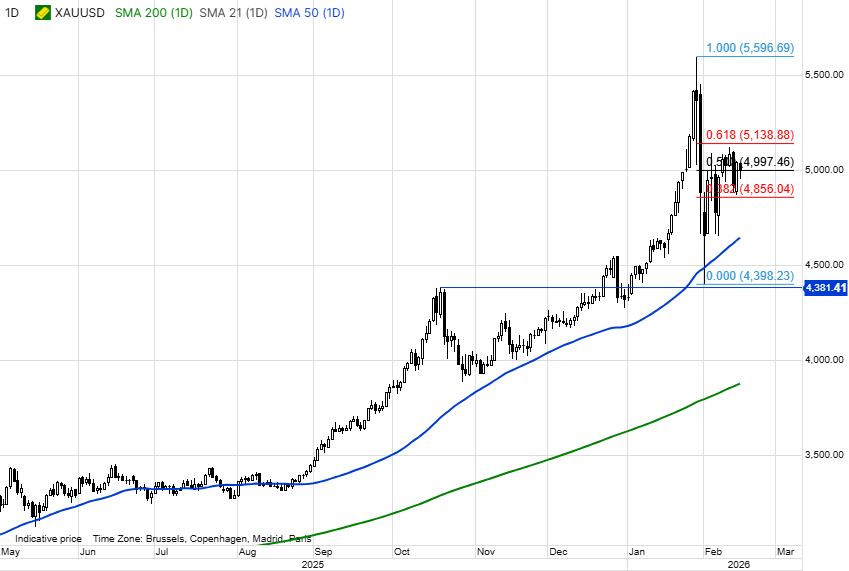
Gold's breach and subsequent defense of the $5,000 per ounce level represents a watershed moment. Following the most severe single-session selloff in over a decade, the yellow metal demonstrated remarkable resilience, reclaiming this threshold within days. This recovery underscores a fundamental shift in market composition that separates gold from its industrial counterpart.
The distinguishing factor lies in the buyer base. Throughout January's volatility, gold benefited from persistent, price-insensitive institutional accumulation. Central banks, particularly the People's Bank of China which has now recorded fifteen consecutive months of purchases, continue treating gold as a strategic reserve asset rather than a speculative instrument. This sovereign buying removes substantial physical supply from circulating markets, effectively creating structural support that dampens downside volatility.
Silver's trajectory tells a different story. The white metal's remarkable 2025 advance—approximately 140% from trough to peak—was built primarily on fragile foundations: leveraged futures positioning and algorithmic momentum strategies. When macroeconomic catalysts, specifically dollar strength following unexpected political developments, triggered position unwinding, silver's carefully constructed rally collapsed with startling speed. COMEX managed money net longs were reduced to levels not witnessed since early 2024.
The current gold-silver ratio near 61 might superficially suggest relative value in silver. However, this metric fails to capture the velocity of silver's recent descent from its $116 peak. Such parabolic advances rarely find immediate equilibrium, and the absence of institutional buying programs comparable to gold's leaves silver vulnerable to continued recalibration.
Major financial institutions reflect this divergence in their outlooks. Goldman Sachs projects gold reaching $5,400 by year-end, while Bank of America's $6,000 forecast suggests institutional confidence in continued sovereign demand. Silver analysts, conversely, offer projections characterized by wider confidence intervals and explicit references to industrial cyclicality.
This analysis does not dismiss silver's structural merits. Its industrial applications—dominating photovoltaic cell manufacturing and expanding into AI-driven electronics—provide compelling long-term demand fundamentals. However, for investors seeking resilience during periods of systemic volatility, gold's institutional backing provides a crucial differentiator that silver's predominantly speculative market structure cannot currently replicate.