
U.S. stock markets are now running significantly ahead of the underlying money supply, raising questions about sustainability. The gap between stock prices and M2 money supply has surged to 270 percent, marking the highest level ever recorded.
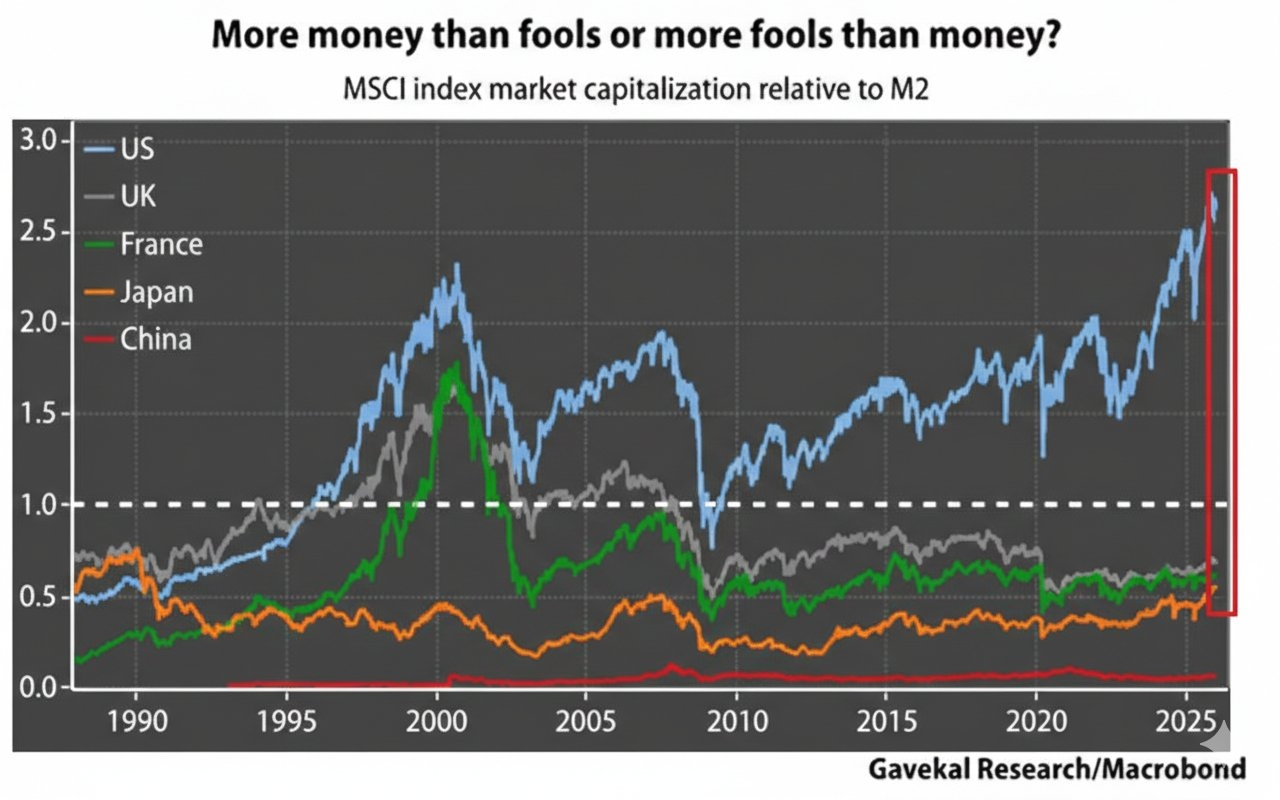
To put this in perspective, the gap has widened by 120 percentage points since 2022, sits 40 points above the peak seen during the Dot Com Bubble, and is 75 points higher than levels following the 2008 Financial Crisis. Even compared to 2025’s all-time high, the current gap is 20 points higher.
By contrast, other major economies are far behind. The UK, France, and Japan currently see gaps around 60 percent, highlighting that U.S. markets are uniquely stretched relative to their money supply.
Analysts suggest this indicates markets are priced for liquidity that does not yet exist. The trajectory poses a clear choice: either monetary expansion returns, or prices will eventually realign with reality. For investors, the warning is clear, the disconnect between stocks and actual liquidity could lead to sharp corrections if expectations fail to materialize.
