
I stopped caring about TPS (and started caring about fills)
This year, I’ve caught myself rolling my eyes every time a new chain shows up screaming “we do more TPS.” Because if I’m being honest, TPS alone has never saved me in the moments that actually matter — the moments where candles are violent, funding flips, liquidations cascade, and everyone is rushing to exit at the same time. In those minutes, the real question isn’t “can the chain process a lot?” It’s who gets the trade first, who gets re-ordered, and who gets punished by delay.
That’s why @Fogo Official pulled me in. Not because it’s another SVM chain, but because its whole design feels like it’s admitting a truth most people still avoid: latency is market structure. If messages arrive inconsistently, then execution becomes uneven. And uneven execution doesn’t create “efficiency”… it creates random winners — and random winners create toxic flow that drives real traders away.
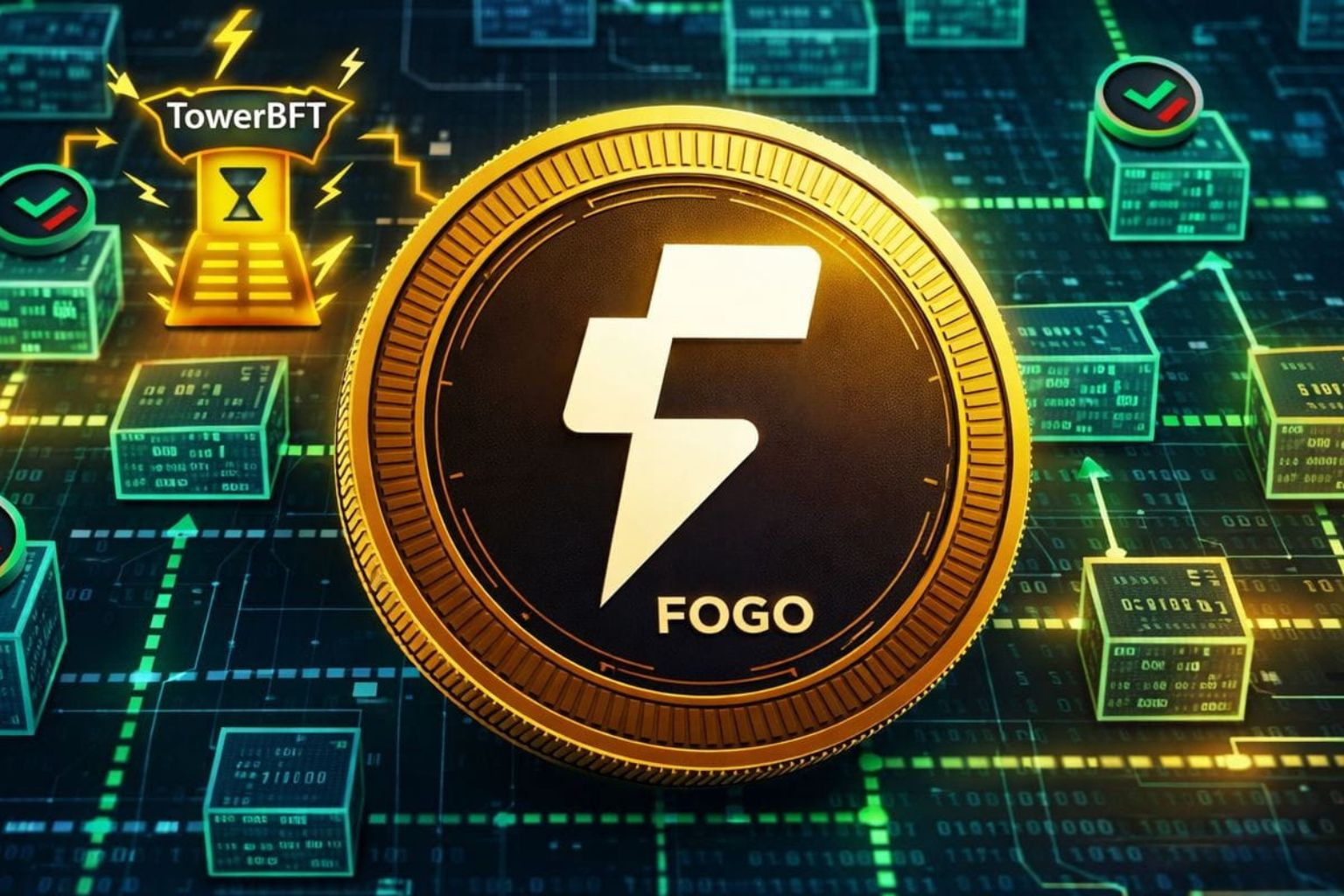
Why I think Fogo’s “geography-first” mindset is the real headline
When I dug into Fogo’s own architecture material, the framing felt unusually physical — almost un-crypto. It treats the network like what it really is: machines in places, connected by cables, limited by distance, congestion, and variance. The docs explicitly talk about multi-local consensus and validator zones where validators co-locate (ideally in the same data center) so validator-to-validator latency approaches hardware limits.
That “zones” concept is what made me pause.
Most chains talk like geography doesn’t exist. Fogo basically says: geography is the protocol. The idea is that you can keep latency low by having a quorum that’s not scattered across the planet every second — and then still preserve broader decentralization by rotating zones across epochs (with selection coordinated via governance/voting).
And that matters because in trading, variance is the enemy. It’s not just “fast” vs “slow.” It’s “predictable” vs “chaotic.”
The part people miss: reducing variance is harder than reducing averages
Here’s what my trading brain keeps coming back to: a chain can show me a beautiful average confirmation time on a dashboard… and still wreck me if the variance is ugly.
In real markets, the worst outcomes come from randomness:
you submit a close, but propagation delays and ordering variance push you behind others
you get clipped, sandwiched, or forced into a liquidation path you didn’t deserve
you see price, click, and still get a fill that feels like it was from another timeline
Fogo’s litepaper literally calls out this “variance problem” as a first-class design parameter: it emphasizes localized consensus to reduce distance on the critical path, and performance enforcement so the network is governed less by slow outliers and more by a predictable quorum path.
That’s a different philosophy than most L1 marketing — and it’s the kind of philosophy I actually want if the endgame is on-chain perps and order books.
Parallel execution is the baseline — the real test is the trading edge-case
Yes, Fogo is SVM-based and leans into parallel execution, which helps when workloads are trading-heavy and state updates are happening across many accounts at once. Its docs position it directly around low-latency DeFi use cases like on-chain order books, precise liquidation timing, and even reducing certain kinds of MEV extraction.
But I’m not naïve about this part: everyone looks good in calm markets.
The real question is what happens when volatility spikes and the chain hits “stress reality” — the moment where:
traffic surges
bots push spam-like throughput
liquidations go algorithmic
the mempool/ingress pipeline becomes a battlefield
That’s where the network’s validator behavior, propagation design, and ordering rules stop being technical trivia — and start being the difference between “this feels like a real market” and “this feels like a casino.”
Curated validators sounds controversial… but I get why they did it
I know some people hear “curated validator set” and instantly think centralization. I had that reaction too — until I looked at it through the lens of execution quality.
Fogo’s architecture page is pretty direct: the curated validator set is there to prevent under-provisioned nodes from dragging the network down, and it even frames social-layer enforcement as a way to maintain network health (including pushing back on harmful behaviors like MEV abuse and chronic underperformance).
Do I think that trade-off will be debated? Of course.
But do I understand the intent? Also yes.
Because if the goal is CEX-like execution reliability, then pretending every validator in the world can run on hobby hardware without affecting market fairness is… honestly fantasy.
The “Sessions” idea is where I think this gets really practical
One thing I personally love (because it matches how real traders manage risk) is Fogo’s “Sessions” standard showing up in the docs and litepaper as a built-in concept.
When I think about the next wave of on-chain trading, I don’t think it’s going to be “connect wallet and pray.” I think it’s going to look more like controlled permissions:
time-boxed trading sessions
spend caps
allowed actions (trade / cancel only)
bounded blast radius if something goes wrong
If Sessions becomes widely adopted by apps on Fogo, that’s not just a UX feature — that’s a risk primitive. It’s the kind of thing that makes on-chain trading feel less like raw key management and more like modern account security design.
What I’m watching next (because this is where the story becomes real)
I’m not here to pretend anything is “guaranteed.” If I’ve learned anything in crypto, it’s that performance claims mean nothing until the chain survives ugly conditions.
So here’s what I’m watching with Fogo specifically:
Volatility performance: does execution stay legible when markets are chaotic?
Latency variance: not the average, the tail — the spikes
Ordering fairness: does it feel like a real market, or a bot playground?
Zone rotation in practice: does the operational coordination stay smooth, or become political friction?
Ecosystem maturity: bridges/oracles/indexers matter more than hype — and Fogo’s docs already point to integrations like Wormhole and Pyth in its ecosystem section, which is a good sign of intent.
My real bottom line
The way I see it, #fogo isn’t trying to win a generic L1 popularity contest. It’s trying to win a behavioral contest: can on-chain trading feel stable enough that serious traders stop treating it like a side quest?
If $FOGO can genuinely deliver predictable, low-variance execution — the kind where latency doesn’t randomly decide winners — then it stops being “another fast chain” and starts becoming something bigger:
a trading infrastructure thesis.
And in 2026, that’s the only thesis I think is actually worth fighting for.
