
A lot of crypto blogs attach significance to the speed of the chain.
I find that approach narrow!
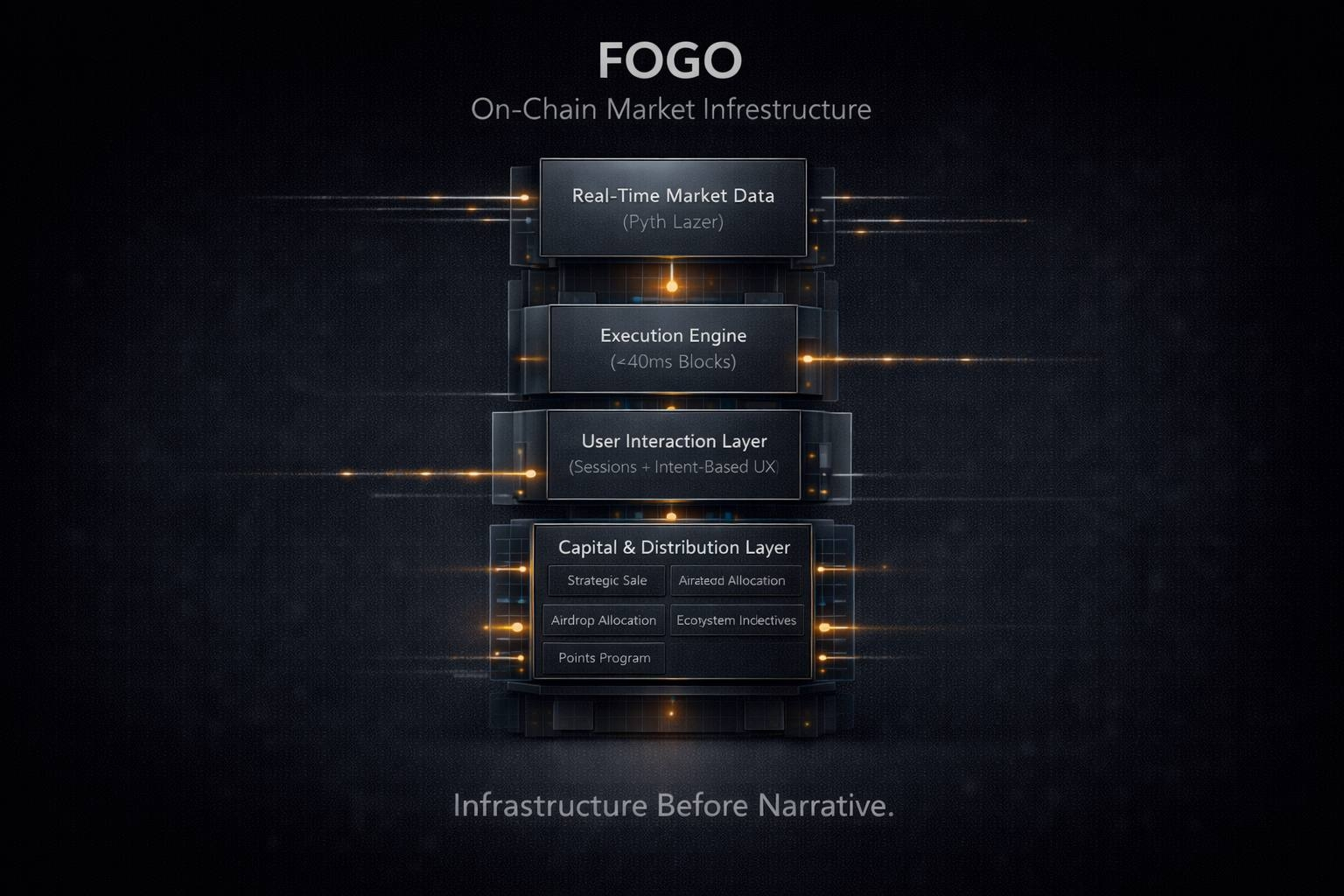
On a real market, a loop is created, and the cycle runs indefinitely: new price updates are received, matched orders are arranged, risk systems respond, new orders are created. This loop tends to fail on-chain at one of three stages: the data has come in late, liquidation engines and perpetual pricing have moved out of sync; execution has become a lottery, and a fills, rather than a normal trading experience; or the user experience requires the user to sign in a constant loop, killing normal trading.
The strategy of FOGO is strong in that it aims at compressing all the three weak links at the same time. It connects live market data with execution and eliminates the never-ending sign, sign, sign that makes the DeFi a tedious task. This synergy makes the project a synergy between a venue-design challenge and not a TPS-marketing exercise.
Why FOGO Discusses Geography in a TradFi Engineer
|human|>Why FOGO Speaks Geography Like a TradFi engineer.
Another notable aspect is the openness of the physical proximity that FOGO talks about. It uses a zone-based topology where the validators are co-located in geographic zones in order to put latency to the hardware limit, and then rotate the zones with time so that they are not put in permanent locations. This is similar to TradFi since high frequency markets consider physical distance and routing as a product.
Crypto tends to believe that distance does not count. FOGO clearly claims that it cares and creates around it. This story changes decentralization to a haphazard allocation to rotating operational imprints with definite performance objectives.
The Canonical Client Choice Is a Canonical Statement of Reliability.
The use of a Firedancer-based client path is another minor design decision by FOGO. Most chains use several clients as a cleanliness test, but FOGO perceives performance as a coordination issue: in case the network needs to support slow clients, the performance limit is inherited to the rest of the chain.
This is a trade-off in engineering not a moral position. FOGO tries to imitate the market infrastructure, which, as a rule, standardizes the key elements to make the result predictable and consistent. And whether you like it or not, it is a consistent stand: avoid theoretical diversity which undermines the deterministic behavior traders need.
Sessions Are Not a "Nice UX Usability," They are a Market Primitive.
The majority of the population speaks of sessions as a convenient thing but in fact, the existence of some applications depends on the sessions. When a trader or bot is expected to sign a wallet per order then the product will never have a feel of real-time. The centralized exchanges are also smooth as the users authenticate and can operate with a controlled permission window.
FOGO sessions embrace such an idea on-chain. According to the documentation, the sessions are temporary, limited, may expire or be revoked, and exist to maintain the custody of the user and ease interactions. More importantly, the sessions allow only SPL-token communications and prohibit direct communication with native FOGO, as it is an infrastructure layer used by paymasters and low-level primitives. This isolation is critical: it allows applications to be natural and at the same time provides security.
Live Data is More Important than Most Chains Attract.
An expeditious chain with slow data is a slow trading system. The story behind FOGO emphasizes oracle integration particularly through Pyth and provision of real-time native market data to developers. Another product available in Pyth is Lazer, an ultra-low-latency price-stream product that is designed to be used in real-time trading, which perfectly fits the mission of FOGO to not only finalize a trade but to actually respond to it.
This is essential in perpetuals and systems with heavy liquidation where minor delays become actual losses in money, and this area has been the most vulnerable in DeFi.
When FOGO is operating on a tight data and a tight execution at the same time, the operating space of latency exploits is reduced.
Ambient and Bigger Microstructure Bet.
The patterns of execution that FOGO supports make its ecosystem more apparent. In the announcement of the ambient finance, Pyth states that it is possible to utilize the power of an ensured DEX to offer an integrated experience in terms of execution, price, and settlement. This does not happen to be a haphazard alliance, but an indication that FOGO wants the base layer and its central trading venue to co-evolve, creating a venue stack and not an application on top of a generic chain.
I am trending in this direction since faster order books are not all that DeFi needs. It requires implementation models to reduce the problems of the toxic flow and alleviate the MEV-like effects among ordinary users. The field of this struggle is venue design.
The mainnet of FOGO was launched on January 15, 2026. It has reported block times of approximately 40 0 ms and more than 1200 transactions per second with the initial live application. That is a figure of a public network and not some lab experiment.
The most telling route is the financing route. Approximately at the launch, FOGO declared an effective token sale on Binance that sold 20 percent of its supply at a fully diluted valuation of $350m, raising about 7M. An earlier public pre-sale that was targeting $20M at a valuation of $1B was cancelled by the team, as it shifted its focus to airdrops and a points program. This was not some trivia--it indicates how the team was adapting to market environment and community demands in the here and now balancing capital requirements and distribution optics and long term involvement in the network.
FOGO will have to win builders to win traders. The documentation of the ecosystem reveals that attention was paid to the elimination of friction. The integration SDK, as well as ecosystem partners such as Wormhole to bridge, Squads to sign multisig, visibility tools such as Goldsky, data and routing tools such as Birdeye and Codex, etc. will all enable developers to ship and not just admire a consensus paper.
Practically, the majority of chains fail not to be slow but to experience a painful shipping, lack analytics, and use apps, which is unable to deliver a clean user experience. FOGO is aware of the fact that trading infrastructure is not a single feature.
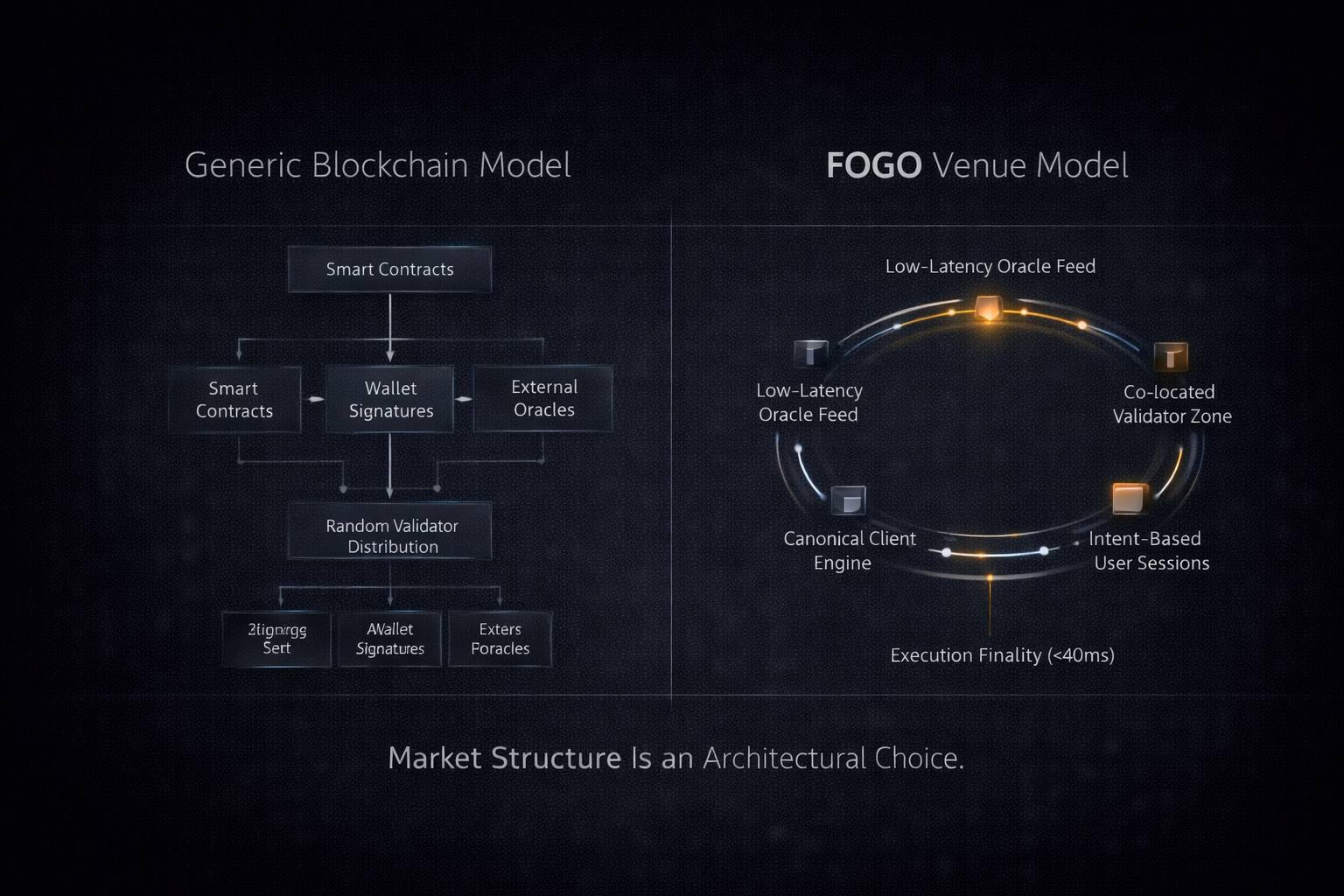
Speed is just a tool. What the chain can safely and reasonably achieve in that speed is the main question that other chains cannot. Reading the documentation of FOGO and watching it launch on the mainnet, the project seems not so much like an L1, but rather an endeavor to recreate the microstructure of a real on-chain trading venue. It entails not just the quick blocks but also predictable sequencing, oracle fitting and models used in executing it that minimize the odd games which are not favorable by traders.
There Is a Weak Link in the Trading Loop: Data, Execution, or UX.
In my future thesis, I would argue that FOGO is experimenting with another definition of decentralised markets. Another criterion that it has put forward to maintain speed and resilience is performance standards, co-location zones, and rotation instead of stating the fact that anyone can now be a validator. Instead of requiring users to carry gas tokens and sign every time, it has session-based and paymaster-like flows to provide a UX that is more like a real venue. It also focuses on real time oracle design where the data does not fall behind execution.
This is why I will not decrease FOGO to 40ms blocks. Those figures are important so long as they result in improved market performance - smaller spreads, less execution surprises, more predictable liquidations and an on-chain experience that does not punish normal users. Whether FOGO will be able to support such venue-like properties as an activity increases, and not become weak in the ideal conditions, is the real test.
