
 I’ve heard “AI + crypto” enough times to develop a reflex.
Usually it goes like this: AI is the future, crypto is the future, so combining them must be inevitable. A few slides about autonomous agents. A few lines about decentralizing intelligence. Maybe a token that somehow powers it all.
It sounds impressive for a moment. Then it starts to feel vague.
That’s why my first reaction to Vanar wasn’t excitement. It was fatigue. I assumed it would be another case of narrative overlap two strong trends stitched together to capture attention.
But when I looked closer, what felt different wasn’t ambition. It was restraint.
Most AI + crypto projects start by asking how to add AI to a blockchain. AI analytics. AI trading bots. AI content tools. The chain stays fundamentally the same AI is just layered on top.
Vanar didn’t frame it that way.
Instead of asking how to integrate AI, the framing seemed to assume AI would already be there. That machine-generated activity would be constant, not occasional. That automated systems would interact with users, contracts, and data continuously.
That shift sounds subtle, but it changes the design philosophy.
Most blockchains were built around human behavior. You initiate a transaction. You sign something. You vote. You stake. Even automation typically starts with human-defined logic.
AI doesn’t behave like that.
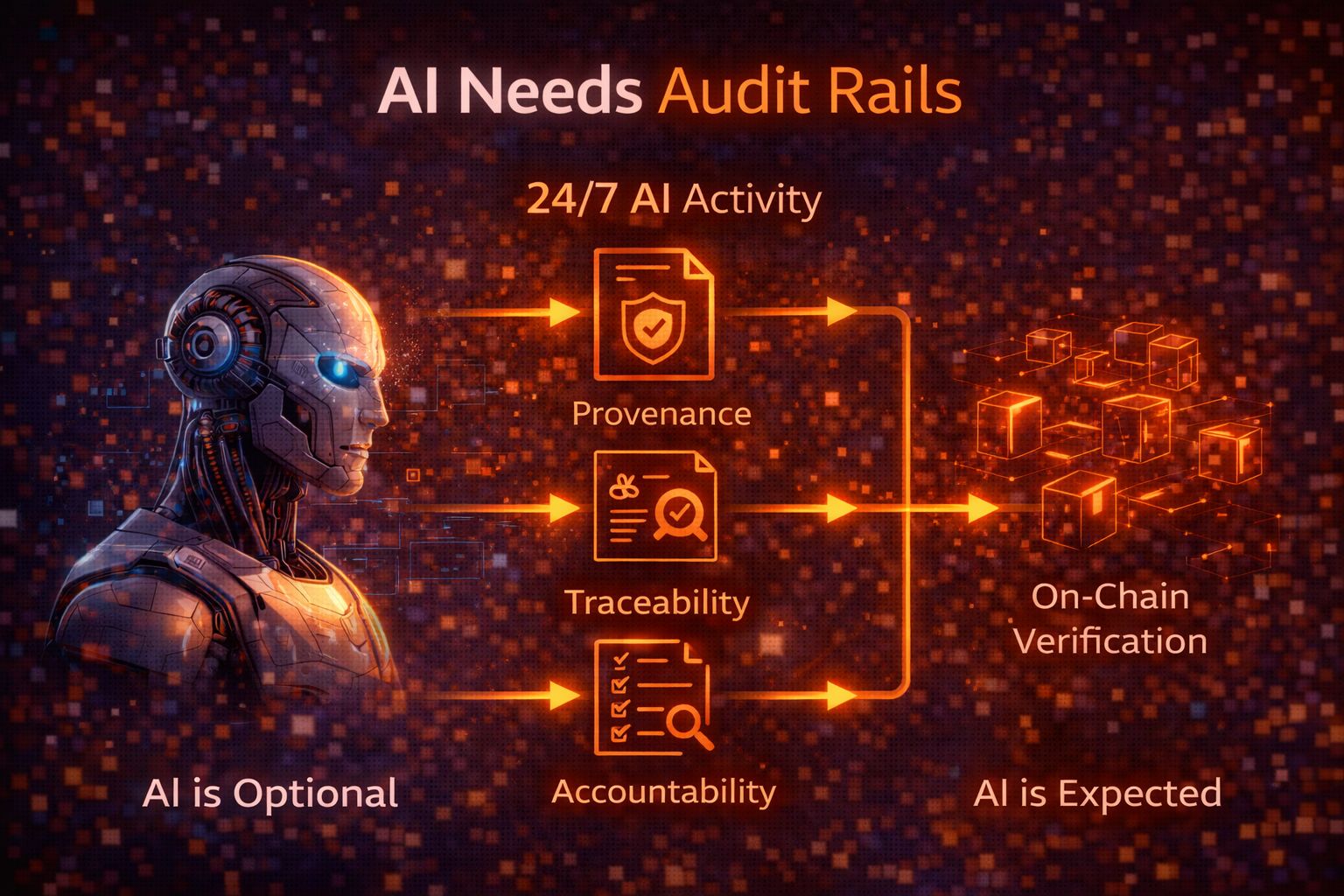 It runs continuously. It processes data at scale. It produces outputs without needing a click every time. If AI becomes a persistent layer of digital life which increasingly feels likely then infrastructure designed only for human-triggered interactions starts to feel incomplete.
That’s where Vanar started to feel different to me.
The conversation wasn’t about building smarter dApps. It was about building rails that can anchor and verify AI-driven activity. Provenance. Traceability. Accountability. The less glamorous parts of the stack that only matter when things go wrong.
And that’s important, because AI systems today are largely opaque.
You input something. You receive output. You trust the provider. In casual contexts, that works fine. But when AI begins influencing financial decisions, ownership rights, creative work, or identity systems, opacity becomes uncomfortable.
Blockchain can’t solve AI’s black-box nature entirely. But it can create checkpoints. Timestamps. Interaction logs. Verifiable records of when something was generated or modified.
That’s not flashy. It’s structural.
Another difference is tone.
A lot of AI + crypto narratives lean into autonomy autonomous agents, decentralized intelligence, machines operating without oversight. Vanar’s positioning feels more focused on accountability than autonomy.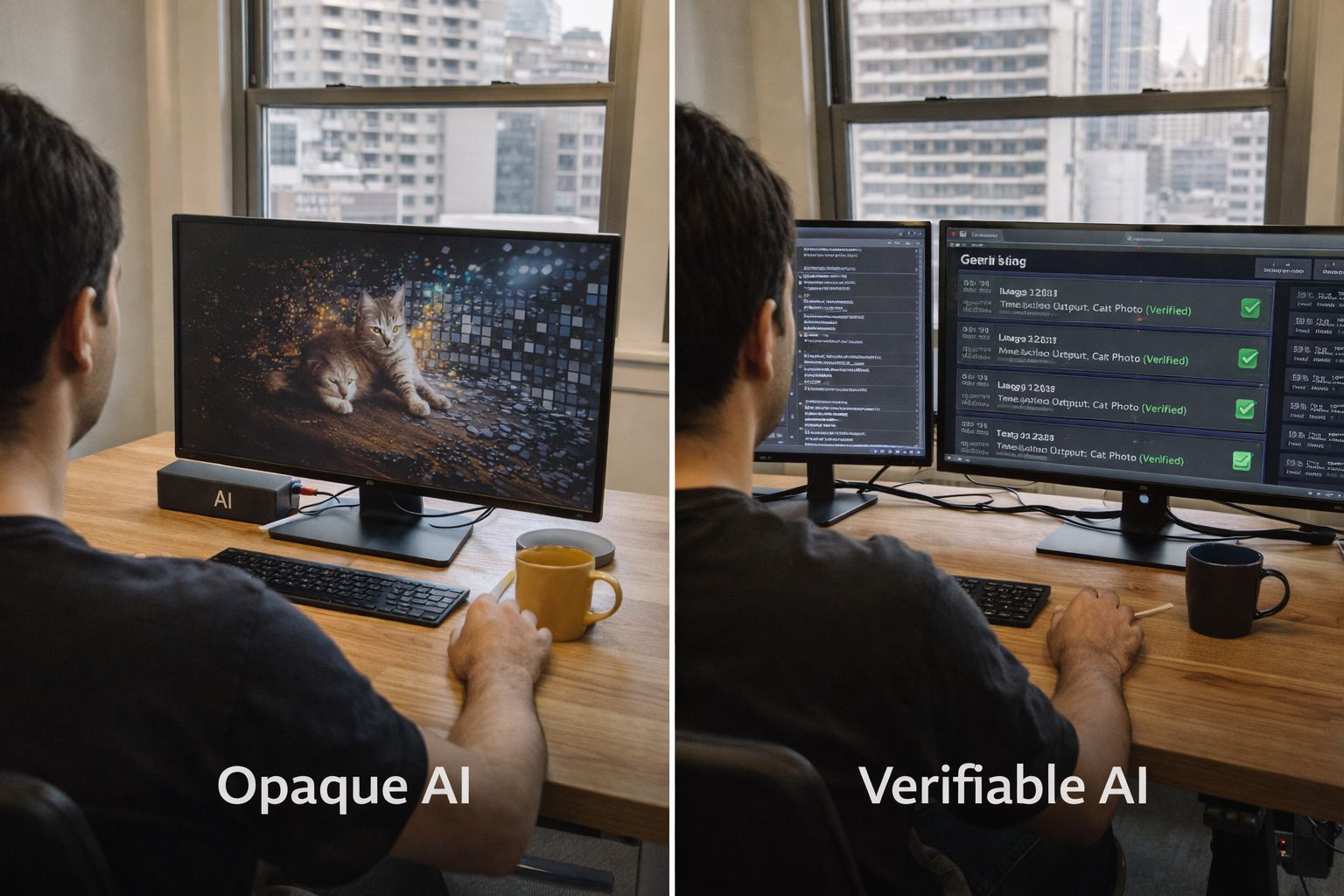 That’s a healthier starting point.
AI’s rapid progress has already created trust gaps. Deepfakes. Synthetic media. Automated financial models. The more capable these systems become, the more important it is to know where outputs come from and how they were produced.
If AI becomes embedded in economic systems, there needs to be an audit layer.
That’s where blockchain makes sense again.
I’m still cautious.
There’s always a risk that “AI-first” becomes a slogan rather than a sustained architectural commitment. AI workloads are heavy. Most processing will remain off-chain. Designing infrastructure around AI doesn’t mean forcing everything onto a ledger it means deciding carefully what should be verifiable.
Execution matters more than narrative.
There’s also the question of adoption. Developers need to care about anchoring AI outputs. Enterprises need to see value in verifiable machine interactions. Users need to notice the difference between opaque AI and accountable AI.
Those shifts don’t happen overnight.
But what changed for me wasn’t certainty. It was posture.
Instead of dismissing AI + crypto outright, I started seeing how the combination could be less about hype and more about preparing for a change in digital behavior. If AI systems become constant actors in online environments, then infrastructure that anticipates that shift may age better than infrastructure that treats AI as a plug-in.
Vanar felt different not because it promised something bigger, but because it felt more grounded.
Less about replacing existing systems.
More about reinforcing them.
Less about spectacle.
More about architecture.
I’m not convinced AI + crypto is inevitable. I’m not ready to declare any project the blueprint for the future.
But I am more open than I was.
And in a space where narrative fatigue is real, that shift from dismissal to cautious attention is significant.
I’ve heard “AI + crypto” before.
This time, it felt less like a slogan and more like someone thinking a few steps ahead.
