

I’ve stopped judging blockchains by TPS charts and started judging them by a simpler question: would I feel comfortable handing this product to someone who doesn’t even know what a wallet is? That’s the lens I keep returning to with Vanar, because most chains still feel like they were built for crypto-native users who already accept friction as normal. Vanar feels like it’s trying to build for people who don’t want to learn a new system just to enjoy a game, collect a digital item, or interact with a brand.
Most Layer 1 ecosystems still treat onboarding as a one-time ritual. Download wallet. Save seed phrase. Learn gas fees. Understand networks. Then maybe you can start using the product. But real consumer products don’t work like that. People don’t form habits because they completed a setup step once. They form habits because the experience repeats smoothly, without creating anxiety each time they return. Vanar’s approach feels less like “onboard the user into Web3” and more like “make Web3 disappear until the user naturally builds trust.”
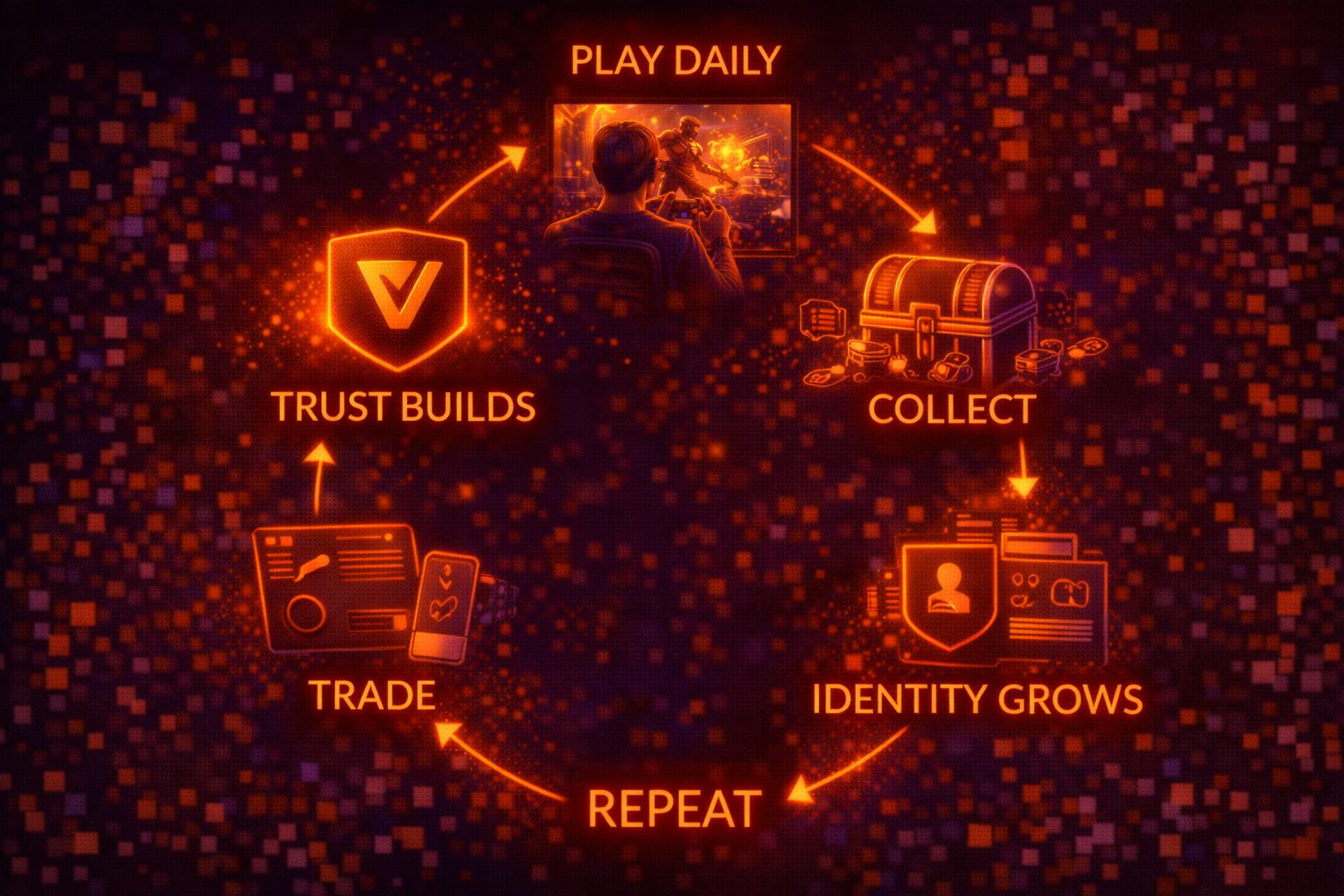
That’s why Vanar’s focus on gaming, entertainment, brands, and AI matters. It’s not just a list of trendy sectors. These are environments where user behavior is already repetitive. People play games daily. They collect items daily. They interact with content daily. And that repetition is what creates a habit loop. If Web3 ownership can be introduced through repeated, frictionless actions, it stops feeling like a financial decision and starts feeling like a normal feature.When I look at the VGN gaming ecosystem, what stands out isn’t the label “Web3 gaming.” It’s the attempt to make entry feel normal. Single sign-on style onboarding, reducing wallet friction, letting players start as players. That might sound like a small UX improvement, but in crypto it’s actually a major philosophical shift. The industry has trained users to believe they must become mini-operators before they can participate. Vanar’s design implies something different: let users play first, and let ownership quietly appear later, when it becomes useful.
Virtua is another piece that makes Vanar feel more real than theoretical. I don’t see it as “another metaverse pitch.” I see it as a stress test. A digital world with marketplaces, collectibles, trading, and brand integrations forces the chain to behave like consumer infrastructure. If transactions lag, if fees spike, if the experience stutters, users won’t debate decentralization principles they’ll simply leave. The fact that Virtua’s Bazaa marketplace and dynamic NFT functionality sit on Vanar suggests the network is being used as a backbone for ongoing consumer activity, not just for technical demos.
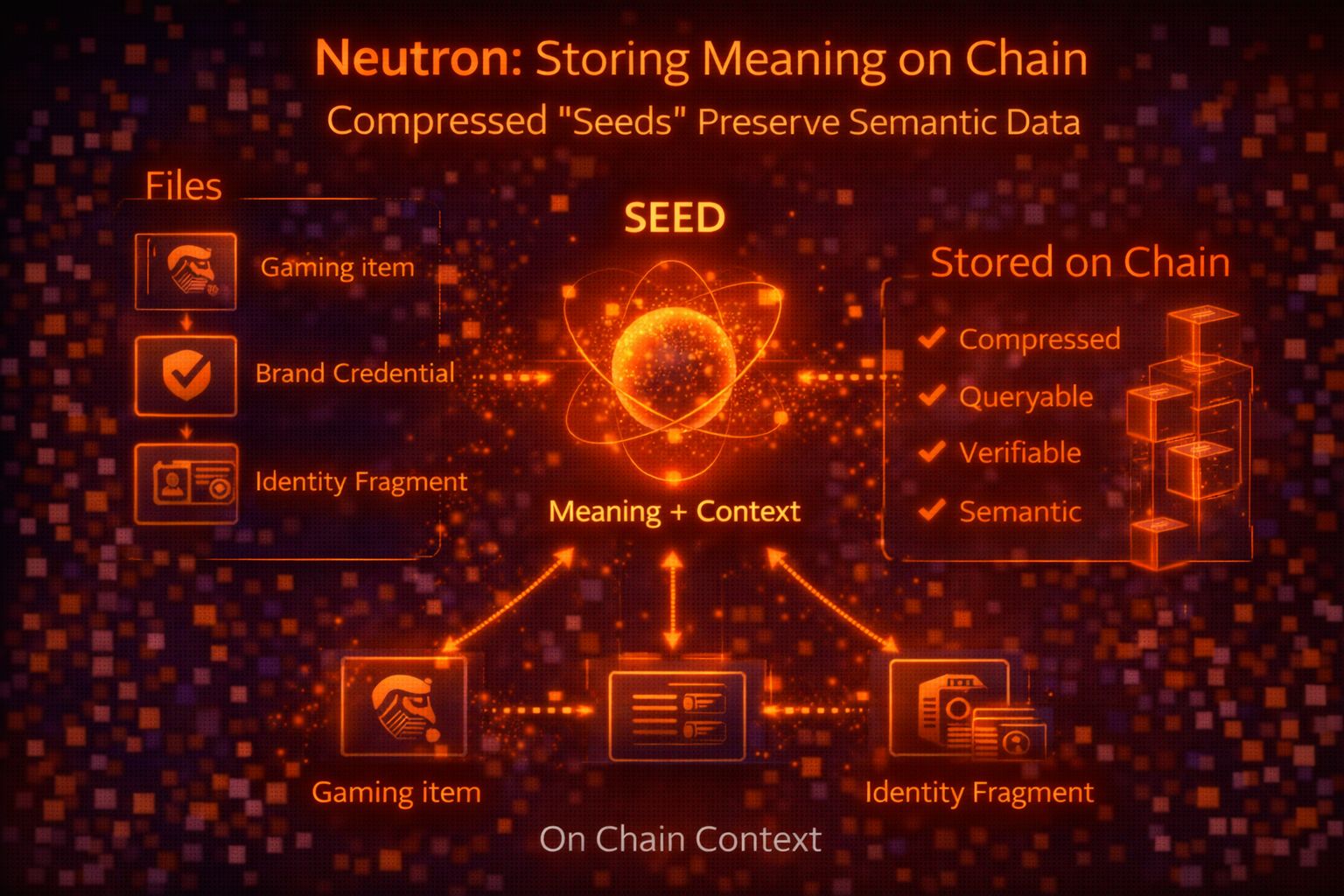
The AI layer, especially Neutron, is where I had to slow down and think. “AI + blockchain” is such an overused phrase that it has almost lost meaning. But Neutron doesn’t read like a flashy agent narrative. It reads like infrastructure work. The idea of turning files into compressed “Seeds” that preserve semantic meaning feels less like hype and more like an attempt to solve the deeper problem: blockchain assets need context, not just IDs. If you can shrink data dramatically while keeping it understandable and verifiable, you’re not just storing files you’re storing meaning. For gaming items, brand credentials, compliance proofs, or identity fragments, that kind of semantic persistence matters.When I look at VANRY, I don’t see some get-rich-quick “moon token.” To me, it’s more like the meter ticking away in the background. Vanar’s docs call it the fuel gas, staking, validator rewards, governance, the whole ecosystem. And with wrapped versions on Ethereum and Polygon, you actually get real interoperability. Not just buzzwords, but something you can use. The Ethereum contract’s out there in the open too, so anyone can check the supply and holder numbers for themselves. No need to just swallow whatever the marketing team says. That kind of transparency keeps the story real. It gives you something solid to hold onto.
But the honest part is this: token utility only becomes real if people are actually doing things. Explorer statistics show large cumulative counts for blocks and VANRY transfers. Numbers alone don’t equal adoption, but they do at least indicate the network isn’t idle. What matters more is whether usage becomes steady and organic game sessions, marketplace trades, identity updates rather than short bursts driven by speculation.
The staking model also reveals a lot about priorities. Vanar’s DPoS structure includes validator selection by the foundation, with community delegation. Purists will call that centralized. Enterprises may call it reassuring. I see it as a deliberate tradeoff. If your target audience includes brands and entertainment companies, predictability and accountability may matter more than maximal decentralization in the early stages. The real test is whether that structure evolves over time into broader participation.
What makes Vanar interesting isn’t that it claims to onboard “the next 3 billion.” Every chain says that. What makes it interesting is that the pieces feel connected to an actual user journey. Start with something familiar. Reduce fear. Hide complexity. Let ownership become a natural extension of the experience instead of a prerequisite. That is what turns onboarding into a habit loop rather than a one-time wallet setup.
The strongest consumer technologies in history succeeded because people didn’t need to understand them. Nobody studies TCP/IP before streaming a movie. Nobody reads about distributed systems before uploading a photo. If Vanar succeeds, it won’t be because people admire its consensus model. It will be because they are playing a game, collecting an item, trading something on a marketplace, or interacting with a brand and only later realize there was a blockchain involved at all.
That, to me, is a far more human strategy than chasing the next performance benchmark.
