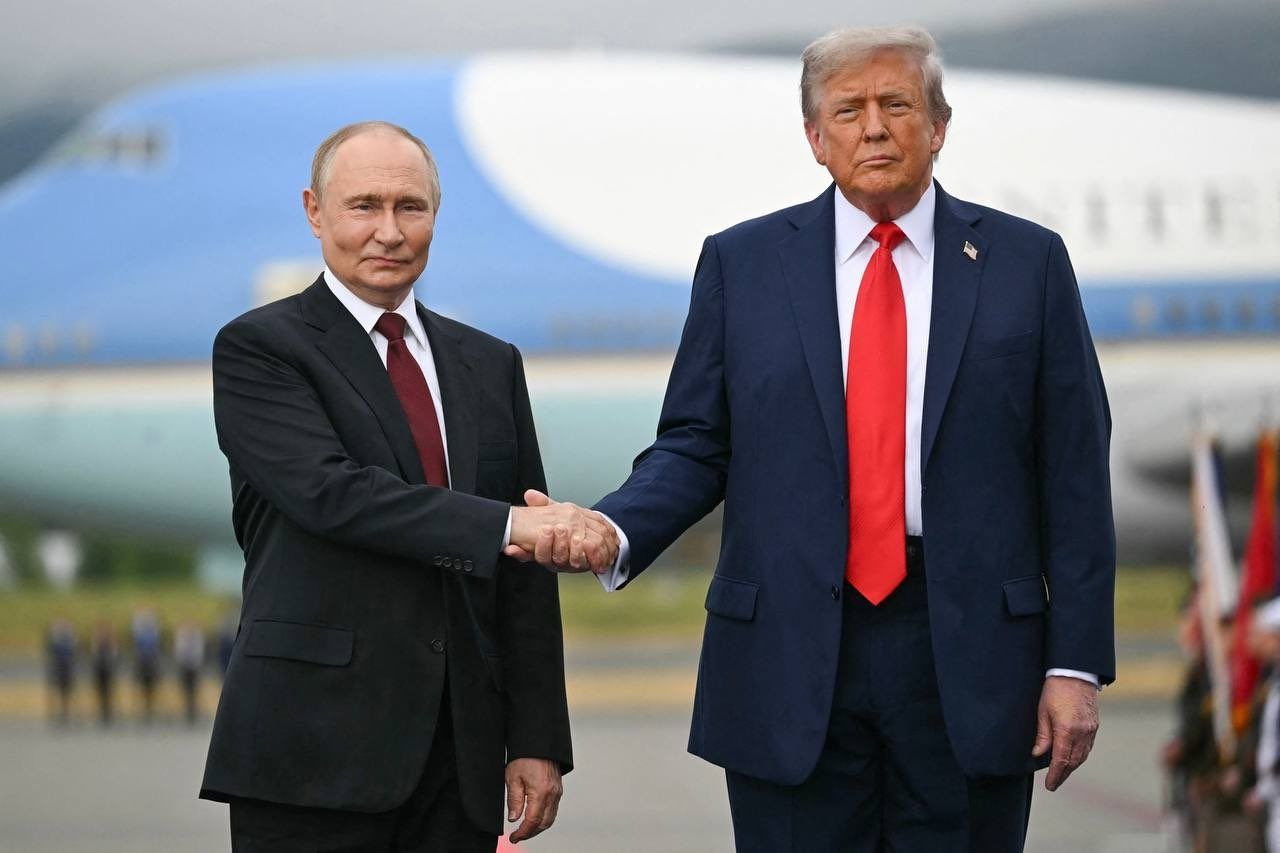
The U.S. and Russia are exploring cooperation across fossil fuels, natural gas, offshore oil drilling, and critical raw materials.
Put that into scale.
The U.S. is already producing 13.5 million barrels/day of oil, the highest in history. Russia, even under sanctions, still produces 9.1 million barrels/day.
Together, cooperation would influence a massive share of global oil supply, immediately shifting pricing power and export leverage.
The same applies to natural gas.
Russia holds some of the world’s largest gas reserves, and many LNG and pipeline projects were frozen after sanctions. Reopening investment and joint development would reintroduce supply into global markets, directly impacting Europe and long-term gas pricing dynamics.
Now add critical minerals.
Russia controls large portions of strategic resources:
- 44% of enriched uranium
- 43% of palladium
- 40% of industrial diamonds
- 25% of titanium
- 20% of vanadium
These materials sit at the core of semiconductors, defense systems, EV production, nuclear energy, and aerospace manufacturing.
Partnership here isn’t symbolic: it secures U.S. industrial supply chains while reducing reliance on China. That’s where the currency angle ties in.
Russia spent the last decade reducing dollar exposure, cutting USD reserves, shifting trade to yuan and rubles, and building alternatives to Western settlement systems.
But that pivot increased dependence on China. Russia-China trade hit $245B by 2024, creating structural reliance on yuan liquidity and Chinese imports.
Reopening USD settlement would diversify Russia’s financial positioning, balancing East and West exposure, while re-anchoring parts of global trade in the dollar system.
Corporate capital is another layer.
Western companies absorbed $110B in losses exiting Russia. If partnerships reopen energy fields, gas infrastructure, mining projects, and Arctic drilling zones, U.S. firms could re-enter resource extraction at scale.
That’s the direct economic upside for American corporations.
Russia isn’t negotiating from weakness.
Its reserves recently climbed to a record $833B, with gold holdings alone above $400B. This provides financial stability for structuring long-term resource deals.
Zooming out, this is what’s forming:
- Energy cooperation affecting global oil and gas supply
- Mineral partnerships reshaping industrial resource access
- Corporate re-entry unlocking capital and infrastructure projects
- Currency realignment pulling Russia partially back into USD settlement
- Geopolitical leverage shifting between the U.S., Russia, and China simultaneously
If finalized, this wouldn’t just be a bilateral trade deal.
It would mark one of the biggest structural resets in global economic alignment since the Cold War, with direct implications for commodities, currencies, and global power distribution.