
1 - Story
When the only digital currency that the world had heard of was $BTC and blockchain was viewed as a transaction recording system at best, a young prodigy came into the picture at the age of 19. He was a small Canadian programmer of Russian descent called Vitalik Buterin.

By 2013, Bitcoin had become a freedom technology that developers globally were interested in. Vitalik was no exception. He became a part of the Bitcoin community at the initial stage and soon understood that there was much more to the Bitcoin blockchain than it being a digital currency system.
To unlock the full potential of blockchain technology, according to Vitalik, the ecosystem required something more versatile, a platform that would potentially allow supporting a large number of different applications, not only payments. To overcome this shortcoming, he introduced a new type of platform, the one that would be capable of running smart contracts and decentralized applications.
That idea became $ETH
2 - Idea to Reality
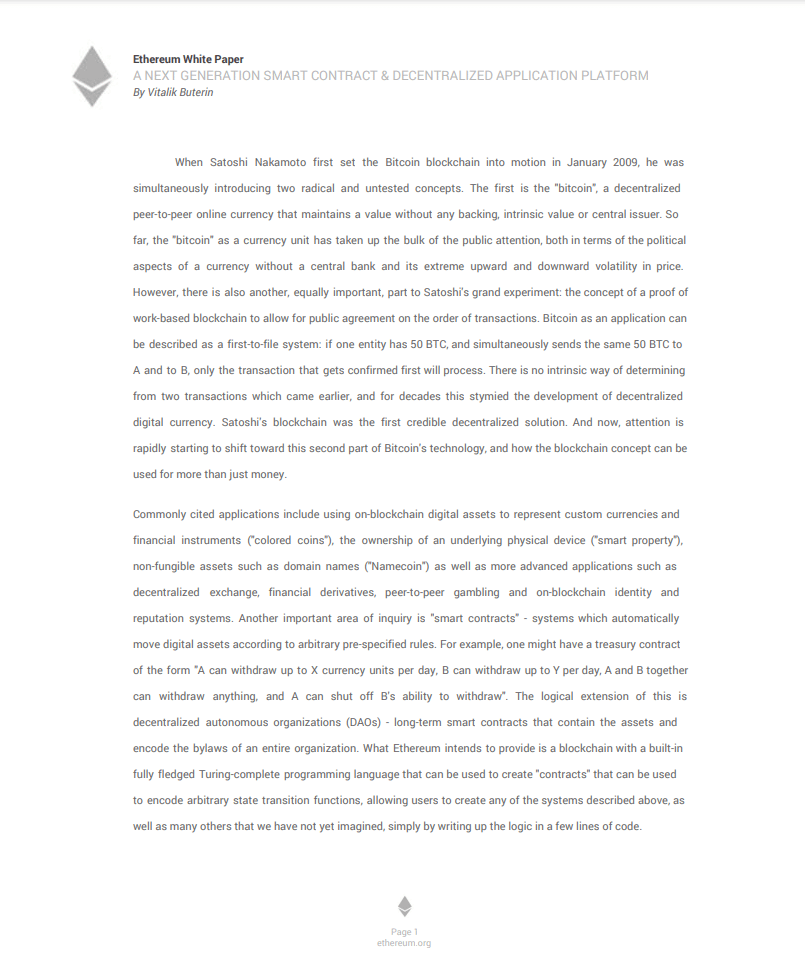
The idea was initially proposed in a whitepaper that was released at the end of 2013. Within a short time period, the project started to form with the development team increasing at a rate with co-founders joining, such as Gavin Wood, Joseph Lubin, Anthony Di Iorio, and Charles Hoskinson.

Subsequently, two of the foundational team members, Charles Hoskin and Gavin Wood failed to share a vision of the future of Ethereum with Vitalik Buterin. This led to their separation and they proceeded to start their own blockchain, Cardano and Polkadot.

In 2014, Ethereum held a community fundraiser to start making the vision of Vitalik real by raising approximately eighteen million dollars by selling sixty million ETH. It was also one of the most successful crypto fundraisers at the time. The initial adopters purchased ETH at approximately sixty cents, which has since increased by far beyond two thousand dollars.

The financing spurred the development of Ethereum with its first version, Ethereum Frontier being released on July 30, 2015. Early Ethereum reused a proof-of-work system like that of Bitcoin that miners used to answer complex questions and gain ETH. Nonetheless, the excessive power consumption of this design raised the environmental concern, and the community found the need to seek improvements in the long-term future of Ethereum.
3 - How ETH Works
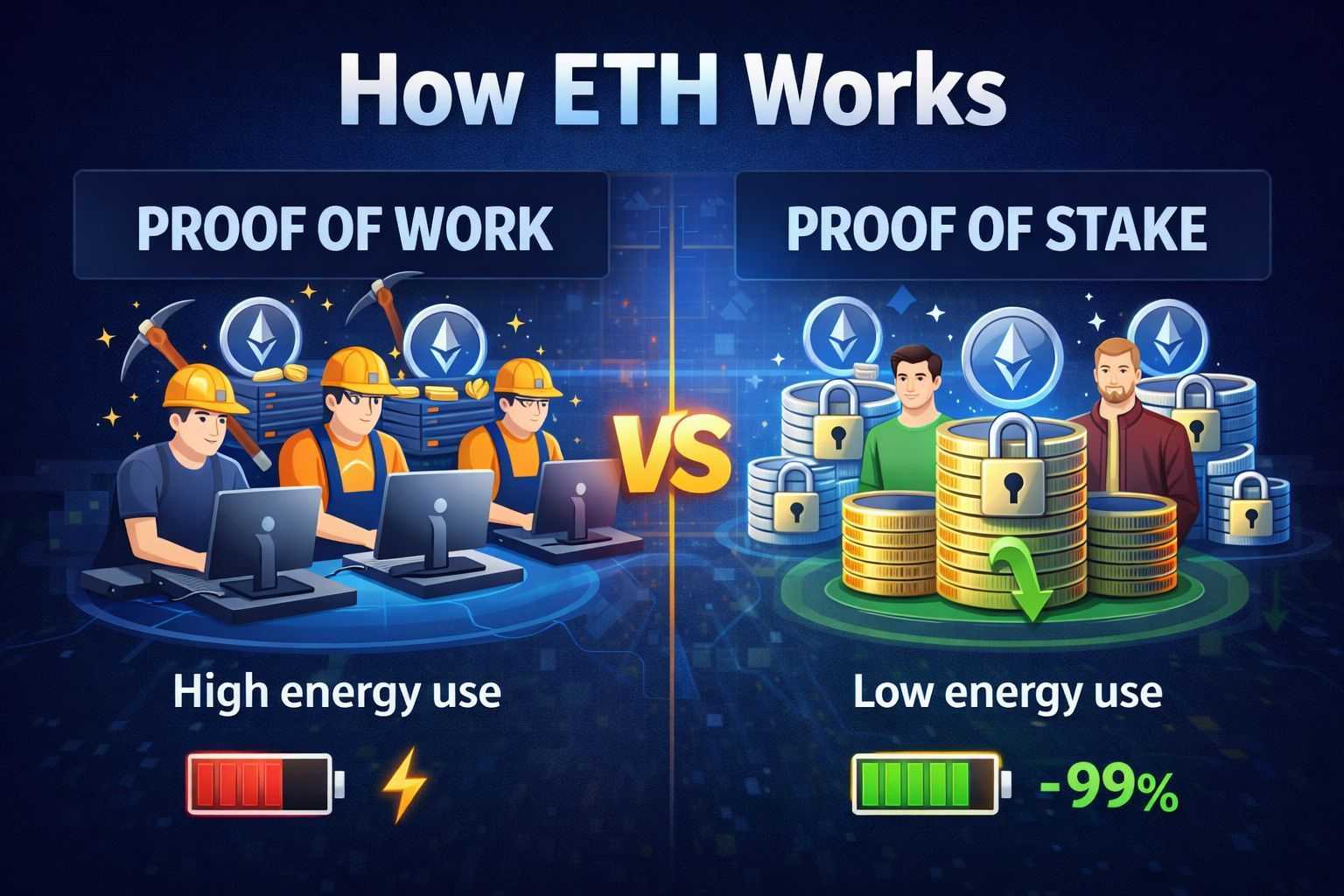
In 2022, Ethereium changed to proof of stake. Validators seal ETH rather than mined network. They make losses in the event that they are ill-willed. The conversion saved more than 99 percent of the energy and was scalable at the long-term.
The first and Ethereum employ the use of proof or work like Bitcoin. The miners were racing against each other on solving complex problems and the reward was ETH. This system was extremely energy consuming and the issue of sustainability was raised.
4 - Supply, Inflation and ETH value.
The supply of Ethereium is unlimited unlike in the case of Bitcoin. This had the initial effect of triggering panic inflation. Ethereium reacted to this by creating a burn mechanism of fees. These costs incurred in the transaction are irredeemable.
Ethereium will become deflationary when there is a greater burn than emission. In fact, the general supply of ETH has been reduced at times that can favor the long term value as long as the demand is on the upswing.
5 - Is Ethereum Centralized?
There are those who consider Ethereum as being under the control of a corporation or a few individuals. That’s not true. Ethernet is entirely decentralized and becomes secured by tens of thousands of nodes worldwide. The network is not controlled by any individual, company or government.
Vitalik could vanish tomorrow, but Ethereum would none the less be running.
6 - Real-World Use Cases
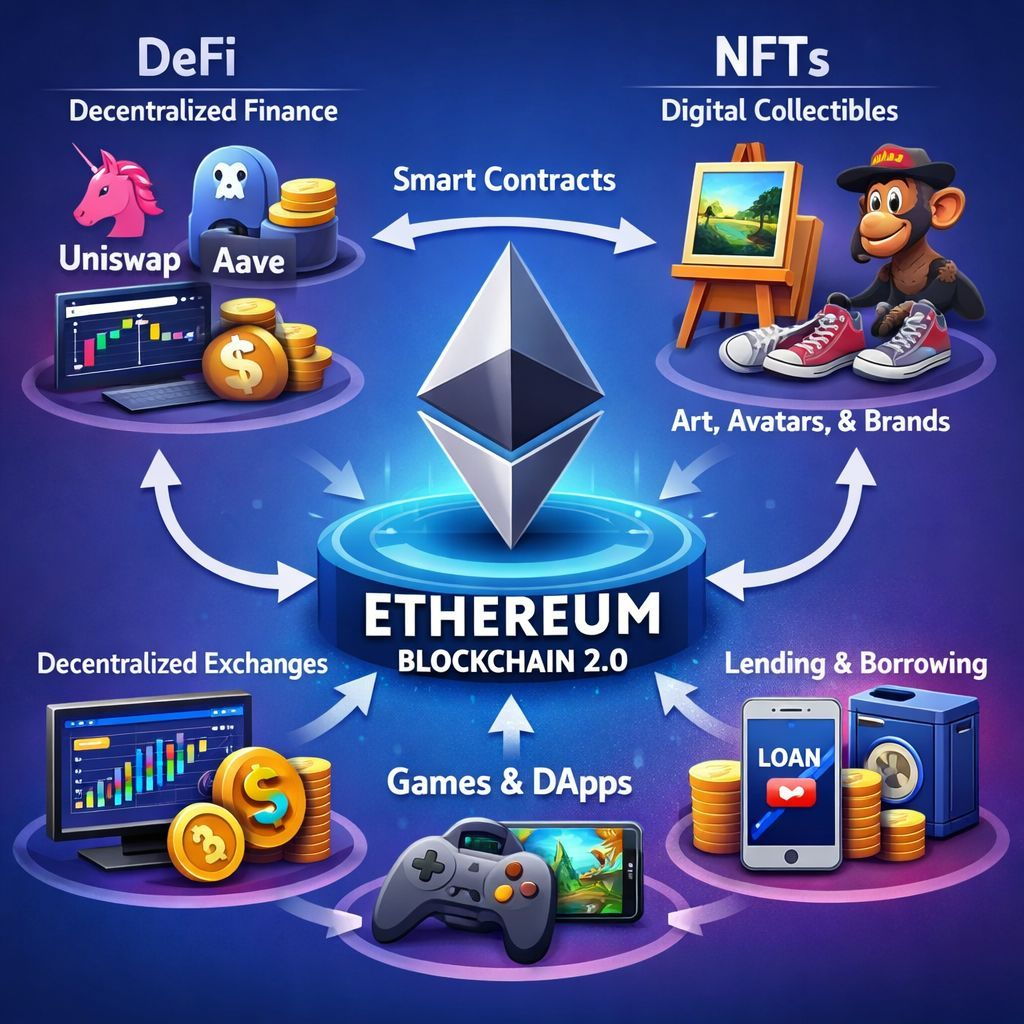
Ethernet is commonly referred to as blockchain 2.0 due to the idea of smart contracts which are automated programs that operate automatically on the blockchain. These contracts allow decentralized finance, NFTs, games and numerous others.
Ethereum is used to run decentralized exchanges such as Uniswap and lenders such as Aave in the DeFi. These systems decrease the need of the centralized intermediaries and enhance transparency.
Etherem also gave birth to the NFT movement, with its big name sales and popular brands creating digital collections.
7 - ETH Price History
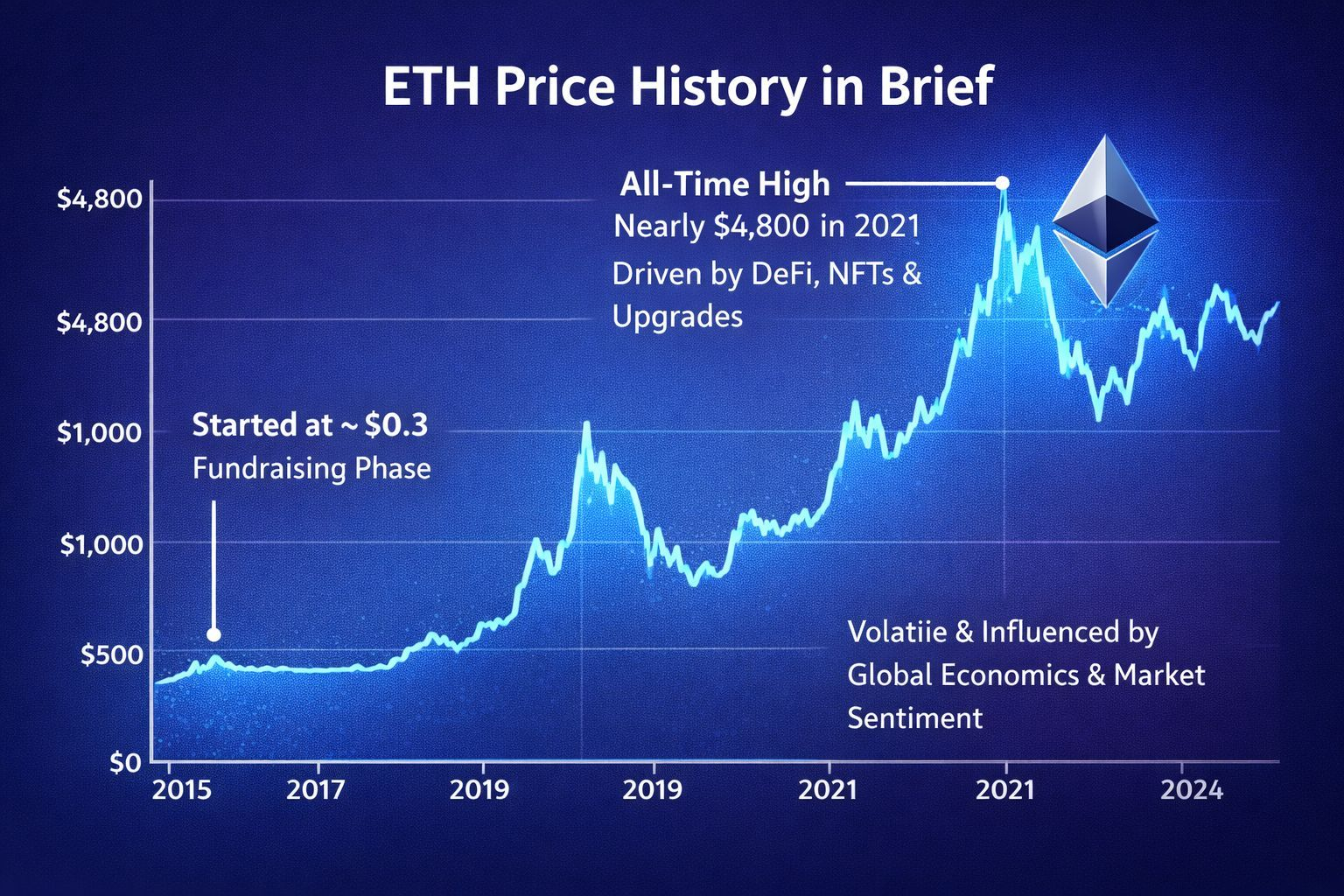
ETH was founded at approximately 0.3$. It has been undergoing tremendous growth, steep drops and various market cycles over the years. In 2021, it has hit an all-time high of almost 4,800 dollars due to DeFi, NFTs, and network upgrades.
Similar to the rest of the crypto market, ETH is volatile, and it is affected by global economics, technology upgrades, and market sentiment.
8 - The Road Ahead
Etherium is still leading in smart contract ecosystems. Several legacy firms currently extend layer-two blockchain on Ethereum to enjoy its safety and have cheaper transactions.
These layer twos continue to use ETH fees, which once again solidifies its position in the center of the ecosystem.
Technologically and in the areas of adoption, Ethereum is one of the most powerful technologies in the crypto industry.
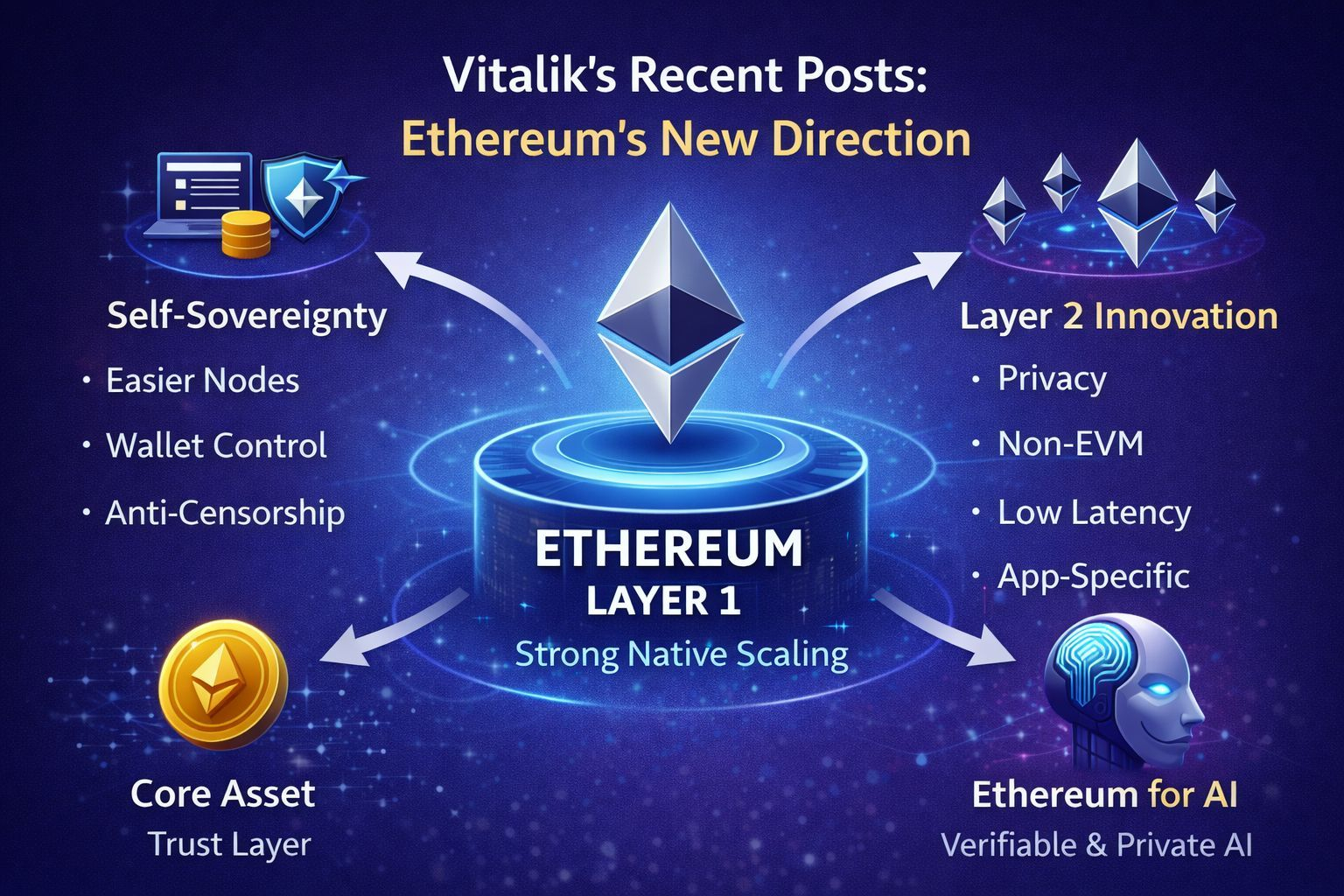
Vitalik Buterin posted a conspicuous change in his perception of the future of Ethereum recently.
The year 2026 is presented as a year of self-sovereignty. Vitalik is advocating so much against centralization, which includes more seamless verification of nodes and enhanced privacy, censorship resistance, and wallets that are entirely managed by the user. Etherium has to be usable without relied upon intermediaries.
He also reiterated that ETH was a core asset and store of value and growing popularity in Ethereum as a layer of economics and trust in AI and emphasized finding an AI interaction that is verifiable and private.
#ETH #BTC #WhatisETH #Vitalik

