PlasmaChain bringing real revolution in the crypto world specially in stablecoin payments sectors. No chain can match the level of plasma chain in sensw of speed and security. With it's native coin XPL that is uses as Gas fees has investors friendly tokenomics. The burninh mechanism of XPL equivalent to gas fees on every transaction making XPL inflation free.
There is a strange irony in how we talk about cryptocurrency. For years, the industry has been obsessed with building worlds—metaverses, gaming ecosystems, complex DeFi cathedrals—while the one thing everyone actually uses money for has been treated almost as an afterthought. Sending dollars, whether digital or physical, should be boring. It should be instant, it should cost nothing, and it should feel like gravity: predictable, invisible, and absolute.
This is why Plasma, the Layer-1 blockchain that launched its mainnet in late September 2025, matters in a way that most new chains do not . It is not trying to be the next general-purpose computer. It is not courting NFT artists or memecoin degenerates. It is building a rail. And investors who are paying attention to the migration of value rather than the oscillation of prices are beginning to realize that this rail is quietly absorbing a staggering share of the global stablecoin economy.
As of late 2025, Plasma is processing approximately 4% of all annual stablecoin settlement volume. That is a slice of a market that exceeds $27 trillion in yearly flow—more than Visa, Mastercard, and PayPal combined . This is not a milestone that was achieved through marketing hype or Ponzi-like point farming. It was achieved by answering a question that the industry has largely ignored: what if we designed a blockchain specifically for the only asset class that millions of people actually need to send every day?
Why investors should care about PlasmaChain?
To understand why investors should care about Plasma, you have to stop thinking about it as another crypto project and start thinking about it as infrastructure. The distinction is everything.
Elimination of High Gas fee
For years, sending USDT has been a lesson in quiet frustration. On Ethereum, you pay gas fees that spike unpredictably. On TRON, you are forced to hold TRX—a volatile, unrelated asset—just to move your stablecoins. If you are a business processing thousands of transactions a month, this friction accumulates into real cost and real operational headache. If you are an individual sending remittances home, a $3 fee on a $50 transfer is not negligible; it is punitive .
Plasma eliminates this entirely by doing something deceptively simple: it makes stablecoins the first-class citizens of the network. You do not need to hold XPL, the native token, to pay for gas. You can pay fees directly in USDT or even Bitcoin. The protocol handles the conversion invisibly, oracle-sourced pricing ensures fairness, and the user simply sends money . It sounds obvious. It is, in fact, radical.
This is the kind of user experience that does not make headlines but does build empires. When a freelancer in Nigeria receives payment and it arrives in seconds instead of days, when a treasury desk moves eight figures without sweating about network congestion, when a parent sends money to a student abroad and the recipient does not lose 5% to intermediaries—that is not just optimization. That is replacement. That is the old system being rendered obsolete by something that simply works better .
Plasma chain Architecture
The technical architecture enabling this is not flashy, but it is brutally effective. PlasmaBFT, the custom consensus mechanism, is a pipelined implementation of Fast HotStuff. It parallelizes proposal, voting, and commitment stages rather than processing them sequentially. The result is sub-second finality and throughput that clears thousands of transactions per second without the fee spikes that plague general-purpose chains when a popular NFT drop hits . More importantly, Plasma isolates payment traffic from speculative noise. You do not get stuck in line behind a memecoin mania. The payment lane stays clear.
This specialization is not a limitation; it is the entire point. General-purpose chains are, by design, terrible at any single thing. They are jacks-of-all-trades and masters of none. Plasma chose a lane. It chose to be the best in the world at moving digital dollars, and that decision is creating economic gravity. Money flows toward the most efficient path. Increasingly, that path is Plasma .
Then there is the Bitcoin dimension, which is perhaps the most misunderstood aspect of the project. Plasma is frequently categorized as a stablecoin chain, but that framing misses half the picture. It is also, fundamentally, a Bitcoin sidechain. It regularly anchors its state commitments to the Bitcoin blockchain, inheriting Bitcoin’s security model while providing something Bitcoin itself cannot offer: a fast, cheap, private settlement layer for dollar-denominated assets .
This is not trivial. There is a massive, pent-up demand for Bitcoin-based finance that does not require trusting centralized bridges or wrapped tokens with shaky custody. Plasma is building a trust-minimized bridge to Bitcoin, with the intention of adopting BitVM2 as soon as it is production-ready. When that happens, users will be able to use native BTC as collateral for stablecoin lending, execute low-slippage swaps, and engage in DeFi activities that currently require leaving the Bitcoin ecosystem entirely . With Tether—specifically, Tether CEO Paolo Ardoino himself—backing the project and likely to natively issue USDT on Plasma, the liquidity advantage is staggering. This is not another sidechain hoping to attract TVL. This is the largest stablecoin issuer in the world building a dedicated execution environment .
The capital efficiency has already demonstrated itself. Plasma’s public fundraising rounds were less fundraises than they were feeding frenzies. A $500 million offering was filled in thirty minutes. One address spent approximately $100,000 in gas fees alone just to ensure they secured a spot. The public sale for XPL was oversubscribed by 7.5 times . This is not retail FOMO in the traditional sense; the median contribution in the $500 million round was $35,000 to $40,000. This is sophisticated capital signaling conviction .
That conviction extends to the institutional backers. Peter Thiel’s Founders Fund, Framework Ventures, Nomura, Bybit, and Tether’s leadership are not names that attach lightly. They are names that attach when they see a potential standard being set. Plasma is not just another portfolio hedge; it is a deliberate bet that the future of settlement will occur on a purpose-built, Bitcoin-aligned, stablecoin-optimized chain .
The privacy component, while still under development, adds another layer of institutional viability. Plasma intends to offer shielded transfers that hide sender, recipient, and amount while allowing for selective disclosure to auditors or regulators when necessary . This is not anonymity for illicit actors; it is confidentiality for legitimate businesses. Corporations do not want their payment flows and treasury positions visible to every competitor and on-chain sleuth. They want privacy with compliance. Plasma’s architecture accommodates both, which is why it is plausible as enterprise infrastructure rather than merely consumer tooling.
Critics will point out, fairly, that not all of these features are live yet. Free USDT transfers currently operate on a more centralized "economy lane" that will be progressively decentralized. The Bitcoin bridge and full privacy features are still in development. The token distribution skewed heavily toward large wallets, raising questions about whether the "blockchain for the people" rhetoric matches the venture-backed reality . These are not insignificant concerns. But they are concerns about timing and execution, not about fundamental viability. The train has left the station; the question is how fast it is traveling.
What Plasma represents, more than any specific feature, is a shift in mindset. The crypto industry has spent years believing that the winning chain would be the one that accommodated the widest array of use cases. Plasma suggests the opposite: that the winning chain for payments will be the one that refuses to accommodate anything that distracts from payments. It is a bet on focus over sprawl, on settlement over speculation, on the boring utility of moving money over the exciting casinos of DeFi summer.
If that bet is correct, and the early volume data suggests it is gaining momentum rapidly, then Plasma is not merely another investment opportunity. It is infrastructure for the next phase of global finance. It is the rail that remittances run on, that payroll runs on, that cross-border trade settles on. It is the invisible layer that consumers never see but always rely on .
Investors looking at Plasma should not ask whether XPL will go up next week. They should ask whether the world will continue to move money across borders, whether businesses will continue to seek cheaper and faster settlement, whether stablecoins will continue to absorb value from traditional payment rails. If the answer to those questions is yes, then the chain optimized exclusively for that purpose is not a gamble. It is the only logical destination. 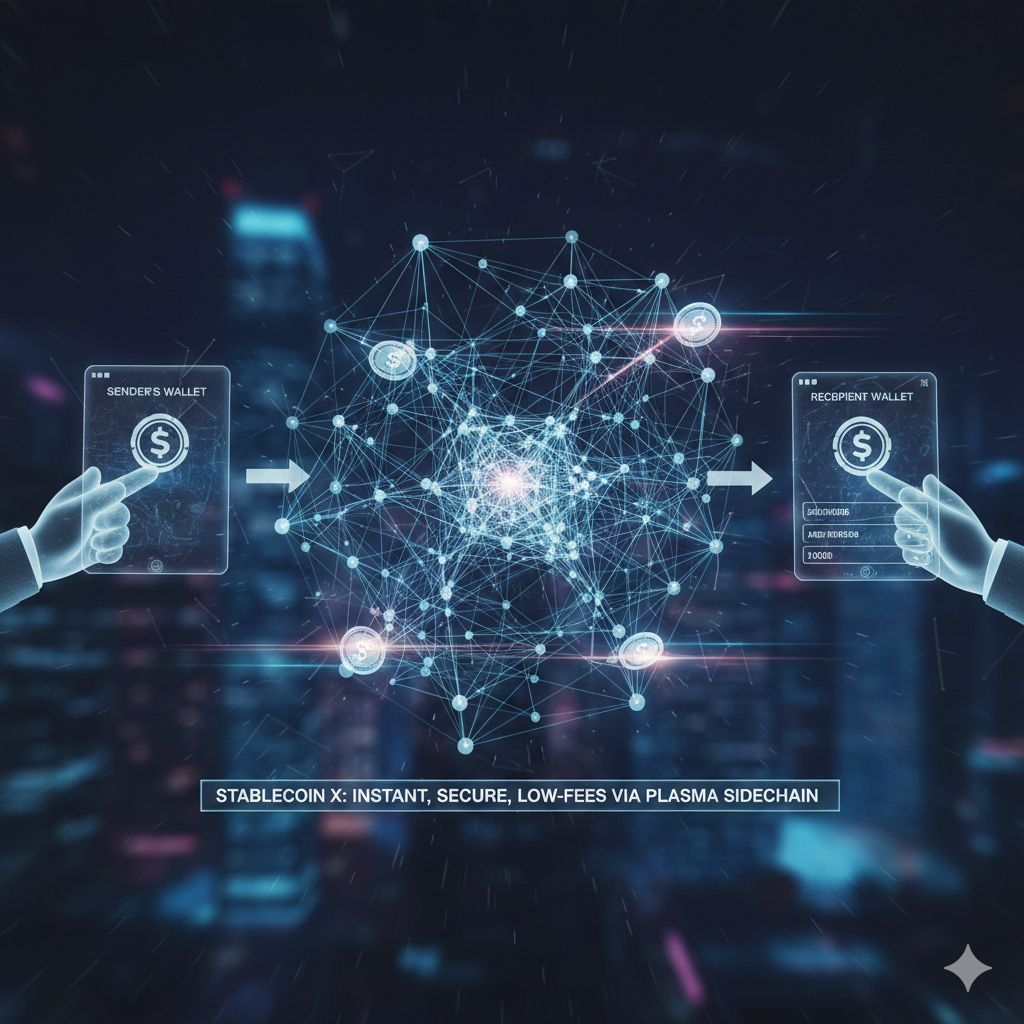
The Conclusion of the Topic :
Plasma is not trying to be the future of everything. It is trying to be the future of one thing: moving money. And it is winning. Plasma considered your money as its own. Otherchains considered your money as transaction or client money but plasma cgain really care about your money. That'swhy they are peoviding you with Bitcoin level security and high speed that is much hugher than bitcoin. Otherchains need Gas fees in their native currencies like Ethereum network needs ETH as currency and Solana network needs in Sol. But Plasma is the only chain that accept its minimal fees even in USDTs and plasma system indirectly convert it into XPL without knowing you ans hence same amount of XPL burns, thats why with the more adoption of plasma chain the supply shock will come due to huge burning mechanism and developers don't need to learn any newthing they can use ethereum as parent chain for plasma. So in short we can say Plasma is the future of stableCoin payments.