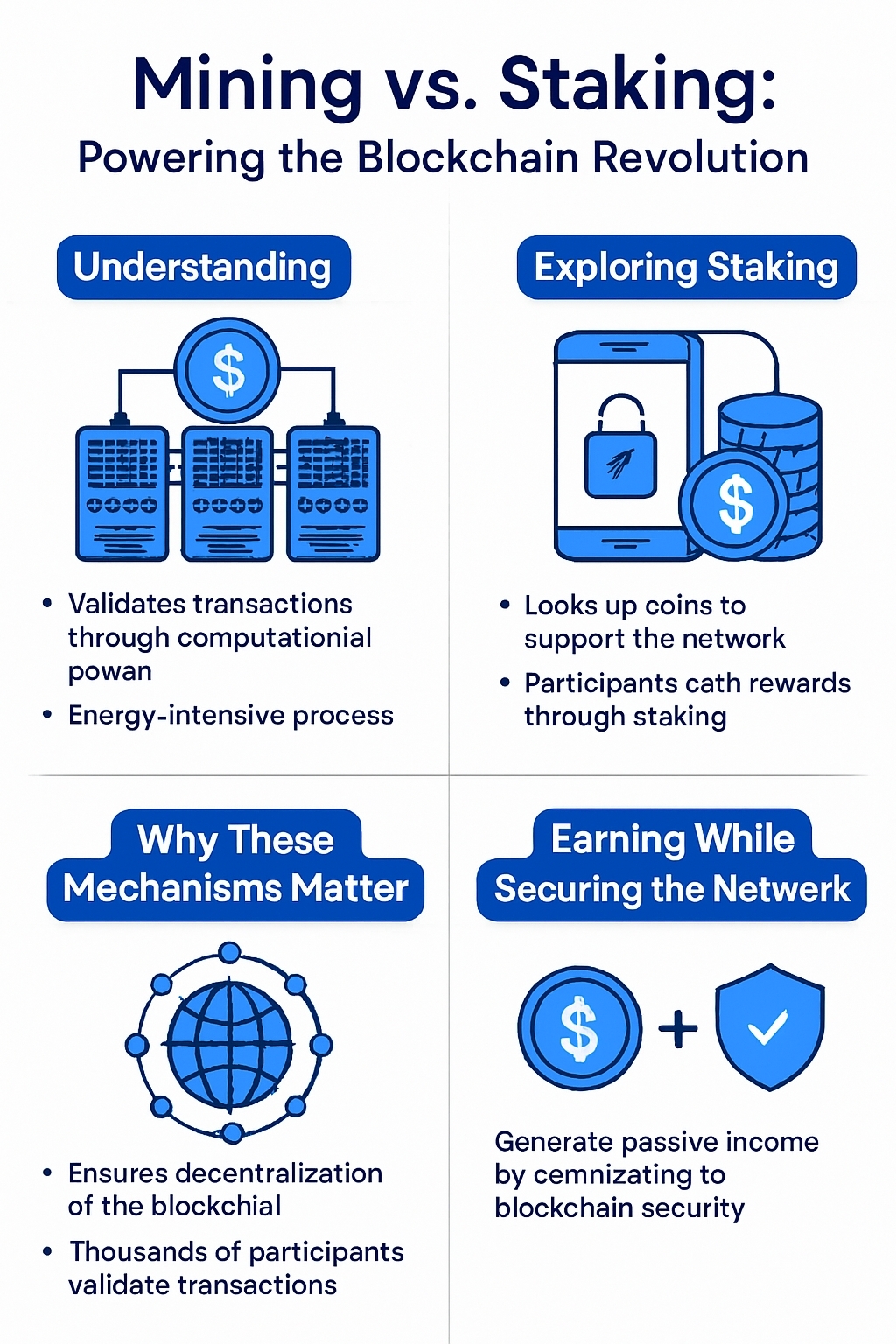
As blockchain technology continues to reshape global finance, two core mechanisms remain at the heart of its security and functionality: mining and staking. These systems validate transactions, maintain decentralization, and ensure trust without centralized intermediaries. Networks like $BTC and $ETH demonstrate how different consensus models can power entire digital economies while rewarding participants who secure them.
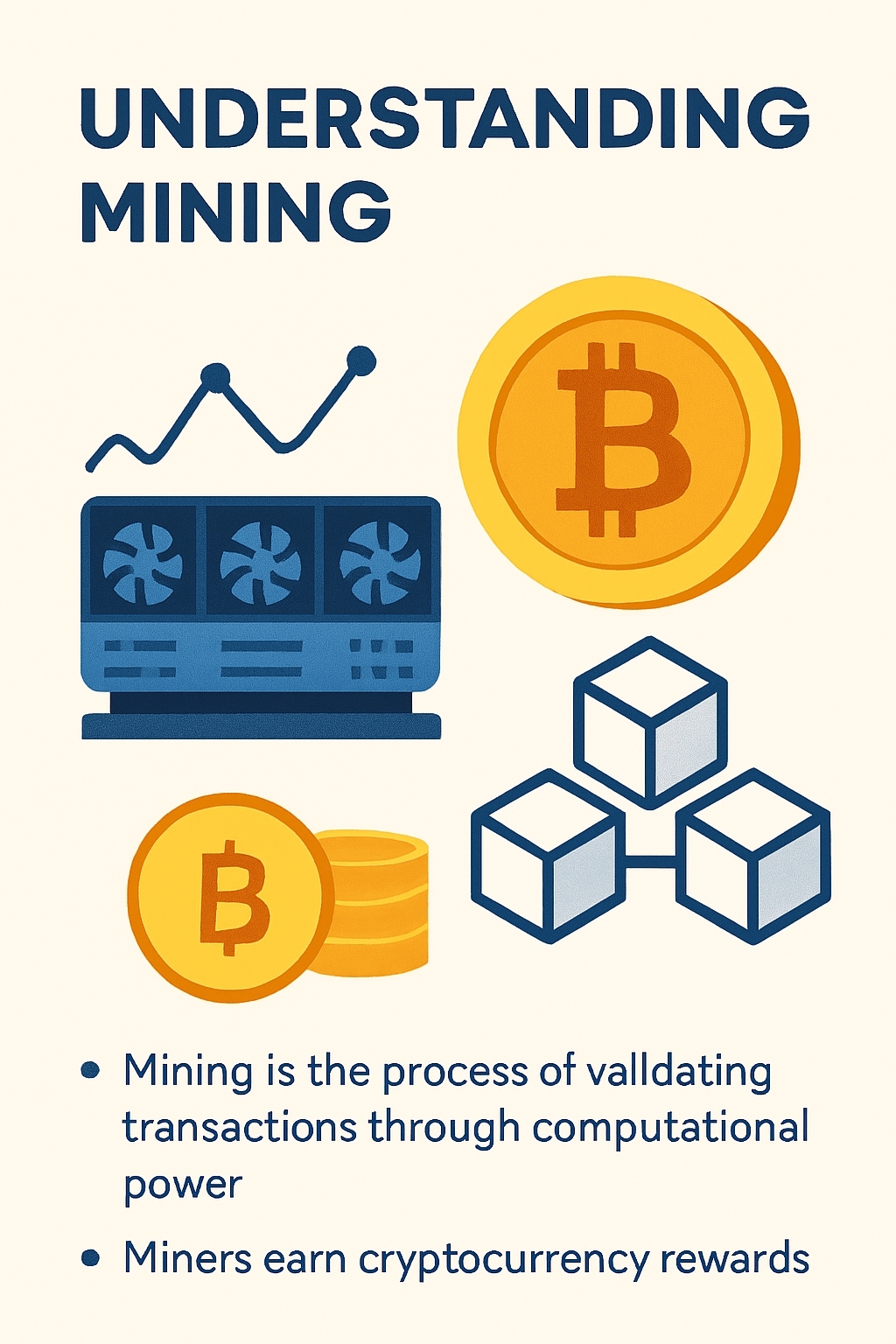
🔹 Mining: The Old Guard
Mining was the first big idea, introduced by Bitcoin through Proof of Work (PoW). Think of it like a global competition: miners use powerful computers to solve tough puzzles, and the winner gets to add the next block of transactions to the chain. In return, they earn rewards.
It’s rock‑solid in terms of security, but it comes at a cost, lots of electricity and specialized hardware. The upside? Attacking the network is so expensive and difficult that it’s practically impossible.
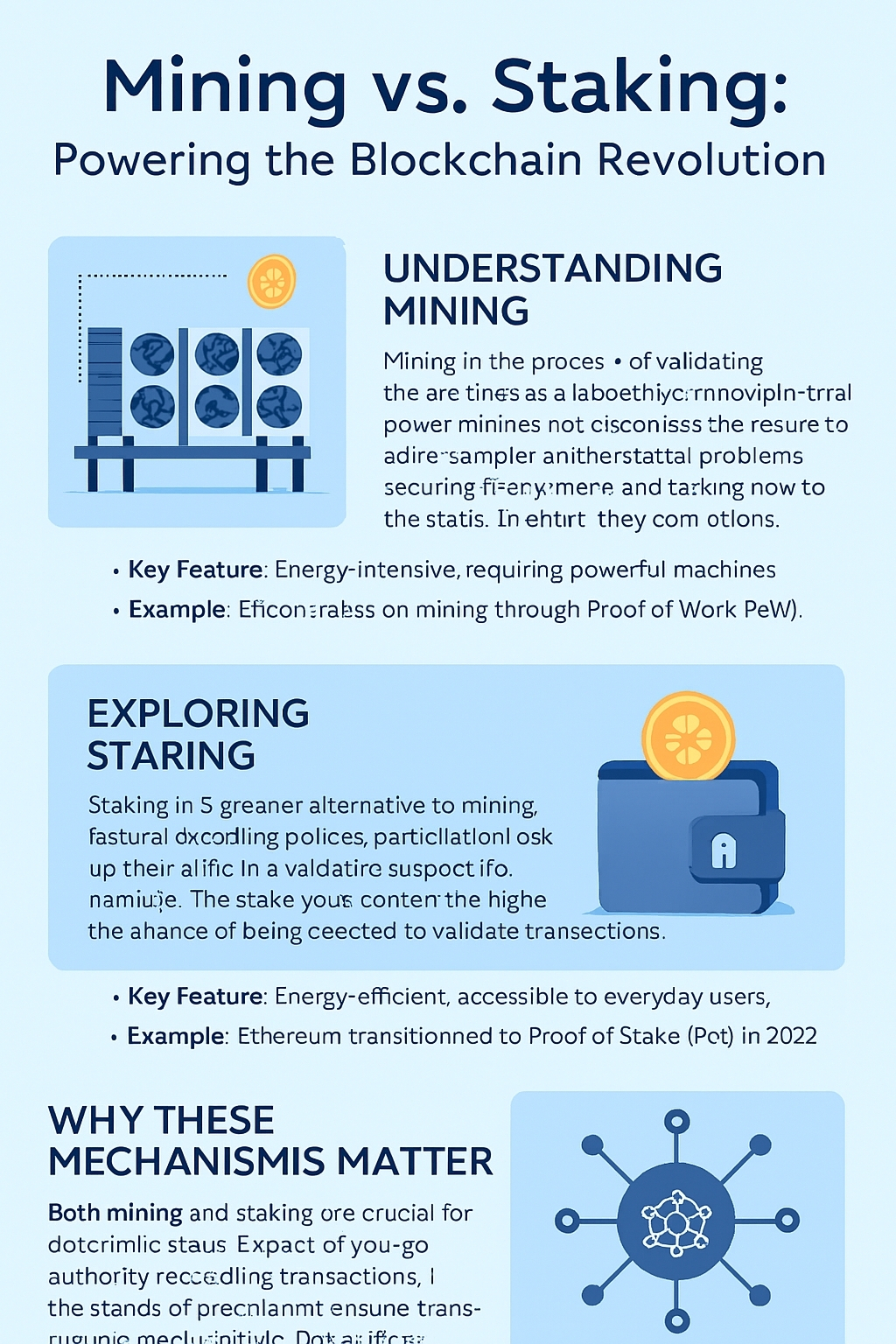
🔹 Staking: The New Approach
Ethereum shook things up when it moved to Proof of Stake (PoS). Instead of burning electricity, validators put their coins on the line. The more you stake, the better your chances of being chosen to validate transactions. Rewards come in the form of new tokens, but there’s a catch: cheat the system, and you risk losing your stake.
This makes staking far more energy‑friendly and accessible. You don’t need a warehouse full of machines, just a commitment to the network.
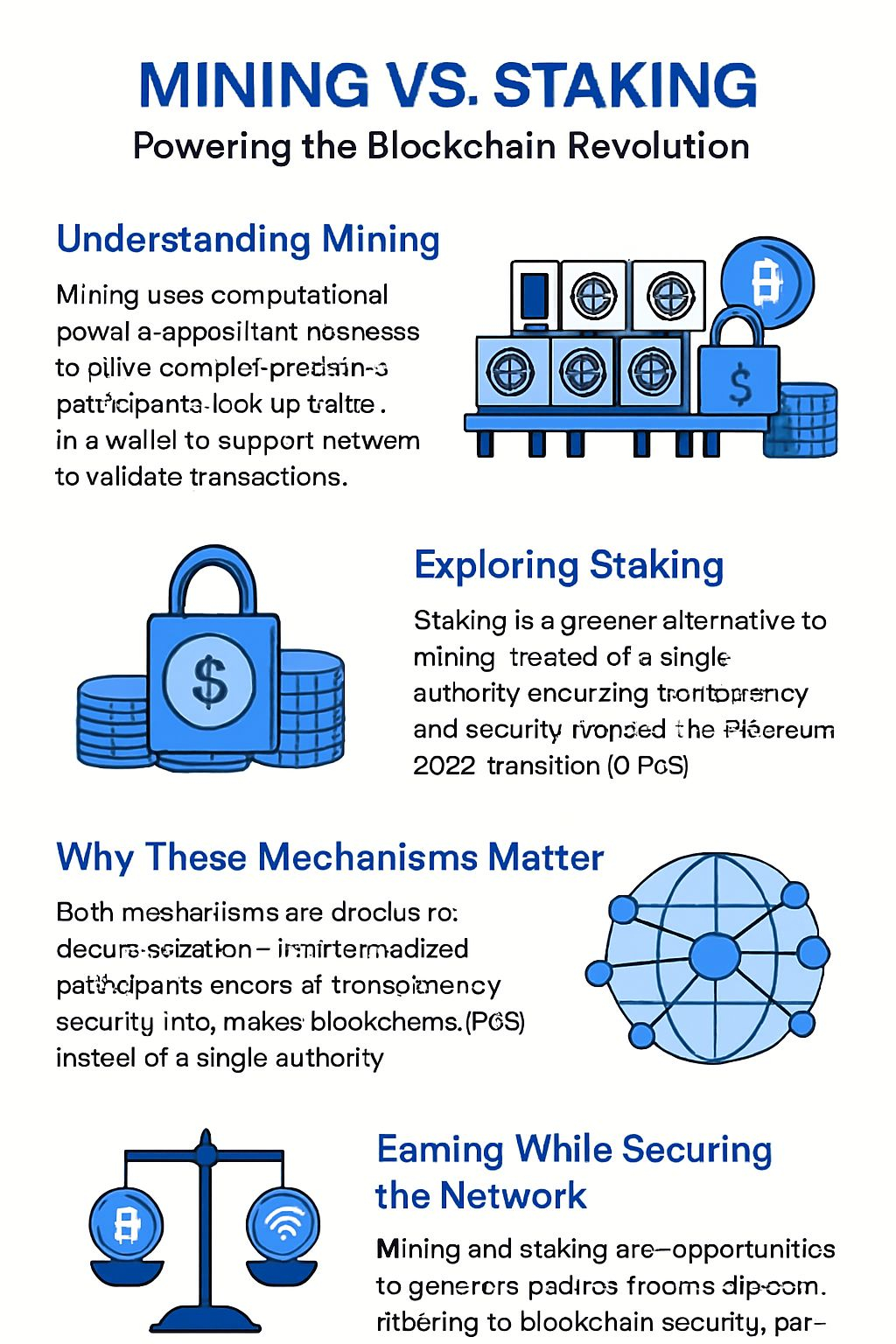
🔹 Why It Matters
Mining and staking are two sides of the same coin. Mining secures networks with raw computing power, while staking secures them with financial skin in the game. Both spread control across thousands of people worldwide, keeping blockchain decentralized and trustworthy.
Together, they fuel innovation, protect digital economies, and prove that you don’t need a central authority to keep things running smoothly.