

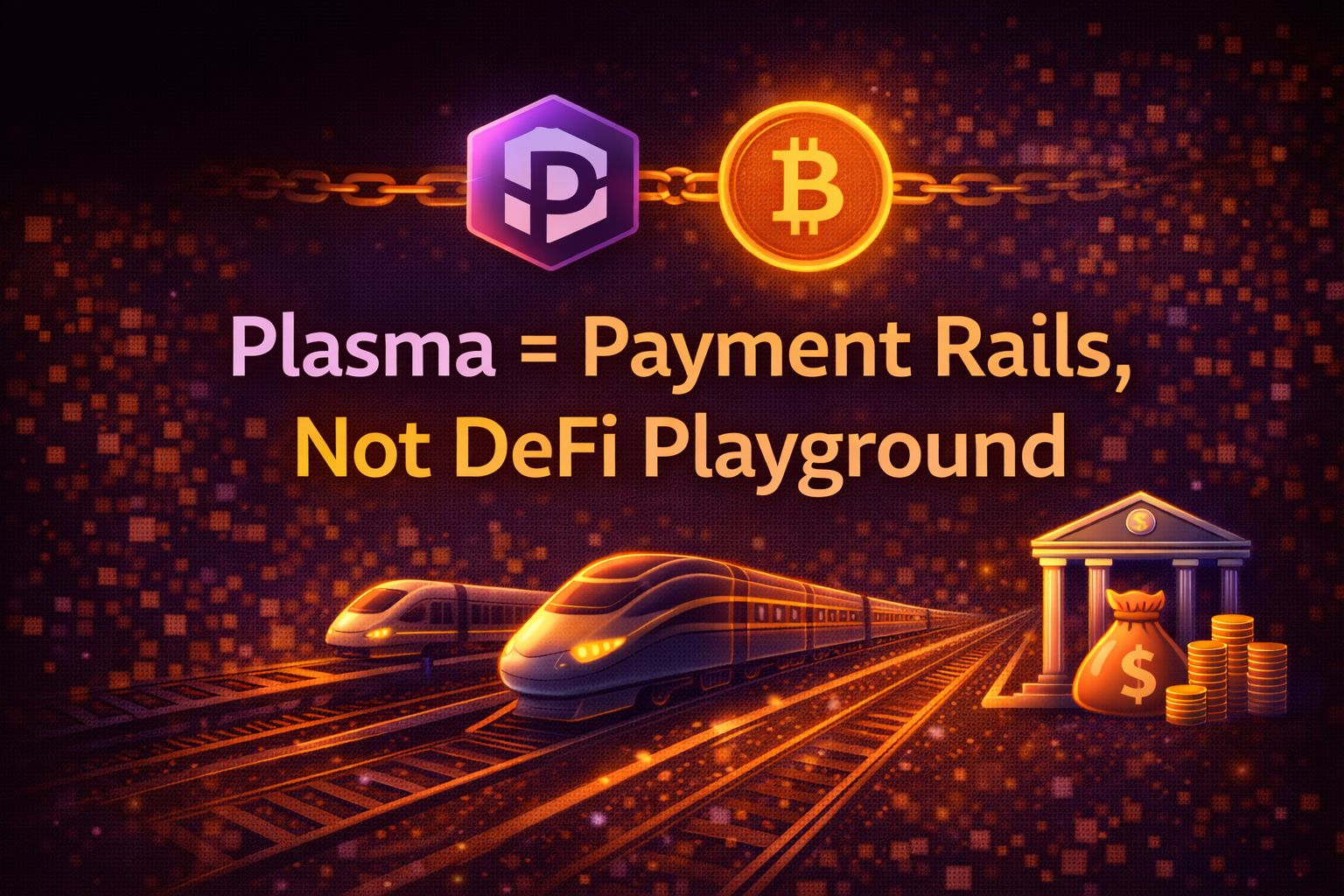
 When you have watched enough cycles play out you start to notice a pattern. The projects that survive are not always the ones that were the most exciting. They are usually the ones that were designed as if they were meant to carry weight. A lot of things in crypto are built like games. They are fun, they are loud, and they are built to create activity. But activity is not the same thing as infrastructure. Infrastructure is what remains after the excitement is gone.
Plasma triggered a very specific feeling in me. Not the feeling of “this will pump.” Not the feeling of “this will trend.” The feeling was more structural than that. It felt like something built with the mindset of a payment system, not a DeFi playground.
And that difference matters more than people think.
Most Bitcoin-adjacent systems have been built as experiments. They try to bolt complexity onto Bitcoin in the same way people bolt extra features onto a machine without asking whether the machine can safely carry them. The result is always the same. The user ends up being asked to trust something they do not understand. A bridge, a multisig group, a wrapped asset, or a committee of validators that promise they will behave correctly.
Bitcoin holders have never liked that arrangement. They did not become Bitcoin holders because they wanted to take extra risks. They became Bitcoin holders because they wanted an asset that did not require trust in anyone. Bitcoin’s entire value comes from the fact that it does not ask you to believe in people. It asks you to believe in math.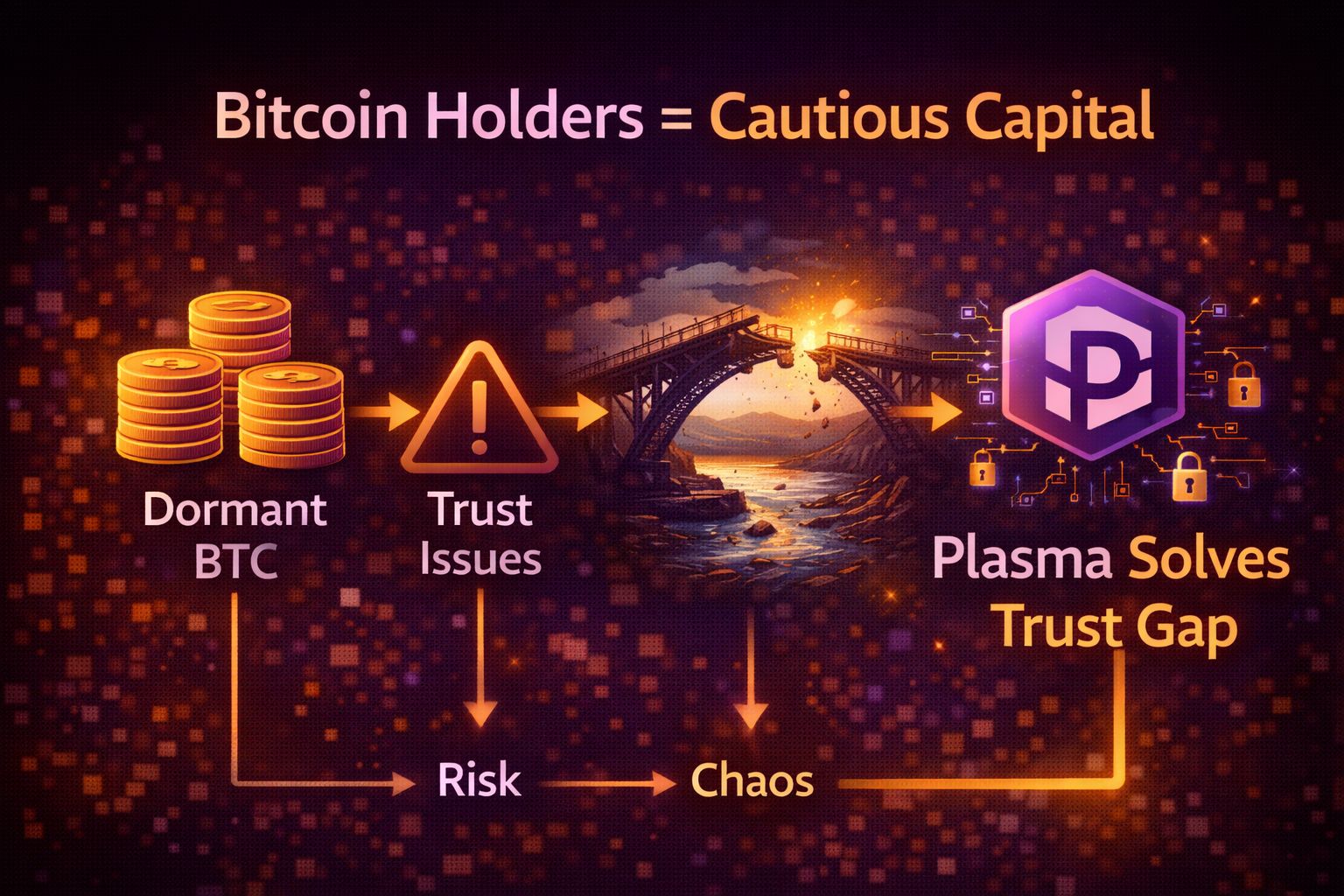 Plasma understands this instinct.
The core of Plasma’s design is not about creating the most yield. It is about creating a system where settlement can happen without the fragile social layer that most DeFi systems depend on. That social layer is what breaks when pressure arrives. It breaks when markets crash, when liquidity disappears, and when incentives shift. In DeFi, many things work only as long as everyone behaves.
That is not a stable foundation.
Payment infrastructure is not supposed to work “most of the time.” It is supposed to work every time. It is supposed to work when the world is calm and when the world is chaotic. It is supposed to work when the operator is honest and when the operator is not. This is the standard Bitcoin set, and it is why Bitcoin still stands after everything else has come and gone.
Plasma is not trying to turn Bitcoin into a casino. It is trying to build an environment around Bitcoin that feels like rails, not a playground.
A playground encourages risk because it is designed for entertainment. It assumes that people will fall and get back up. That is not how serious capital behaves. Serious capital behaves like it is trying to survive. It behaves like it wants to avoid regret. It behaves like it has responsibilities. And when capital behaves that way, it looks for one thing: reliability.
This is why the payment framing matters. Payments are not an optional use case. Payments are the foundation of real economies. If you want Bitcoin to be connected to the world’s economic system in a meaningful way, you do not start with complex derivatives. You start with settlement. You start with transfer. You start with something simple enough to scale.
Stablecoins have quietly proven this point.
Stablecoins are not exciting. They do not promise a new world. They simply move value. And yet stablecoins have become one of the most used crypto products in existence because they solve a real problem: global settlement that does not require banking permission.
Plasma is designed around that reality. It is built like the stablecoin economy is not a side story, but the main story.
The thing that stands out about Plasma is that it does not treat trust as a feature. It treats trust as a vulnerability. Many chains try to solve security by hiring better validators or building stronger governance. Plasma seems to be solving security by reducing the importance of governance entirely. That is a different mindset. It is the mindset of protocol design rather than political design.
Bitcoin’s genius was never that it had good people running it. Bitcoin’s genius was that it did not matter who was running it. The rules were stronger than the humans. That is the kind of philosophy Plasma seems to respect.
And this brings us to why Plasma feels “Bitcoin-adjacent” in a way that is not superficial.
Most projects attach themselves to Bitcoin as branding. They talk about being “Bitcoin aligned” while still asking you to deposit your capital into systems that can fail through human weakness. Plasma feels different because the design appears to be built around the same emotional truth that Bitcoin holders live by: losing your Bitcoin is not acceptable.
That is the standard. And if you cannot meet that standard, you do not deserve to handle Bitcoin’s liquidity.
People underestimate how conservative Bitcoin capital is. They think Bitcoin holders are greedy, waiting for yield. In reality, most Bitcoin holders are cautious because they have already learned the lesson that chasing extra return is usually the fastest way to lose what you already have. They have seen too many bridges collapse. Too many custodians fail. Too many protocols get hacked. Too many “safe” systems turn out to be fragile.
So they keep their Bitcoin dormant.
And the industry acts surprised.
But dormancy is not laziness. Dormancy is rational. Dormancy is what happens when the risk-reward tradeoff is not worth it. When every opportunity requires a new form of trust, the smartest decision is to do nothing.
This is the dormant treasury problem that keeps repeating across Bitcoin cycles. It is not that Bitcoin capital is inactive because it does not want to work. It is inactive because the systems built around it have not been trustworthy enough.
Plasma looks like an attempt to solve this problem at the root.
Instead of building a system that asks Bitcoin holders to become gamblers, Plasma appears to be building a system that respects their nature. It is designed like infrastructure. And infrastructure does not demand excitement. Infrastructure demands durability.
There is also something psychologically important about systems built for payments. Payments force discipline. Payments cannot rely on hype. A payment network cannot survive on narratives. If it fails once, people do not forgive it. They leave. That is why payment infrastructure is usually boring. It has to be boring. Boring is another word for dependable.
DeFi playgrounds are the opposite. They can afford to be chaotic because the user expects chaos. The user enters knowing they might lose. That is not how global settlement works. That is not how companies move treasury capital. That is not how real-world payroll works. That is not how cross-border remittance works.
Plasma seems to be built with those realities in mind.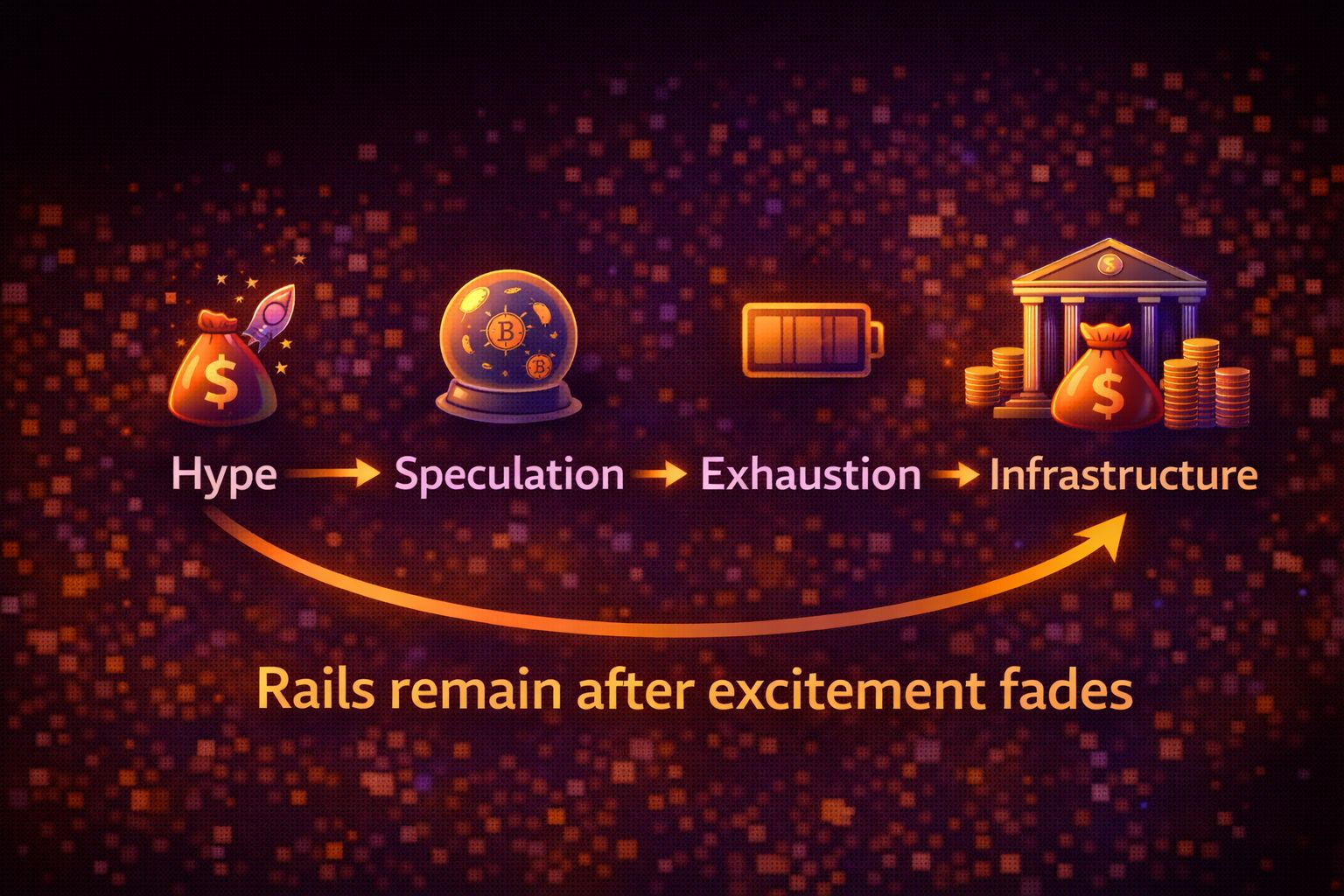 It is not trying to convince the world that it is revolutionary. It is trying to build a system that functions like it belongs in the real economy. That is why it feels like the first Bitcoin-adjacent system designed as payment infrastructure rather than financial theater.
And when you think about it from a longer perspective, this is exactly the kind of design that survives.
The market will always chase entertainment first. The market will always reward speculation early. But over time, the systems that matter are the ones that keep working when speculation becomes exhausted. They are the ones that builders can depend on when they stop caring about hype and start caring about execution.
This is the stage where infrastructure begins to separate itself from performance.
Plasma feels like it belongs to that category. Not because of what people say about it, but because of what its design implies. It implies restraint. It implies discipline. It implies that the builders are thinking about what happens after the excitement fades.
In crypto, restraint is rare. And when restraint appears, it is often the clearest signal that something is being built for the long run.
Plasma is not trying to be a playground.
It is trying to be the rails.
And rails are what the world ends up using when it finally stops playing.


