
Bitcoin is not collapsing. There’s no dramatic crash, no widespread panic, and no mass liquidation across the market. Yet beneath the surface, something more subtle—and arguably more important—is unfolding. The structure of Bitcoin’s market is changing, and history suggests these changes often precede prolonged periods of stagnation. What we may be witnessing is not chaos, but the early formation of another crypto winter.
Rather than focusing on price alone, the real story lies in supply behavior, market structure, liquidity, and sentiment. These indicators don’t scream for attention, but together they paint a picture of a market cooling down, growing cautious, and slowly transitioning from expansion to preservation.
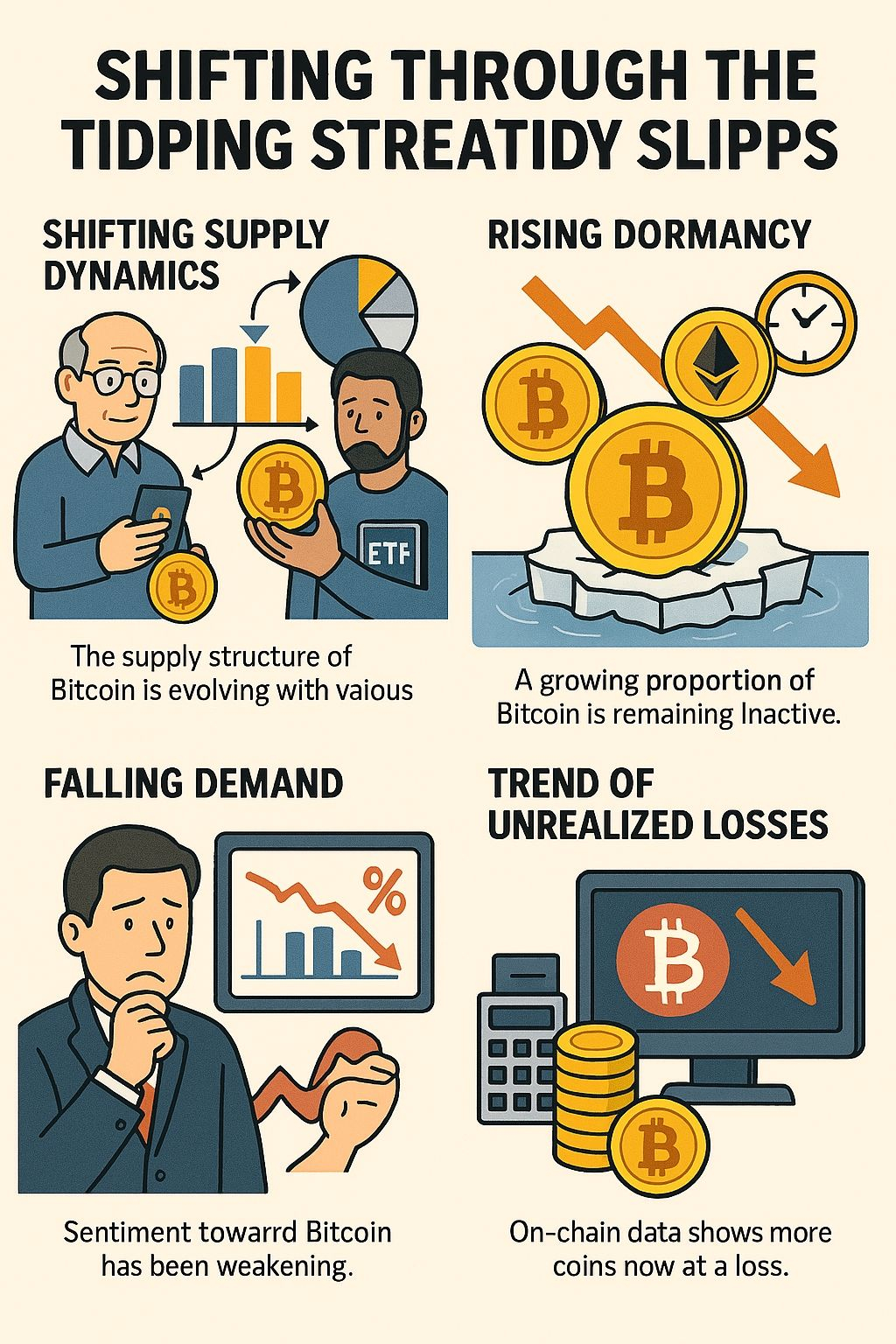
1. Shifting Supply Dynamics
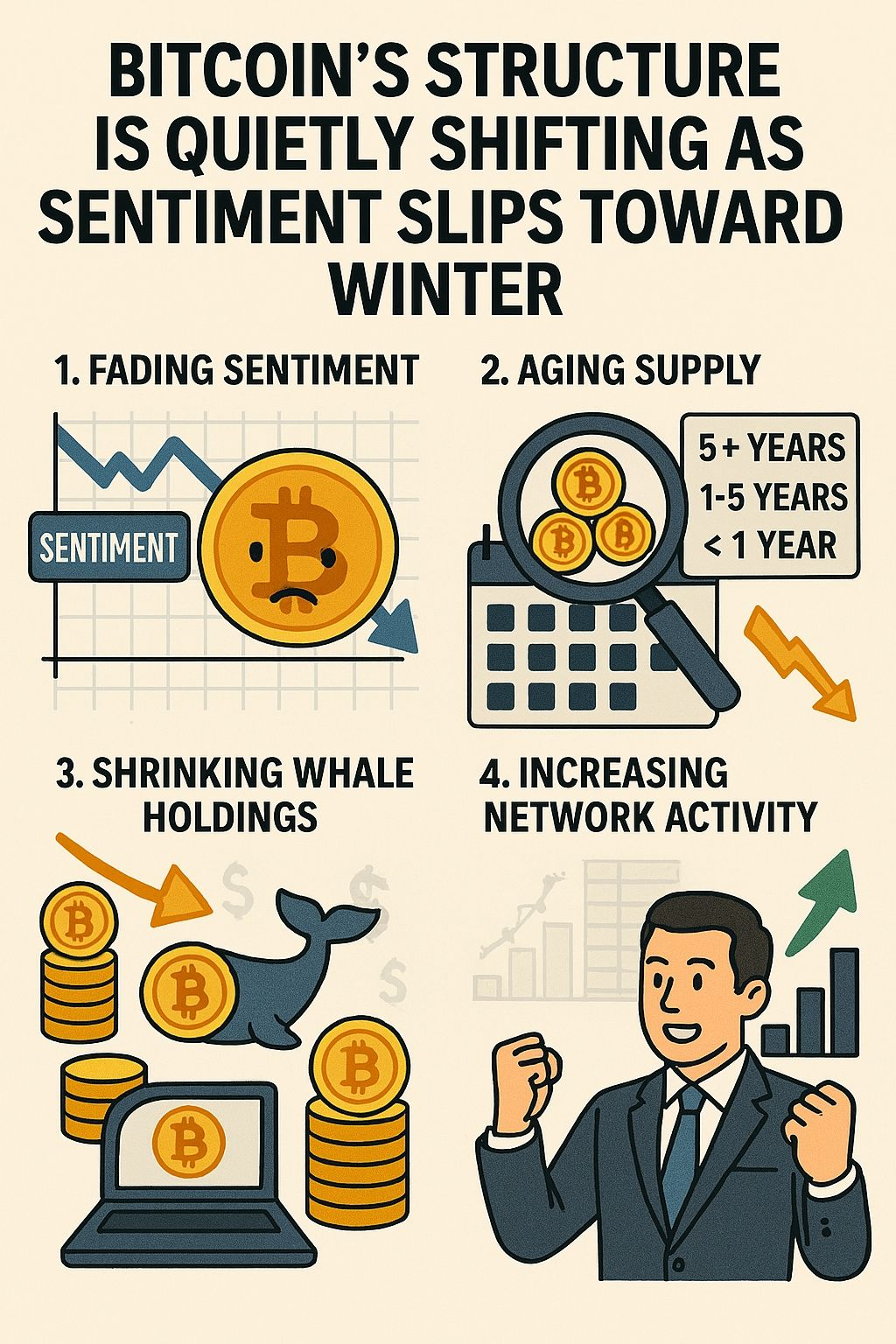
One of the clearest signs of a changing market regime is the behavior of $BTC holders. On-chain data shows that long-term holders continue to accumulate and increase their share of the circulating supply, while short-term traders and institutional participants are reducing exposure. This shift matters because it reduces active liquidity in the market.
As more coins become dormant, fewer are available for rapid trading. This limits volatility on the upside and makes strong rallies harder to sustain. Long-term holders are typically conviction-driven and slow to react, meaning price discovery becomes sluggish. Historically, rising dormant supply has aligned with periods of consolidation or slow market decay rather than explosive growth.
In short, Bitcoin is being held—not traded—and that changes everything.
2. Compression and Market Indecision
From a technical perspective, Bitcoin’s price action reflects hesitation rather than confidence. Price has been compressing within a broadening wedge, a structure that often signals a major move ahead—but not necessarily an immediate one. This pattern reflects a tug-of-war between buyers and sellers, where neither side has the conviction to take control.
Importantly, this is not panic-driven behavior. Instead, it signals uncertainty. Traders are waiting for confirmation, catalysts, or macro clarity. Momentum indicators remain muted, breakouts lack follow-through, and volatility continues to contract. When markets enter this phase, participation drops, patience wears thin, and speculative capital slowly exits.
Compression is rarely comfortable, and it often resolves only after interest has faded.
3. Post-Peak Structural Weakness
Since reaching its 2025 peak, Bitcoin has failed to reclaim its prior bullish structure. Lower highs, descending resistance, and repeated rejection zones suggest that upside momentum has weakened considerably. Each rally attempt has attracted less volume, indicating diminishing demand rather than aggressive accumulation.
Whale activity has also declined. Large players tend to step back when risk-reward becomes unfavorable, preferring to wait for deeper discounts or clearer macro signals. This absence of strong hands on the bid side makes the market vulnerable to slow grinding declines rather than sharp drops.
Structural weakness doesn’t always look dramatic—but it is persistent, and it compounds over time.
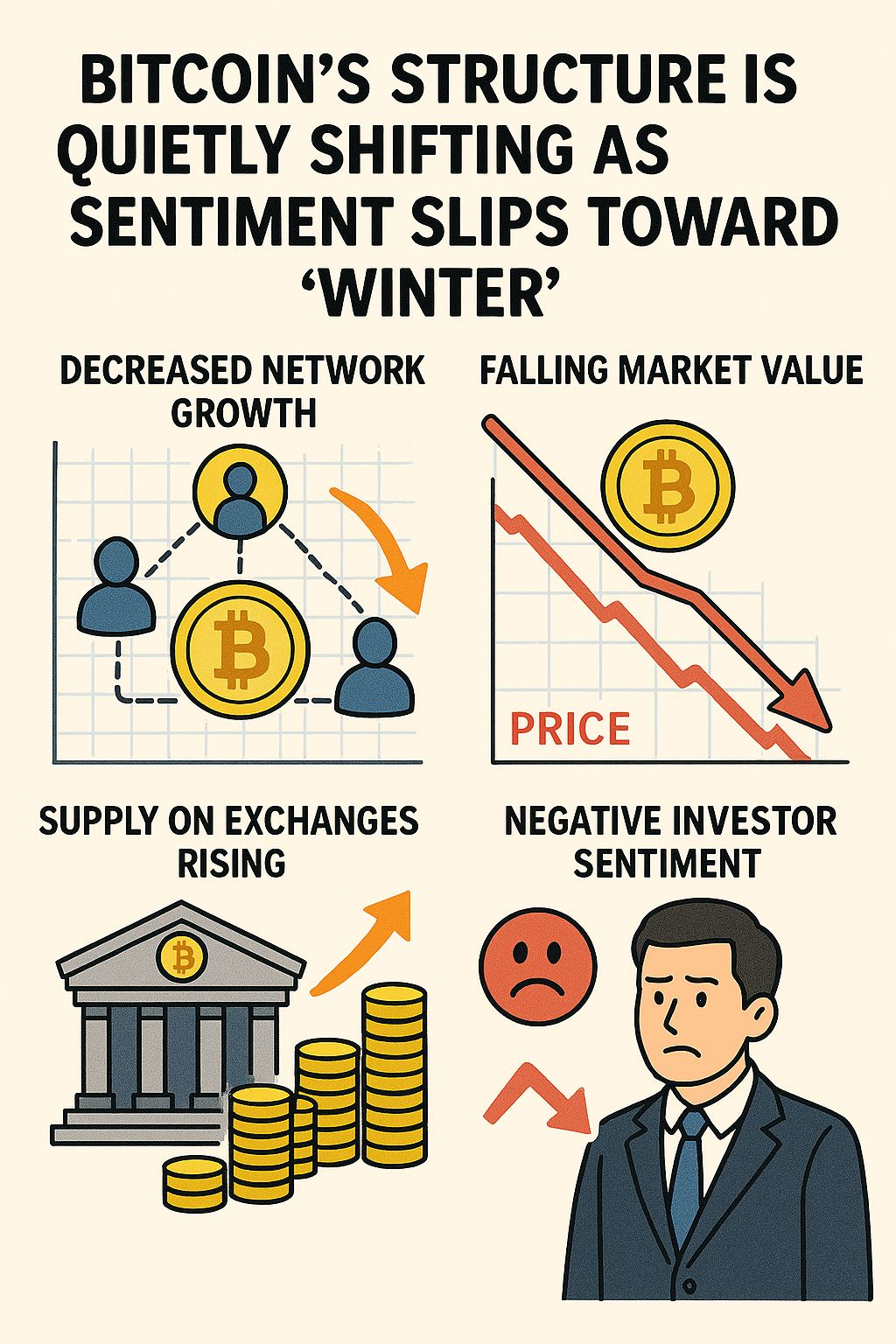
4. Sentiment Slipping Toward Winter
Sentiment is perhaps the most telling indicator of all. Funding rates have normalized after extended periods of optimism, and a growing portion of coins are now held at a loss. While this is not capitulation, it represents a shift away from confidence and toward caution.
The market feels quiet. Social engagement has slowed, narratives have weakened, and risk appetite is fading. This emotional environment is characteristic of early winter phases—where hope hasn’t fully disappeared, but excitement no longer drives participation. Investors become selective, traders reduce leverage, and capital preservation takes priority over growth.
Crypto winters don’t begin with fear. They begin with boredom.
Final Thoughts
Bitcoin’s current phase is not defined by collapse, but by restraint. Liquidity is tightening, conviction is thinning, and momentum is fading. These conditions don’t guarantee a deep bear market—but they do suggest a prolonged period of slow movement, reduced opportunity, and heightened selectivity.
For experienced market participants, this phase is less about chasing upside and more about patience, risk management, and preparation. Crypto winters have historically rewarded those who observe quietly, accumulate strategically, and wait for conditions to shift again.
The noise is fading. The signals are subtle. And that’s exactly why they matter.

