

On July 19, the American pharmaceutical company MEI Pharma (stock code: MEIP) announced a strategic transformation to establish a dedicated Litecoin treasury strategy. Currently, over $100 million in funding commitments have been made for this project.
As part of the transaction, this biotech company will appoint Litecoin founder Charlie Lee to its board of directors. GSR will also obtain a board seat and play an important role on the company's digital asset and fund management advisory committee. Additionally, the Litecoin Foundation has also invested in MEI Pharma, as the company's treasury strategy aligns closely with the core mission of promoting global Litecoin adoption.
Following the announcement, MEIP's stock price surged 83.37% in pre-market trading on Friday, continuing the previous day's increase of 16.58%. The price briefly reached $9 and is currently stable at $6.30. That day, trading volume exceeded 13 million shares, far surpassing the average daily volume of 26,000 shares over the past three months. This change not only reflects the market's positive expectations for the company's blockchain transformation but also signifies the formal initiation of another 'altcoin micro-strategy' model following mainstream crypto assets like ETH, SOL, and BNB, marking a new chapter in institutional allocation for Litecoin (LTC).
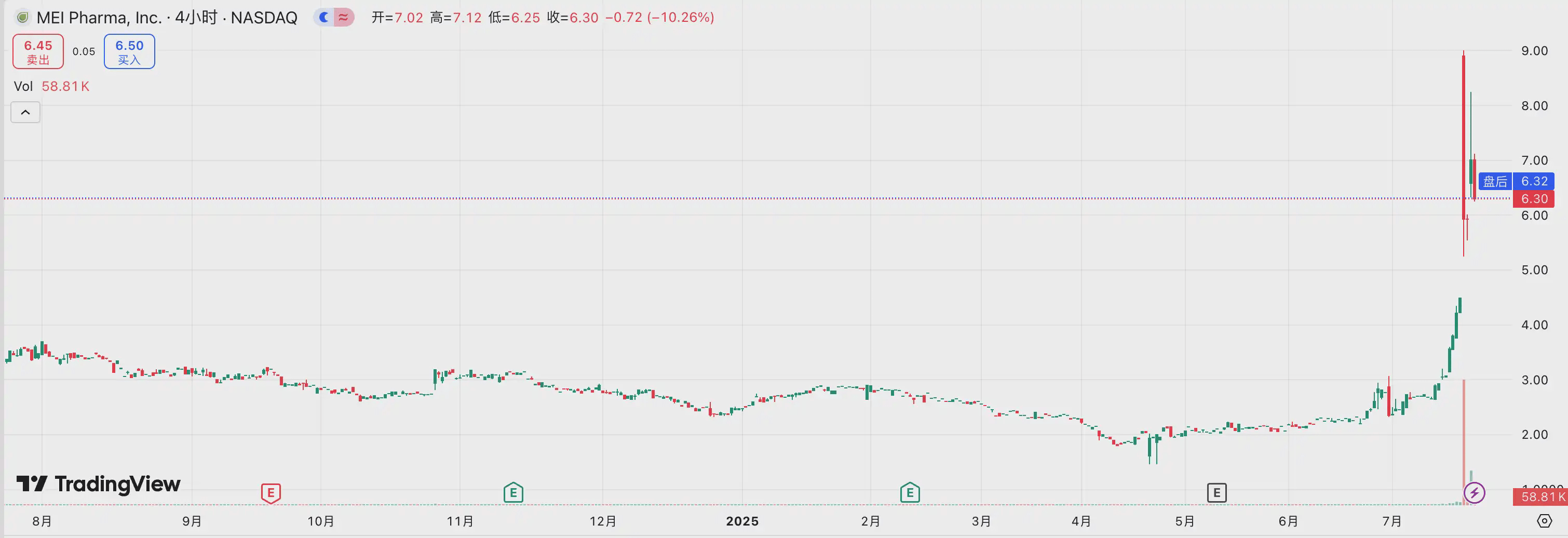
MEI Pharma completes strategic transformation: the first publicly listed company to establish a Litecoin strategic reserve.
MEI Pharma, Inc. is a biopharmaceutical company focused on the research and development of small molecule drug compounds, with core research projects including CDK inhibitor Voruciclib for treating B-cell malignancies and mitochondrial-targeted anti-cancer drug ME-344. The company was founded on December 1, 2000, and is headquartered in San Diego, California, USA.
On July 19, 2025, MEI Pharma announced its alignment with blockchain finance, initiating a new round of private equity investment (PIPE) and planning to include Litecoin (LTC) in its corporate asset allocation, becoming the first publicly listed biotech company to use LTC as a primary financial reserve asset.
According to the announcement, this round of financing is co-led by Titan Partners Group and cryptocurrency trading company GSR, planning to issue 29,239,767 shares of common stock or equivalent pre-paid warrants at a price of $3.42 per share, with a total financing scale of approximately $100 million. The transaction is expected to be completed around July 22, 2025, subject to customary regulatory and closing conditions.
Behind this financing is not just a capital operation but also signifies that MEI is undergoing a profound strategic transformation. The company stated that it has previously conducted a systematic assessment of the sustainability of traditional biotech business models and decided to embrace blockchain and decentralized finance (DeFi). It plans to restructure its corporate treasury with Litecoin as the core asset and engage in long-term collaboration with the Litecoin Foundation and GSR.
In response to this collaboration, Charlie Lee stated: 'Since its founding in 2011, Litecoin has consistently adhered to the principles of speed, security, and decentralization. I am pleased to see publicly listed companies like MEI embracing these principles. This not only reflects the growing confidence institutions have in LTC but also lays a foundation for its further expansion into traditional capital markets.'
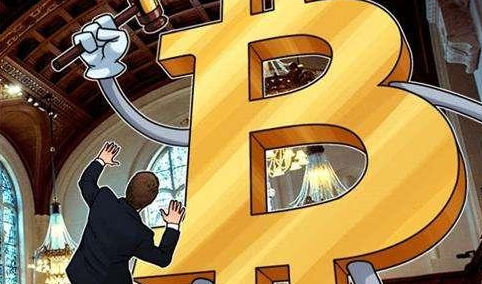
Why choose Litecoin
Litecoin is one of the earliest altcoins to enter the market, created by former Google engineer Charlie Lee in 2011. Its core architecture is based on Bitcoin's open-source code, with several optimizations and upgrades made on top of it. Compared to Bitcoin, Litecoin generates blocks faster, uses the Scrypt proof-of-work (PoW) algorithm, which is more suitable for ordinary hardware mining, thereby lowering the participation threshold. Its total supply is set at 84 million coins, possessing deflationary attributes similar to Bitcoin—every 840,000 blocks will trigger a halving mechanism for block rewards.
As a representative of the first generation of altcoins, Litecoin has always been committed to improving on-chain transaction efficiency and scalability, with advantages such as low transaction fees and fast processing speeds. In recent years, Litecoin has also gradually expanded its payment use cases, including travel companies, convenience stores, real estate agencies, and online e-commerce. In 2021, the Litecoin Foundation announced a partnership with financial service providers to issue Visa debit cards, allowing users to instantly convert LTC to USD for payment, further solidifying its practical value.
Since Litecoin's founding in 2011, Charlie Lee has always been the core driver behind this ecosystem. He has not only advocated for technological innovation but also led several key upgrade processes—including Litecoin's selective integration of privacy features and activation of Segregated Witness. Charlie Lee has also made significant contributions to the development of the Lightning Network experiment, mining pool collaboration, and developer community building, laying a solid foundation for the long-term development of both Bitcoin and Litecoin networks.
Today, his deep involvement in MEI Pharma's Litecoin treasury has once again boosted market confidence in the 'Litecoin treasury' strategy. As emphasized by the Litecoin Foundation in its announcement: 'For 14 years, Litecoin has consistently provided millions of users with a stable, low-cost, and easily accessible network.' This collaboration with MEI not only means that Litecoin is being incorporated into the financial structure of a U.S. listed company for the first time, but it also marks a strategically significant institutional financial experiment with the founder's direct involvement.
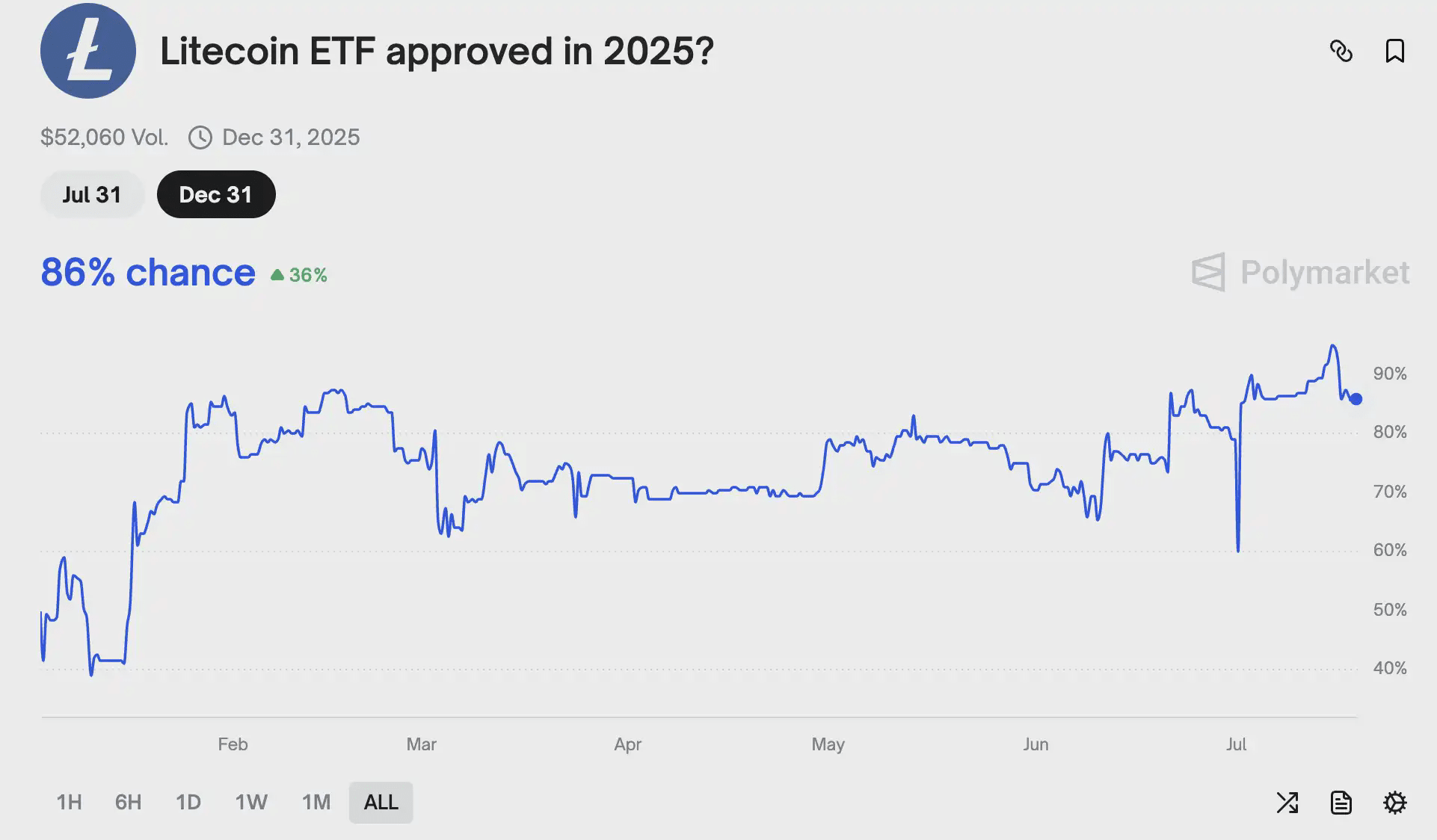
At the same time, market expectations for institutional investment in Litecoin are rapidly heating up. According to data from the decentralized prediction platform Polymarket, as of the end of 2025, the probability of the U.S. Securities and Exchange Commission (SEC) approving a Litecoin spot ETF has reached 86%. This not only reflects investors' optimistic expectations for Litecoin's regulatory prospects but also indicates its gradual entry into the ranks of 'mainstream assets' amidst the trend of compliance.
Once the spot ETF is approved, Litecoin will join Bitcoin and Ethereum as core targets in traditional financial investment portfolios, providing institutional funds with a legal and compliant allocation path. This will enhance LTC's market liquidity and valuation anchoring while further strengthening its market positioning as a 'payment-type digital asset', acting as a bridge linking the on-chain world with Wall Street funds.
Summary
With MEI Pharma becoming the first publicly listed company to incorporate LTC into its financial reserves, following the initiation of the 'micro-strategy model' by mainstream tokens like Ethereum, BNB, and SOL, Litecoin has also officially joined this institutional accumulation camp, marking the initiation of another altcoin 'treasury path'. On the day the news was announced, Litecoin strongly broke through the downward channel, rising over 6% within 24 hours, with its price reaching as high as $106, and then continuing to rise to $115. This not only marks a reassessment of LTC's asset attributes but also further reinforces the role of 'altcoin micro-strategy' as a driver of funds in this bull market. Coupled with the ETF concept and accelerated institutional accumulation, the altcoin season is quietly beginning.
$LTC #ETH重返3800 #上市公司加密储备战略 #莱特币LTC Cryptocurrency market