

As promised, I am writing you a more technical article on Solana. I had already shared with you a review as well as a detailed article on this blockchain. This time, let’s dive together into an in-depth technical analysis of Solana.
Solana is a third-generation blockchain, designed to solve the scalability and speed issues faced by previous blockchains. Unlike traditional blockchains like Bitcoin and Ethereum, which use Proof of Work (PoW) and Proof of Stake (PoS) respectively, Solana stands out with a series of technical innovations. These innovations allow it to process an impressive volume of transactions at lightning speed.

Proof of History (PoH): A Revolutionary Algorithm
Proof of History (PoH) is at the heart of Solana’s innovation. This concept was introduced by Anatoly Yakovenko, Solana’s creator, in 2017. PoH allows for a verifiable source of time to be created before consensus, which is radically different from traditional systems where transaction timestamps depend on communication between nodes.
How does PoH work?
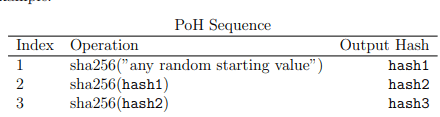
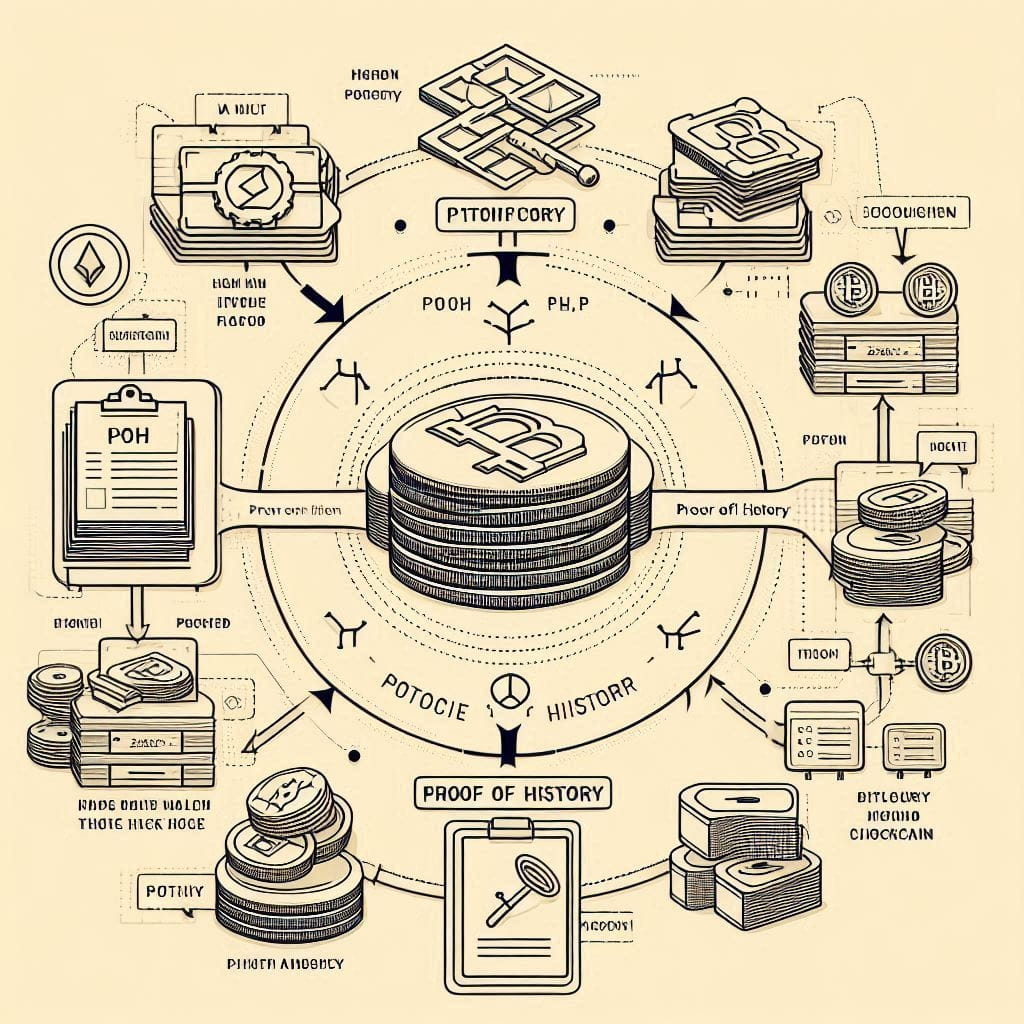
PoH is based on an iterative hash function algorithm, often a SHA256 cryptographic function, although other functions can be used. The algorithm generates a unique record that proves that the data occurred at a specific point in time. Each hash output depends on the previous one, thus forming a linear sequence of hashes, where each hash proves that the previous one occurred before it.
Timestamp: Each Solana node generates a timestamp based on the current PoH state. This timestamp is then attached to each transaction, creating a verifiable chronological proof.
Sequencing: Using this mechanism, nodes do not need to constantly communicate to ensure the order of transactions. This allows for a significant increase in processing speed, with transactions validated independently of the global consensus.
Validation: When a node receives a transaction with a PoH timestamp, it can immediately verify its validity without having to wait for synchronization with the rest of the network.
PoH thus makes it possible to considerably reduce network latency by offloading part of the consensus process forward.
Iterative Hashing Algorithm:
The core of PoH is an iterative hashing algorithm, usually based on the SHA256 cryptographic function. This hash function generates a unique sequence of data where each element depends on the one before it. This process creates a linear chain of hashes, with each hash proving the existence of the previous one at a given time.
Example: If H0 is the initial hash, then H1 = SHA256(H0 + Data) where Data can be any input data. H2 = SHA256(H1 + Data) continues the sequence, and so on. The chain thus formed (H0 -> H1 -> H2 -> ...) becomes a proof of the order of events.
Timestamp:
Each node on the Solana network generates a timestamp based on the current PoH sequence. This timestamp is attached to each transaction, providing cryptographic proof that the transaction occurred at a specific moment in time.
Visualization: Imagine a blockchain where each block is timestamped based on the previous PoH state. This process avoids the need for constant synchronization between nodes, as the order of transactions is already determined by the PoH sequence.
Transaction Sequencing:
With PoH, transactions can be sequenced without requiring immediate validation by the entire network. This means that nodes do not need to continually communicate to verify the order of transactions, which greatly speeds up the process.
Advantage: In traditional blockchains, each transaction must be approved by the entire network, a process that can be slow. With Solana, transactions are validated locally by each node using PoH, which reduces latency and increases transaction throughput.

Transaction Sequencing:
With PoH, transactions can be sequenced without requiring immediate validation by the entire network. This means that nodes do not need to continually communicate to verify the order of transactions, which greatly speeds up the process.
Advantage: In traditional blockchains, each transaction must be approved by the entire network, a process that can be slow. With Solana, transactions are validated locally by each node using PoH, which reduces latency and increases transaction throughput.
Quick Validation:
When a node receives a transaction with a PoH timestamp, it can immediately verify its validity based on the hash sequence it has already calculated. This eliminates the need to wait for synchronization with other nodes to confirm the validity of a transaction.
Schematic of how PoH works
A visual diagram to represent this process might look like this:
Data -> SHA256 -> H0 (PoH initial)
H0 + Data1 -> SHA256 -> H1 (Horodaté T1)
H1 + Data2 -> SHA256 -> H2 (Horodaté T2)
H2 + Data3 -> SHA256 -> H3 (Horodaté T3)
...
Each Hn is timestamped, indicating that event DataN occurred after Data(N-1). Timestamps ensure that the order of transactions is respected, without requiring real-time synchronization between all nodes in the network.

Solana’s Proof of History (PoH) is a major innovation that allows the blockchain to process transactions at impressive speeds. By pre-sequencing transactions and enabling fast local validation, PoH overcomes the limitations of traditional blockchains that require global consensus before transactions can be validated.
Tower BFT : Le Consensus Solana
To secure the network and achieve consensus, Solana uses Tower BFT, an optimized version of the Byzantine Fault Tolerance (BFT) algorithm. Tower BFT leverages the timestamps generated by PoH to lock in node votes and ensure fast and secure consensus.
How Tower BFT works:
Votes Lock:
Nodes validate transactions by voting for a certain state of the blockchain. Once a node votes, it is locked to vote in the same direction for future transactions. This lock increases with each vote, thus reinforcing the stability of the consensus.
Voting Process: When a node validates a transaction or a particular state of the blockchain, it casts a vote for that state. Unlike traditional BFT algorithms, where votes can be revised or reversed, in Tower BFT, each vote is "locked".
Locking Effect: Once a node votes for a given state, it cannot go back. Instead, it must continue to vote in the same direction for future transactions that depend on that state. This locking mechanism enhances network stability by minimizing the risk of forks or divergent consensus.
Increased Lock: The lock level increases with each new vote, meaning that nodes become more and more committed to the chain they support. This progression makes chain reorg attacks much harder to pull off, because once consensus is reached, nodes are strongly discouraged from changing their minds.
2. Optimization du Consensus :
Thanks to PoH timestamps, Tower BFT is able to reach consensus without requiring multiple rounds of communication between nodes, unlike traditional BFT algorithms. This further reduces latency and allows Solana to maintain high performance even under congestion.
Reduced Communication Rounds: In traditional BFT systems, nodes often have to go through multiple rounds of communication to ensure that all agree on the current state of the blockchain. With Tower BFT, PoH timestamps serve as reference points, allowing nodes to synchronize their votes more efficiently. This means that consensus can be reached faster, without the multiple round trips of messages, significantly reducing latency.
Elimination of General Conferences: Traditional BFT algorithms often require nodes to hold general conferences to reach consensus, especially in the event of disagreement. Tower BFT eliminates this need by leveraging PoH timestamps, which provide an objective timeline that all nodes can follow. This not only speeds up consensus, but also reduces the communication load on the network.
Security and Resilience:
Tower BFT ensures that even if part of the network is compromised, consensus can still be achieved securely. Attacks are made more difficult because timestamps are inherently tied to the state of the network.
Byzantine Fault Tolerance: Tower BFT is designed to tolerate Byzantine faults, i.e. scenarios where nodes can act maliciously or incorrectly. Even if up to a third of the nodes are compromised, the network can still reach a secure consensus. This is made possible by the combination of locked votes and PoH timestamps, which limit the ability of compromised nodes to influence the overall consensus.
Attack Resistance: PoH timestamps are inherently tied to the state of the network, making attacks much more complex. For example, for an attacker to successfully influence consensus, they would not only have to compromise a large portion of nodes, but also manipulate timestamps consistently across the entire network, which is extremely difficult to achieve.
Tower BFT, as an optimized version of the BFT consensus, represents a fundamental pillar of Solana’s performance and security. By combining locked votes with Proof of History timestamps, Solana manages to maintain a fast, efficient, and resilient network against threats. This unique approach allows Solana to process an impressive number of transactions per second, while ensuring the security of the network.

Turbine: Large-Scale Data Propagation
Turbine is a core technical element in Solana’s architecture, designed to solve a critical problem in high-performance blockchains: the fast and efficient propagation of data blocks across a distributed network. Inspired by decentralized file sharing systems such as BitTorrent, Turbine enables Solana to maintain high performance even during periods of high traffic, while reducing latency and increasing network resiliency.
1. Problem of Block Propagation
In a blockchain, each node in the network must receive and validate blocks of transactions for consensus to be reached. However, as the network grows and the number of transactions increases, the propagation of these blocks becomes a potential bottleneck. Traditional blockchains, where blocks are propagated linearly across the network, can suffer from latency and congestion, limiting the number of transactions per second (TPS) the network can handle.
2. Turbine Operation
The Turbine protocol is specifically designed to overcome these limitations by breaking up data blocks into smaller pieces called “chunks” and distributing them across the network in a parallel and efficient manner. Here’s how it works in detail:
Block Fragmentation: When a leader node generates a new block, that block is immediately split into multiple fragments or chunks. Each chunk represents a small portion of the total block data. This fragmentation allows each node to not have to process the entire block at once, reducing the load on each node and speeding up the propagation process.
Tree Propagation: Turbine uses a tree propagation scheme to distribute these chunks across the network. The leader node sends the chunks to a select group of neighboring nodes, which in turn send these chunks to other nodes, and so on. This layered distribution process allows for fast and largely parallel dissemination of data, significantly reducing latency.
Redundancy and Resilience: To ensure that blocks are fully propagated, Turbine incorporates some redundancy into the distribution of chunks. Even if some nodes fail or become malicious, data can still be reconstructed from the fragments received by other nodes. This redundancy strengthens the network’s resilience against outages and attacks.
3. Advantages of Turbine
The Turbine protocol has several distinct advantages that contribute to Solana's overall performance:
Latency Reduction: By splitting blocks into smaller chunks and distributing them in parallel, Turbine allows Solana to reduce the time it takes to propagate a full block across the network. This results in lower latency and faster transaction validation.
Scalability: Turbine is designed to scale with the size of the network. As the number of nodes increases, tree propagation remains efficient, allowing Solana to maintain high transaction throughput without compromising performance.
Fault Tolerance: Thanks to its built-in redundancy, Turbine ensures that even in the event of chunk loss, the network can always rebuild the complete block, guaranteeing service continuity and network robustness.
4. A concrete example
Imagine Solana is processing a spike in transactions during a highly anticipated ICO (Initial Coin Offering). Thousands of transactions are submitted every second. Without Turbine, the network could become overloaded, causing significant delays in block propagation. With Turbine, blocks are fragmented and propagated ultra-fast across the network, allowing Solana to maintain high TPS throughput without compromising speed or security.
Turbine is a key innovation in Solana’s architecture, allowing the network to handle high transaction volumes while maintaining low latency and high resilience. This protocol, in combination with other elements like Tower BFT and Proof of History, positions Solana as one of the most performant and promising blockchains on the market.
Sealevel: Parallel Execution of Transactions
Sealevel is one of Solana’s most technical and important innovations, allowing the blockchain to significantly differentiate itself from others like Ethereum. Unlike Ethereum, where transactions are executed sequentially, Sealevel allows for parallel execution of non-conflicting transactions, thus fully exploiting the multi-core capabilities of modern processors. It is thanks to Sealevel that Solana can achieve a transaction per second (TPS) throughput that is much higher than that of traditional blockchains.
State Identifiers and Parallel Execution
Every transaction on Solana is associated with a set of state identifiers, which indicate precisely which parts of the blockchain are affected by the transaction. If two transactions do not have conflicting state identifiers, they can be executed in parallel without risking the integrity of the blockchain.
Example: Let's say two transactions A and B are submitted to the Solana network simultaneously. If transaction A modifies a user account and transaction B transfers to another account without touching the same balance, Sealevel will allow these two transactions to be processed in parallel. This parallel execution capability can significantly reduce the overall transaction processing time.
Optimisation Multicœur
One of Sealevel’s major strengths is its optimization for multi-core architectures. While many blockchains remain stuck in sequential execution that limits their scalability, Solana uses Sealevel to take advantage of modern CPUs, which often have multiple processing cores. This type of optimization is crucial for maximizing network throughput, especially as the number of submitted transactions increases exponentially.
Interoperability with Smart Contracts
Sealevel is not limited to simple transaction execution. It also enables the parallel execution of smart contracts, which is crucial for complex applications like decentralized exchanges (DEX) or blockchain games. For example, a DEX on Solana can process multiple buy and sell orders at the same time, without having to wait for each transaction to complete before moving on to the next one.
This means that Solana users not only benefit from increased speed for simple transactions, but also the ability to execute complex operations efficiently, with minimal latency.
By combining Turbine, Tower BFT, and Sealevel, Solana has built an incredibly powerful and resilient blockchain architecture. The parallel execution offered by Sealevel is particularly impressive, as it allows Solana to process transactions and smart contracts at a scale that few other blockchains can achieve.

Solana Tokenomics: SOL, an Essential Asset
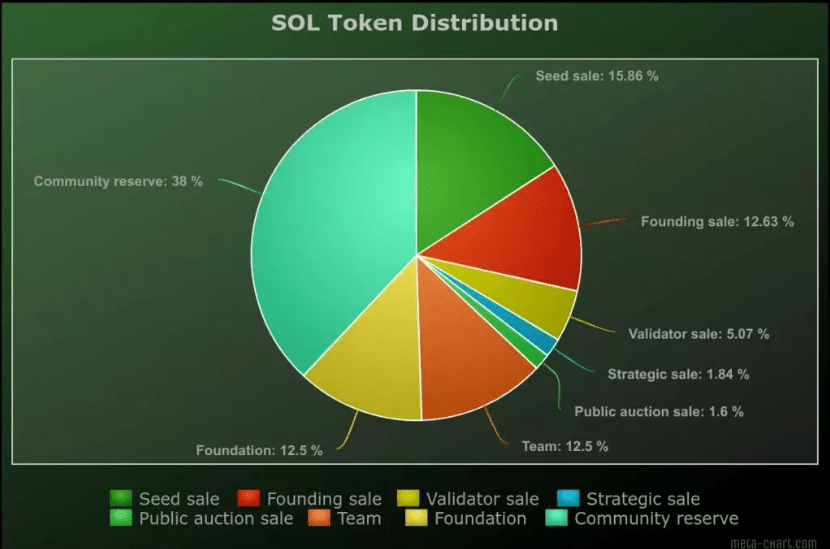
The SOL coin is at the heart of Solana’s economy. Its role is not limited to paying transaction fees; it is also used for staking, governance, and participation in the ecosystem.
Distribution and Inflation: At launch, 500 million SOL were created. Solana uses a controlled inflation mechanism, with issuance gradually decreasing to a fixed rate of 1.5% per year. This inflation is offset by the burn of SOL used to pay transaction fees, creating a balanced supply and demand dynamic.
Staking and Security: SOL holders can stake their tokens to help secure the network and participate in the consensus process. In exchange, they receive rewards proportional to their participation, in the form of additional SOL.
Ecosystem Usage: SOL is widely used in decentralized applications (DApps) in the Solana ecosystem, including decentralized exchanges (DEXs), lending platforms, and blockchain games.
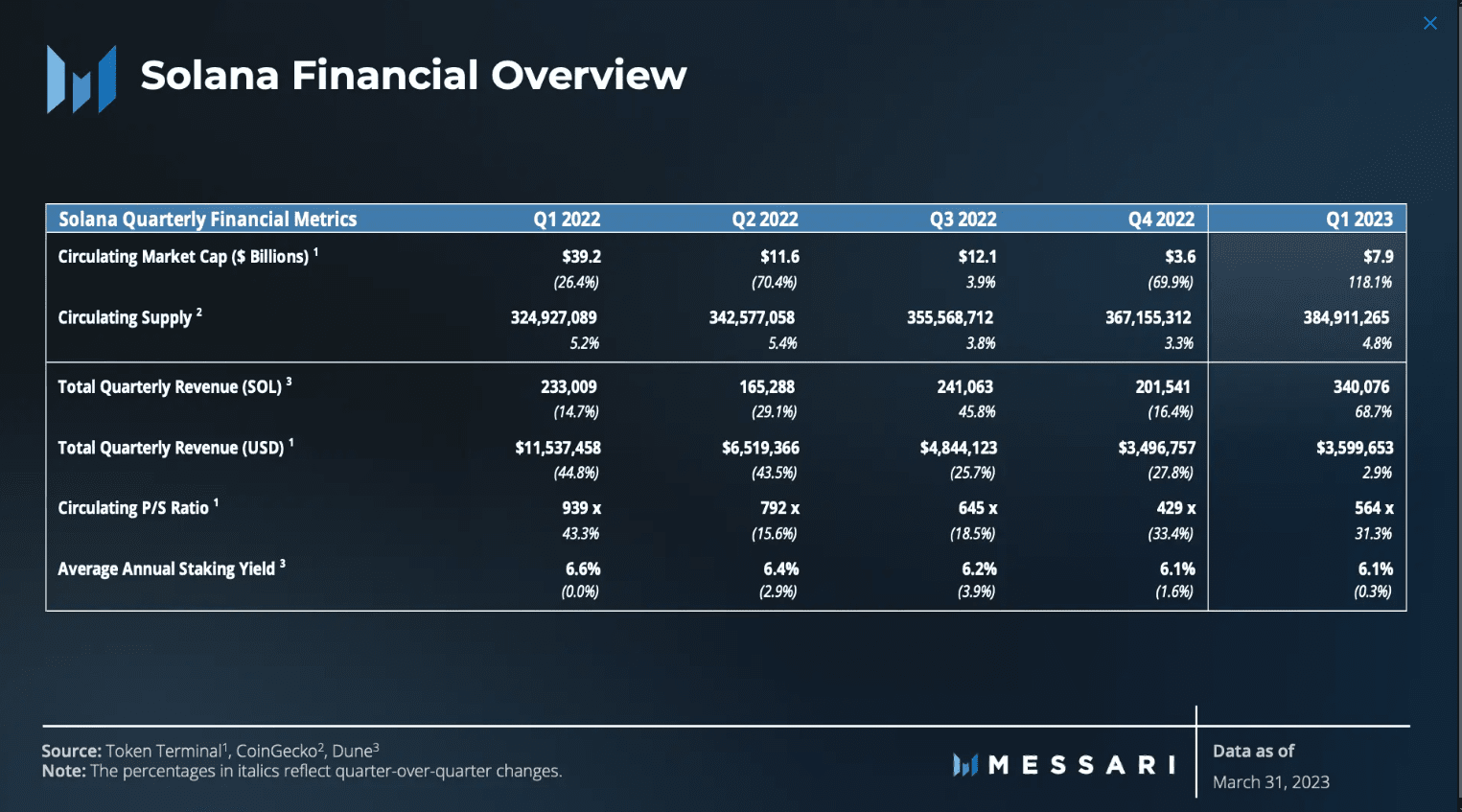
Solana is a technically advanced blockchain that combines innovations like Proof of History, Tower BFT, Turbine, and Sealevel to deliver a fast, scalable, and secure solution. Its ability to process large numbers of transactions at low cost makes it an attractive platform for developers and users. However, like any technology, it must continue to evolve to meet market challenges and improve its resilience.
A future article will cover in detail the specificities of DApps on Solana, compatible wallets, and DeFi tools available on this innovative blockchain.
Disclaimer: This article does not constitute investment advice. It is intended to provide a technical understanding of the Solana blockchain. Before investing, do your own research and consult a professional. Thank you for reading. If you found this article useful, please share it, like it, and subscribe to stay informed of future posts.
#MarketDownturn #BinanceTurns7 #LowestCPI2021 #SolanaUSTD $SOL #BinanceSquareCreatorAward
