

The yen is hovering near 159.1 per dollar, and Japan's push to defend it has run into an awkward fact: some of the country's biggest investors are no longer insuring against a stronger yen.
Nine of the largest life insurers hedged just 43.3% of their foreign-asset holdings with derivatives in the six months to September 30, the lowest reading in Bloomberg's data, which starts in 2011.
Bloomberg calls that a headwind for Tokyo, since less hedging means less structural demand for the currency. Life insurers have long been big buyers of foreign bonds, so their positioning carries weight.
Why the Insurers Are Stepping Back
A hedge ratio is the share of overseas assets an investor protects against currency swings. When insurers cut it, they take on more yen risk and remove a steady source of yen buying. The cost of hedging dollar assets tracks the gap between US and Japanese interest rates, and that gap is wide. With protection expensive and the yen still soft, paying for it looks hard to justify.
The flip side is exposure. If the rate gap narrowed abruptly and the yen jumped, unhedged overseas holdings would lose value in yen terms. Insurers are betting, in effect, that the gap stays wide. The figure is also a snapshot of April through September, so it predates this week's tariff news and the latest inflation data.
The Carry Trade Underneath
Behind the yen's weakness sits the carry trade: borrow cheaply in yen, invest in a currency that pays more, and keep the difference. Let's focus on USDJPY. The BOJ's policy rate is 1.25%, while the Federal Reserve's target range is 3.75% to 4.00%. That leaves a gap of 2.50 to 2.75 percentage points. The cushion is why the trade has lasted, and why yen weakness persists.
Tamura, one of the board's most hawkish members, told local business leaders in Yamanashi on Thursday that the policy rate should reach a neutral level soon. He puts neutral near 2%, which implies roughly three more quarter-point hikes from here, and he said the pace may need to quicken if inflation pressures build.
Swaps price in about an 80% chance of a Bank of Japan hike on December 18, and 61 of 71 economists in a Reuters poll expect a move to 1.50%. That would be the third hike of the year, a first in 37 years, and 35 of those 61 expect another to 1.75% by the end of March.
Reuters also reports that policymakers appear more worried about inflation and a weak yen than about a stumbling economy, and Tamura himself listed yen weakness among the inflation pressures.
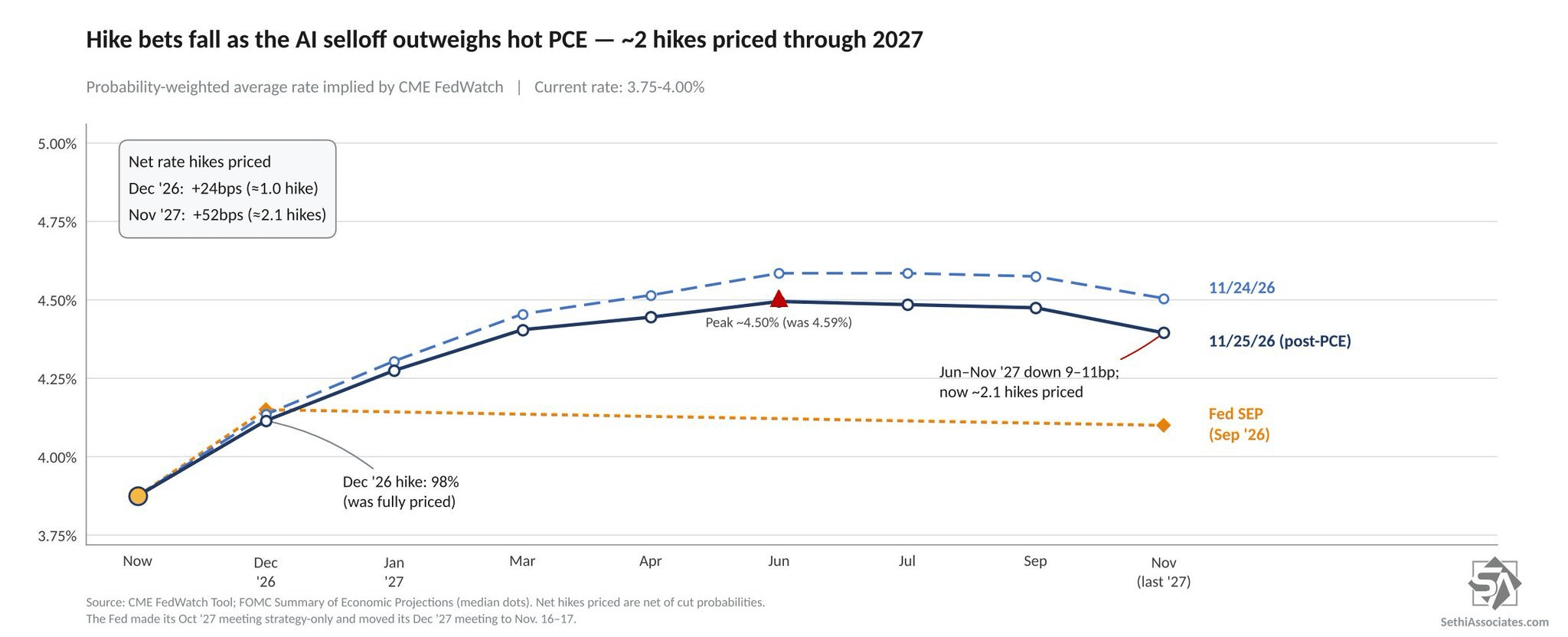
The Fed is keeping the gap open; Fed funds futures price in roughly a 97% chance of a quarter-point hike on December 9, which would lift the target range to 4.00% to 4.25%. US core inflation came in hotter than expected for October, and Governor Christopher Waller has floated a half-point move if prices stay firm. If both central banks deliver 25 basis points, the rate gap stays exactly where it is, and so does the insurers' arithmetic.
Tariffs Add Another Variable
On Wednesday, the US Trade Representative proposed new Section 301 tariffs on 14 economies, citing structural excess manufacturing capacity. The list includes China, the European Union, South Korea, India and Vietnam, with proposed ceilings from 15% to 35%. For Japan, the proposal is up to 15%, net of existing duties and in line with the cap in the US-Japan framework agreement, with a fallback of up to 20% if consultations fall short. No effective date has been set, and hearings begin on January 25, 2027.
The tariff proposal could add to yen pressure, but only indirectly. Japan's economy contracted unexpectedly in the third quarter, so any extra trade friction lands on a soft growth backdrop, and weaker growth would give the Bank of Japan more reason to move cautiously after December. A slower BOJ keeps the rate gap with the US wide, which sustains the carry trade and the insurers' reluctance to hedge. The direct hit looks small, since the proposed rate for Japan is capped at up to 15%.
Tokyo's Costly Defense
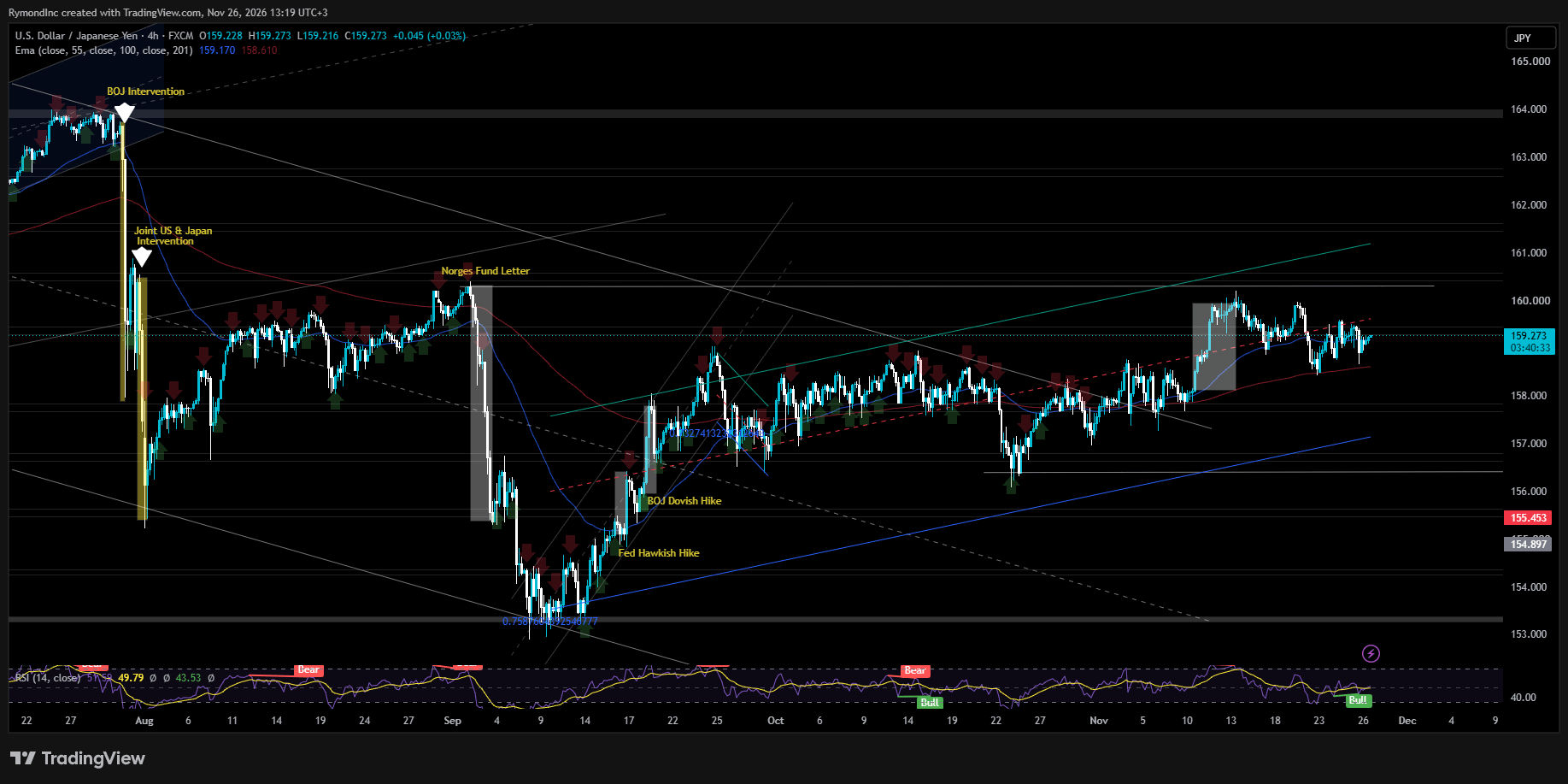
Japan has already spent heavily. It bought ¥11.73 trillion of yen in late April and May, then a record ¥15.39 trillion between July 30 and August 26 after the dollar neared ¥164, its highest level against the yen in almost 40 years. That round included ¥7.98 trillion on July 30, ¥5.55 trillion on July 31 in a rare joint operation with the United States, and ¥1.87 trillion on August 3. Cumulative buying this year tops ¥27 trillion.
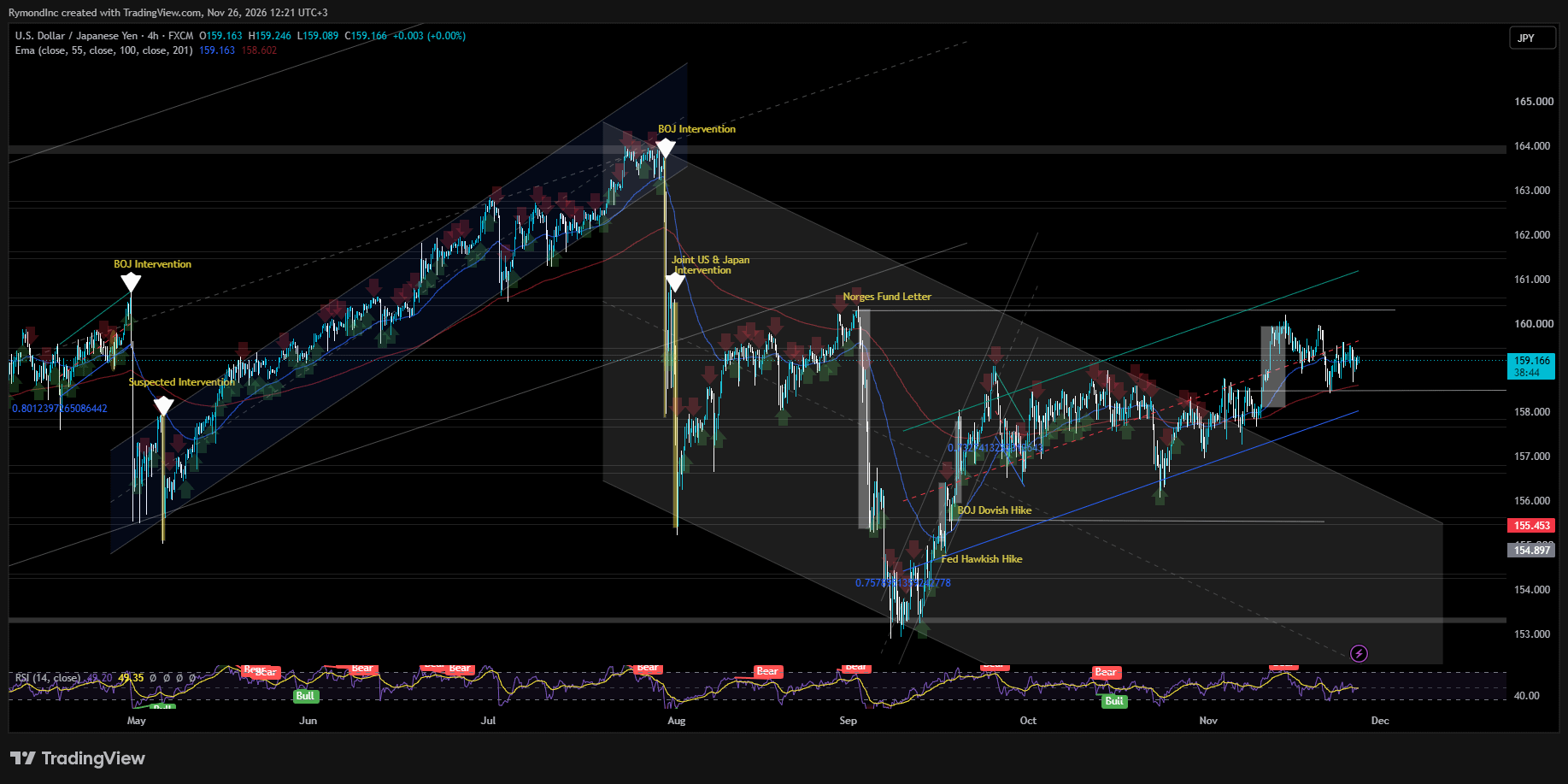
The US Treasury joined the July 31 operation with a small purchase of ¥79.4 billion, the New York Fed reported, its first yen purchase since 1998. The effect faded fast, and by late August the yen was back near ¥160.
No new spending has been reported since, and warnings from officials have helped keep the dollar from holding above that level, according to FX analysts. Whether words keep working is the open question.
What Comes Next
Two central bank decisions sit nine days apart next month, and both will shape the rate gap the insurers are reacting to. Intervention can buy time, but a lasting yen recovery is hard to engineer while Japan's own big institutions scale back protection. Both decisions will also color how the market prices yen funding costs into early 2027. For anyone tracking the yen or crypto liquidity, the rate gap and the hedge ratios are the numbers to watch.